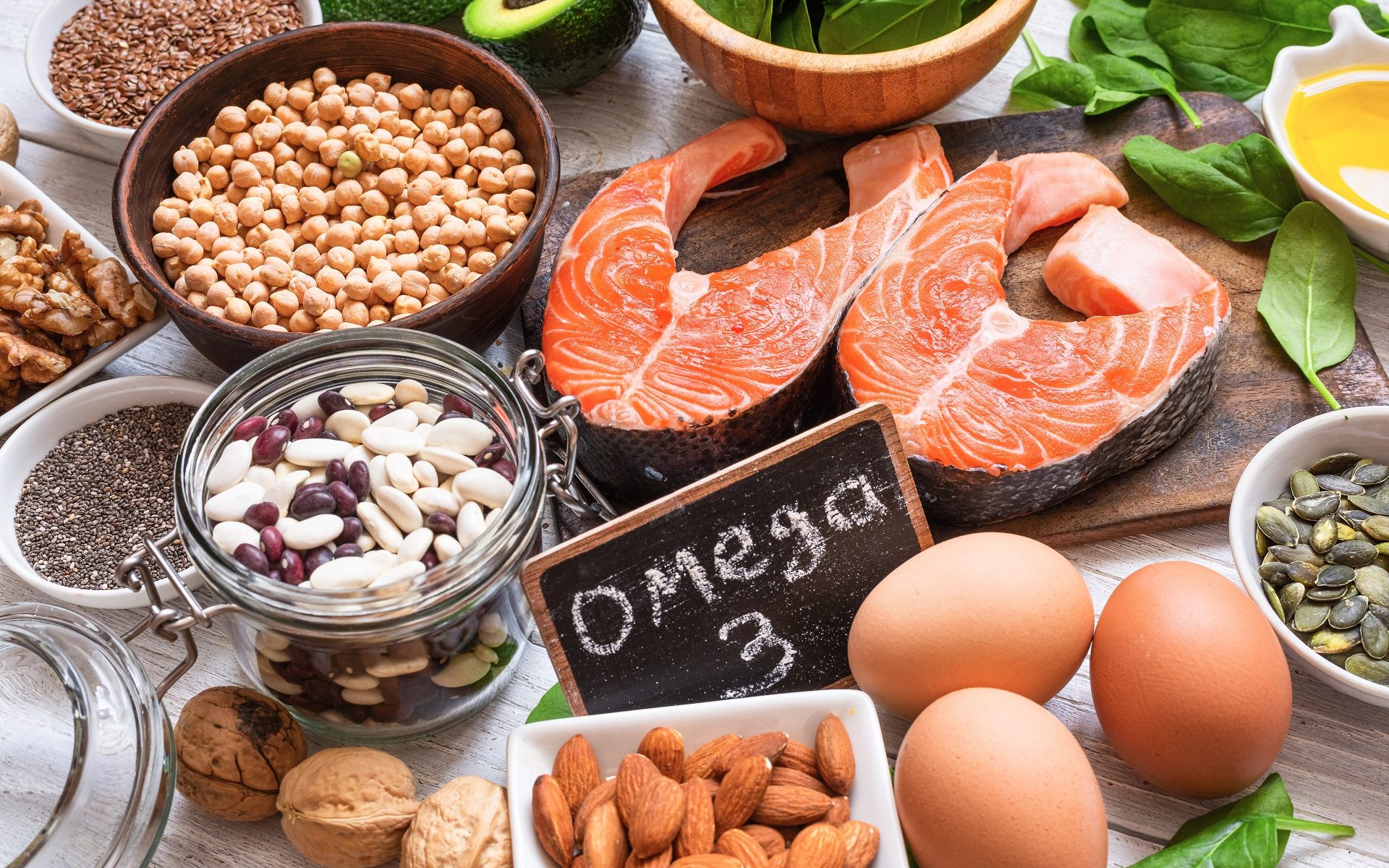
We’re running low on clean
omega-3s — and it’s a big deal

Most people have heard omega-3s are good for you — they’re the healthy fats in fish that help with everything from keeping your heart strong to lifting your mood. But the bad news is, according to a new report, 85 percent of the world isn’t getting enough of them, and the ones we are getting aren’t always clean.

Timothy Ciesielski, a public health expert, says this shortage isn’t just about skipping salmon at dinner. It’s about how our entire global food system, packed with processed foods and too many omega-6 fats (the inflammatory kind), is substantially out of balance.

Without sufficient omega-3s, the body will suffer the effects of inflammatory ailments impacting skin, joints, mood, fatigue and cardiovascular issues.

Plus, climate change is messing with ocean ecosystems, overfishing is draining our fish supply and pollution is tainting many seafood sources.

Even popping omega-3 pills isn’t a magic fix.

Ciesielski says we need a food and environmental makeover, which means more sustainable omega-3 sources, fewer junk fats and a fresh look at how we treat our oceans and our plates.

This isn’t just a health problem — it’s a wake-up call for the whole planet.

The paper appears in AJPM Focus.

More like this: Microplastics: The invisible threat

FEEDING
TOMORROW

The second United Nations Sustainable Development Goal is a big one: zero hunger. For the U.N., this means, “End hunger, achieve food security and improved nutrition, and promote sustainable agriculture.” In the face of unmitigated climate change, this goal becomes even harder to achieve.

“Based on projections of global population growth, 9.7 billion people will need to be sustainably fed by 2050,” says Erik Murchie, professor of applied plant physiology at the University of Nottingham. “Economic growth will enrich this population, which will likely lead to increased overall food consumption.”

The number of people facing hunger and food insecurity has been on the rise since 2015, according to the U.N., with 670 million people projected to be facing hunger by 2030.

The pandemic, conflict, climate change and growing inequalities have exacerbated the situation.

“Maintaining and ensuring food security is a key challenge for mankind that relies on the key pillars of agricultural productivity, access, utilization and stability,” says Martin A. J. Parry, professor emeritus at the University of Lancaster.

“The pillar of crop productivity relies on farmers to produce sufficient biomass to feed livestock, as well as provide feedstock to support the bio-economy.

By 2050, the world will need to double agricultural biomass production, and this will need to be achieved on less land and using fewer resources than ever before.

“At the current rates of biomass yield improvement, the world will fall far short of meeting the future productivity demands, and progress could be further hindered by the complexity of climate change and political and socio-economic challenges.”

There are many challenges facing future-proofing agriculture. Land, healthy soils and water are key to food production, and their growing scarcity makes it imperative to use and manage them sustainably. But even responsible and sustainable farming practices will fail to feed us into the future if crops are pushed past their heat tolerances.

 If you can’t stand the heat …

Philippe Nacry, research director at the French National Institute for Agricultural Research, explains that increased temperatures from climate change are often negatively correlated with productivity and yield and lead to more frequent and severe heatwaves that affect all crop species:

“Heat stress is defined by temperatures at which optimal plant functioning and homeostasis are impaired, leading to reduced growth, yield, quality and productivity.”

William R. Cline also points out the damage heat can have on crop yields in an article for the International Monetary Fund:

“Beyond a certain range of temperatures, warming tends to reduce yields because crops speed through their development, producing less grain in the process. And higher temperatures also interfere with the ability of plants to get and use moisture.”

Cline is a senior fellow at the Peterson Institute for International Economics and the Center for Global Development. He analyzed six climate models of changes in temperature and rainfall to identify the likely effects of unarrested global warming on agriculture in more than 100 countries.

“In the long list of potential problems from global warming, the risks to world agriculture stand out as among the most important,” he writes.

His study considered climate-model projections into the 2080s to allow sizeable warming and potential damage to materialize but keep the timeframe close enough to the present to elicit public concern. The results weren’t good.

“Whether the impact of climate change is projected by economic or agronomic models, nearly all countries suffer,” Cline writes. “Damage will generally be greater in countries located close to the equator, where temperatures already tend to be close to crop tolerance levels. Country elevation also matters. For example, because of higher elevation and lower average temperatures, Uganda faces smaller losses than Burkina Faso, even though the latter is situated about 10 degrees further north of the equator.”

 Not a drop to drink

In many ways, increased temperatures and water scarcity go hand in hand.

“Periods of drought and increased temperature events increasingly co-occur in major crop-producing regions, and reduced water availability can have important consequences for heat-tolerance strategies,” FNIAR’s Nacry says. “We know that water deficit is the abiotic stress that affects crop productivity the most.”

The Middle East is hot and dry. Rainfall is sparse and inconsistent, and the UAE is investing vast quantities of time, effort and money into cloud seeding to increase precipitation. This is a trend likely to continue across the region and around the world as climate change results in longer periods of drought and more unpredictable weather patterns.

Nacry points out that Europe is already coming to terms with this: “Europe already faces a declining water availability and higher variability in precipitation, both in space and time, translating into increased risks of water stress on crops and significantly impacting European agriculture.”

Manipulating local weather is one solution, but researchers are also investigating ways to improve how roots take in and transport water and reduce the number of stomata to regulate water loss in plants.

“Recent studies have shown that roots can sense moisture gradients and direct their growth or position roots preferentially towards increased water availability,” Nacry explains. “Other studies show that plants with shallow rooting systems are more tolerant to drought.

We think this is because a more horizontally distributed root system is a more efficient adaptation to capture water in environments with sparse rainfall. These examples illustrate the power of natural variation approaches for identifying new and unexpected genetic regulators to dissect and possibly improve root hydraulic performance under agricultural conditions.”

Stomata are the tiny pores on leaves and stems. They open and close to control the rate of gas exchange between the plant and the atmosphere. They have been the center of interest for improving drought tolerance, with many studies investigating natural genetic variation or manipulating genes to reduce stomatal density in an attempt to limit water losses. Because stomata are slow to respond to changes in light conditions, they often remain open longer at night, allowing more water to escape. A research study from the University of Glasgow introduced a new ion-channel into the stomata of mustard plants to speed up this response. These plants produced more biomass and conserved more water, especially in the fluctuating light conditions typical of outdoor growth.

Researchers at the University of Montpellier took this concept a step further to force stomata to close at night, reducing nighttime water loss. Since climate projections predict increased levels of transpiration at night relative to the day, breeding plants that can close stomata at night will help plants retain water.

There are places around the world, however, where quantity of water isn’t the problem. Many areas rely on brackish water for irrigation or face increased groundwater salinity due to rising sea levels. Soil salinization is a serious threat to crop productivity. The situation is worst in arid and semi-arid regions, which usually see higher temperatures too. This results in even more water loss and aggravates the effects of salinity.

Turning to crops that can handle the salt and still offer nutritional quality could be a solution for these areas. Jessica Davies, University of Lancaster, certainly thinks so:

“Given that climate-change predictions suggest that future agriculture will be challenged more due to extreme weather conditions and salinity, the potential of halophytic crops should be explored.”

Halophytes can grow in salty soils and have developed traits that allow them to withstand salt stress.

“Quinoa in particular tolerates saline conditions and has a high nutritional quality,” Davies says. “It is also considered the only plant that provides all the essential amino acids, carbohydrates and lipids in proportions ideal for human and animal nutrition. In addition, it can be used for salt sequestration, giving the crop a dual functionality that allows for a more sustainable use of the soil.”

Smart farming or small farming?

Geoffrey Carr writes for the Economist. He says if agriculture is to continue to feed the world, it needs to become more like manufacturing:

“Farms are becoming more like factories: tightly controlled operations for turning out reliable products, immune as far as possible from the vagaries of nature. Technological improvements will boost farmers’ profits, by cutting costs and increasing yields, and should also benefit consumers in the form of lower prices. In the longer run, though, they may help provide the answer to an increasingly urgent question: How can the world be fed in the future without putting irreparable strain on the Earth’s soils and oceans?”

Carr is all for the concept of smart farming, which refers to managing farms using modern information and communication technologies to increase the quantity and quality of products. Sensors, software and robotics connect with advanced data analytics to streamline strategic decisions for an individual plant or the farm as a whole without the farmer even needing to step foot in the field.

IMAGE: Freepik
QUINOA: The future proof crop?

Quinoa is an edible seed that comes in various colors. It’s been cultivated for about 5,000 years, and it looks to be around much longer still: Many researchers consider quinoa the food of the future. Read more›››

“Quinoa has a high nutritional quality,” says Jessica Davies, University of Lancaster. “It is also considered the only plant that provides all the essential amino acids, carbohydrates and lipids in proportions ideal for human and animal nutrition.”

Experts agree that future farming will need to see a shift from current staple crops to provide enough nutrition for a growing population under increasingly difficult climate conditions. The United Nations Food and Agricultural Organization predicts that by 2030, the negative effects of climate change on food production will become increasingly apparent all over the globe.

Such major crops as wheat, rice and corn are progressively failing to withstand increasing salinity and lack of water in marginal areas. Halophytic crops, plants that can withstand saline conditions, could be the solution to sustain and increase agricultural productivity in areas where growing traditional crops has become difficult or uneconomical.

“The broad genetic variability for this species offers the potential to meet our future crop-productivity demands globally,” Davies says. “Moreover, it is particularly suitable in those areas faced with increased groundwater salinity or the need to irrigate with brackish water, problems that reduce the yield of most crops. In addition, quinoa can be used for salt sequestration, giving the crop a dual functionality that allows for a more sustainable use of the soil.”

The UAE’s International Center for Biosaline Agriculture has been leading a global quinoa program since 2007, introducing this South American crop to the desert. This program evaluates and tests the performance of quinoa cultivars for their productivity when grown in marginal conditions. To date, the center has identified and developed five high-yielding salt-, heat- and drought-tolerant quinoa genotypes that are ready to be tested in other agro-ecological areas.‹‹‹ Read less

“Agriculture has undergone yield-enhancing shifts in the past, including mechanization before the Second World War and the introduction of new crop varieties and agricultural chemicals in the Green Revolution of the 1950s and 1960s,” Carr says. “Yet yields of important crops such as rice and wheat have now stopped rising in some intensively farmed parts of the world, a phenomenon called yield plateauing. To go beyond them will require improved technology.”

University of Lancaster’s Parry believes one way to achieve this is to increase photosynthesis of major crops like wheat. Photosynthesis is responsible for more than 90 percent of all biomass on Earth, but left alone, photosynthesis is relatively inefficient. This is because of the nature of rubisco, the enzyme that helps convert carbon dioxide into sugar. About 20 percent of the time, rubisco reacts with oxygen instead of carbon dioxide, reducing the rate of photosynthesis. Parry is working on improving rubisco’s catalytic properties to increase photosynthetic rates. Better rates equal better yields.

Amanda Cavanagh is working on the same concept with the University of Essex and the Carl R. Woese Institute for Genomic Biology. She says as temperatures rise, rubisco has a harder time distinguishing between carbon dioxide and oxygen. When rubisco reacts with oxygen, the plant starts a process called photorespiration, which is energetically expensive and reduces yield. Cavanagh’s research focuses on genetically manipulating this photorespiration to help crops withstand temperature stresses and mitigate yield losses.

Cavanagh proved her concept in tobacco plants, which are common experimental subjects because they are easy to work with and results can be seen quickly. Research is underway to use the same genetic manipulation in food crops like potatoes and soybeans.

Shangchiri Reimi, founder of agricultural-services provider My Farming Days, says the UAE is turning to the future of agriculture – one filled with innovative technologies, diverse crops and a skilled workforce:

“The UAE’s agricultural landscape has been synonymous with towering date palms and vast stretches of sand for centuries,” Reimi writes in a post on LinkedIn. “While dates remain a cherished symbol of Emirati heritage, the story is changing. The UAE’s agricultural sector has witnessed impressive growth in recent years. In 2023 alone, the sector contributed AED 3.5 billion to the national GDP with this growth fueled by a strategic focus on diversification and a wider range of crops and technologies. The vision for the future is clear: a UAE where date palms stand alongside greenhouses teeming with exotic vegetables, fish farms thrive in the desert, and skilled farmers leverage technology to maximize yields.”

Improved technology is all well and good but a team of researchers including Wageningen University’s Ken Giller points out that farming systems around the world are dominated by small family farms, with more than 70 percent of farms in India and Africa considered “ultra-small” at less than 0.05 hectares. Giller says future-proof farming may require a reversal of a global trend toward increasing specialization to a recoupling of arable and livestock farming, not least for the resilience it provides:

“Smallholder farms will remain an important source of food and income, and a social safety net in the absence of alternative livelihood security. But with limited possibilities for smallholders to ‘step-up,’ the agricultural engine of growth appears to be broken.”

Peterson Institute’s Cline is also skeptical that technological developments will swoop in to save the day:

“There are those who argue that rapid technological change will raise agricultural yields so much by late this century that any reduction caused by global warming would easily be more than offset. But technological change is a false panacea.”

Farmer or plant scientist, everyone involved in the production of enough food for a growing population is combatting major challenges in the face of climate change. To future-proof agriculture, our current ways of doing things will need to be reimagined — and soon.

IMAGE: Freepik

Menus of the future could look very different. Although this list is only a slice of the emerging portfolio of food solutions, here are three ingredients we might see more of:


Jellyfish

Human-driven changes to the oceans may be bad news for most marine life, but jellyfish stand to benefit. Jellyfish prefer warmer water: They experience a boost in metabolism, growing faster, breeding faster and living longer. And as the oceans warm, more areas become habitable for the more than 3,000 species of jellyfish we know about. Some societies already eat jellyfish, but as the organisms become more abundant, populations around the world could turn to eating them too. They are nutrient-rich and offer a similar taste and texture profile to oysters.

Insects

Entomophagy is already practiced around the world. Many insect species are rich in protein, vitamins and minerals, and there’s plenty of them. Insect farming requires significantly less land, water and energy and the animals can be fed on fruit and vegetable waste. Cricket flour is already commercially available, but the ”ick” factor may prove difficult for some consumers.

Seaweed

Jessica Davies, University of Lancaster, thinks seaweed is a future staple beyond sushi. “Seaweeds are used for direct human consumption as a vegetable, a source of flavoring and as a thickener in Asian cuisines,” she says.

The algae are often rich in minerals and vitamins. They can be farmed quickly and don’t require additional land use: They’re sea “weeds.”

“Despite the major potential that seaweeds offer, they remain largely understudied and currently still relatively few molecular tools are available to study and possibly engineer them,” Davies says. “Investment in the characterization of their biology, reproduction, growth and development would be advantageous to further leverage their potential and allow aquatic species to become a competitive resource.

How Coldplay takes sustainability on tour

With 45,000 other fans, I went to a Coldplay concert last month. It had been 20 years since my last one and this time was a very different experience. The technology wasn’t just a flashy addition, it was an essential part of the sustainable show.

Concert-related CO2 emissions come from a wide range of sources — travel, ticketing, audience electronics, energy consumption for staging, lighting, sound, ventilation, hotel stays for attendees, band members, and crew, as well as waste from packaging and plastics.

After launching “Everyday Life” in 2019, Coldplay told the BBC that they would stop touring until they could ensure it could be done sustainably.

“We’re taking time over the next year or two to work out how our tour can not only be sustainable but how it can be actively beneficial,” frontman Chris Martin said.

Fast forward to 2021 and the announcement of their Music of the Spheres Tour, where the band vowed to cut direct carbon emissions by 50 percent, covering every aspect of production and travel.

Among the innovations used to cut their carbon emissions: Energy centers placed around each venue consist of 44 sustainable tiles for fans to dance on and 15 kinetic bikes that generate energy to help power the show. Data collected from these centers records the amount of energy produced during specific songs, shows and across tours.


“From collecting unprecedented amounts of data to taking specific actions today based on rigorous analysis, Coldplay is modelling a trajectory toward a low-carbon, biodiverse and equitable future.”

John E. Fernández, director of the MIT Environmental Solutions Initiative


On average, these installations — along with solar panels set up around the stadium — generate about 17 kWh each night, enough to power the center stage.

The band also encourages concertgoers to use public transportation and shuttle buses organized for the event; set up water stations around the venue; and requests that fans bring refillable bottles.

Every flight, including freight and charter, uses sustainable aviation fuel, and the stage is built with reusable and recycled lightweight materials.

In 2023, the band reported powering 18 shows from a portable battery system made from recycled BMW i3 batteries. Over 2022–2023, they also achieved a 59 percent reduction in CO2 emissions compared to their 2016 tour.

But it’s not all about direct emissions and energy consumption.

Coldplay also focuses on food and waste management. So far, 72 percent of all tour waste has been sent for reuse, recycling or composting. They’ve also donated nearly 10,000 meals from tour catering to the homeless over the same two-year period.


For each ticket sold, a tree is planted, and the band partners with several sustainability-focused organizations, including ClientEarth and One Tree Planted. To top it all off, Coldplay’s tour merchandise is made from organic and recycled materials.

It seems like they’ve got the bases covered. But is it enough?

Carbon Market Watch praises the band’s efforts but points out that some information is missing from their data — such as emissions from fan travel. They also suggest the numbers could be reduced by playing fewer concerts.

The data and sustainability claims have been audited and verified by the MIT Environmental Solutions Initiative.

“For some time now, Coldplay has been leading by example in taking seriously and acting on the various interrelated environmental and social challenges facing humanity; climate change, biodiversity loss, air and water pollution, environmental injustice and more,” says John E. Fernández, director of the MIT Environmental Solutions Initiative.

“With each subsequent year of their tour they demonstrate an evolving vision and expanded commitment to move the entire music industry toward true and humane sustainability and planetary resilience. From collecting unprecedented amounts of data to taking specific actions today based on rigorous analysis, Coldplay is modelling a trajectory toward a low-carbon, biodiverse and equitable future,” he adds.


After all, they’re one of only a few taking such measures.

Comprehensive industry-wide data is scarce. That’s why MIT is conducting its own research, led by Fernández and MIT research scientist Norhan Bayomi of The Climate Machine, an MIT Environmental Solutions Initiative research group.

“This latest analysis of Coldplay’s impact on the environment from touring is again setting a new standard for the entire music industry. The data and the methods of analysis support the conclusion that substantial progress has been made to reduce emissions in touring,” Fernández says.

This is Planet Earth

Following are ASTER (Advanced Spaceborne Thermal Emission and Reflection Radiometer) images taken from space that show the sometimes strange and wild beauty of our world as well as its vulnerability to climate change.


Glacial retreat
New Zealand contains over 3,000 glaciers, mostly in the Southern Alps on the South Island. The glaciers have been retreating since 1890. Click here to see the same location in 1990.

Find out how the dust in your country might be contributing to glacier loss here.

IMAGE: NASA/METI/AIST/Japan Space Systems, and U.S./Japan ASTER Science Team

Bottom of the world
Space imagery revealed a wide crack in Pine Island Glacier in the Antarctic. The area has undergone a steady loss of elevation with retreat of the grounding line in recent decades.

Satellites brought you these images, but they can be vulnerable to attacks. Find out here how experts are safeguarding our assets in space.

IMAGE: NASA/GSFC/METI/ERSDAC/JAROS, and U.S./Japan ASTER Science Team

Water sculpture
Erosion has carved the mountain slopes along the western flank of the Andes of Lima, Peru, into long, narrow serpentine ridges.

Click here to see how water erosion can change a landscape.

IMAGE: NASA/GSFC/METI/ERSDAC/JAROS, and U.S./Japan ASTER Science Team

Troubled waters
This image shows the Rio Negro, a tributary of the Amazon River, at Manaus, Brazil, in 2023. Compare this image to one taken in 2020 to see the effects of drought. Here, vegetated areas show up as pink to red. Water is black or blue.

IMAGE: NASA/METI/AIST/Japan Space Systems, and U.S./Japan ASTER Science Team

Fan dance
An alluvial fan spreads between the Kunlun and Altun mountain ranges at the southern border of China’s Taklimakan Desert in this ASTER image. The blue left side is the active part of the fan, made up of water flowing from many small streams. An alluvial fan is an area where rivers deposit silt, sand and other debris over a long period of time.

IMAGE: NASA/GSFC/METI/ERSDAC/JAROS, and U.S./Japan ASTER Science Team

In the pink
Lake Natron in Africa’s Great Rift Valley is the world’s most caustic body of water. The alkaline lake gets its color from salt-loving spirulina algae, whose pigments are passed along to the lesser flamingos that feed on them.

IMAGE: NASA/GSFC/METI/ERSDAC/JAROS, and U.S./Japan ASTER Science Team

A summer thaw
After a 4,400-kilometer journey north from the mountains of south-central Russia, the Lena River fractures into streams that empty into the Arctic Ocean via the Laptev Sea. The Lena River Delta is frozen for as long as seven months of the year, but it thaws during the summer into an ecologically important wetland. Changes in the volume of water emptying into the sea as well as the depth of the permafrost (soil that remains frozen year-round) indicate Arctic climate change. Vegetation shows up as green; places scoured by annual spring floods appear bright white; and mudflats and other areas covered by shallow water are light blue.

Related: The history of remote areas can help guide laws as humans move out into space. Read more here

IMAGE: NASA/GSFC/MITI/ERSDAC/JAROS, and the U.S./Japan ASTER Science Team.

Down under
Lake Mackay is the largest of hundreds of ephemeral lakes scattered throughout Western Australia and the Northern Territory. It is also the second largest lake in Australia. Darker areas indicate desert vegetation or algae, moisture within the soils and lowest elevations where water pools.

IMAGE: NASA/GSFC/METI/ERSDAC/JAROS, and U.S./Japan ASTER Science Team

Endangered glacier
This image of the southwest part of the Malaspina Glacier and Icy Bay in Alaska is a composite of infrared and visible bands. Snow and ice appear light blue; dense vegetation is yellow-orange and green; and less vegetated, gravelly areas are orange. According to Dennis Trabant of the U.S. Geological Survey in Fairbanks, Alaska, the Malaspina Glacier is thinning. Its terminal moraine protects it from contact with the open ocean; without the moraine, or if sea level rises sufficiently to reconnect the glacier with the ocean, the glacier would start calving and retreat significantly.

IMAGE: NASA/GSFC/METI/ERSDAC/JAROS, and U.S./Japan ASTER Science Team

On target
This prominent circular feature in the Sahara desert of Mauritania has attracted attention since the earliest space missions and is now a landmark for shuttle crews. The conspicuous bull’s-eye in the otherwise rather featureless desert has a diameter of almost 50 kilometers. Although it was initially interpreted as a meteorite-impact site, it is now thought to be merely a symmetrical uplift (circular anticline) that has been laid bare by erosion. Paleozoic quartzites form the resistant beds outlining the structure.

Read here to find out how low- and high-tech methods are helping to turn deserts green.

IMAGE: NASA/METI/AIST/Japan Space Systems, and U.S./Japan ASTER Science Team

Heart of sand
The Rub’ al Khali or Empty Quarter is one of the largest sand deserts in the world, encompassing most of the southern third of the Arabian Peninsula and including parts of Oman, United Arab Emirates and Yemen. The desert covers 650,000 square kilometers, more than the area of France.

A hearty desert resident might be the key to a more environmentally responsible food source. Read here for more.

IMAGE: NASA/GSFC/METI/ERSDAC/JAROS, and U.S./Japan ASTER Science Team

Ancient impact
The Shoemaker Impact Structure in Australia is estimated to be between 1,000 and 600 million years ago. The structure is 30 kilometers in diameter and is recognized by the deformation of the resistant ironstones of the Frere Formation, shown here in dark green. Low-lying areas are salt-encrusted seasonal and dry lakes.

IMAGE: NASA/METI/AIST/Japan Space Systems, and U.S./Japan ASTER Science Team

Wind up
The Songhua River meanders through northeast China. The image also shows oxbow lakes, lakes that form in abandoned meander loops of a river channel.

IMAGE: NASA/GSFC/METI/ERSDAC/JAROS, and the U.S./Japan ASTER Science Team

Written in the earth
The Messak Settafet plateau’s dark, erosion-resistant sandstone separates the Ubari Sand Sea to the north and the Marzūq Sand Sea to the south. Although the plateau in southwestern Libya now receives less than 10 millimeters of rain annually, clues in the landscape make clear it was once much wetter. Deeply incised dried stream valleys, or wadis, crisscross the plateau, indicating significant past water flow.

IMAGE: NASA Earth Observatory images by Michala Garrison, using Landsat data from the U.S. Geological Survey

City in the desert
In the middle of the Arabian desert the city Green Oasis Wadi Al Dawasir is being developed for the Wadi Al Dawasir region of Saudi Arabia. Solar fields supply the city and the region with energy. Center pivot irrigation apparatus drawing water from subterranean aquifers feed hundreds of circular agricultural fields.

IMAGE: NASA/GSFC/METI/ERSDAC/JAROS, and U.S./Japan ASTER Science Team

Agriculture in Sudan
Al Jazirah, also known as Gezira, is one of the 26 states of Sudan. The state lies between the Blue Nile and the White Nile in the east-central region of the country and is a major agriculture center.

IMAGE: NASA/GSFC/METI/ERSDAC/JAROS, and U.S./Japan ASTER Science Team

Striking gold
The Escondida open-pit mine in Chile’s Atacama Desert produces copper, gold and silver. Primary concentration of the ore is done on-site; the concentrate is then sent to the coast for further processing through a 170-kilometer-long pipe.

Mining might not just be an industry only on Earth. Read here to find out how the moon might provide important materials as humans step into space. 

IMAGE: NASA

The cold north
Franz Josef Land, an archipelago in the far north of Russia, consists of 191 islands covering about 200 by 325 kilometers. It has no native inhabitants.

IMAGE: NASA/GSFC/METI/ERSDAC/JAROS, and U.S./Japan ASTER Science Team

Picture this
Jebel Uweinat is a mountain range at the Egyptian-Sudanese-Libyan border. In general, the west slope constitutes an oasis, with wells, bushes and grass. The area is notable for its prehistoric petroglyphs representing giraffes, lions, ostriches, gazelles and human figures.

IMAGE: NASA/GSFC/METI/ERSDAC/JAROS, and U.S./Japan ASTER Science Team

ASTER, a collaboration of U.S. and Japanese scientists, produces images using infrared, red and green wavelengths.

Reports of nuclear’s death are
exaggerated

As nations battle rising energy costs and world temperatures, nuclear looks to remain an important part of the clean-energy mix, even in countries that had previously stopped investing in the technology.

Japan, for example, turned against nuclear after the 2011 Fukushima disaster, when a tsunami and earthquake struck, leading to power loss and the failure of cooling systems in three reactors. But the country in 2022 announced that it would restart old plants. extend the life of plants past the 60-year limit and build next-generation reactors.

We need more electricity production, we need clean electricity and we need a stable energy system.

Elisabeth Svantesson, Swedish finance minister

Other countries are also reinvesting. Many U.S. states with the most vigorous climate goals are putting millions of dollars into nuclear power.

“We are moving expeditiously toward a clean energy mix, but that is going to take a while,” Joe Fiordaliso, president of the New Jersey Board of Public Utilities, says in an article for Pewtrusts.org. “We can’t build renewables fast enough, and people still need energy. Nukes are an important interim part of the mix.”

The U.S.’ first new reactor in 40 years came on line in Georgia in 2023.

Sweden’s parliament in June green-lit plans to build new nuclear reactors. The country plans to build 10 in the next 20 years as part of a target to reach net-zero emissions by 2045. The country 40 years ago voted to phase out nuclear power.

“This creates the conditions for nuclear power,” Finance Minister Elisabeth Svantesson said in parliament per Reuters. “We need more electricity production, we need clean electricity and we need a stable energy system.”

As of May 2022, there were 439 nuclear plants operating in about 30 countries. The United States had the most, with 92.

One of the newest of the world’s plants, however, is the UAE’s Barakah facility, which opened in 2020 and began operating commercially in 2021. Three reactors at the plant are in operation with the fourth expected to go online in 2024.

“Nuclear is really important in the energy portfolio. For the UAE to embark on the nuclear program is important for the country’s energy security mix as well as to reduce carbon emissions,” says Saeed Al Ameri, a professor in Khalifa University’s Department of Mechanical and Nuclear Engineering.

It is … crucial to use cost-effective and proven solutions to provide secure access to 24/7 low-carbon electricity to support socioeconomic development for everyone.

Henry Preston, World Nuclear Association


Mohamed Ibrahim Al Hammadi, president of the World Association of Nuclear Operators, was also keen on the technology’s future in the UAE when he spoke in 2022 at the opening of the Barakah plant’s third reactor. “The Barakah plant is spearheading the decarbonisation of the power sector, sustainably generating abundant electricity to meet growing demand and power growth,” he said.

Other countries in the MENA region, including Saudi Arabia and Egypt, are also investing in nuclear, KU’s Al Ameri adds. Egypt began construction on its El Dabaa site on the Mediterranean coast in 2022.

Meanwhile in France, President Emmanuel Macron in 2022 announced six new reactors to come online by 2050.

That year is important, says Henry Preston of the World Nuclear Association.

“Demand for electricity is set to increase at least 50 percent by 2050, with the global population, electrification and access to electricity all projected to increase,” he tells KUST Review. “It is therefore crucial to use cost-effective and proven solutions to provide secure access to 24/7 low-carbon electricity to support socioeconomic development for everyone.”

LOW-CARBON BACKBONE

The International Energy Agency, an intergovernmental organization based in Paris, in a 2019 report called nuclear, along with hydropower, “the backbone of low-carbon energy generation,” providing 75 percent of global low-carbon energy generation.

This has reduced CO2 emissions by more than 70 gigatons over 50 years, Preston says. To put that into perspective, a single gigaton is equivalent to about twice the mass of all humans on Earth. Seventy gigatons also equals nearly two years of global energy-related emissions, Preston says.

We know that nuclear is clean. Operation cost is not expensive. And it continuously supplies energy to the grid.

Saeed Al Ameri, Khalifa University

And as the U.S. Office of Nuclear Energy points out, reactors have small physical footprints, needing little more than a square mile to operate. The Nuclear Energy Institute says a wind farm producing about the same amount of electricity needs 360 times more land area. Solar farms are slightly more compact, needing about 75 times more space to produce the same amount of electricity.

Land use is one of the issues addressed in Simon Friederich and Maarten Boudry’s 2022 paper in Philosophy & Technology on the ethics of nuclear energy in times of climate change. They conclude that even considering such issues as waste disposal and diminishing uranium reserves, “From the point of view of climate-change mitigation, investments in nuclear energy as part of a broader energy portfolio will be ethically required to minimize the risks of decarbonization failure.”

LOOKING AHEAD

The 2019 International Energy Agency report foresaw risks of steep declines in nuclear’s use in advanced economies. And there are drawbacks to the technology, to be sure: It’s expensive to build and slow to roll out. The power it produces is also expensive, rising 40 percent per kilowatt since 2011 while solar’s price is falling. And what to do with the waste remains an issue. But the World Nuclear Association’s Preston remains enthusiastic.

“Reactors online today can expect to operate for 60-80 years, so I think there is also a growing appreciation that nuclear power plant construction and operation generates thousands of long-term, high-quality jobs, along with substantial socioeconomic benefits into the local, regional and national economies,” Preston says.

KU’s Al Ameri is similarly enthusiastic. “In terms of the technology itself, we know that nuclear is clean. Operation cost is not expensive. And it continuously supplies energy to the grid.”