A bounty in the desert

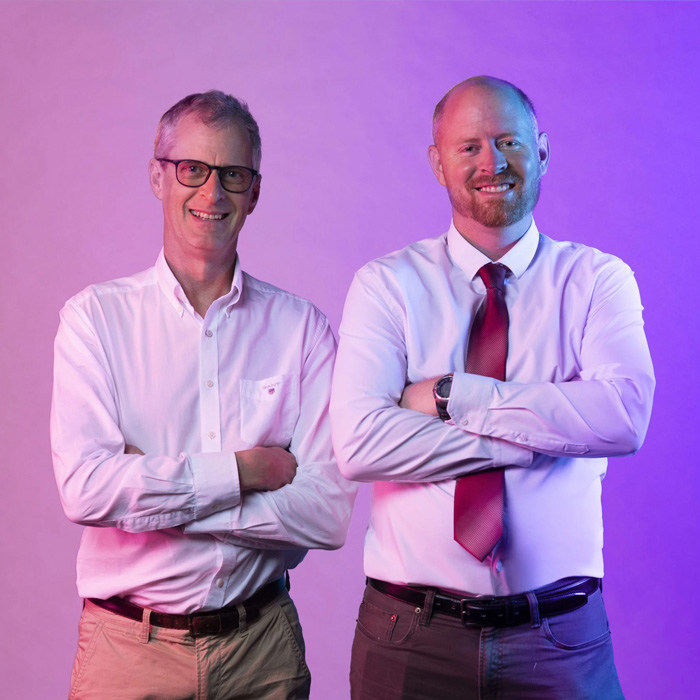
Ryan Lefers started his Red Sea Farms project with partner Mark Tester to find better ways to bring food and water security to desert communities. Discovering new ways to save energy and reduce carbon emissions while doing it was a bonus.

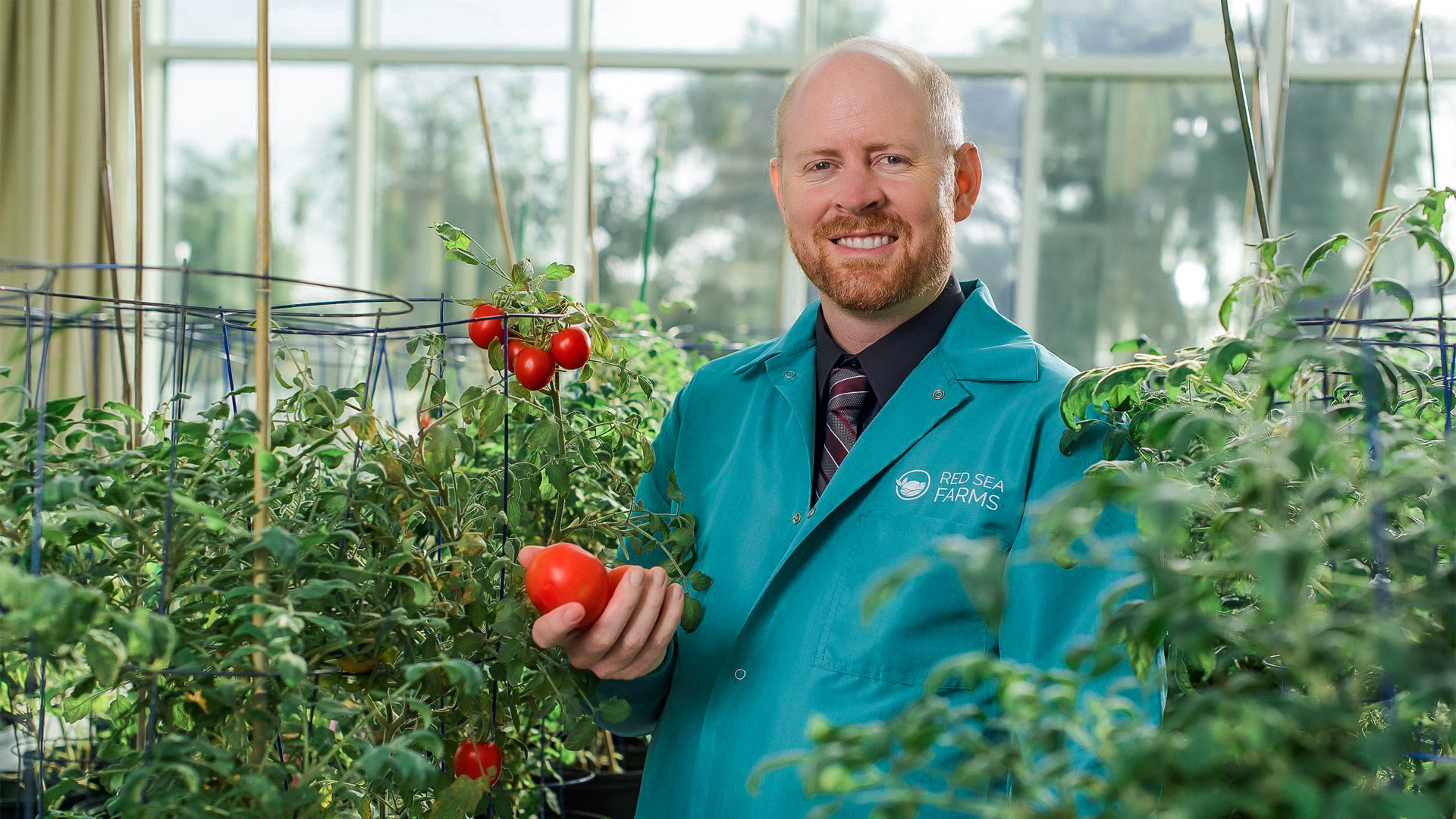
Lefers, a research scientist at King Abdullah University of Science and Technology in Saudi Arabia whose unique agtech project uses sunlight and seawater to commercially farm produce indoors in otherwise harsh growing environments, grew up on a dairy farm in South Dakota in the American Midwest, where he learned early that a capricious Mother Nature could make or break a harvest.

“Checking the weather in the morning and evening was just part of life,” he says, “and usually the question to be addressed was ‘When are we going to get rain?’”

In his work studying sustainable agriculture and water usage, he brought that sensibility to the even harsher climate of the Middle East, where the answer to the question “When are we going to get rain?” is usually “Don’t hold your breath.”

“When your harvest is dependent on the whims of nature, there are significant risks of failure. Hail, drought, insects, weeds, floods and frost are just a few of the obstacles to success in open-field farming in the Midwest.

In the Arabian Peninsula, you can add to that list sandstorms, excessive heat, poor-quality soils and excessive humidity,” Lefers says.

“We work around these challenges by putting most of our high-value crops indoors in protected controlled environments, and we do it in an energy- and water-efficient way using sensors and a growing database to get the best results for our planet, our crops, our communities and our bottom line.”
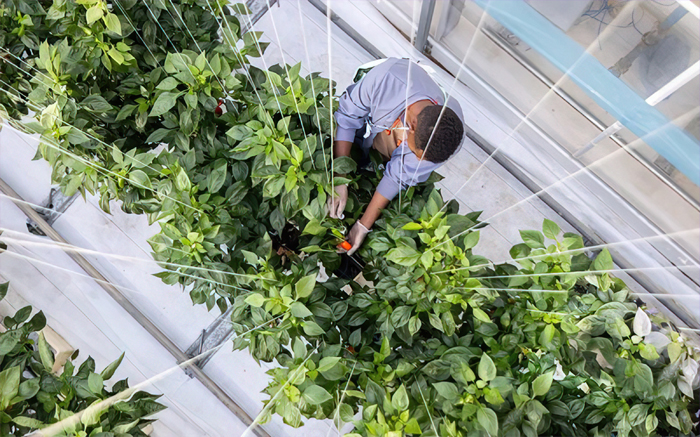
IMAGES: Red Sea Farms

Most traditional greenhouses in the desert region use grid energy and freshwater to water plants and keep the greenhouses cool. But Lefers and his team capitalize instead on desert resources – sun, saltwater, and a lot of both – to reduce operational expenses and grow crops close to the markets they serve. This in turn increases local food security and reduces the costs and challenges of shipping delicate produce long distances.

Red Sea Farms, based in Saudi Arabia, uses solar power and saltwater to both water crops and cool the greenhouses. Plants are selected for saltwater tolerance, and material selection, smart engineering design and smart control systems allow the cooling systems to weather saltwater’s corrosive effects, Lefers says.

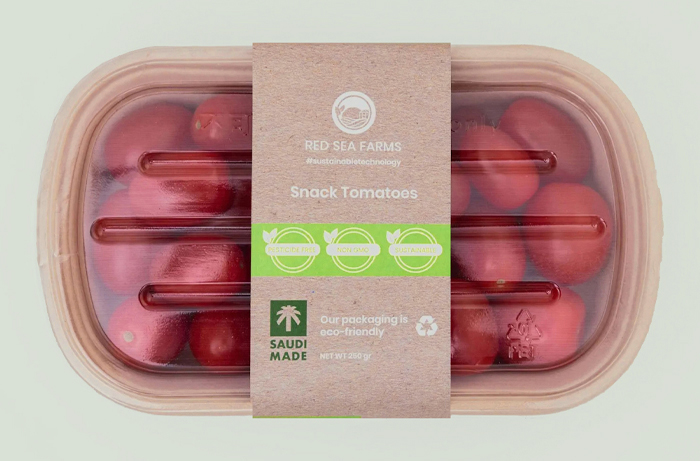
And the tomatoes? “A bit of salt in irrigation for crops like tomatoes actually increases physical properties like brix (often used as a measure of sweetness/taste) and vitamin and mineral content,” Lefers says. “We find that our tomatoes irrigated with salty water taste amazing and have a longer shelf life as well.”

Lefers thinks his approach is especially relevant in the wake of the COVID-19 pandemic that exposed serious weaknesses in traditional supply chains. “(It helps) build the case for why we should be looking at growing crops that have a short shelf life locally as much as possible,” he says.


Up to 95 percent less freshwater use
as compared with a traditional
desert greenhouse.

Up to 90 percent less energy use than mechanically cooled greenhouses.

Number of sites in Saudi Arabia where
tech is deployed today

Number of countries with active projects


“The big question is how can we do this? Our technologies enable these crops to be grown locally – providing resilience in the face of supply-chain disruptions. Add to this the growing consumer awareness and demand for local and healthy food and we expect a bright future for local communities who will benefit from agriculture systems operating using our platform of technologies.”

And which communities would benefit from this platform of technologies? One or more pieces of the Red Sea Farms technology platform can be used anywhere, but it’s especially suited to communities in harsh environments globally, Lefers says.

“These environments may include deserts, island communities, regions with significant solar resources, coastal communities and regions and/or structures with significant humidity challenges.” As for Red Sea Farms, the future is growth, Lefers says.

“We are aggressively pursuing opportunities for growth locally (in Saudi Arabia), regionally (in the near MENA region) and globally (with North America as our first step in this). We are excited about bringing our innovative platform of technologies for agriculture systems in harsh environments from Saudi Arabia to the world.”

He adds: “On a personal note, I look forward to the day in the future when I can look back and see how we, as the Red Sea Farms team and as a global community working toward this common goal of food security, have managed to both improve the lives of people and protect/enhance the planet we live on for future generations.”

Microplastics:
The invisible threat

Over 300 million tons of plastics are produced each year, out of which only up to 40 percent are recycled or incinerated. The majority end up in landfills or are improperly discarded in the environment, leading over time to their fragmentation into smaller plastic items.


CREDIT: Khalifa University
Ludovic Dumée

Ludovic (Ludo) Dumée is an assistant professor within the Chemical Engineering Department at Khalifa University who leads the Advanced Separation Materials team. Read more›››

His research interests span from functional and reactive materials engineering to their application across environmental applications. In 2020, he received the Membrane Society of Australasia Science award for his work on microplastics separation. He can be reached at Ludovic.dumee@ku.ac.ae.‹‹‹ Read less

Such “microplastics,” whose maximum dimension falls below 5 millimeters, are ultimately released into waterways and represent a major threat to global ecosystems, the entire food chain as well as many human industrial activities that rely on river or sea-water intake.

The fragmentation of such microplastics may also lead to the formation of nanoplastics, with dimensions below the micrometer level. These are much more difficult to quantify and identify, and they represent key challenges for engineers and researchers.

Why may microplastics enter the food chain and affect humans? Microplastics are reported in the guts of multiple avian or sea-life species that often mistake microplastics for food. Ingested microplastics may accumulate in their digestive system. Besides representing a major source of pain, it can lead to the animals’ premature death. Scavengers then feed on their carcasses, leading to further ingestion of microplastics up the food chain.

Over time microplastics contamination carries over to greater predators and human beings. It is estimated that humans ingest between 50,000 and 100,000 microplastics every year, arising from overusage of plastic bottles for soft drinks or packaged-water consumption, but also through uncontrolled fragmentation and release from packaging materials.

Examples of risks associated to plastic ingestion for human and their uptake by our body through diffusion in the blood system are multiple and daunting, not only due to the increased risk of cancer for exposed organs, but also because microplastics may carry over pathogenic contaminants, such as heavy metals or persistent organic pollutants. Such surface-contaminated microplastics, given the high buoyancy of plastic materials and their ability to float, may therefore act as cargos to further disseminate other contaminants over much larger distances than the single contaminants could achieve.

How can microplastics impact human industrial activities? Besides the food industry, a key area affected by the presence of micro or nanoplastics is the water industry.

Microplastics that enter the waterways may carry over pathogenic contaminants, such as heavy metals or persistent organic pollutants. CREDIT: Unsplash

The intake waters, feeding wastewater-treatment and desalination plants, may contain, depending on their location and origin, various levels of nano or microplastics, which may damage existing treatment processes.

For instance, the presence of microplastics in microbial-digestion bioreactors would disturb the microbial ecosystem and floc formation, that is the size of the colonies and their stability, thus reducing the efficiency of the process.

Deposits of nano or microplastics may directly damage membrane-separation steps, potentially leading to mechanical abrasion, as well as to accumulation onto the membranes, reducing the separation and flux performance. These phenomena were found to increase substantially the cost of water desalination and processing, sometimes detrimentally affecting the quality of produced water.

In addition, studies showed also that, depending on the treatment trains in place, microplastics may be further concentrated across the treatment units, leading to discharge of sludge or downstream waters richer in microplastics at the end of the water-treatment process.

How can you help? Discard your plastic wastes properly and ensure that you put them in the right bin without leaving a chance for discarded items to get into our beautiful waterways. Also privilege sustainable-packaging options and limit your usage of single-use items.

What is needed at this point to better understand risks? Researchers are developing advanced tools and platforms to detect nano and microplastics in wastewaters, to better understand their interactions with microbial organisms, water-treatment operations and assess their health and economic impact. We develop strategies to reveal the true extent of pollution within local ecosystems and understand the impact of plastic fragments of various sizes or shapes on the performance of separation systems. We also study the impact of microplastics on human health and their potential diffusion into our bodies to better prevent long-term diseases.

Play your part: this game challenges you to
save the earth, one decision at a time

A free, global-access climate-simulation tool aims to show the world that climate-change recovery is possible and offer world leaders the opportunity to create a well-rounded plan of action.

The simulation tool from Climate Interactive, called En-ROADs, can be used by individuals and groups. It allows adjustments across simulated industries and sectors to immediately show changes in the global-temperature increase.

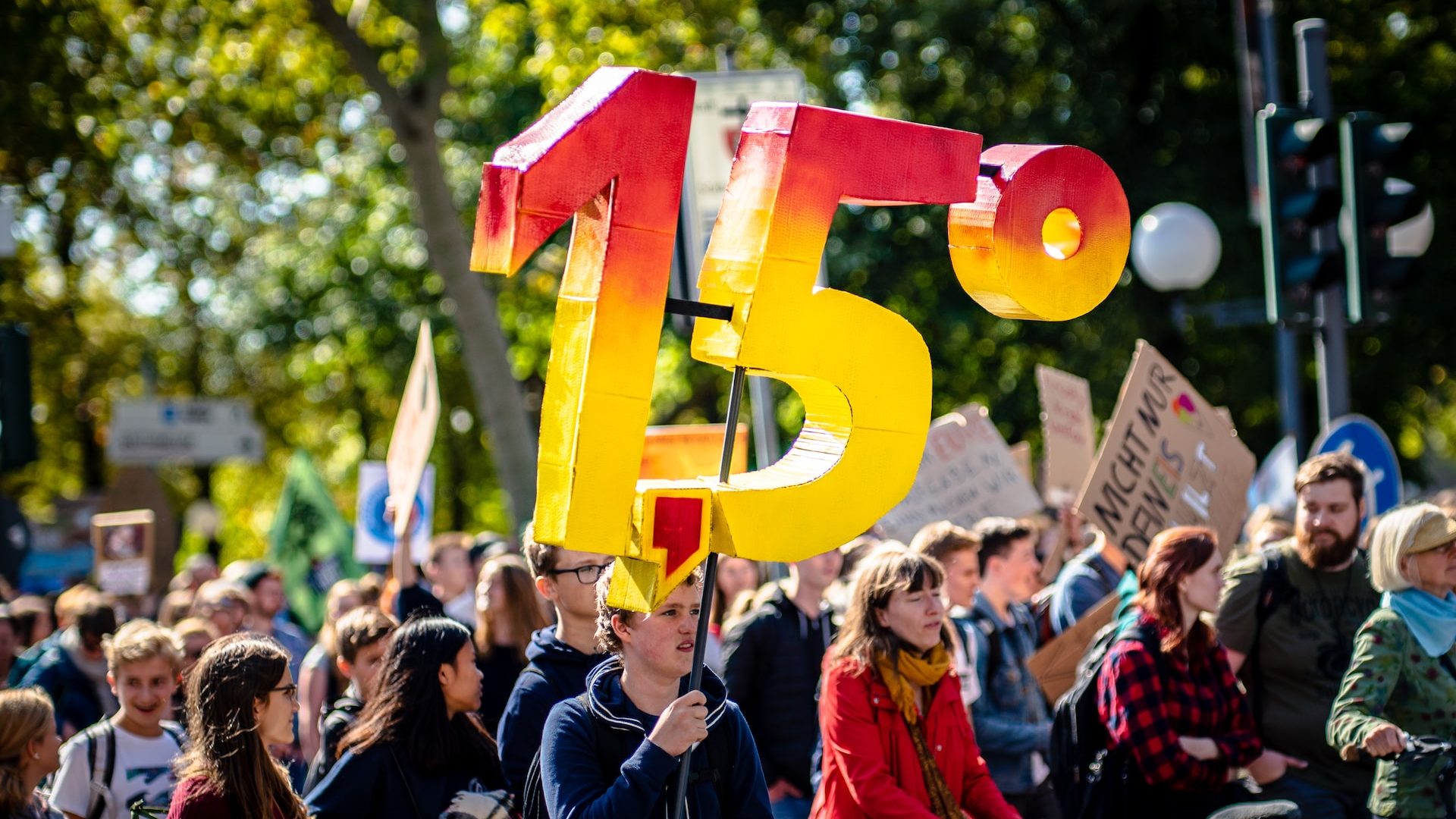
Group events vary based on the audience but are essentially role-playing games similar to the Model United Nations. These events were developed to help policy makers, world leaders, researchers, scientists, students, etc., create a multi-faceted plan of action to ensure that global warming stops at 1.5 degrees Celsius, below the 2 degrees Celsius set out by the 2015 Paris Agreement.

Adjustable markers in the simulator either raise or decrease the temperature, depending on actions taken.

The group activity assigns a role to each player, such as a fossil-fuel-company executive, a government, a community representative or a clean-technology company.

En-ROADS offers insights that support the learning of people from any sector, country and age.

– Climate Interactive’s Yasmeen Zahar

Participants will lobby for their country or industry’s interests. They will discuss, negotiate and come to an agreement with other participants on how to ensure that the global temperature does not pass that that 1.5 degree mark.

Some actions that participants may take to decrease the global temperature include: implementing a reduction in fossil fuels, increasing green technologies, introducing a carbon tax or increasing reforestation. The digital tool will record adjustments as agreements are made and in real time. The process takes two to three hours and can be played in person or online.

IMAGE: Pixabay

“Since the release of En-ROADS, nearly 250,000 people in 140 countries have participated in an event with the simulator. En-ROADS offers insights that support the learning of people from any sector, country and age, and helps them gain grounded knowledge of impactful and equitable climate solutions,” Climate Interactive’s Yasmeen Zahar tells KUST Review.

En-ROADS offers free online training on how to run the simulation or the option to have representatives from the organization host and moderate. Groups can have anywhere from 12 to 300 participants.

The simulator was developed by the MIT Sloan Sustainability Initiative and Ventana Systems.