In space, no one can hear you flush

Ensuring the accessibility of water on Earth is a priority for science in the coming years to be certain.

But so is making sure it’s available in space.

It isn’t like finding water in space is impossible. The chemical elements that make water – hydrogen and oxygen – are abundant in space.

“NASA science activities have provided a wave of amazing findings related to water in recent years that inspire us to continue investigating our origins and the fascinating possibilities for other worlds, and life, in the universe,” says Ellen Stofan, a chief NASA scientist, on NASA.gov.

NASA astronaut and Expedition 65 Flight Engineer Mark Vande Hei services components on an advanced new toilet installed inside the International Space Station’s Tranquility module. CREDIT: NASA

NASA points to the four giant planets in our solar system – Uranus, Jupiter, Saturn and Neptune – as being likely to contain large amounts of water. There is also evidence that five moons of Jupiter and Saturn contain oceans under their surfaces.

In 2020, NASA announced the discovery of H2O in sunlit areas of the Earth’s moon, suggesting that the water molecule is widely distributed across the lunar surface.

And scientists have discovered a huge cloud of water vapor about 30 billion miles away that contains at least 140 trillion times the amount of water in all of the seas and oceans on Earth.

In fact, all of the water here came from out there as ice piggybacking on the comets and asteroids that plowed into a hot and dry young Earth. That’s right: Water is alien.

We recycle about 90 percent of all water-based liquids on the space station, including urine and sweat.”

Jessica Meir , astronaur

For privacy, the toilet is located inside of a stall just like in a public restroom on Earth. CREDIT: NASA

But ensuring a steady supply for humans venturing out into space is a bit more complicated right now than steering into a vapor cloud or drilling into a frozen moon. Explorers will have to ensure they bring and manage whatever they need.

“We recycle about 90 percent of all water-based liquids on the space station, including urine and sweat,” says astronaut Jessica Meir on NASA.gov. “What we try to do aboard the space station is mimic elements of Earth’s natural water cycle to reclaim water from the air. And when it comes to our urine on (the International Space Station), today’s coffee is tomorrow’s coffee!”

Part of the liquid-recovery process is accomplished with NASA’s new space toilet: The $23 million Universal Waste Management System launched to the ISS in 2020.

The toilet, designed for male and female astronauts, aids in recycling more urine for tomorrow’s coffee. The water in fecal content is not currently being recycled, but NASA scientists are looking into it.

That could help them do better than their current 90 percent recovery rate. NASA wants to bring that recycling rate to 98 percent before humans board a proposed Mars transport vehicle for missions expected to last two years round-trip. NASA is aiming for the Mars missions to begin in the 2030s.

X marks the spot for clean water

X, the “moonshot factory” for Google parent company Alphabet, in 2020 began its first tests on a design to harvest drinking water from the atmosphere using solar power.

Now, in a paper published in Nature, the team has calculated the number of people such a device can potentially help around the world.

Net-zero water production is possible if such AWG systems are coupled to renewable-energy sources, such as hydrogen or solar power.

Ludovic Dumee, Khalifa University

Using WHO/UNICEF datasets, the X team mapped out where the people who have the least access to safe drinking water live and compared those locations to the areas with the best climate conditions (relative humidity at 30 percent to 90 percent) for using its atmospheric water harvesters.

The result? Up to 1 billion people who live in places with enough atmospheric moisture (in the form of dew or fog) to use the technology AND lack access to safe drinking water may benefit from this type of water harvester. 

Study author Jackson Lord notes that larger infrastructure projects such as desalination plants can take years to build. “This (model) can (potentially) leapfrog a lot of that and go directly to the source with a small device that’s solar-powered,” says Lord, who previously worked at X on the project.

“Net-zero water production is possible if such AWG systems are coupled to renewable-energy sources, such as hydrogen or solar power,” says Khalifa University’s Ludovic Dumee, who was not involved in the study. “In that context the footprint of the technologies, which may be decentralized, may become competitive with reverse osmosis. However the kWh requirements are still much higher for AWG than for RO.”

Similar technology is behind an industry-funded project at Masdar City, a hub for sustainability research and innovation in the MENA, with whom Khalifa University does research.

“As freshwater scarcity is becoming a global challenge, a promising route to overcoming water shortage is to extract water from air with innovative atmospheric water production (AWG) technologies,” says Samuel Mao, senior director of Masdar Institute at Khalifa University. “The research team at Masdar Institute is performing comprehensive assessment of different AWG approaches, and developing advanced technologies to enable water extraction from air with better energy efficiency and lower cost.”

A bounty in the desert

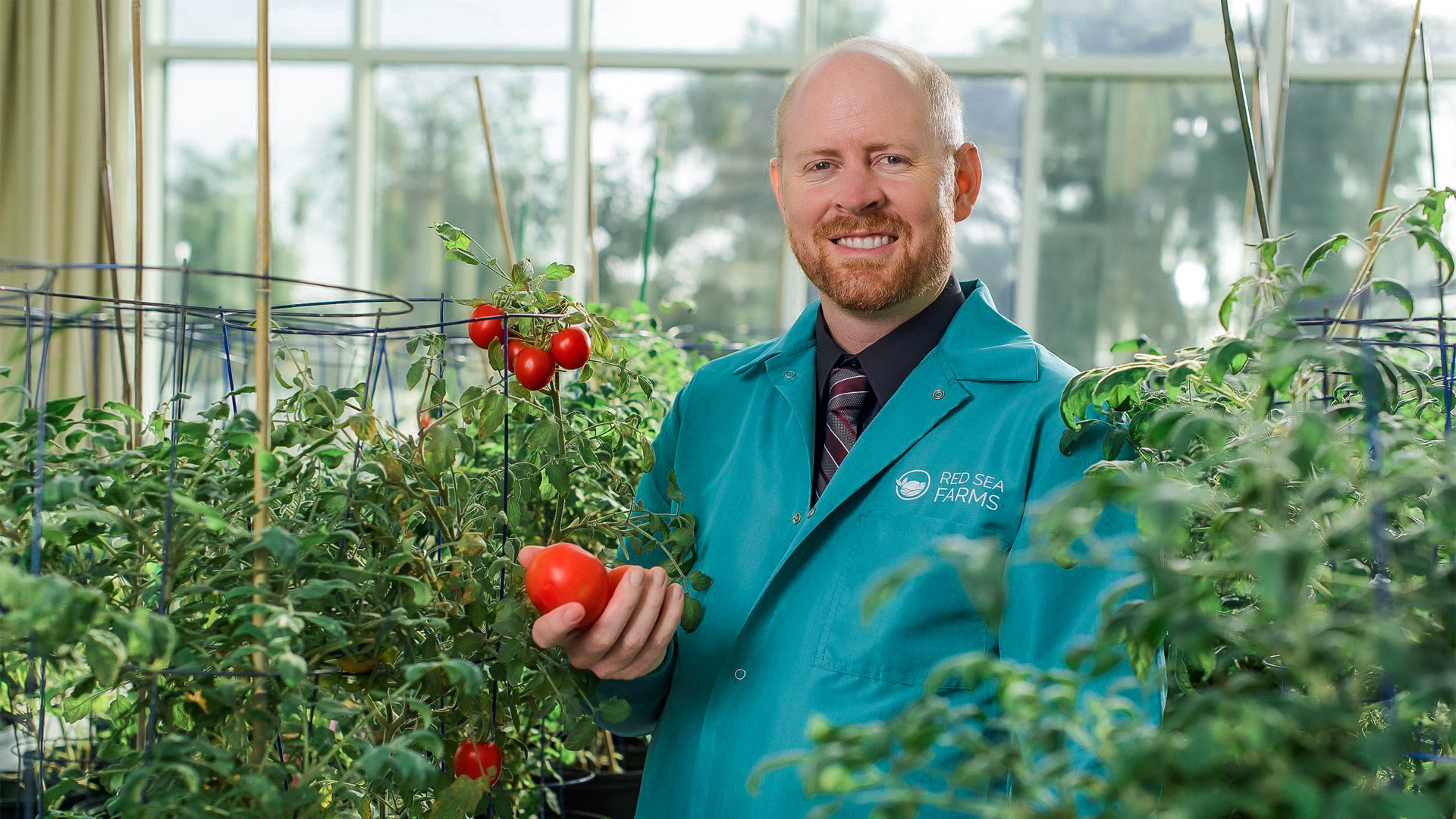
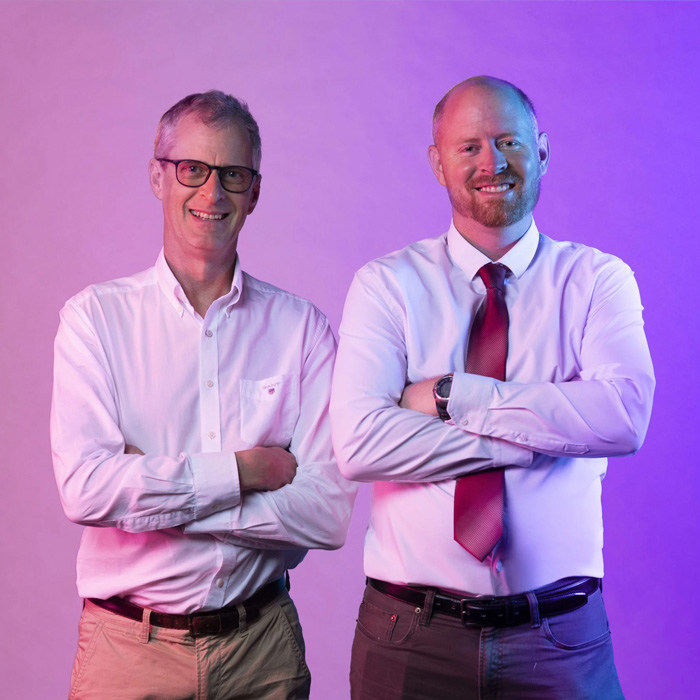
Ryan Lefers started his Red Sea Farms project with partner Mark Tester to find better ways to bring food and water security to desert communities. Discovering new ways to save energy and reduce carbon emissions while doing it was a bonus.

Lefers, a research scientist at King Abdullah University of Science and Technology in Saudi Arabia whose unique agtech project uses sunlight and seawater to commercially farm produce indoors in otherwise harsh growing environments, grew up on a dairy farm in South Dakota in the American Midwest, where he learned early that a capricious Mother Nature could make or break a harvest.

“Checking the weather in the morning and evening was just part of life,” he says, “and usually the question to be addressed was ‘When are we going to get rain?’”

In his work studying sustainable agriculture and water usage, he brought that sensibility to the even harsher climate of the Middle East, where the answer to the question “When are we going to get rain?” is usually “Don’t hold your breath.”

“When your harvest is dependent on the whims of nature, there are significant risks of failure. Hail, drought, insects, weeds, floods and frost are just a few of the obstacles to success in open-field farming in the Midwest.

In the Arabian Peninsula, you can add to that list sandstorms, excessive heat, poor-quality soils and excessive humidity,” Lefers says.

“We work around these challenges by putting most of our high-value crops indoors in protected controlled environments, and we do it in an energy- and water-efficient way using sensors and a growing database to get the best results for our planet, our crops, our communities and our bottom line.”

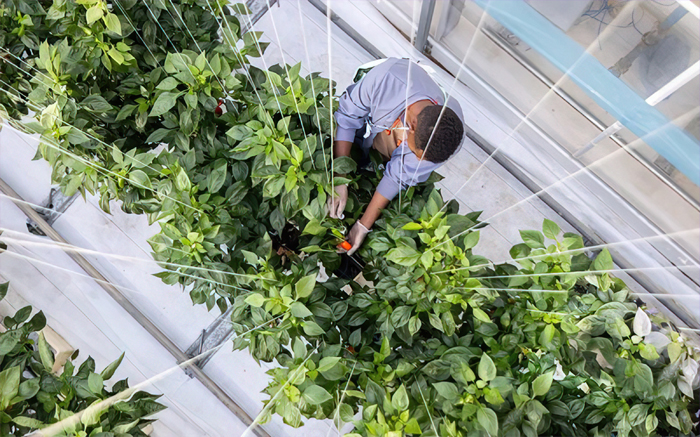
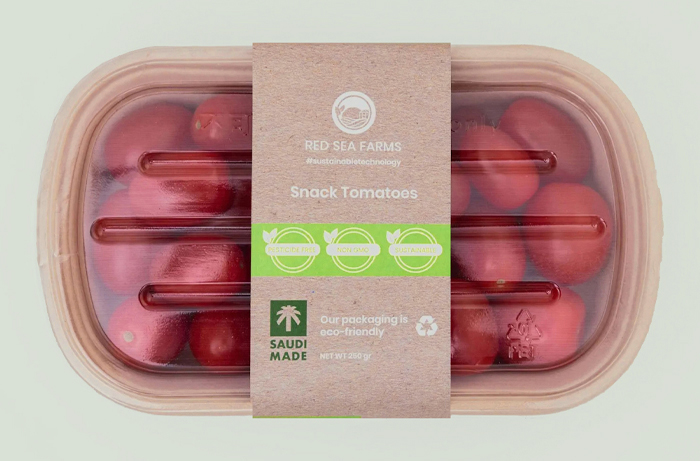
IMAGES: Red Sea Farms

Most traditional greenhouses in the desert region use grid energy and freshwater to water plants and keep the greenhouses cool. But Lefers and his team capitalize instead on desert resources – sun, saltwater, and a lot of both – to reduce operational expenses and grow crops close to the markets they serve. This in turn increases local food security and reduces the costs and challenges of shipping delicate produce long distances.

Red Sea Farms, based in Saudi Arabia, uses solar power and saltwater to both water crops and cool the greenhouses. Plants are selected for saltwater tolerance, and material selection, smart engineering design and smart control systems allow the cooling systems to weather saltwater’s corrosive effects, Lefers says.

And the tomatoes? “A bit of salt in irrigation for crops like tomatoes actually increases physical properties like brix (often used as a measure of sweetness/taste) and vitamin and mineral content,” Lefers says. “We find that our tomatoes irrigated with salty water taste amazing and have a longer shelf life as well.”

Lefers thinks his approach is especially relevant in the wake of the COVID-19 pandemic that exposed serious weaknesses in traditional supply chains. “(It helps) build the case for why we should be looking at growing crops that have a short shelf life locally as much as possible,” he says.

Up to 95 percent less freshwater use
as compared with a traditional
desert greenhouse.

Up to 90 percent less energy use than mechanically cooled greenhouses.

Number of sites in Saudi Arabia where
tech is deployed today

Number of countries with active projects


“The big question is how can we do this? Our technologies enable these crops to be grown locally – providing resilience in the face of supply-chain disruptions. Add to this the growing consumer awareness and demand for local and healthy food and we expect a bright future for local communities who will benefit from agriculture systems operating using our platform of technologies.”

And which communities would benefit from this platform of technologies? One or more pieces of the Red Sea Farms technology platform can be used anywhere, but it’s especially suited to communities in harsh environments globally, Lefers says.

“These environments may include deserts, island communities, regions with significant solar resources, coastal communities and regions and/or structures with significant humidity challenges.” As for Red Sea Farms, the future is growth, Lefers says.

“We are aggressively pursuing opportunities for growth locally (in Saudi Arabia), regionally (in the near MENA region) and globally (with North America as our first step in this). We are excited about bringing our innovative platform of technologies for agriculture systems in harsh environments from Saudi Arabia to the world.”

He adds: “On a personal note, I look forward to the day in the future when I can look back and see how we, as the Red Sea Farms team and as a global community working toward this common goal of food security, have managed to both improve the lives of people and protect/enhance the planet we live on for future generations.”

A framework for innovation

As the availability of natural fresh water sources rapidly declines globally, a result of world population growth, lifestyle changes and climate change, countries around the world have turned to non-traditional water sources such as wastewater reclamation and desalination.

Hassan Arafat

Dr. Hassan A. Arafat is the former director of the Center for Membranes & Advanced Water Technology at Khalifa University. He is now senior director for the Research & Innovation Center for Graphene and 2D Materials.

In fact, over the past 20 years, the total global desalination capacity has increased by more than 1,500 percent.

The United Arab Emirates (UAE) and other Gulf Cooperation Council (GCC) countries particularly have grown to rely on desalination, which now provides more than 90 percent of total potable water supply in those Gulf countries.

This tremendous growth was catalyzed by a plethora of innovations that helped improve energy efficiency and cut the cost of desalination. These include new membranes, energy-recovery devices and effective membrane-based pre-treatment technologies.

However, the sustainable provision of potable water through desalination and the treatment of industrial and domestic wastewater effluents is still a significant challenge, both for the UAE and globally.

The UAE’s leadership has emphasized that securing a sustainable fresh water supply for the country is a top priority. This is indeed a grand challenge that must be met with grand, innovative solutions. To create such holistic solutions, multidisciplinary efforts are a must.

This is why Khalifa University (KU) created the Center for Membranes & Advanced Water Technology (CMAT). The Center’s main goal is to create a framework for well-coordinated research efforts that have a clear, common goal: generating a sustainable potable-water supply for the UAE and the globe.

RELATED: Solar-powered desalinations plants could help achieve global water security
RELATED: Desalination has social benefits – and costs, too

At the forefront of the Center’s research goals are developing innovative technologies for desalination, wastewater reclamation and relevant membrane processes.

This framework takes full advantage of KU’s tremendous accumulated research capacity to develop innovative technologies for desalination, wastewater reclamation and relevant membrane research.

The UAE’s leadership has emphasized that securing a sustainable fresh water supply for the country is a top priority.

CMAT also allows KU to engage UAE industry and government in research, development, demonstration and deployment of innovative water-related technologies. It focuses on research that addresses ensuring adequate availability of water to meet society’s needs while addressing concerns of environmental integrity and economic viability.

The result: The Center is a viable ecosystem for relevant technology development and intellectual-property transfer, driving interdisciplinary novel-membrane and water-technologies research to secure sustainable sources of water for the UAE and the world now and into the future.

Update: A previous version of this story incorrectly listed the director of the Center for Membranes & Advanced Water Technology at Khalifa University. Dr. Shadi Hasan is the current CMAT director.