Incentives such as merchandise discounts and reduced ticket prices are among the most effective ways to cut the environmental impact of “mega-events” like concert tours and World Cups, according to University of Cambridge researchers.
The recommendation follows an analysis of Coldplay’s 2024 European tour and projections for the expanded 2026 FIFA World Cup, both of which show that audience travel is by far the largest source of carbon emissions.
Published inCommunications Sustainability, the study found that Coldplay’s efforts to encourage sustainable travel — including apps comparing low-carbon transport options and merchandise discounts for fans who traveled sustainably — helped reduce travel-related emissions by 48 percent. Combined with other environmental measures, the tour’s overall carbon footprint was nearly halved, with researchers estimating that 98 percent of the emissions reductions came from changes in fan travel behavior.
The researchers estimate that the 48-team 2026 FIFA World Cup will generate approximately 4.23 million tons of carbon emissions, with 82 percent coming from spectator travel and around 3 million tons from air travel alone. Passing the full cost of offsetting those emissions directly to fans would add an average of $114 to every match ticket, the study found, making incentives to reduce travel emissions a more practical solution.
The study proposes a two-step framework for making mega-events more sustainable. First, organizers should determine whether an event’s social and economic benefits justify its climate impact. Second, responsibility for emissions should be shared, with organizers covering operational emissions while encouraging audiences to reduce indirect emissions through travel incentives, smarter venue selection and pricing strategies.
Researchers say host locations could also play a major role in reducing emissions. Around 40 percent of international attendees at the 2026 World Cup were expected to travel from Europe, meaning a European host nation would have generated substantially fewer travel emissions than North America. Other ideas include discounts for rail travel or ride sharing, carbon charges weighted toward premium tickets, and even a small broadcast fee to help fund emissions reductions.
Microwaves aren’t just a quick, easy way to heat up your pizza pocket. Researchers at Khalifa University are using them to grow high-quality crystals that could power low-energy memory devices.
Creating these crystals typically involves multiple-step, high-heat processes, but this method, using microwave energy, turns the natural material molybdenum disulfide into molybdenum trioxide crystals in minutes.
The crystals can grow to almost 1 centimeter long, and the process uses up to 140 times less energy with substantially less carbon output.
Further, these crystals can be used to construct memristors (tiny electronic components that remember past activity). The devices worked reliably with only low voltage, which makes them a promising option for producing faster, energy-saving electronics.
Ultimately, this simple microwave method could pave the way for smarter, low-power tech with cheaper, greener and easier-to-produce advanced materials — a big win for both industry and the environment.
A changing climate is putting more pressure on the world’s supply of clean water. But an amphibian might have the answer.
A team of researchers at the University of Nevada, Las Vegas, has developed a material that harvests atmospheric water more efficiently than current technologies. And it’s all thanks to a frog.
Listen to the Deep Dive:
Frogs don’t consume food and water the way we do. Food is taken in orally, but the eyeballs fall inward to push it down the throat. Water, however, is absorbed through their skin.
It was this process that inspired a new ultra-absorbent material that came exclusively from studying hydrogels. The gels create a barrier that keeps out contaminants but allows water to pass through.
CAPTION: Jeremy Cho, assistant professor, Department of Mechanical Engineering
IMAGE: University of Nevada, Las Vegas
“A hydrogel is a soft polymeric material that can swell with water, meaning it is very permeable to water, just like skins in organisms,” says Jeremy Cho, one of the researchers on the team.
A hydrogen membrane and a liquid desiccant was the winning combination that permits rapid capture and large quantity storage for freshwater distillation.
“We observed that it could capture water at incredibly fast rates. We captured two to six liters per day per square meter of membrane area in Las Vegas air — the driest city in the United States,” Cho says.
The liquid desiccant attracts water and absorbs water vapor from the air, even when the relative humidity is as low as 10 percent.
The most challenging obstacle was to filter outside air particulates and contaminants. A hydrogel membrane was added between the desiccant and the air.
It sounds like an easy solution, but finding the just-right hydrogel took two years of experimentation resulting in two published papers. “It took a lot of careful hydrogel synthesis and experimentation to verify our theory,” he tells KUST Review.
| What’s new?
Though atmospheric water harvesting processes have been around for a long time, often repackaging old technologies, the team’s method is based on new tech.
“Our work is different in that we are not creating a new sorbent to be cycled, or relying on an old tech developed for a different application. We are presenting a new membrane-based method where water can be continuously captured into a liquid desiccant and released (distilled) in another location.
The segregation of processes is what’s key here as it allows you to separately optimize and control each process for better overall performance and efficiency. It gives us flexibility in how we can design a complete water-harvesting system. If we want to be solar or waste-heat or electrically powered, we can build different systems that still rely on the same membrane-based capture approach developed because of this flexibility,” Cho says.
| It’s not just for drinking
The majority of the market is focused on drinking water, which is only a fragment of overall water consumption, so the team initiated a start-up company with hopes its tech has a massive impact on sustainability and water sourcing.
Cho adds, “This approach was invented with water-stressed arid regions in mind, and sustainability has been part of the vision from the very beginning.”
This includes considering the current level of water stress and how their tech can impact water usage, conservation and regulation. Regulators are consistently looking toward lower consumption and water reclamation, and companies that look to environmental, social and governance factors when making investment calls are seeking to be water-neutral or water-positive.
Regulators in Nevada sometimes try to put off businesses from setting up there, based on their water-consumption forecasting. Cho and his team are hoping to eliminate this market barrier, enhancing the local economy.
| At what cost?
The problem is that these water solutions are more costly than tap water, but Cho says his team’s goal is to ensure their start-up company, WAVR Technologies, is focused on developing solutions to supply water to make up for these consumptive losses.
| Who is willing to pay the price?
Cho says there are many industries in Las Vegas looking for solutions, including real estate, hospitality, construction and high-tech manufacturing. “We’ve been talking to them, they’re all looking for a solution and are willing to pay for it. And from what we can tell right now, the amount they’re willing to pay seems to be achievable from a technoeconomic standpoint when we scale up our technology.”
“Climate change is real, and whether or not you accept the science that we are causing it, you are paying for it. In arid regions, it is extremely visible through our water resources, our utility bills, and our abilities to do business and live in our communities. We should be more responsible in how we use our water and do what we can to reclaim it. And whatever water we cannot reclaim, let’s consider sourcing that from the air—a hidden resource that surrounds us all,” Cho tells KUST Review.
The team at WAVR Technologies expects its first prototype to be ready by the end of 2025.
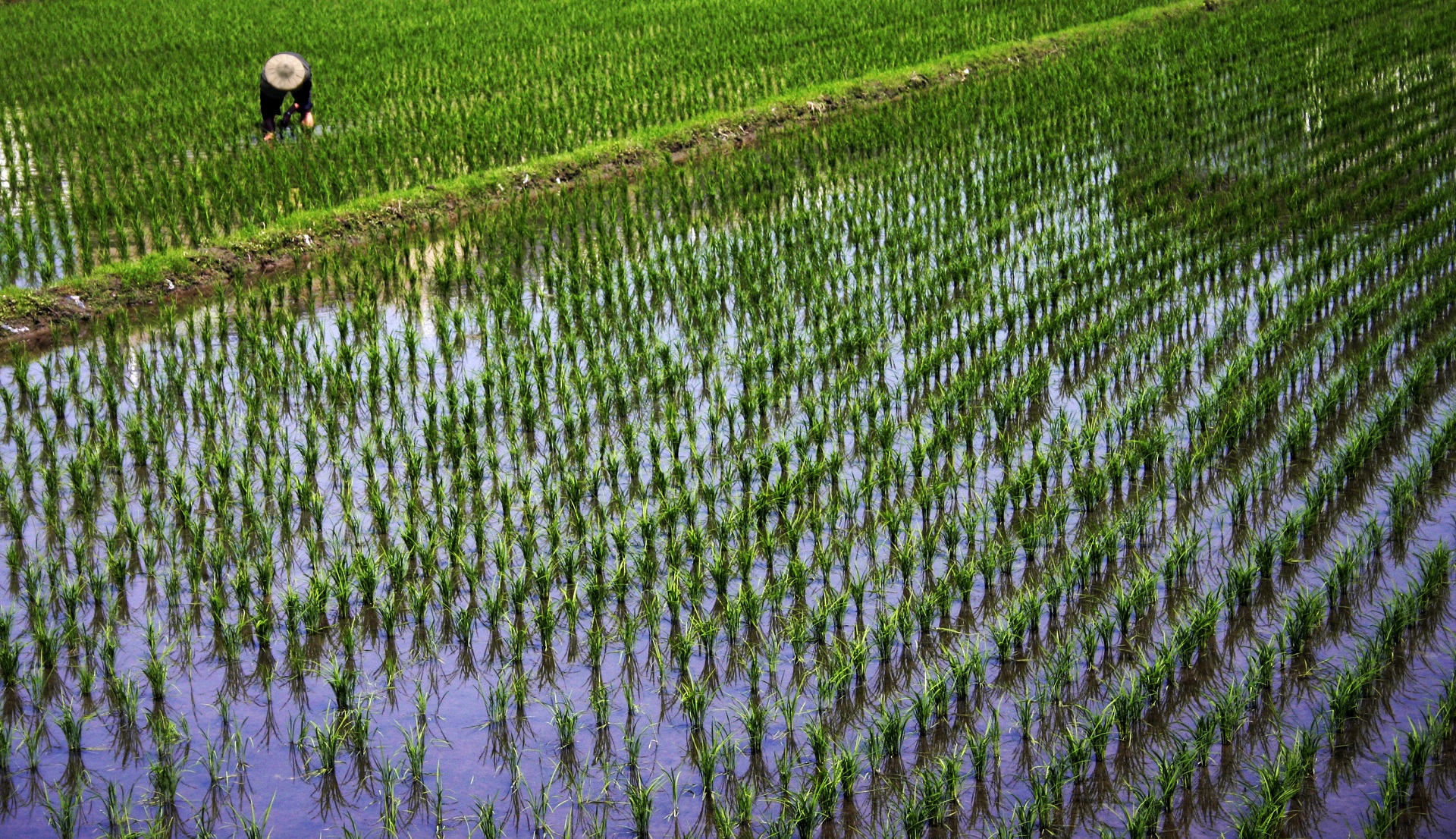
Rice paddies take up about 9 percent of global agricultural land and pump out loads of methane, which is 28 times more potent than carbon dioxide.
Adding electrically charged biochar, though it increases crop yield and has often been used for its sustainable properties, makes them even gassier. A new study, in Springer Nature Link, reveals that soils treated with graphene-enhanced biochar produce up to 70 percent more methane.
This is because biochar’s conductivity helps electrons move faster through dissolved organic matter — like giving soil a power boost. The extra electron flow enhances methane production.
This means biochar isn’t always a climate-friendly option. In rice farming, its electrical side effects could mean more greenhouse gas than less.
A study by Chinese researchers published in Seed Biology reveals surprising strength in planted forests — they contain more seeds in their soil than natural forests. This underground gold mine may transform current forest restoration in a warming world.
Analysis of 920 China forest sites, natural and planted, revealed that planted forests have markedly denser soil seed banks. These reserves are critical for regrowth after fires or droughts. While both the forest structure and climate played a role, the biggest impact on seed storage is the soil itself — principally nitrogen and pH levels.
In planted forests, high nitrogen content helped boost seed density. In natural ones, soil pH was the most prominent factor. Temperature and rainfall still contributed — higher values generally lowered seed density — but soil conditions clearly mattered most.
The results suggest that looking below the surface can add value when planning restoration efforts. Enhancing soil nitrogen in planted forests and monitoring pH in natural forests could help them grow back more effectively.