THE FAST & AUTONOMOUS

Peering through the gap in the catch fence, the members of the Fly Eagle team held their breath. A whine emerged from the distance, an engine noise that grew louder as anticipation built for the Dallara Super Formula car to round the corner and scream down the pit straight. In the blink of an eye, the car whipped past its spectators, crossed the timing beam and turned the corner at the end of the straight. The Fly Eagle team whooped; they’d set their best time yet.

Abu Dhabi’s Yas Marina Circuit is no stranger to racing cars. It hosts events throughout the year, including the season finale of the Formula One World Championship since 2009. But the track has never seen racing like this before. It’s not the speed or the car that makes it special: It’s the drivers.

The Fly Eagle car is driven entirely by artificial intelligence. There’s no driver in that car.

Yet, the drama, the speed, the precision, the passion — all remain.

The Abu Dhabi Autonomous Racing League (A2RL) is the first of its kind in the region, shaping the future of motorsport as we know it. Eight university teams were invited to take part in the “challenge,” going head-to-head for a prize fund of U.S.$2.25 million.

Image: Motorsport has long been a testing ground for innovations that later make their way into road cars.

Each team races using identical Super Formula SF23 cars, the fastest open-wheel race car after those used in Formula One, capable of reaching a maximum speed of 300 km/h. They’re also manufactured using sustainable bio-composite materials, an important factor we’ll get into later.

Each car is equipped with seven cameras, four radar sensors and three lidar units to navigate its way around the track, with the only difference between the teams lying in how they use their coding skills, algorithms and machine learning techniques to teach the cars to drive.

“Just because it’s a machine, doesn’t mean there aren’t human elements in it,” said Tom McCarthy. He’s executive director of ASPIRE, the “technology transition arm” of Abu Dhabi’s Technology Research Council. “Remember that it’s people doing the programming here.”

HOW DOES IT WORK?

The AI needs to be able to turn into corners at the right moment, know when to brake, accelerate, change gear and recognize its surroundings at all times. To get the most out of the car, it needs information on how hot the tires and the brakes are, what the wind is doing in each turn, how much grip the tires have left — all the information a human driver gets from sensors and intuits from experience.

You’d think that the fastest way around the track would be to train the AI on an “ideal lap” set by an actual racing driver, an expert, and then have the car follow that data to the letter. And indeed, there is training data for the algorithms, but every 50 milliseconds, the AI decides whether to listen to that training data or the live data it receives from its sensors. Sometimes, when it relies on its own inputs, the car shaves time off its previous best lap. Sometimes, it turns too soon and smacks into the wall.

Lakmal Seneviratne is director of the Khalifa University (KU) Center for Robotics and Autonomous Systems. With Majid Khonji, who leads the research activities in the KU Autonomous Vehicle Laboratory, the university entered the A2RL event with team Fly Eagle, a collaboration with Beijing Institute of Technology. They spoke to KUST Review in the team garage on qualifying day.

“The optimal trajectory is pre-computed,” Khonji explained. “The code is then based on the information you get about your location on the track, and you try to accurately follow that path.”

“In a simulator, your car would run perfectly using this method,” Seneviratne added. “And do 10,000km perfectly. But in real life, errors creep in. If not corrected, these errors build up and the car goes wrong.”

CAPTION: AI generated, KUST Review IMAGE: Anas Albounni, KUST Review

When asked if the team was correcting these errors or the AI was handling it, both Khonji and Seneviratne were quick to jump in: “The system is doing it. We set it up, but the system is doing all the learning, all the work.”

There’s plenty of run-off area at Yas Marina Circuit, but the barriers around the track are unforgiving, and there were many times during the practice runs that cars ran afoul of the track limits. Sustainable manufacturing came in handy as front wings were replaced regularly. And thankfully, the organizers had plenty of spare wings.

“We had some good runs but some technical hiccups, of course,” Seneviratne said on qualifying day. Race events are rarely without hiccups for any race team, no matter the category, but for Fly Eagle, the biggest issue was signal around the racetrack. Their car was finding it difficult to communicate with the GPS system localizing it around the circuit.

“We get a very high-quality 3D map of the track and then the car has lidar sensors which it uses to localize itself on this map,” Seneviratne explained. “The teams that are doing well here are using that technique successfully, and that’s what we’ll do next time too.”

“To give an analogy, imagine it’s a Formula One race and you’ve blindfolded the driver,” Khonji added. “That’s what our car is experiencing without the GPS.”

Elite racing drivers practice each track before they arrive by putting in lap after lap on a simulator. It’s common to hear them say they could drive a circuit with their eyes closed. Seneviratne laughed when KUST Review put this to him:

“In a straight line, sure, you could probably do it with your eyes closed, but corners, no way.”

This statement could not have been timed better: This is the point where attention was drawn from the garage back to the racetrack as the Kinetiz team car turned for Turn 12 too early and struck the barrier. Unfortunately for Kinetiz, Turn 12 is directly visible from the support pitlane where the teams were hosted for the event. The car was recovered, and a new front wing quickly supplied.

WHAT’S THE POINT?

Motorsport is often referred to as the “cradle of innovation”: Many innovations that found their way onto our roads originated in different motorsport categories. Disc brakes won the 1953 24 Hours of Le Mans Grand Prix for Team Jaguar and two years later debuted on Citroen road cars.

Carbon fiber was first used in Formula One in the 1980s to reduce weight and can now be found on high-performance road cars. Push-to-start reduced the start-up times for racing drivers in the pit lane — hardly a modern car lacks it now. Anti-locking brake systems originated on the Ferguson P99 racecar in 1961, the kinetic energy recovery system first tested in Formula One in 2008 led the way for hybrid vehicles and all suspension systems in cars today trace their roots to NASCAR or Formula One.

Even rear-view mirrors were first found in motorsport. At the first Indianapolis 500, driver Ray Harroun attached a mirror to his car so he could keep track of the cars behind him. By 1914, this was standard practice for all production cars.

ASPIRE says by stress-testing autonomous technology on the racetrack, it’s easier to identify key challenges and areas of improvement and rapidly address them:

“We believe there is potential in autonomous robotics and AI to combine these with the average driver to bring about greater safety on our roads,” said ASPIRE’s McCarthy. “We thought the best way to do it is to demonstrate its capability in the most extreme conditions you can, in the fastest, most well-designed race car in the world.”

Stress-test may be the operative word for the event. A race car lapping the circuit at speed with no driver but a computer was seriously impressive, but a full lap with no incidents was a rarity.

During qualifying runs, many of the teams struggled to set a lap. The cars seemed to randomly swerve, spin or turn into the barriers. Sometimes, they even pulled off to the run-off area and simply stopped.

Seneviratne explained the random stopping was the AI making a prudent safety choice: When it wasn’t sure what to do, rather than risk anything, it just came to a halt.

Fly Eagle, however, was not one of the teams that made it into the final.

“We’re on a learning curve but we’re really happy with what we’ve done,” Seneviratne told KUST Review. “For us, it was more about establishing a platform to go onto the next stage. This was the first time we’ve competed in any racing event. High speed is new for us.”

LIGHTS OUT

Four teams lined up for the final, hosted in front of a capacity crowd. Even this didn’t go to plan: The leading car spun, the second car passed by without incident, but then the race officials displayed a yellow flag to the competitors. Racing rules dictate no passing under a yellow flag, but this means no passing moving vehicles: i.e. no overtaking.

Humans get this. Computers did not. The algorithms knew they weren’t allowed to pass, so they didn’t. They stopped on track.

The safety feature is perfect for incidents on a real-life road, but it’s not so impressive for a racing event if all the cars grind to a halt.

After a restart, the eight-lap race was completed. For reference, Formula One drivers do a lap in about 90 seconds. They’d complete eight laps in 12 minutes or so. The A2RL cars took 16 minutes.

They weren’t far off once they got going but these lap times were slower than teams had achieved earlier in the week during their practice sessions. Once they’d reached the final, there may have been a subconscious unanimous decision to exercise a little more caution.

All race teams watch nervously as their cars compete – few must be as nervous as those watching a computer.


In the end, the inaugural event was won by the team from Technical University of Munich as its car correctly turned the hairpin on the last lap, while the lead car misjudged its entry. It was a clean move and was just as dramatic for a driverless car as it would have been for human drivers.

The gap between human and robot persists for now, but if these events keep happening, and teams keep pushing the boundaries of what AI can do, things may change very quickly.

A2RL plans to be back in 2025.

More like this: Aquabots

Of mummies, mice and medical students

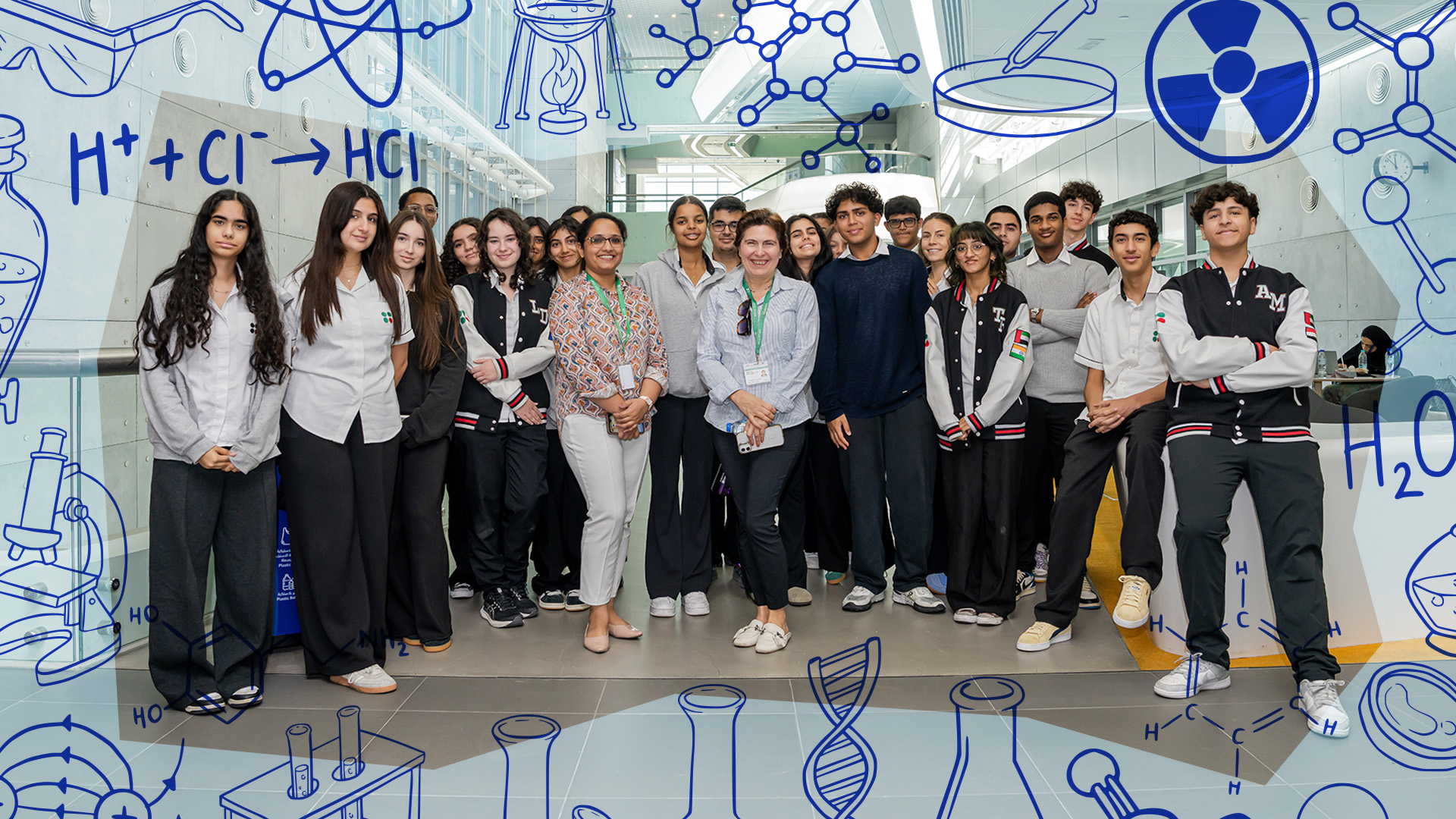
A crew of curious biology and chemistry students recently marched into Khalifa University’s main campus in Abu Dhabi for the science lesson of a lifetime.

IMAGE: Courtesy of UAE Year of Community website


With two packed days meeting med students, seeing how genome sequencing can help diagnose a centuries-old mummy and learning how to anesthetize a mouse, this was a field trip to remember.

The Raha International School, Khalifa City campus students’ bus was met by the academic coordinator of KU’s College of Medicine and Health Sciences, Hibba Samir El-Atar, and members of the KU public outreach team that had orchestrated experiences and welcome packs with their first (but hopefully not their last) lab coats.

“Our primary goal with these outreach programs is to make higher education in STEM fields tangible and accessible. We want to show students the ‘why’ behind the ‘what’ they learn in school. By bringing a piece of the KUST campus experience to them, we hope to plant a seed, showing them the incredible opportunities and dynamic environment that await them at a university like ours,” Khawla Alsaedi, specialist with the KU outreach team, tells KUST Review.


Next, the students visited the KU Experiential Learning and Clinical Simulation Center, where KU students are exposed to life-like situations and advanced imaging technology for an immersive learning experience.

The students, led by Ahmed Khalam Mohamed and his team, observed CPR demos, tried out vital-signs equipment and participated in a clinical-skills workshop.

“I got to experience the facilities that I plan on studying in,” says Ali Zoheir, a Grade 12 student and self-proclaimed future plastic surgeon.

The remainder of the first day was a bit of a dream for potential future docs as they worked with the team from the medical sciences through a real-life case study and spent the final hour with a couple of KU med students, Layth Rafat and Carl Kassab, to find out what it’s really like to live in their lab coats.

The soon-to-be Raha graduates threw questions at the duo and received valuable advice: Take chances, manage your time well and get involved in research right out of the undergrad gate.

KU lab instructors Trust Nyirenda and Samson Chengetanai and KU faculty member Okobi Ekpo led the students on a guided tour of the anatomy and histology labs.

“It was very unconventional for us as (high school) students to be put in such a developed lab,” said Grade 12 student Farah Al Blooshi.


Next came the KU Body Museum tour. The museum opened in 2023 and is a permanent exhibition of dissected human bodies presenting both regional and systems-based anatomy in healthy and diseased adults. It is open to the public and often hosts school tours.


Within its walls the Raha students witnessed what a brain looks like after a stroke; what a person’s internal organs can tell us about their lifestyle and quality of life; the vastness of a fully extracted and intact human nervous system; and much more.

Siobhan O’Sullivan from the Department of Biological Sciences talked about her career path and an Egyptian mummy she studied as an undergraduate to determine the cause of death.

FYI, it was sickle cell anaemia.

O’Sullivan used the DNA extracted from the mummy’s toenails, which sat in a jar on her desk for a time. Gross or super cool? We’re going with cool.

There was more “cool” to come as the students moved on to a talk about what a biomedical engineer does with faculty member Anna-Maria Pappa and a demonstration of medical technology by Rateb Katmah.

They discussed wearable technologies like foot and heart sensors, sleep-pattern monitoring caps and stress-testing tech currently in use.

In the final part of the KU journey, students spent more lab time with Hamdan Hamdan for a talk about neurological conditions like ADHD, autism and Alzheimer’s.

They watched a video of a surgery on a mouse, learned how to anesthetize said mouse and why mice are used in the lab more than other animals (FYI, it’s cheaper and we can increase the testing size).


KU hopes to share these experiences with the Raha Grade 11 class soon and will continue to open its doors to other academic institutions.


“Our DP2 Science students’ visit to Khalifa University was an inspiring and intellectually enriching experience.

The students learned a tremendous amount — from exploring the body museum and how different parts of the body function, how genetic testing is conducted on ancient Egyptian mummies, to understanding how artificial intelligence can be used to personalize medical treatment, to observing how multiple sclerosis is diagnosed and treated, among many other fascinating insights.

“We are deeply grateful for the warmth, guidance, and professionalism shown to us throughout the visit — particularly to Ms. Hibba (Samir El-Atar), who was present and continually sought ways to enrich the experience, and to Ms. Khawla, who accompanied and supported us throughout the two days.

This visit was truly memorable and profoundly educational for our students, and we extend our sincere thanks to everyone who made it possible,” said Margarita Lozinova, secondary chemistry teacher at the Raha, Khalifa City campus.


El-Atar says she very much enjoyed being part of organizing and hosting the visit is thrilled with the outcome and participation from the students and KU team alike, “Seeing everything come together and watching everyone engage so enthusiastically made it all worthwhile. I’m so grateful for the teamwork and support that made the day a success. I am looking forward to many more events like this in the future and welcoming students from schools all over Abu Dhabi.”

More like this: Every splash counts

A new form of biometrics:
We’re all ears

Previously, it took biometrics such as facial recognition, fingerprints or retinal scans to identify the unique physical characteristics of each human, but now identification might be as simple as measuring your ear.

Using ears to identify humans isn’t new, but our favorite crime shows still rely on old faithful methods — dusting for fingerprints or collecting DNA — to land a suspect. In all fairness, criminals are much more likely to touch things with their hands than rub their ears all over a crime scene.

It was, however, used in a 1997 murder trial after an investigation lifted an ear-print from the window the killer entered through. The subsequent conviction was the first using ear prints as an identifier. However, the verdict in 2004 was overturned on appeal as DNA from the ear print indicated a different suspect. It was the opinion of the expert used in the trial that solidified the guilty verdict.

That case was flawed, but recent studies show ears are just as reliable an identifier as our fingerprints.


A team of researchers from the University of Georgia in 2022 developed software that scans your ear. It was intended to serve a post-COVID world in which people wear masks — muffling voice recognition — and are conscious of what they touch.

Masks aren’t the problem they used to be, but there are other security operations in which ear identification can be instrumental.

Ears are fully formed and developed at birth. Except for the consequences of age they really don’t change over time. Each ear is unique, and your ears are even unique from each other. This makes them a reliable source of identification – even from a distance.

You can’t access someone’s fingerprints or DNA from a photo, but even a photograph of your ear can tell us who you are. And with the number of crimes recorded on video, ear biometrics can help identify the culprits.

A more recent development in ear identification came when a team of forensic and dental scientists from all over the world built on a 2011 study by Roberto Cameriere that measured the four anatomic regions of the ear and combined the measurements to produce a code that is unique to each person.

They implemented a larger specimen group and divided it across multiple ethnic groups to stretch the method and determine further accuracy. They found that when they added the codes for each person’s ears together, there were zero code repeats. This means 814 unique ear identifiers. The team concluded that “the probability of two different individuals having the same code (false-positive identification) was found to be less than .07 percent.”

So, if you’re planning to launch a crime wave, make sure to wear ear muffs. They’ll protect you from the cold and from getting caught.

But if you happen to forget, perhaps you can simply slouch your way through your criminal activity. Or not.


A team of researchers from Khalifa University suggest the factors that inhibit accurate ear identification in 2D and 3D images — posture, light and scaling — can be overcome with combining both, “To the best of our knowledge, this is the first time two-dimensional and three-dimensional ear attributes have been merged to build a detector and descriptor for matching a pair of 3D ears. Combining features from the 2D domain and features from the 3D domain considerably increased recognition efficiency.”

The team suggests that a keypoint detector and a descriptor, built from angular features of 2D ears and textures of 3D ears, can lead to more accurate ear identification. The texture and shape combined enhance the veracity of the results.

“This holistic approach culminates in the achievement of state-of-the-art results while simultaneously ensuring robustness to illumination and pose variations,” says Iyyakutti Iyappan Ganapathi. He is lead author on the study and a post-doctoral fellow in the electrical engineering and computer science department at Khalifa University.

Ganapathi says while there is comparable accuracy between other commonly used biometrics and ear identification, a lack of data is a challenge.

However, he is hopeful going forward.

“Looking ahead, it is foreseeable that, as more ear data becomes accessible, researchers will increasingly turn their attention towards ear biometrics as a viable means of human recognition. This nascent avenue holds significant promise for the future of biometric identification,” he tells KUST Review.

POWERED PLANTS

From wearables for leaves to rose cyborgs, researchers are trying to weave electronics into greenery

There’s a human phenomenon known as “plant blindness.” Used to describe the human perception of plants as mere background noise, plant blindness was a useful evolutionary trait that kept the brain from being overwhelmed by the sheer volume of green surrounding us. But an evolutionary disregard for plants will need to be overcome as we turn to the natural world for solutions to our modern problems.

Anna-Maria Pappa is a researcher at Khalifa University. She says measures to enhance plant productivity and nutrient content are urgently needed — as is a fundamental understanding of plant development and how plants acclimate to environmental stresses:

Plants are increasingly becoming victims of human-caused climate changes, she says. But the classic kind of research in plant sciences that might offer answers can be invasive and may disturb the way plant cells communicate with each other.

Plants are renewable, large-volume and high-performing machineries that represent an untapped source for the production of advanced materials, electronics and energy technology.

Eleni Stavrinidou

Her potential solution? “Real-time, non-invasive plant sensing can be achieved by placing sensors either on the surface of the plant or inserted inside them. Amalgamating plants and electronic materials makes it possible to combine electric signals with the chemical processes of the plant.”

Pappa calls this futuristic technological concept “e-Plants.” Her research uses conjugated polymers — a kind of organic semiconductor — to create electronic devices for bridging the gap between the biotic and the abiotic. Recent research has seen organic electronic materials used in biologically relevant ion sensing, ion pumps and neural activity transducers in humans.

They more seamlessly integrate with complex biological systems and offer more effective signal transduction of biological events. For e-Plants, they can be either “wearable,” where they are placed on the surface of leaves or stems, for example, or implantable.

Conjugated polymers are mixed conductors. The electronics surrounding us in our daily lives use electrons as the dominant charge carrier; biological systems use ions.
Conjugated polymers can use both, which makes them perfect for direct coupling with biological systems.

Plus, they’re flexible and light. The ease and versatility of integrating flexible polymers instead of hard metals into delicate biological structures is an obvious advantage on top of their other inherent advantages over conventional electronics, Pappa says.

“As in conventional bioelectronics devices, plant-integrated bioelectronics enable bidirectional communication through sensors that can translate plant biosignals to electronic readouts and actuators that can modulate their biological functions,” Pappa explains.

“The combination of ionic and electronic carriers aids signal transduction not only for sensing, but also for converting electronic signals into the specific delivery of chemicals. This could be a key measure for enhancing sustainable farming, which is the main pillar of the fast-growing agricultural revolution we are now facing.”

FLOWER POWER

Pappa’s research focuses on developing hydrogel materials from those polymers that can augment plant seeding and growth in environments that are not that favorable, but that’s not the only avenue for e-Plant technology.

A team of researchers from Sweden’s Linkoping University went down the implantable route, developing a molecule that can be absorbed and polymerized inside the plant, creating long threads throughout that conduct electricity.

Similar to dyeing a flower by feeding it a solution with food coloring, the researchers dissolved a molecule called ETE-S into a solution that was transported through the vascular system of a rose. The ETE-S polymerized throughout this network, turning it electronic.

They weren’t trying to sense anything across this rose, rather turn it into a supercapacitor, a fast-charging energy storage system that could be the future of batteries.

“The plant’s structure acts as a physical template, whereas the biochemical response mechanism acts as the catalyst for polymerization,” Eleni Stavrinidou, the team’s principal investigator, writes in Applied Physical Sciences.

“Plants are renewable, large-volume and high-performing machineries that represent an untapped source for the production of advanced materials, electronics and energy technology.”

Research is also investigating harvesting electricity from photosynthesis.

During photosynthesis, plants use sunlight to split water atoms into hydrogen and oxygen.

The electrons released are used to combine with carbon to produce sugars, but researchers at the University of Georgia have developed a way to interrupt this pathway, capturing the electrons before they can be squirreled away into sugar molecules.

Ramaraja Ramasamy led the team in manipulating the proteins contained in thylakoids, the structures in plants responsible for capturing and storing energy from sunlight. The modified thylakoids were then immobilized on carbon nanotubes, which act as electrical conductors, funneling the electrons from plant cells and out along wires.

A team of researchers at the University of Cambridge discovered something similar. Using ultrafast transient absorption spectroscopy (lasers at speed), the team observed electrons moving through the photosynthetic process.

Image: Envato Elements
Dream date

By: Suzanne Condie Lambert

Sap could make date palms even more important to food security Read more›››

Sap extracted from date palms has long been a rich source of extra nutrition before and after fasts for people in North Africa.

Fawzi Banat and his Khalifa University team in collaboration with UAE University would like to see those nutritional benefits extended to the emirates and other parts of the world.

The researchers had a few problems to overcome, however, before date sap can find its way onto store shelves: First, the extraction process often kills the towering plants, which in the Middle East are culturally and economically significant.

Second, the sap quickly turns to alcohol, limiting its appeal in Muslim markets. The team has an answer for the second issue – a chemical added to the sap that prevents fermentation – and is working on the first.

Banat wants to make sure the collection process doesn’t harm the date palms, but the researchers now know what time of day and how often they extract it matters. They’re perfecting the process, learning how deep to drill and what part of the palm to drill into.

But perhaps the most important question: How does it taste? “It’s sweet and delicious. It is very good,” Banat says.‹‹‹ Read less

They identified what they described as a “leaky pathway”: The cell in which photosynthesis starts was leaking electrons. Gathering these electrons could be a way to generate renewable energy from a self-generating, carbon-sequestering source — a truly green energy.

While the photosynthesis process has been honed over millions of years of plant evolution, it could always be better.

Michael Strano is a self-described “plant hacker” at MIT. In 2014, his team managed to insert nano-machines into a plant’s chloroplasts. Before this (literal) breakthrough, there wasn’t a way to penetrate the cell wall of the structures used by plants for photosynthesis. Strano’s team coated their nano-machines with electrically charged molecules, which were absorbed by the chloroplasts.

They weren’t doing this just to see if they could. Chloroplasts use chlorophyll, a pigment that absorbs blue and red light and reflects green — hence, greenery. If a chloroplast can be “re-wired” to absorb a wider range of light wavelength, theoretically, it should see a boost in productivity. Strano’s nanobionic plants produced 30 percent more energy from sunlight than their control counterparts.

Combine this plant hacking with the techniques to harvest electrons and we could have veritable power plants at our disposal for all our energy needs.

FEED THE WORLD

The interplay between nanobionic approaches and electroactive plants, what Pappa calls “biohybrids,” could have large implications for agriculture, making plants a technically advanced system to tackle and adapt environmental stresses beyond their natural capacity, as well as to better complement modern urban ecosystems.

“Current research in this area is only the tip of the iceberg,” Pappa says. “This is despite the significant advances in the fields of bioelectronics and materials sciences, mainly for human applications.” Pappa’s own previous research has been focused on developing bioelectronics for in vitro applications in drug design and so-called “membrane-on-chip” devices that use conducting polymer electrodes and transistors to interface with human cell membranes.

“Considering the advancements in bioelectronics, material sciences, synthetic biology and artificial intelligence, a few plants could be used as model indictors to understand the fundamentals for optimizing and correlating productivity on a larger scale,” she says.

“Although they might appear as science fiction, plant-integrated technologies could be the future of not only agriculture, but also modern urban ecosystems, as light-emitting, energy-generating or -storing, -sensing and -communicating biohybrid plants,” Pappa says. “We need to harness the potential of plants if we want to realize the goal of zero hunger by 2030.”

More like this: Thirsty? Science hops to it

HIGH HOPES

Standing at the homestead looking out over the fields was once the typical way to observe farming. Now rather than looking outward, we can look upward at lush, leafy greenery as agricultural innovation stacks sustainability and food security in favor of the environment.

“Indoor farmers do not have to pray for rain, or sunshine, or moderate temperatures, or anything else related to the production of food crops, for that matter,” wrote Dickson Despommier in his 2010 book, “The Vertical Farm.” The concept was introduced much earlier but Despommier in 1999 was first to go from ideation to action.

During his tenure at Columbia University as a professor of environmental sciences, he challenged his graduate students to feed vast numbers of people using 5 acres of rooftop space. Over the span of nine years this challenge escalated to a 30-story building to feed 50,000 people.

These were the fundamental, humble beginnings of a blueprint for a commercial vertical farming establishment. The goal: sustainability and food security.

“Vertical farming has considerable potential for global food security. It is a viable solution for producing certain crops under unfavorable environmental conditions. It represents an efficient approach to growing more food with fewer resources and lower environmental impact,” Henda Mahmoudi, plant physiologist at the International Center for Biosaline Agriculture, a not-for-profit research center in Dubai, tells KUST Review.

How does it all work?

Vertical farming is one method of indoor farming in which rows of crops are planted and stacked in different stages of growth and everything the plants need is controlled and monitored.

There are three types of vertical-farming solutions, and the choice you make for your farm will depend on the facility and the types of plants you intend to grow.

The first is aquaponics. This is a symbiotic, cyclical system for farming fish and plants in which the fish water is filtered and sent up to feed the plants. In turn, the plants oxygenate the water and send it back down to the fish. This system can grow hundreds of plants.

IMAGE: NASA/METI/AIST/Japan Space Systems and U.S./Japan ASTER Science Team
As seen from space

Technology isn’t just helping farmers till new ground indoors. It’s also helping them find suitable agricultural soil from space. Read more›››

“Remote sensing is a powerful tool for assessing soil properties and determining its suitability for agriculture,” says Diana Francis, head of the Environmental and Geophysical Sciences Lab at Khalifa University.

Remote sensing can assess such factors as pH, moisture, texture and salinity. Sensors can also detect signs associated with soil fertility.

“Using data from satellites enables large-scale, non-invasive soil analysis that can provide critical information for optimizing crop yields,” she says. “This data-driven approach provides highly accurate, location-specific guidance.”‹‹‹ Read less

It doesn’t have to be a large commercial establishment. “Aquaponics is for everyone,” says U.S.-based Symbiotic Aquaponic. “Our partners and clients include hobbyists, gardeners, survivalists, environmentalists, educators, schools, nonprofit organizations (and) colleges.”

Next is the aeroponic solution, whereby plant roots are fed via a mist of nutrients pumped from a solution. The plants appear to be hanging, but there’s a lot going on below.

The planting begins on foam. Once the roots grow downward, they push through a mesh lid into the “fog chamber” beneath. This is where the mist feeds the roots in intervals. Everything is timed so that the plants receive the right amount of nutrition for optimal growth.

The most common form of vertical farming systems is hydroponics, in which a pump circulates a nutrient-rich solution continuously through plant roots.

While these are all different techniques, the primary concept is the same — they are all projects of controlled-environment agriculture technology.

There can’t be only one

While farming is typically a climate-specific industry, AgTech startups offering vertical farming solutions are popping up all over the world.

Like Norway-based Avisomo.

With such optimal growth environments, “Their vegetables are tastier, prettier, more nutrient-packed, and their business model is more competitive than ever before. LED grow lights were the key,” Avisomo says.

The company offers systems equipped with AI and robotics.

Each plant is placed in growth stations and is moved around the facility depending on where it is in the growth stage. And each station has controls to monitor and adjust irrigation, nutrition and airflow depending on the plant. Avisomo also offers recipes developed in partnership with local farmers.

The company’s systems allow for extended automation in which a robot, which resembles a large Roomba, moves trolleys full of crops around the farm upon reception of a cloud command.

The perks

You might think that an indoor facility like this would be a massive water and energy sucker, but it’s quite the opposite. Smart energy and water systems and automation provide savings across the board.

More than 70 percent of global water resources are used by the agricultural industry, but within a controlled environment, cultivation of indoor vertical farming crops uses nearly 95 percent less water than conventional farming. And as plants evaporate about 85 percent of the water not used for nutrition, smart water harvesting in these environments uses dehumidifiers that collect the water in the air and reuse it.

All three solutions are soilless, offering further reduction in water use. No soil-born pests or diseases also mean no pesticides. And there’s no soil turnover to release carbon into the atmosphere either.

That’s a number that adds up. According to the U.S. Center for Food Safety, cultivated soils have lost between 50 and 70 percent of their original carbon stock to the atmosphere in the form of CO2.

Additionally, LEDs save energy and costs. These lights don’t give off heat like traditional bulbs, which in turn requires less energy and, subsequently, less cash spent on cooling systems. And they give off more light with less wattage but can be controlled, unlike sunlight, which can burn plants.

Bonus — indoor vertical-farm crops can be grown year-round.

It’s always harvesting season

At the indoor vertical farm, seasons are non-existent, thus crops are not at the mercy of changing weather, frozen ground, overly wet springs, soil conditions or superstorms.

Predictable harvesting makes it easier to secure buyers for products, ensuring produce reaches its destination well before the shelf life runs out. And crop growth is accelerated, increasing annual yields.

U.S.-based AeroFarms is one of the largest vertical farming companies in the world. Its systems use the aeroponic method and have traditional farming yields beat by a reported 390 times. At this rate, we might be more likely to feed a growing population that, according to the United Nations, is expected to reach 9.7 billion by 2050.

What’s the catch?

Along with the perks come challenges. While traditional farming depends on predictable weather, indoor vertical farms depend on technology. The irrigation system, for example, is crucial to crop outcomes, but what happens if it breaks down?

And one of the primary pitfalls of scaling up this vertical farming is that although the LEDs are cost-effective, they’re still more expensive than the sun, which shines for free.

The technology also needs to be adapted to allow more kinds of crops to thrive in this environment. Currently it caters to a limited number.

Tech driven vertical farming has also been criticized for its potential to affect the soil’s CO2 sequestration. If we move to indoor farming, how will the soil absorb the carbon without the plants to absorb and store it in the soil? This is a major kink, but it’s not necessarily a deal-breaker.

Other types of plants can replace farmed crops. Trees, for example, increase stored carbon volume and eliminate the need for soil tilling, which releases carbon from the soil back into the atmosphere.

Is it feasible on a large scale?

“The commercial availability of modular plant factories for installation of vertical farming systems in containers, trailers or cellars was met with great enthusiasm worldwide, marking the dawn of the ‘agri-tech’ era. However, investment costs and energy requirements of these units turned out to be high, and some of them were less versatile than originally anticipated, largely restricting the production portfolio to leafy greens. Under the impact of the recent soar in energy prices, some plant factories even went out of business,” says Elke Neumann, associate professor at United Arab Emirates University (UAEU) and director of ASPIRE Research Institute for Food Security in the Drylands (ARIFSID).

She says success will come with a cross-functional approach. “We need to bring down the energy consumption and the investment costs of these systems to make it more feasible.”

So the ARIFSID team is working toward these goals.

“In the UAE, water equals energy because ultimately, as long as you have enough energy, you can produce as much water as you like,” Neumann tells KUST Review.

How do we use less water, then?

In a warm country like the UAE, temperature tolerance of production systems can save water and energy. Crops that can produce yield at elevated temperatures require less water and energy for environmental control.

“Another thing that we need to address is the nutrient-supply side,” Neumann says.

The ARIFSID team works with aquaponics, combining fish farming and plant production.

Fish require a lot of feed so they can grow quickly, she says. “And like most farm animals they are not very good at utilizing the food. Maybe they utilize around 10 percent and the rest is going into their manure and they release it to the water.”

Credit: Fortune Business Insights

The water then needs to be changed, cleaned or recycled, so they use plants to clean it up.

The water is used as a nutrient solution for vertically grown plants. Once plant roots have extracted the water for nutritional elements, the clean water is returned to the fish.

But there’s more to it than this.

“We have to make sure that this works out economically and also ecologically, environmentally and also from a food-safety perspective. How safe is the food that is coming out of such a system if we’re using fish poop as a nutrient for plants? Fish can have a lot of parasites, so there is a lot that needs to be done,” Neumann says.

Additionally, the UAE is heavily invested in reaching climate neutrality. Part of this strategy includes contributing its Circular Economy 2021-2031 policy. UAEU University vertical farming initiatives align with this.

“To comply with the UAE’s circular economy strategy, strategies for embedding vertical farming systems into a circular food supply chain need to be developed,” Neumann says, “This is a considerable challenge in soilless production systems, given the integral role that soil plays in the global element cycles. Currently, most vertical farming systems still rely on continuous input of mineral fertilizers with a high carbon footprint.”

This research is supported by ASPIRE, the technology program management pillar of Abu Dhabi’s Advanced Technology Research Council via the ASPIRE Virtual Research Institutes Program.

ARIFSID, UAEU, Khalifa University and additional stakeholders are developing “food production systems for the UAE that are not only technically but also agro-ecologically advanced and ready to be integrated into urban buildings, food supply cycles, and contemporary lifestyles,” Neumann says.

The ARIFSID team is also looking at developing the UAE’s indigenous agricultural resources to find new sources of food.

Is it enough?

Though vertical farms offer many positive outcomes for the environment, the consumer and the vertical farmer’s pocketbook, you need to have the funds to get your farm off the ground. And that’s not cheap.

Vertical farm set-up costs can be up to 10 times more expensive than greenhouses that range from U.S.$2,200 to U.S.$2,600 per square meter. So, with startup costs, you need to be looking at a long-term return on investment.

While you might think the use of autonomous technology would reduce labor costs, experts are required to tend to these crops, and these different sorts of farmhands are substantially more expensive to employ.

Regardless of those costs and challenges, however, vertical farms appear to be the agriculture of the future.

More like this: Feeding tomorrow