Desert … meet the stars

The annual Geminids meteor shower is something. The annual Geminids meteor shower observed from Abu Dhabi’s dark desert is something else.

Abu Dhabi amateur astrophotographer Anas Albounni recently led a group on a cosmic safari to view the Geminids, which are traditionally active each December. Peak viewing is around mid-month with 120 meteors visible per hour, depending on visibility.

Albounni took 20-30 adults and kids out to one of his favorite dark spots between Abu Dhabi and Al Ain. Where exactly? That’s a closely held secret.

He says protecting these areas from light pollution and from being overrun is essential for night-sky viewing.
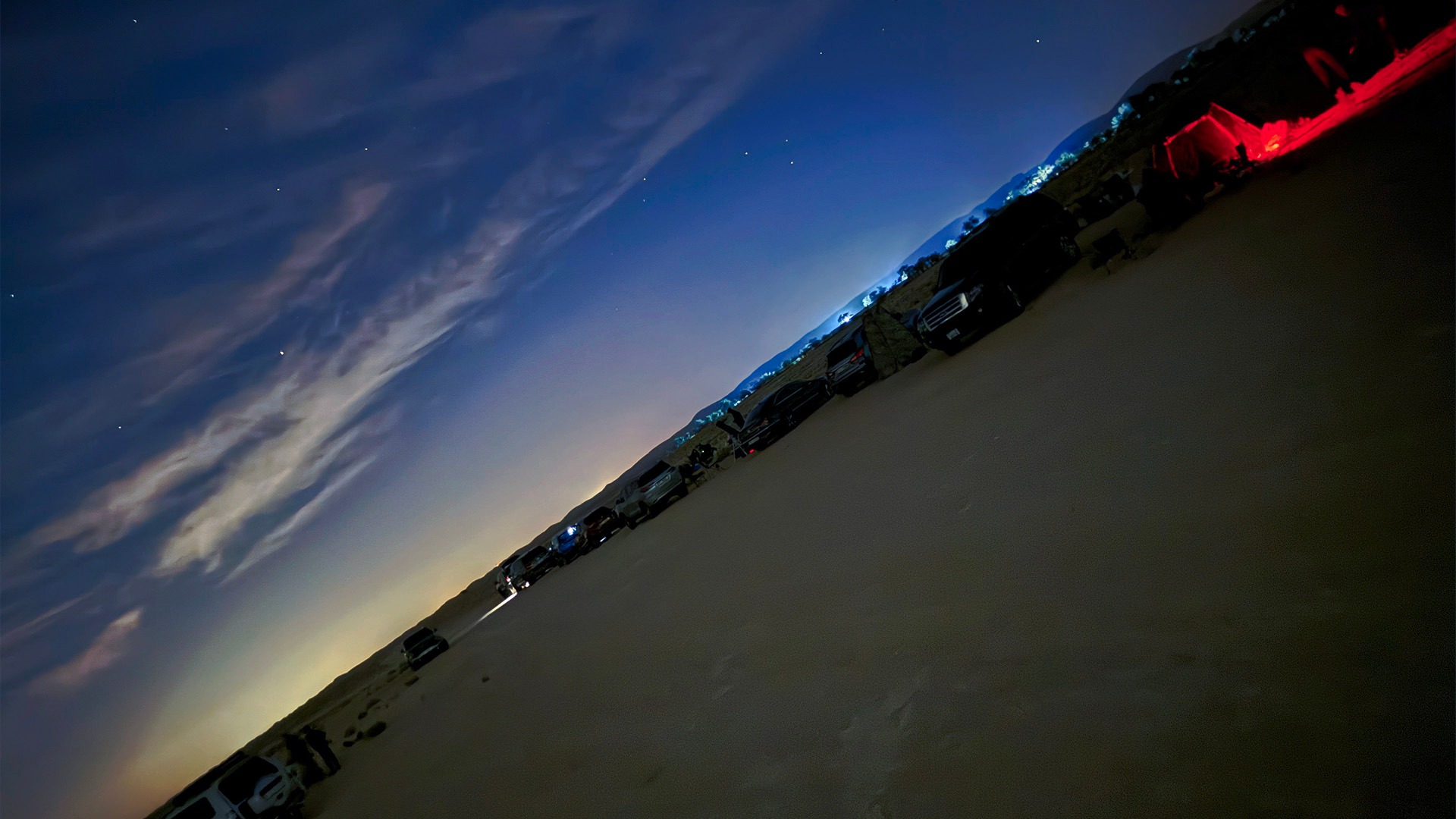
CAPTION: Night sky viewing IMAGE: Syed Awais Ahmed
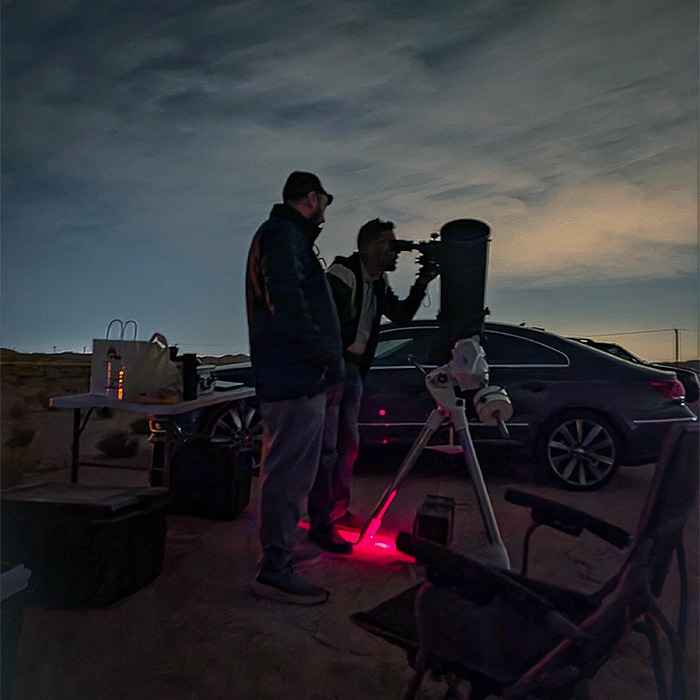
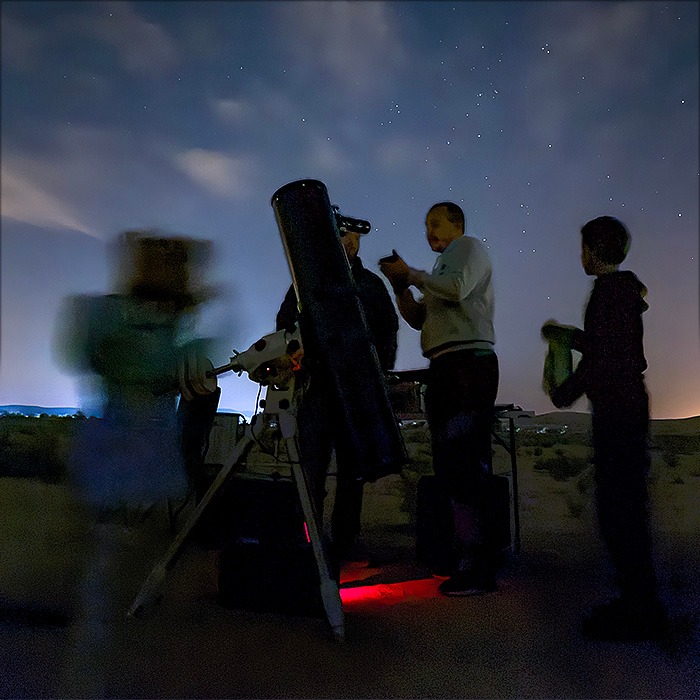
CAPTION: Night sky viewing IMAGE: Syed Faryab Shah

Most meteor showers originate with a comet, but the Geminids are produced by debris from 3200 Phaethon, an asteroid that behaves like a comet. It “brightens and grows a faint tail (when close to the sun), helping make this shower especially bright,” says National Geographic. The magazine describes it as “one of the best meteor showers of the year — and the weirdest.”

The Geminids are active each December. Peak viewing is around mid-month with 120 meteors visible each hour, weather permitting, of course.
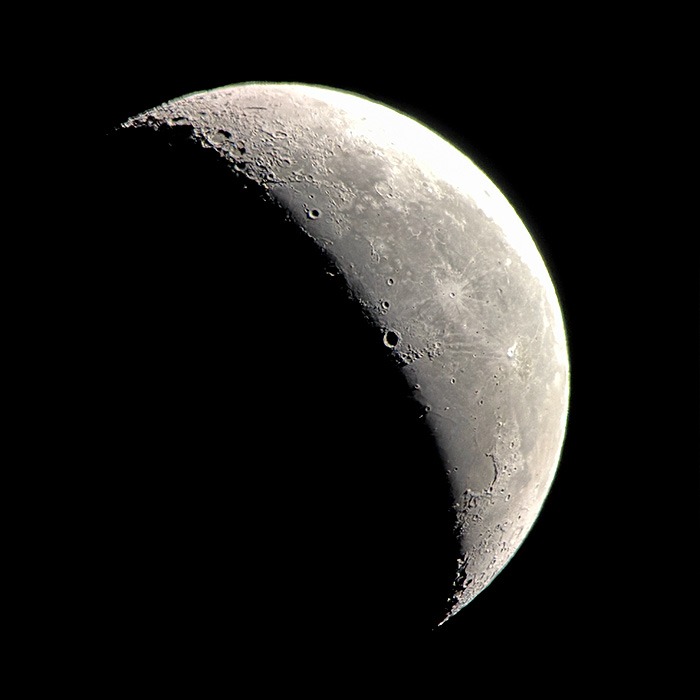
CAPTION: The moon as seen through the telescope that night, photo captured using a phone on the telescope eyepiece IMAGE: Anas Albounni

Prime visibility needs clear skies. Light pollution can also reduce visibility, so you need to be somewhere dark, ideally between midnight and dawn. New and thin crescent moons are best.

If the stars align, you’re in for a treat. Not only are the Geminids plentiful, they’re also colorful.

Syed Faryab Shah wasn’t overly keen on attending the event initially as it was his birthday.

He tagged along with friends for a road trip in a seven-seater, some pizza and good company. Much to his surprise, it was a birthday to remember.

“Going there was the best decision ever,” he says. “We talked, laughed and looked up at the beautiful sky. Anas even showed us Jupiter through his telescope. We took dozens of photos, made memories, and spent time talking under the stars in the chilly weather.”
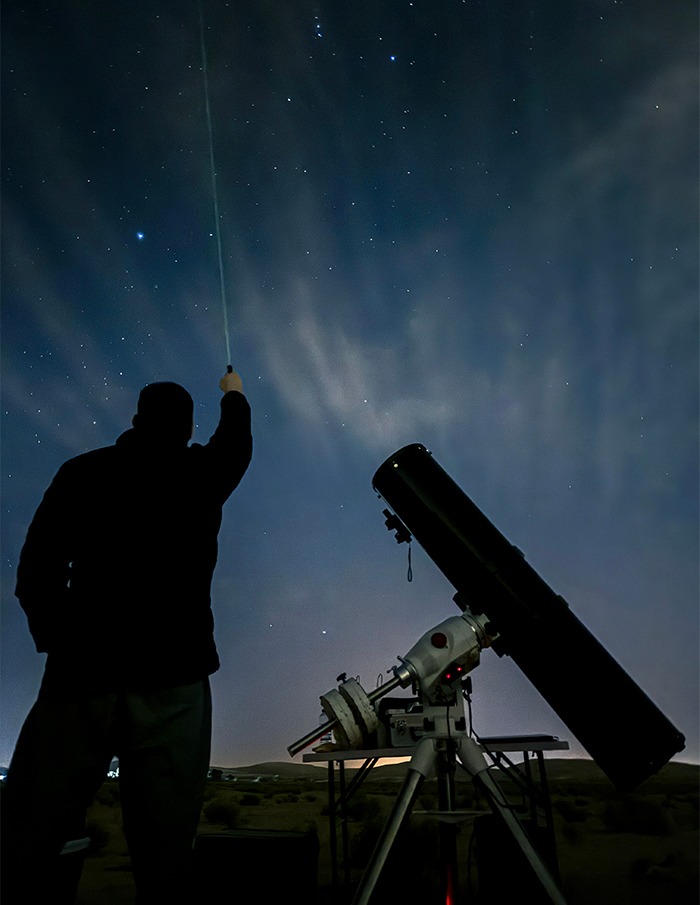
IMAGE: Syed Awais Ahmed
Five tips from Anas Albounni:

1. Cast away hesitation and just do it! Trust me, I’ve been there. Read more›››

2. I strongly recommend that everyone join such a trip at least once to experience it firsthand. It will tell you if this is for you or not. Plus, if you find interest in it, it’s better to have someone with experience to guide you during this first step with the right gear.

3. Bring your kids to introduce them to the topic. Astronomy is a fascinating subject that many have interest in but can’t imagine where or how to step into it.

4. Don’t hesitate to ask questions. The only stupid question is the question that is not asked. That’s how we all got into it.

5. Stay connected, keep an eye on celestial events and socialize with like-minded people.‹‹‹ Read less

Longtime enthusiast Albounni, stargazer by night, creative lead of the Khalifa University Science and Tech Review by day, was fascinated by the cosmos long before he began his artistic professional path. But it became a true passion after attending an event organized by the UAE Astronomy Group. He later became the main organizer of the group.

“I was truly hooked after that and started religiously absorbing everything I could get my hands on, through equipment, researching online, reading books and asking the experienced members for help and guidance,” he says.

Stargazing is often imagined as a solo pursuit, but Albounni says he believes it is something to be shared. He reserves desert ventures of solitude for astrophotography sessions.

“Astrophotography doesn’t go well with large and inexperienced groups; it requires a tremendous amount of focus, accuracy and patience. A tiny unintentional foot bump to the telescope can ruin hours of work. Personally, I love inviting others to join, but when I do, I keep my expectations reasonable. I don’t plan for serious astrophotography, especially when large numbers turn up, in many cases, with kids.”

Fellow astrophotographer and co-organizer, Syed Awais Ahmed, says it was a night of learning, “We had a full astrophotography setup to take deep sky images of various nebulas and galaxies.

The guests were shown the basics on how everything works, what equipment would be needed, how everything works.”

When he does these group events, Albounni says it’s exciting for him to see the reactions of those viewing celestial elements for the first time.

At a recent outing, the group viewed Jupiter and Saturn, which Albounni calls “the true lord of the rings.”
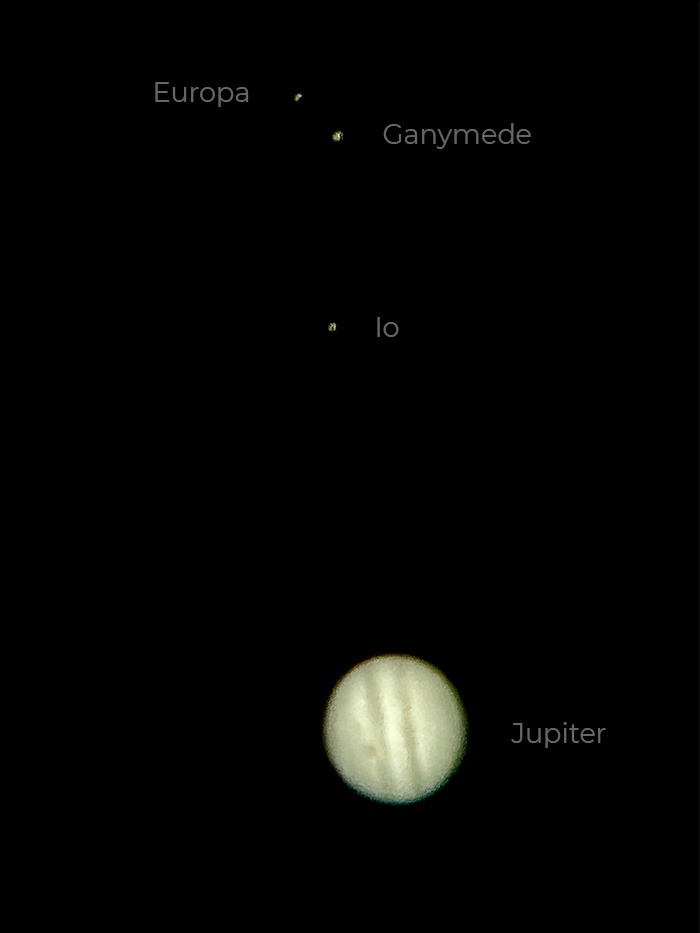
CAPTION: Jupiter and 3 of its moon as seen through the telescope that night IMAGE: Anas Albounni

He was delighted when one woman jumped up and down and squealed with delight that she could see its rings. “People’s reactions the first time looking through a telescope is priceless,” he says.

Zainab Ali Altal attended the Geminids event, a first for her. “I took my family out to the desert in Abu Dhabi to watch the meteor shower, and it turned into this beautiful mix of stargazing and science. Watching my niece and nephew get excited every time a meteor streaked across the sky was the best part.”

Albounni tells KUST Review the Geminids are now observable only every second year because of an 11- to 12-day difference between the lunar and solar calendars.

The forecast was unfavorable, but he opted to go ahead with the outing anyway. “I’m glad I did. The night was beautiful, even with clouds,” he says. “We counted over 70 meteors that night.

The cool thing about it is that it depends on where you are looking. You will see the meteors at one angle and others looking at another part of the sky will see different meteors.”

Interested in joining a future event? Check Meetup.com, UAE Astronomy Group, where the group posts upcoming outings.
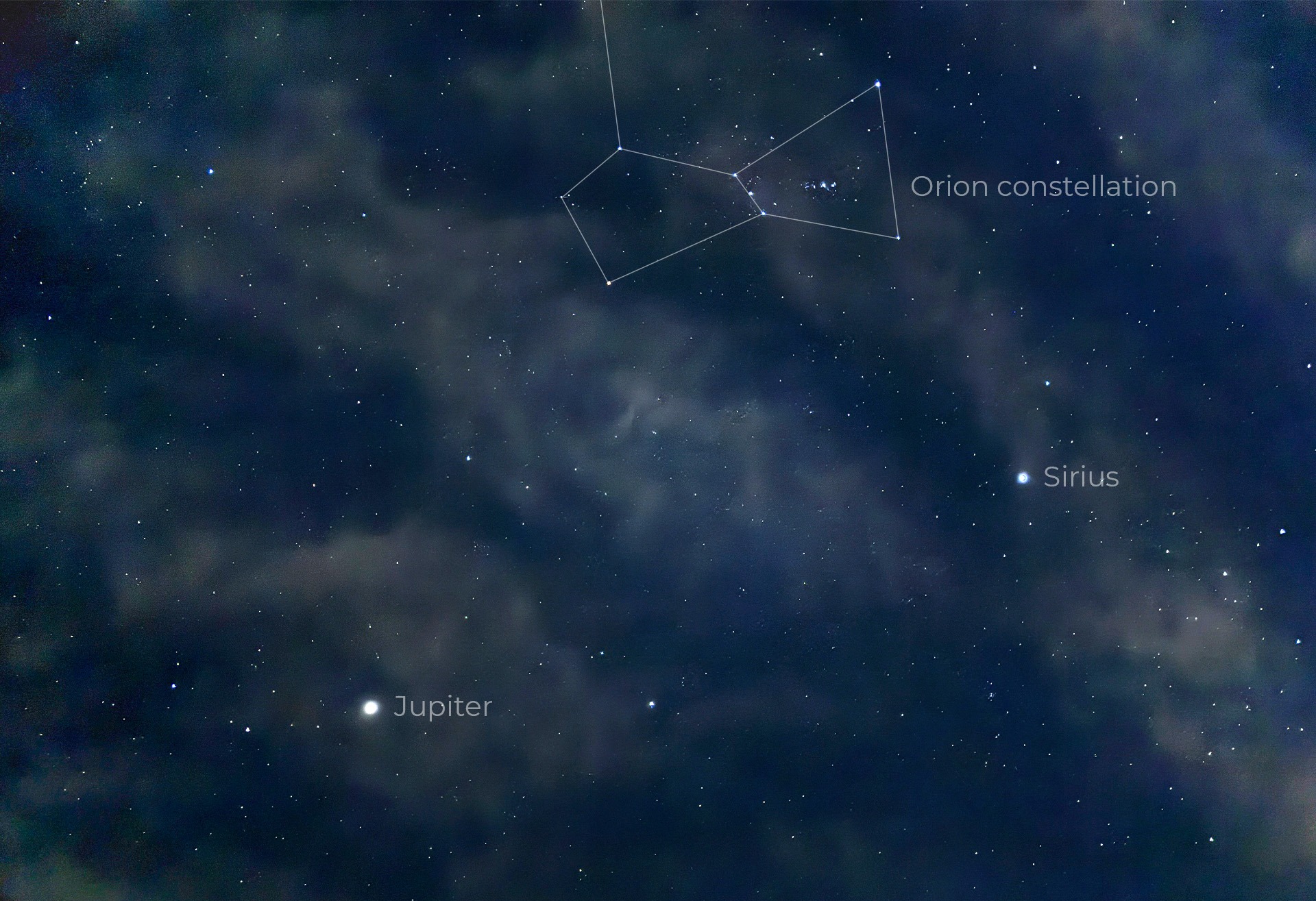
CAPTION: A phone shot of the sky showing Jupiter, Sirius (the brightest star in the sky) and the Orion constellation, to the right of Orion’s belt (the three stars in the middle) you can see a group of bright spots, that’s the Orion nebula. See close up below. IMAGE: Anas Albounni
&nbsp

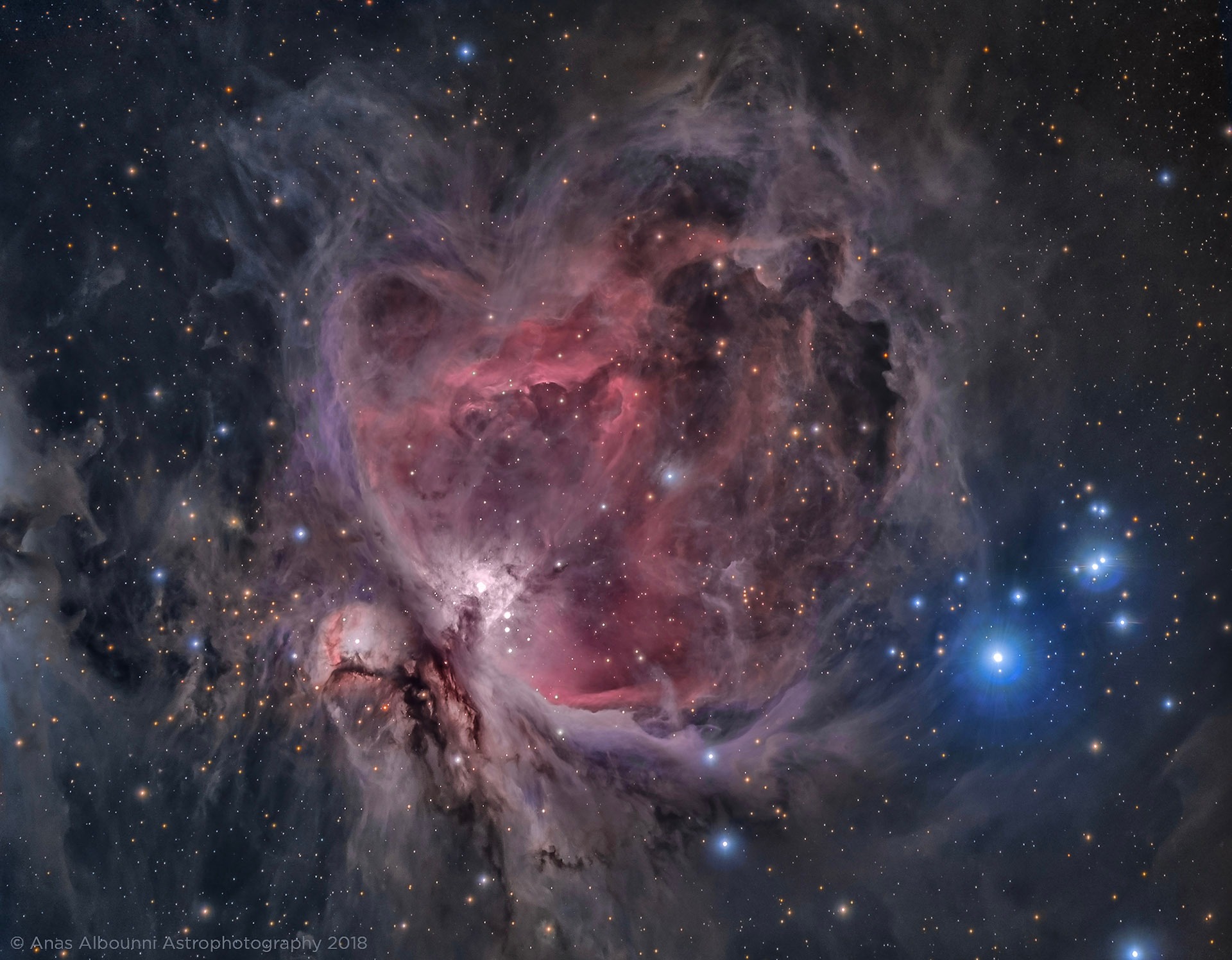
CAPTION: Orion nebula located 1.344 light years away from earth. This can be seen with the naked eye from a dark location. Photo taken over 4 nights in 2017. IMAGE: Anas Albounni

More like this: Lost in the light
Nostalgia and gratitude make friends

If you’re staying home on a Friday night to veg in front of the tube while your friends indulge in a fun evening out, you may want to reconsider. Recent research indicates creating memories might lead to feelings of gratitude, and social connectedness is the key.

A recent paper in Personality and Individual Differences revealed that feelings of gratitude, a buzz word in the mental-health arena of late, can be developed not just by writing about it in a gratitude journal, but by being nostalgic. And that nostalgia comes from looking back on fond memories with friends and family.

Several studies also indicate that those more inclined toward nostalgia showed increased gratitude. Nostalgia made the participants feel closer to others, and one study revealed that a participant listening to a nostalgic song was more thankful than those who simply listened to a happy song.

These sentimental memories aren’t just fluff, they’re your brain reminding you of connections or relationships that matter. These reminders can boost gratitude, overall well-being and ultimately help us develop feelings of connectedness and belonging at work and in communities.

So the next time you feel compelled to list what you’re thankful for in your gratitude journal, try a memory instead. Perhaps an old song or photo might just do the trick.

More like this: Feeling anxious? Social media might be to blame

THE FAST & AUTONOMOUS

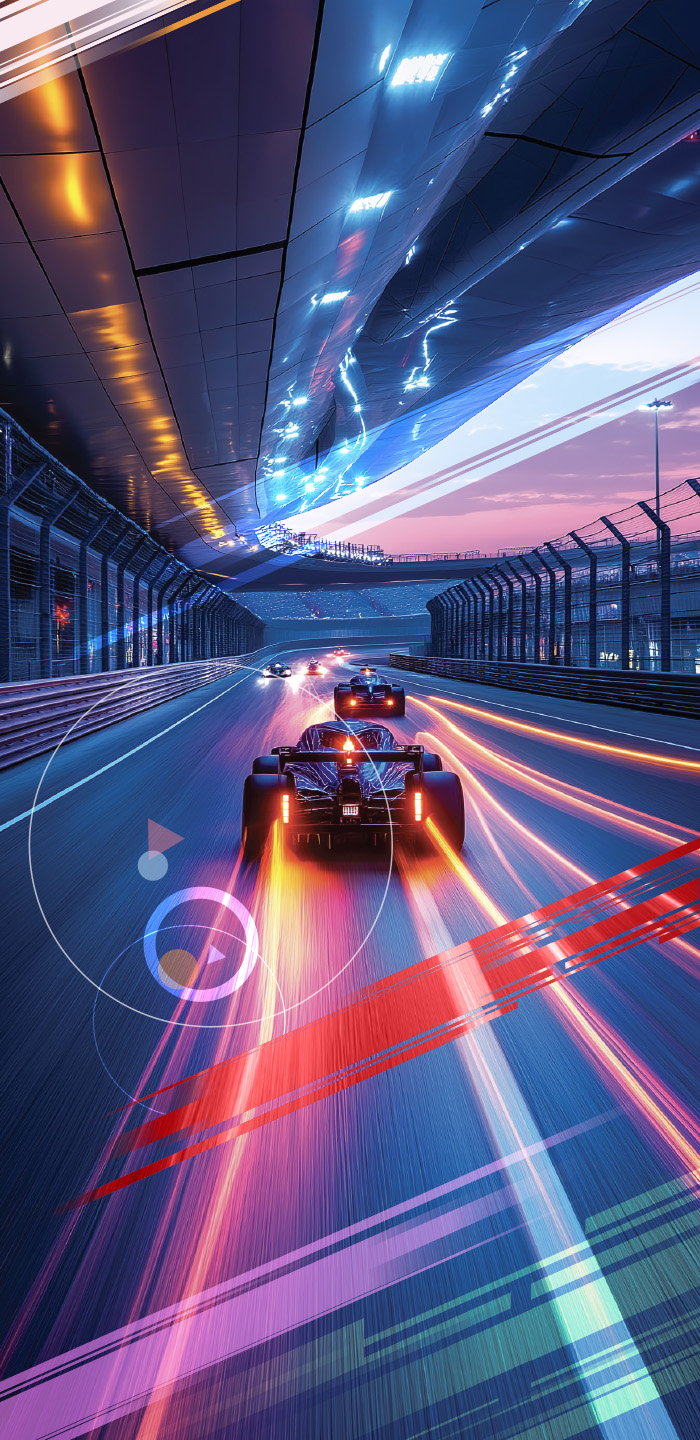
Peering through the gap in the catch fence, the members of the Fly Eagle team held their breath. A whine emerged from the distance, an engine noise that grew louder as anticipation built for the Dallara Super Formula car to round the corner and scream down the pit straight. In the blink of an eye, the car whipped past its spectators, crossed the timing beam and turned the corner at the end of the straight. The Fly Eagle team whooped; they’d set their best time yet.

Abu Dhabi’s Yas Marina Circuit is no stranger to racing cars. It hosts events throughout the year, including the season finale of the Formula One World Championship since 2009. But the track has never seen racing like this before. It’s not the speed or the car that makes it special: It’s the drivers.

The Fly Eagle car is driven entirely by artificial intelligence. There’s no driver in that car.

Yet, the drama, the speed, the precision, the passion — all remain.

The Abu Dhabi Autonomous Racing League (A2RL) is the first of its kind in the region, shaping the future of motorsport as we know it. Eight university teams were invited to take part in the “challenge,” going head-to-head for a prize fund of U.S.$2.25 million.

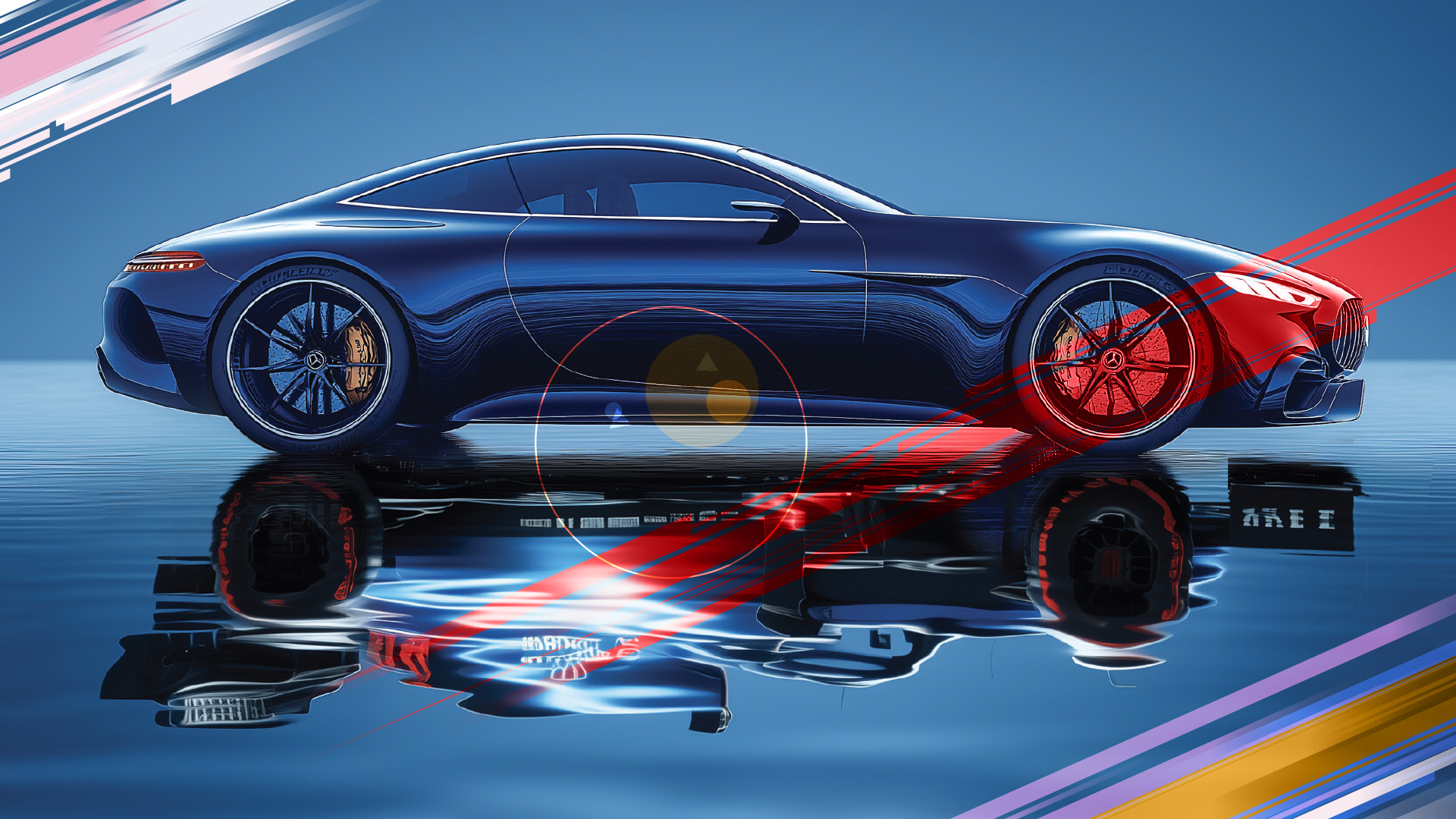
Image: Motorsport has long been a testing ground for innovations that later make their way into road cars.

Each team races using identical Super Formula SF23 cars, the fastest open-wheel race car after those used in Formula One, capable of reaching a maximum speed of 300 km/h. They’re also manufactured using sustainable bio-composite materials, an important factor we’ll get into later.

Each car is equipped with seven cameras, four radar sensors and three lidar units to navigate its way around the track, with the only difference between the teams lying in how they use their coding skills, algorithms and machine learning techniques to teach the cars to drive.

“Just because it’s a machine, doesn’t mean there aren’t human elements in it,” said Tom McCarthy. He’s executive director of ASPIRE, the “technology transition arm” of Abu Dhabi’s Technology Research Council. “Remember that it’s people doing the programming here.”

HOW DOES IT WORK?

The AI needs to be able to turn into corners at the right moment, know when to brake, accelerate, change gear and recognize its surroundings at all times. To get the most out of the car, it needs information on how hot the tires and the brakes are, what the wind is doing in each turn, how much grip the tires have left — all the information a human driver gets from sensors and intuits from experience.

You’d think that the fastest way around the track would be to train the AI on an “ideal lap” set by an actual racing driver, an expert, and then have the car follow that data to the letter. And indeed, there is training data for the algorithms, but every 50 milliseconds, the AI decides whether to listen to that training data or the live data it receives from its sensors. Sometimes, when it relies on its own inputs, the car shaves time off its previous best lap. Sometimes, it turns too soon and smacks into the wall.

Lakmal Seneviratne is director of the Khalifa University (KU) Center for Robotics and Autonomous Systems. With Majid Khonji, who leads the research activities in the KU Autonomous Vehicle Laboratory, the university entered the A2RL event with team Fly Eagle, a collaboration with Beijing Institute of Technology. They spoke to KUST Review in the team garage on qualifying day.

“The optimal trajectory is pre-computed,” Khonji explained. “The code is then based on the information you get about your location on the track, and you try to accurately follow that path.”

“In a simulator, your car would run perfectly using this method,” Seneviratne added. “And do 10,000km perfectly. But in real life, errors creep in. If not corrected, these errors build up and the car goes wrong.”

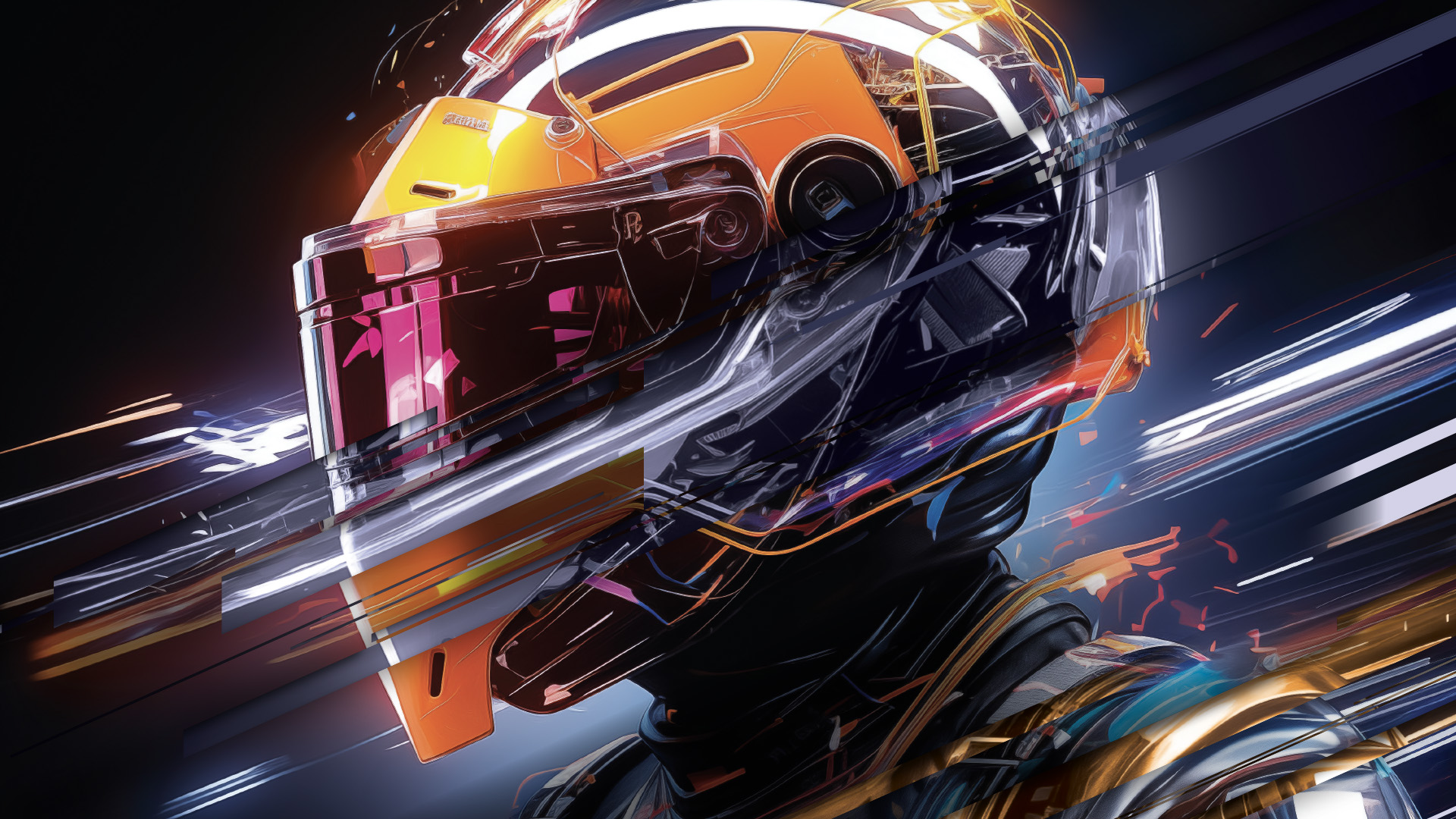
CAPTION: AI generated, KUST Review IMAGE: Anas Albounni, KUST Review

When asked if the team was correcting these errors or the AI was handling it, both Khonji and Seneviratne were quick to jump in: “The system is doing it. We set it up, but the system is doing all the learning, all the work.”

There’s plenty of run-off area at Yas Marina Circuit, but the barriers around the track are unforgiving, and there were many times during the practice runs that cars ran afoul of the track limits. Sustainable manufacturing came in handy as front wings were replaced regularly. And thankfully, the organizers had plenty of spare wings.

“We had some good runs but some technical hiccups, of course,” Seneviratne said on qualifying day. Race events are rarely without hiccups for any race team, no matter the category, but for Fly Eagle, the biggest issue was signal around the racetrack. Their car was finding it difficult to communicate with the GPS system localizing it around the circuit.

“We get a very high-quality 3D map of the track and then the car has lidar sensors which it uses to localize itself on this map,” Seneviratne explained. “The teams that are doing well here are using that technique successfully, and that’s what we’ll do next time too.”

“To give an analogy, imagine it’s a Formula One race and you’ve blindfolded the driver,” Khonji added. “That’s what our car is experiencing without the GPS.”

Elite racing drivers practice each track before they arrive by putting in lap after lap on a simulator. It’s common to hear them say they could drive a circuit with their eyes closed. Seneviratne laughed when KUST Review put this to him:

“In a straight line, sure, you could probably do it with your eyes closed, but corners, no way.”

This statement could not have been timed better: This is the point where attention was drawn from the garage back to the racetrack as the Kinetiz team car turned for Turn 12 too early and struck the barrier. Unfortunately for Kinetiz, Turn 12 is directly visible from the support pitlane where the teams were hosted for the event. The car was recovered, and a new front wing quickly supplied.

WHAT’S THE POINT?

Motorsport is often referred to as the “cradle of innovation”: Many innovations that found their way onto our roads originated in different motorsport categories. Disc brakes won the 1953 24 Hours of Le Mans Grand Prix for Team Jaguar and two years later debuted on Citroen road cars.

Carbon fiber was first used in Formula One in the 1980s to reduce weight and can now be found on high-performance road cars. Push-to-start reduced the start-up times for racing drivers in the pit lane — hardly a modern car lacks it now. Anti-locking brake systems originated on the Ferguson P99 racecar in 1961, the kinetic energy recovery system first tested in Formula One in 2008 led the way for hybrid vehicles and all suspension systems in cars today trace their roots to NASCAR or Formula One.

Even rear-view mirrors were first found in motorsport. At the first Indianapolis 500, driver Ray Harroun attached a mirror to his car so he could keep track of the cars behind him. By 1914, this was standard practice for all production cars.

ASPIRE says by stress-testing autonomous technology on the racetrack, it’s easier to identify key challenges and areas of improvement and rapidly address them:

“We believe there is potential in autonomous robotics and AI to combine these with the average driver to bring about greater safety on our roads,” said ASPIRE’s McCarthy. “We thought the best way to do it is to demonstrate its capability in the most extreme conditions you can, in the fastest, most well-designed race car in the world.”

Stress-test may be the operative word for the event. A race car lapping the circuit at speed with no driver but a computer was seriously impressive, but a full lap with no incidents was a rarity.

During qualifying runs, many of the teams struggled to set a lap. The cars seemed to randomly swerve, spin or turn into the barriers. Sometimes, they even pulled off to the run-off area and simply stopped.

Seneviratne explained the random stopping was the AI making a prudent safety choice: When it wasn’t sure what to do, rather than risk anything, it just came to a halt.

Fly Eagle, however, was not one of the teams that made it into the final.

“We’re on a learning curve but we’re really happy with what we’ve done,” Seneviratne told KUST Review. “For us, it was more about establishing a platform to go onto the next stage. This was the first time we’ve competed in any racing event. High speed is new for us.”

LIGHTS OUT

Four teams lined up for the final, hosted in front of a capacity crowd. Even this didn’t go to plan: The leading car spun, the second car passed by without incident, but then the race officials displayed a yellow flag to the competitors. Racing rules dictate no passing under a yellow flag, but this means no passing moving vehicles: i.e. no overtaking.

Humans get this. Computers did not. The algorithms knew they weren’t allowed to pass, so they didn’t. They stopped on track.

The safety feature is perfect for incidents on a real-life road, but it’s not so impressive for a racing event if all the cars grind to a halt.

After a restart, the eight-lap race was completed. For reference, Formula One drivers do a lap in about 90 seconds. They’d complete eight laps in 12 minutes or so. The A2RL cars took 16 minutes.

They weren’t far off once they got going but these lap times were slower than teams had achieved earlier in the week during their practice sessions. Once they’d reached the final, there may have been a subconscious unanimous decision to exercise a little more caution.

All race teams watch nervously as their cars compete – few must be as nervous as those watching a computer.


In the end, the inaugural event was won by the team from Technical University of Munich as its car correctly turned the hairpin on the last lap, while the lead car misjudged its entry. It was a clean move and was just as dramatic for a driverless car as it would have been for human drivers.

The gap between human and robot persists for now, but if these events keep happening, and teams keep pushing the boundaries of what AI can do, things may change very quickly.

A2RL plans to be back in 2025.

More like this: Aquabots

Stretch out that sodium niobate,
but not too much

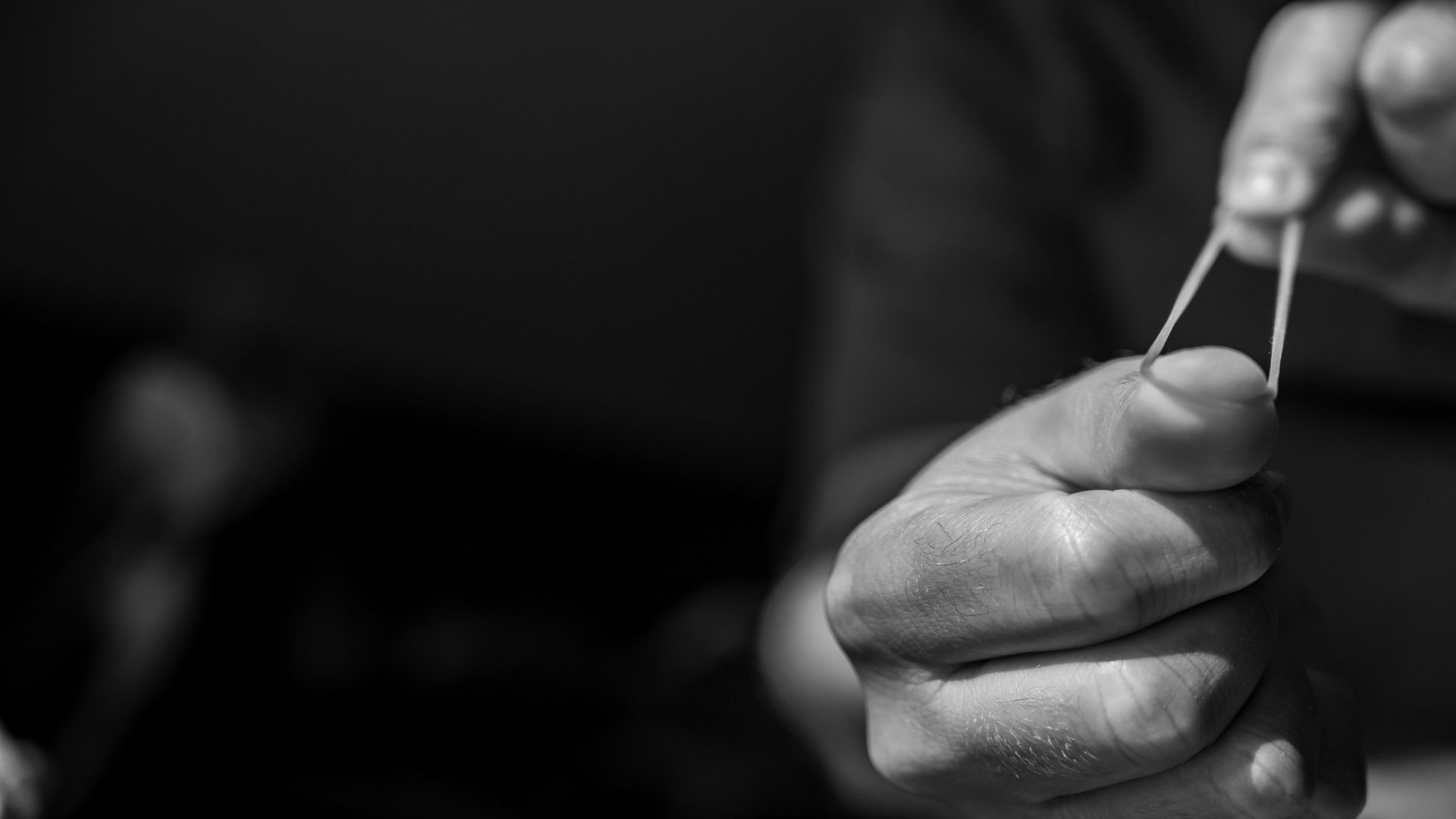
Grab a rubber band and stretch it just far enough to wrap it around a deck of cards — now you understand the trick behind the newest breakthrough in materials science: a simple concept with a serious impact on reduction in lead-based materials.

A group of U.S researchers recently published a study in Nature Communications showing that by putting the right amount of strain on an ultrathin film of sodium niobate (a harmless, lead-free material), they could cajole it into exhibiting some impressive electrical capabilities, the likes of which are usually only typical of high-performance, lead-based materials.

By controlling the stretch, they created small sections where two crystal structures can exist side-by-side.

The electric dispersion can easily twist, rotate and switch between multiple states, giving the material exceptional tunability and fast, reliable switching without adding complex chemical ingredients or harmful lead.

This makes it perfect for future memory chips, sensors and wireless tech.

Using powerful tools like synchrotron X-rays and advanced electron imaging, the researchers observed the crystal phases come to life and confirmed the unusual behavior.
The results indicate a promising path toward greener, safer high-performance electronics that don’t compromise on power.

More like this: Wear a coat

Tiny miners clean up our soil

A Chinese research team recently proposed the novel idea that the ground beneath our feet could clean itself.

A process called microbial iron mining utilizes microbes that can “breathe” iron. As they do, they switch iron back and forth between its rusty and shiny forms — like a little chemical frolic that captures and modifies pollutants.

The tiny miners can tackle toxic metals like arsenic and lead, chemicals like pesticides and microplastics and excess antibiotics and nutrients that typically pollute waterways.

Most notable is that the soil cleaning is natural. Rather than having to dig up and haul away contaminated soil, scientists can provoke these microbes to do the work while saving energy, protecting ecosystems and recovering valuable resources like rare earth elements.

It’s still early days and the research is still lab based, but it shows promise. The next steps are deciphering how this will work in real-world soil while managing side effects like greenhouse-gas releases.

The research demonstrates how powerful nature can be under the right conditions and was published in Environmental and Biogeochemical Processes.

More like this: Drones help farmers go greener