
Holes in parachutes? Yes

If you’ve ever folded a sheet of paper and placed small cuts throughout to create a snowflake design, you’ve participated in the Japanese artform of kirigami.

A team of researchers from Polytechnique Montréal and École Polytechnique has applied the kirigami technique using a laser cutter to create parachutes that demonstrate stable, predictable descents in real-world tests.

The results are a reduction in materials, more accurate landing and less complex designs, compared with traditional parachutes.

The chutes are made of thin, laser-cut polymer discs programmed to reconfigure themselves during descent. Upon release, kirigami patterns prompt the material to deform into shapes that slow their descent and reduce sideways drifts.

Unlike typical parachutes that must be released at a specifically angled trajectory, the new model descends vertically, regardless of the release angle.

The design’s practicality was proven during a full-scale test dropping a water bottle from a 60-meter drone flight.

Manufacturing of this technology can be achieved at scale utilizing die-cutters or laser processes and can offer ample cost and deployment advantages in situations where humanitarian airdrops or drone-based logistics are required. It could also potentially have aerospace applications.

Results are published in Nature and suggest geometric-cut patterns, not just material or size, play a significant role in parachute stability and performance.

More like this: Quantum sensors push precision measurements to new heights
Hope for people with kidney
cancer

Cancer treatments, for most who can have them, are typically limited to chemotherapy, radiation and/or surgery. But not all patients are candidates for all therapeutic options.

Some patients are elderly or have health conditions like heart issues, limited lung function or a complicated history of blood clotting. And while non-surgical options are sometimes effective in these cases, there are some cancers that are resistant to the other traditional treatments.

Renal cell carcinoma is typically treated with surgery and is well known to be resistant to chemo and radiation. But for those patients who are not ideal surgical candidates, some good news is on the horizon — a new study is aiming to improve patient outcomes by applying the treatments differently.

Radiation therapy is typically delivered from outside the body, so the study will adapt the treatment and target kidney cancer tumors from inside the body via microscopic beads called TheraSphere Glass Microspheres. These glass spheres produced by Boston Scientific contain a specific type of radiation called radioactive yttrium (Y-90).

The doctors running the study expect the beads to distribute 10 times the volume of radiation as external radiation.

The hope is that the volume of radiation and direct targeting of the tumor will destroy the cancer cells while protecting the surrounding organs.

The Phase 2 trial is being funded by Boston Scientific and being carried out by Researchers at London Health Sciences Centre Research Institute.

More like this: Cancer can run but, it can no longer hide

Will weight-loss drugs work for
you?

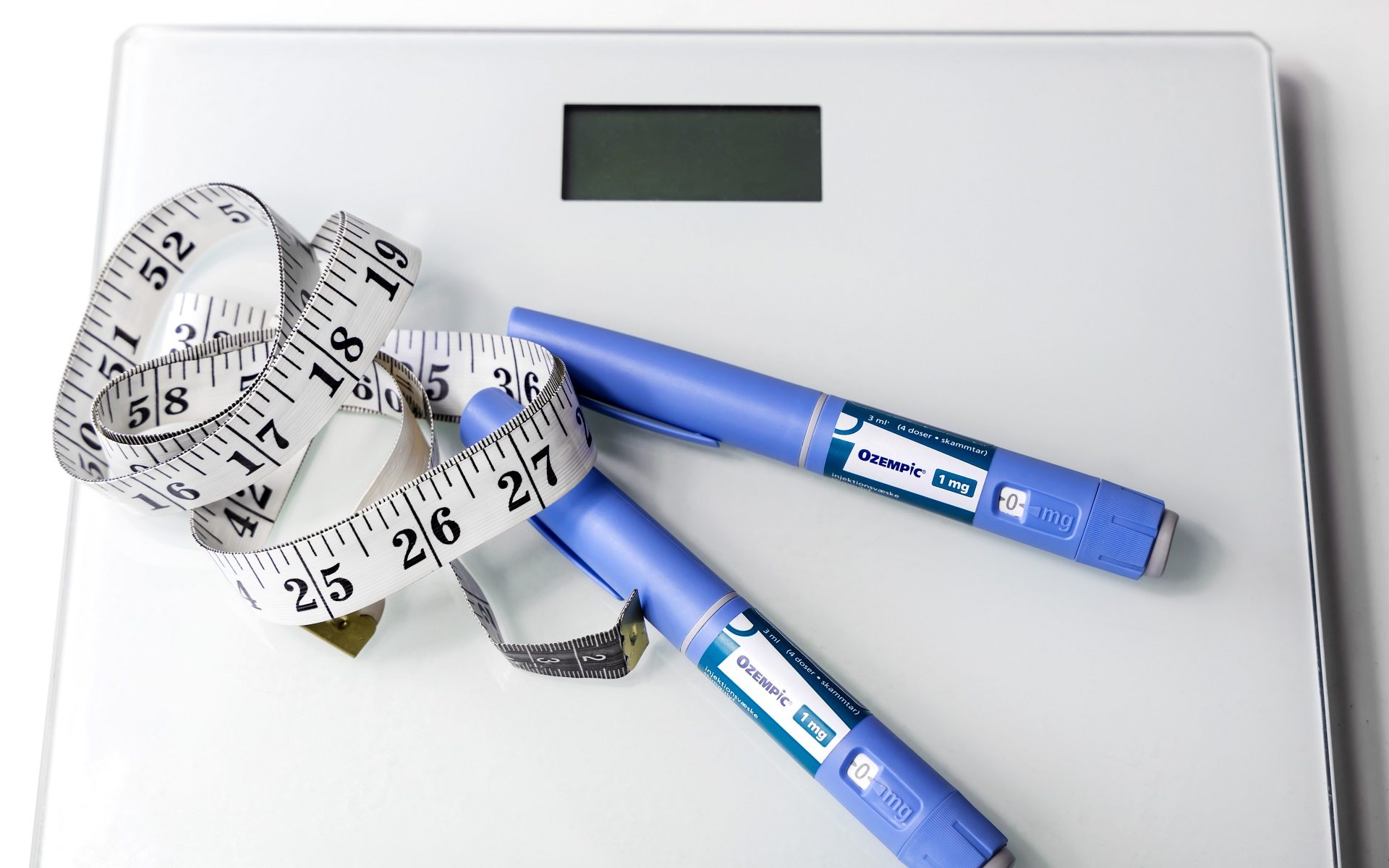
You have likely heard of the weight-loss drugs that have stormed the market in the past year. And maybe you’ve even considered taking one but wondered if it would really work. Well, wonder no more — there’s a new genetic test that will answer that question.

Researchers at the Mayo Clinic have developed a genetic test that can determine if weight-loss drugs are a solution for you or if they would be a waste of your money and time.

About 650 million adults struggle with obesity worldwide. For many, these drugs are the answer to lifelong struggles and obesity-related health issues. The GLP-1 drugs, for example, work by targeting satiety – the biological process that tells us when we are full.

The team, knowing obesity is a complicated ailment made up of much more than genetic factors, was able to measure calories to satiation (which differs among individuals). This, the team says, is “an actionable trait that can be potentially modified by several weight-loss interventions, and, as a result, is a key factor that could enhance weight-loss response through a precision medicine approach.”

“Genetic predisposition plays a critical role in regulating appetite and modulating responses to obesity treatments,” the Mayo researchers say. “Genetic risk scores and polygenic risk scores provide insights into an individual’s inherited susceptibility to complex conditions such as obesity.”

The research was based on two medications, hentermine-topiramate (marketed as Qsymia), and a newer GLP-1 drug, liraglutide (Saxenda).

“Patients deserve treatments that reflect their biology, not just their body size,” says Andres Acosta, a senior author on the study and gastroenterologist at the Mayo Clinic. “This test helps us deliver the right medication to the right person from the start,” he tells the Mayo Clinic News Network.

Test results are expected soon on such semaglutide medications as Ozempic and Wegovy. Further tests will investigate the likelihood of side effects and gut-microbiome and metabolome data.

More like this: Obesity expert has the skinny on semaglutide

A door-opening chemo twist

A new study from the UV Center for Cancer is helping people requiring stem cell transplants safely receive stem cells from mismatched and unrelated donors. For patients with diverse backgrounds often struggling to find an ideal match, it’s great news.

The drug strategy is called post-transplant cyclophosphamide (PTCy)

Doctors used stem cells from blood (instead of bone marrow) and gave patients a powerful follow-up treatment with PTCy plus two other meds — tacrolimus and mycophenolate mofetil.

This resulted in solid survival rates a year later — about 84 percent for patients who had intense chemo, and 79 percent for those with gentler prep.

Most notably, serious cases of graft-versus-host disease — a nasty side effect where the new cells attack the patient’s body — stayed low.

Over 50 percent of patients in the study were from underrepresented racial or ethnic groups, proving this approach helps close the gap in transplant access.

The main takeaway is that a perfect match isn’t required anymore to have a strong shot at survival.

More like this: Cancer can run, but it can no longer hide

The human phenotype project

A new study tracking over 28,000 participants published in Nature Medicine embarking on a Human Phenotype Project (HPP) aims to identify health problems before they show up in the body.

The HPP takes a deep dive in the genes, metabolism, gut microbiome and daily lifestyle habits and hopes to change how we think about health.

Over 13,000 volunteers have already completed their initial check-up, and wearable gadgets like sleep trackers and glucose monitors are producing volumes of data. The goal is to understand how individuals migrate from healthy to ill and how to stop it from happening.

Initial results indicate significant difference in health markers depending on factors like age and ethnicity, implying that the typical “normal ranges” doctors use might be too one-size-fits-all.

Early results show the AI-powered models are better than the usual tools at predicting those who might be at risk for things like diabetes and have picked up on gut bacteria linked to breast cancer and inflammatory bowel disease.

The end game is that every human could have a digital twin to simulate health progression and test how medical treatments and lifestyle changes could affect us beforehand.

This is a 25-year plan, and with international growth on the horizon, the Human Phenotype Project could change the way medicine is practiced forever.

More like this: The AI will see you now