Before dawn, lights shine across the United Arab Emirates, forming a glowing map of the country visible to travelers looking down from an airplane window. Far in the west of the United Arab Emirates stands the Barakah Nuclear Energy Plant, which helps make that map possible.
This significant milestone reflects how far the United Arab Emirates has advanced in science, technology and engineering in five prosperous decades.
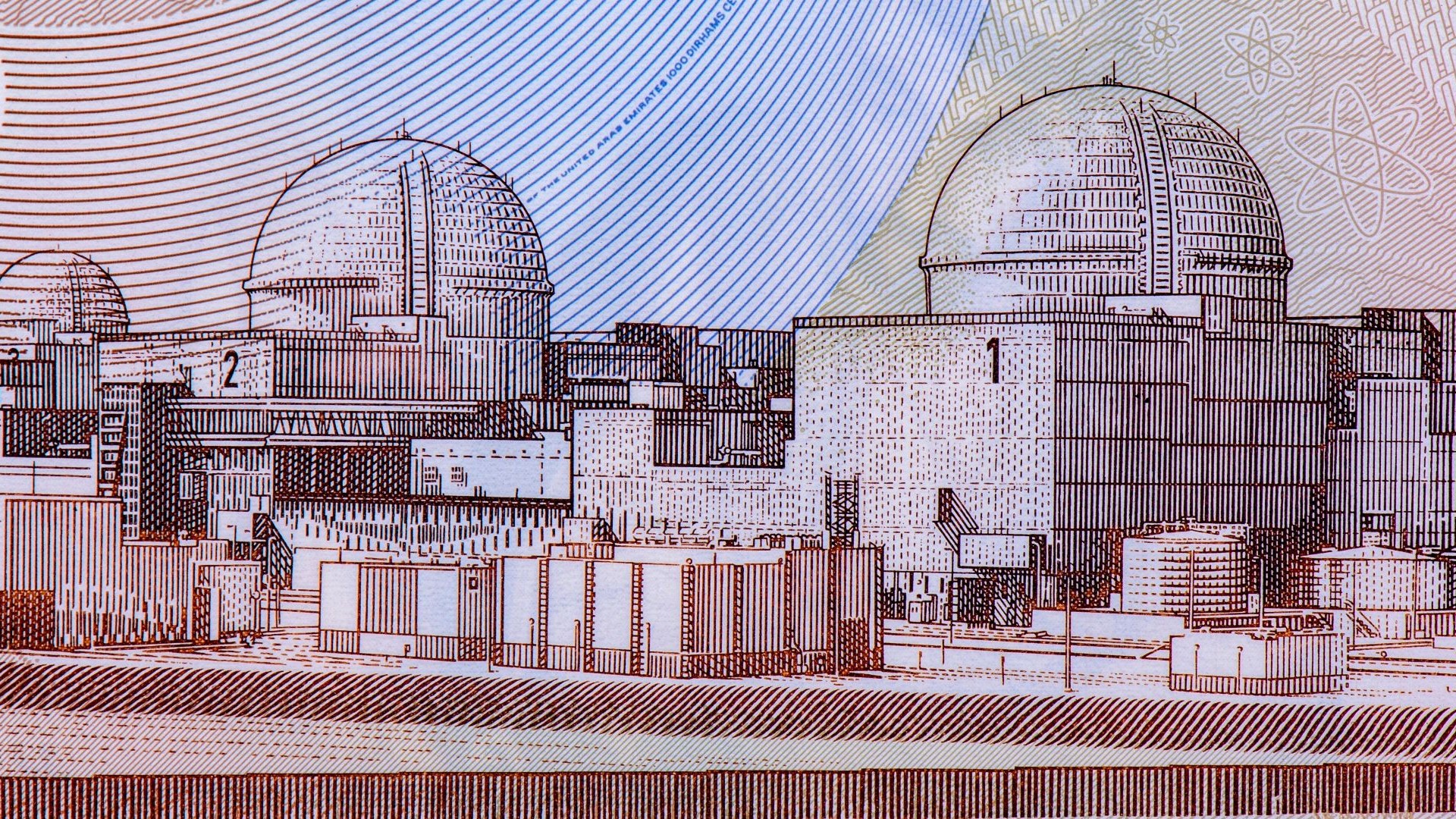
Located in the Al Dhafra Region, the Barakah plant is the country’s first commercial nuclear energy facility.
The nuclear plant consists of four APR1400 reactors that supply around a quarter of the country’s energy supply while simultaneously reducing carbon emissions by a rate of 22.4 million tons per year.
More than just a power plant, the Barakah plant represents a turning point in the UAEs’ energy history and demonstrates the nation’s growing strength in innovation, long-term planning and advanced engineering.
A NEW CHAPTER IN UAE ENERGY
The UAE is a cosmopolitan country, which makes the country’s energy demands higher; in addition, the high population induces major carbon emissions.
The country needed to innovate beyond traditional energy-generation systems.
It all started with the need to diversify energy sources beyond oil and gas. In 2008 the UAE published its own national nuclear energy policy.
 IMAGE: Shutterstock
In line with the country’s shift toward nuclear energy, the Emirates Nuclear Energy Company (ENEC) was established in 2009. An international partnership with Korea Electric Power Corporation (KEPCO) was formed to build the plant.
The UAE chose nuclear energy as part of its long-term energy strategy because it offered a combination of reliability, scale and sustainability.
Nuclear energy could provide continuous clean electricity, reduce dependence on traditional energy sources and support the country’s goals of technological progress and climate responsibility.
BUILDING BARAKAH IN THE DESERT
The site selection for the Barakah plant was based on a rigorous evaluation by experts in accordance with the critical standards of the International Atomic Energy Agency. The remote location is far from major population centers, making it significantly safer.
The remote site has enough space for all four reactors and is effectively integrated into the UAE’s 400 kV national electricity grid.
KEPCO, ENEC’s partner in the project, helped design, build and operate all four reactors, with construction beginning in 2012.
Behind Barakah’s massive structures, however, was an equally important human story.
The project depended on engineers, technicians, operators and health, safety and environment specialists whose work requires precision, training and responsibility.
This made Barakah more than a source of electricity. It also became a milestone in developing the knowledge and expertise needed for the UAE to take part in one of the world’s most advanced energy industries.
The Barakah plant created a new generation of skilled engineers and technicians with over 2,000 Emiratis contributing to its development from the beginning.
THE MOMENT EVERYTHING CHANGED
At its peak, the Barakah plant was the world’s largest nuclear-construction site, with all four units being built simultaneously.
Enter left block..
Enter right block..
The first unit in the project was connected to the grid in August 2020, making the UAE the first country to begin operations of a nuclear reactor in the Arab world at that time.
This milestone came after a series of operational delays stemming from construction issues, environmental factors and a lack of certified operators.
An important reason this remote location was selected was its proximity to the sea. Nuclear power plants depend on water for cooling to operate efficiently.
From the time the first unit started operating, the UAE fulfilled a national vision and entered a new era of energy mix.
The Barakah plant became a symbol of engineering achievement. This shows how the UAE is leading major advanced engineering and energy projects.
BARAKAH’S LEGACY TODAY
The Barakah Nuclear Energy Plant strengthened the UAE’s position as a regional leader in advanced energy and supported the nation’s long-term development.
Barakah is not only an energy plant. It represents a change in how the UAE imagines its future through science, technology and engineering.
The country strives toward constant development, advancement and innovation in a plethora of sectors, including energy, technology and engineering.
In the desert, Barakah stands as more than a structure of steel and concrete. It stands as proof that the UAE’s future is being powered, reimagined and innovated not only by vision.
The UAE gets its vision from leaders who encourage innovation and advancement in the nation; their support gives the individuals behind the idea the hope that what they dreamed of will eventually come true with determination.
BEYOND ELECTRICITY
ENEC says the UAE’s peaceful nuclear energy program has helped create a skilled workforce: ENEC employs more than 3,000 people, with over 60 percent of those UAE nationals, according to ENEC’s program overview.
BARAKAH TIMELINE:
- 2009: ENEC and KEPCO partner to build Barakah.
- 2011: The project officially begins.
- 2012: Construction of Unit 1 starts.
- 2018: Unit 1 completed.
- 2024: Unit 4 begins commercial operation, completing Barakah.
More like this: Building the oil industry and the UAE’s future