High seas

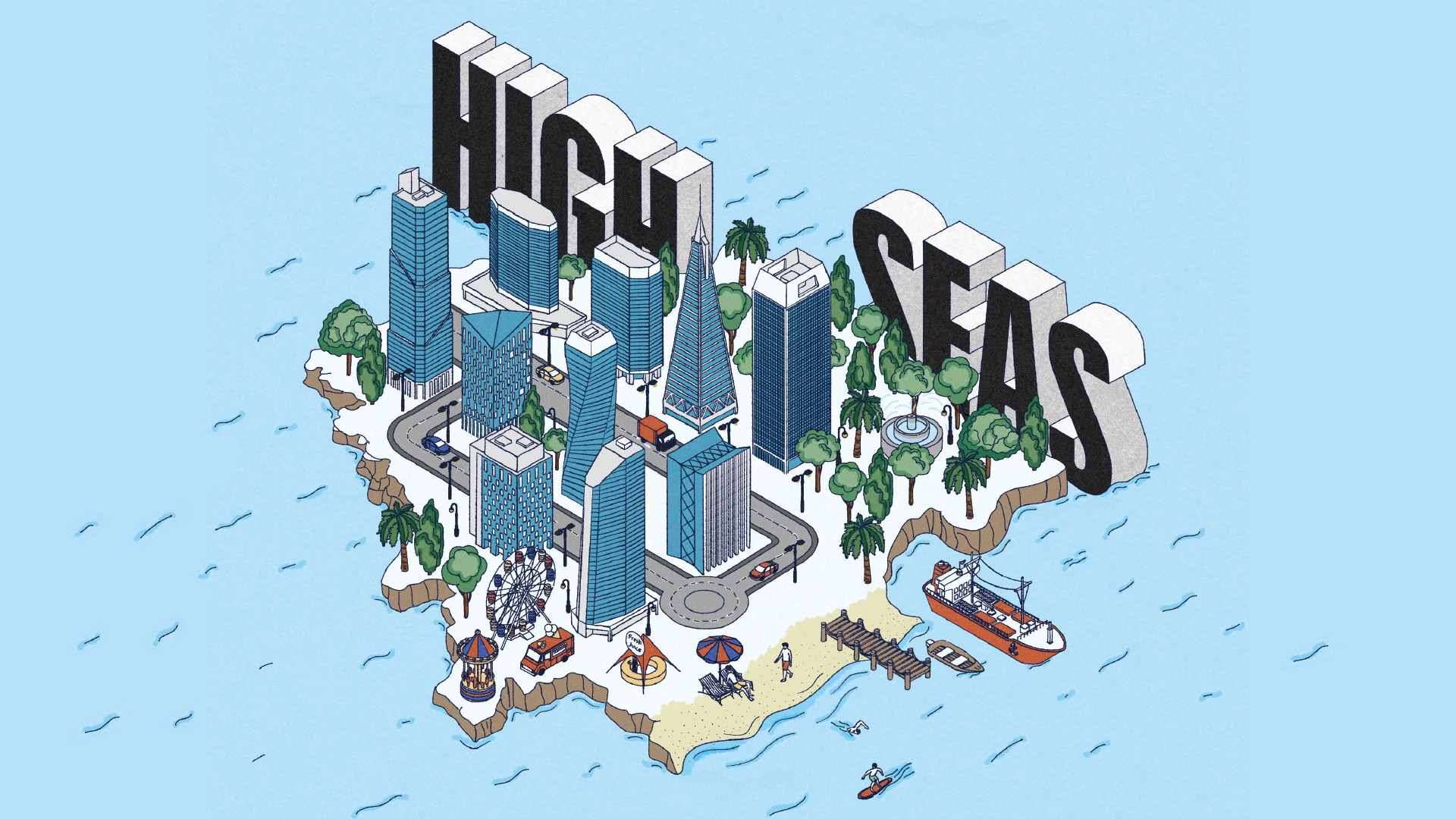
The UAE is renowned for its ambitious engineering projects, including five sets of human-made islands. These islands, however, may become vulnerable to rising sea levels caused by climate change. That’s why the UAE is working now to fortify these land masses and more.

Research in the UAE uses remote-sensing data, sea-level projections and coastal hydrodynamic models to assess the impact of rising seas along the country’s coastlines. This research has identified the country’s low-lying and shallow-sloping geography as particularly vulnerable.

“These models allow us to simulate the impacts of rising sea levels under various scenarios,” says Dr. Maryam Rashid AlShehhi, who researches reefs and reef restoration at Khalifa University.

LISTEN TO THIS STORY HERE

Research teams have identified two critical risk areas: displacement and economic instability due to flooding and erosion; and ecosystems and communities in low-lying areas, encompassing natural habitats and developed regions in low-elevation coastal zones.

“These areas face high risks of habitat loss, increased flood frequency and ecological degradation. For example, coral reefs, which rely on stable water conditions, face stress from both rising sea levels and potential increases in turbidity and sedimentation due to coastal erosion. Saltwater intrusion is another concern, as it can compromise freshwater supplies and agricultural productivity in coastal areas, leading to broader socio-economic effects,” AlShehhi tells KUST Review.

Illustration: Abjad Design
Why climate change causes rising seas

As the oceans warm due to an increasing global temperature, seawater expands — taking up more space in the ocean basin and causing a rise in water level. The second mechanism is the melting of ice over land (in polar regions and mountains), which then adds water to the ocean. — U.S. National Oceanic and Atmospheric Administration

To combat this, breakwaters have been constructed along the coasts of Ras al Khaimah and Fujairah, and Abu Dhabi is mandating seawalls for upcoming waterfront developments.

But sustainable methods will also be used.

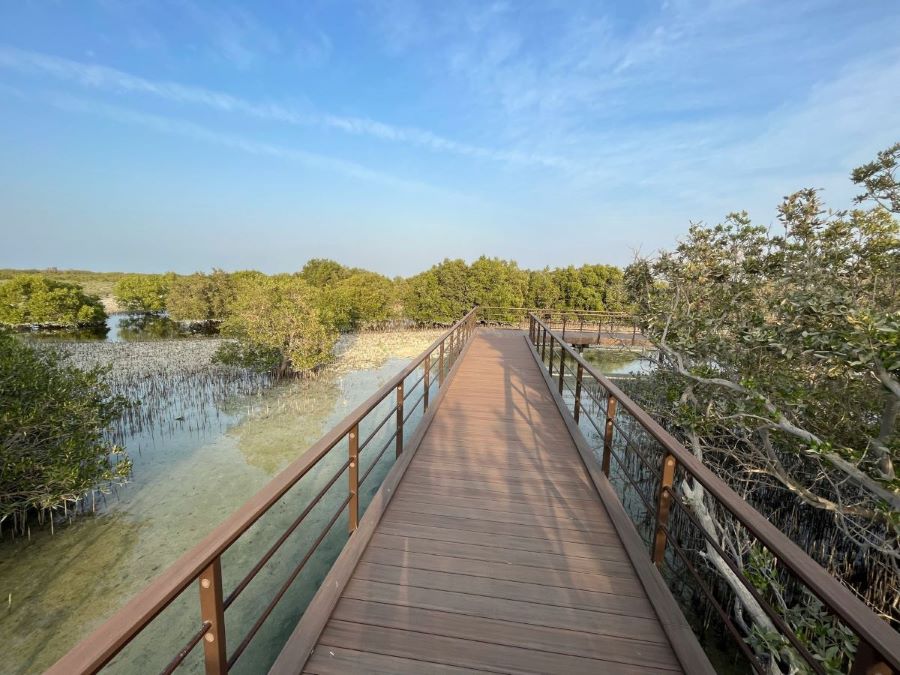
One method involves mangroves, which not only act as a carbon sink, but also protect the coastline.

Their dense biomass and intricate root systems can withstand powerful waves, including those from hurricanes, and thrive in oxygen-poor coastal soils. Mangroves excel at trapping sediment from rivers and oceans, which is both a strength and a vulnerability. While sediment accumulation around their roots helps build land, a disruption in sediment supply leaves the plants vulnerable.

In 2023, Arabian Gulf Business Insight reported that the Environment Agency — Abu Dhabi in partnership with environmental tech company Dendra embarked on a project to plant 27 million mangrove trees in Abu Dhabi by 2030. This is part of the UAE target of 100 million mangrove trees within the same timeline.

“The UAE also uses artificial reefs and ‘living shorelines,’ which combine vegetation, sand and other natural elements to create more resilient and eco-friendly shorelines,” AlShehhi says. “Several projects have been supported on artificial intelligence-driven solutions for real-time monitoring and adaptive responses.”

Other collaborations will address the challenge of rising sea levels. Khalifa University recently worked in conjunction with the Ministry of Climate Change and Environment (MOCCAE) and other universities and organizations to produce a national report on the impact of climate change on the environment.


These areas face high risks of habitat loss, increased flood frequency and ecological degradation.

Maryam Rashid AlShehhi, assistant professor of
civil & environmental engineering at Khalifa University


Additionally, the UAE Climate Change Research Network, led by MOCCAE, brings together universities, research institutions and government agencies to share data, initiate research and develop policy focused on addressing climate challenges like sea-level rise. Diana Francis of Khalifa University leads the network’s Cluster on Climate Data and Modeling.

These are only a fraction of collaborations in action locally and regionally.

“By enhancing natural defenses, the UAE strengthens its resilience against rising sea levels and extreme weather, which aligns with broader regional efforts to prepare for climate impacts. The UAE’s focus on restoring mangroves, seagrasses and coral reefs promotes biodiversity, supporting marine ecosystems that are critical for fisheries, tourism and ecological balance, which is in line with regional priorities to preserve natural habitats.

The UAE’s sustainable practices set a regional example, encouraging neighboring countries to adopt similar approaches,” AlShehhi says.

More like this: Vertical farms and 3D-printed reefs part of UAE’s plans for food security

On the path to sustainable
construction

The United Arab Emirates is a popular tourist destination, with much of the draw attributed to its impressive megastructures: the Burj Khalifa and the Future Museum in Dubai, Abu Dhabi’s Emirates Palace and Qasr al Watan, the Louvre and, of course, Sheikh Zayed Mosque.

There is over U.S. $710 billion invested in ongoing construction projects aimed at fostering economic growth and development. At the same time, architectural marvels and rapid urbanization often come at the cost of environmental sustainability.

Listen to the Deep Dive:

Shadeedha Saradara is a Ph.D. student at Khalifa University. With KU professor Malik Khalfan, she examined the sustainability initiatives surrounding construction efforts in the UAE, evaluating their effectiveness and drawing comparisons with regional and international standards.

The UAE government is unequivocally committed to attaining its sustainable development goals.

Shadeedha Saradara, Khalifa University

Saradara says the built environment is a major contributor to global environmental challenges, responsible for over 50 percent of the annual global extraction of materials and a significant portion of greenhouse gas emissions.

“In 2015, the same year members of the U.N. signed the Paris Agreement to substantially reduce global greenhouse gas emissions, the construction industry was responsible for 38 percent of the total world carbon dioxide emissions,” Saradara says. “It’s imperative that we quickly and substantially reduce these emissions in the building sector on a worldwide scale if we want to achieve the objectives outlined in the Paris Agreement.”

However, the journey to sustainable construction is fraught with obstacles. The UAE, a nation synonymous with rapid development and constant construction, serves as a case study for this challenge.

“The UAE’s transformation from a modest economy to a global hub has been meteoric,” Saradara says.


IMAGE: Unsplash

“But this comes with a hefty carbon footprint. The construction sector here must now pivot toward a circular approach that emphasizes reuse and minimizes waste. This isn’t just an environmental imperative, it can also have economic benefits, reducing the long-term costs associated with material consumption and waste management,” she adds.

Saradara notes the UAE’s commitment to sustainable development is evident in its policies and practices. Despite its reliance on fossil fuels and the environmental pressures of air-conditioning and desalination, the country is striving to reduce its carbon emissions and enhance its sustainability credentials.

“The construction sector stands as a cornerstone of the UAE’s economy, but this comes with a set of environmental responsibilities,” she says. “There are new green building standards and certifications which are augmented by existing global certifications, and efforts to reduce emissions from the construction industry and construction and demolition waste are all backed up with Emirate-level programs and policies.”

More legislation and initiatives are still needed to address the challenge of sustainable construction, but Saradara says the UAE is definitely heading in the right direction: “The UAE government is unequivocally committed to attaining its sustainable development goals, showcasing its dedication to ensuring a sustainable future for its population and natural resources.”

How UAE managed the COVID-19 pandemic

The UAE was quick to turn to wastewater monitoring when the COVID-19 pandemic struck.

“The United Arab Emirates was the first in the region and the fifth worldwide,” Habiba Al Safar, the director of Khalifa University’s Center for Biotechnology, tells KUST Review.

Al Safar and teammates Shadi Hasan and Ahmed Yousef, in partnership with the Ministry of the Interior and Abu Dhabi Department of Energy, established the surveillance pipeline and strategic plan to tackle the pandemic in its earliest days.

It wasn’t an easy task, Al Safar says.

The team worked around the clock to prepare in-house reagents in this country. We had the full support from the government, and that helped the program to keep going non-stop.

Habiba Al Safar

“We established a scientific committee to discuss the best way to approach this pandemic by introducing an environmental surveillance program in the UAE. And given the full lockdown and the shortage of the supply chain of chemicals, equipment and reagents, we had to come up with a plan with existing equipment and laboratory facilities in the country. We had to build a dedicated laboratory for this program, and we did it in less than four months.”

Supply-chain issues made importing chemicals and consumables from abroad difficult.

“However, the team worked around the clock to prepare in-house reagents in this country,” Al Safar says. “We had the full support from the government, and that helped the program to keep going non-stop,” she adds.

Over the course of the pandemic, the university and government team members in Abu Dhabi helped inform UAE response policy, meeting weekly with top government officials and providing alerts when they spotted incoming waves, variants and disease hotspots.

This project also led the team to publish, with many surveillance programs established around the world using the project’s protocol, Al Safar says.

The wastewater monitoring, which has since been turned over to Ministry of the Interior, gave the government the information it needed for early detection of upcoming waves. This helped it create procedures and manage lockdowns.

“The UAE has managed the pandemic very well,” she says. “All the procedures and precautions that the decision makers were conducting and the massive PCR testing drives were to the benefit of our society and beloved people.” We are very lucky to have a leadership that cares for our well-being.”

Among other benefits from the project: It also provided training to UAE nationals and police officers, Al Safar says. “We didn’t just provide services. We provided training, knowledge, research and discoveries.”

In addition, the team recently filed a patent for a sensor that can detect the COVID-19 virus in wastewater in less than one minute.

In other responses to the pandemic, Khalifa University launched in 2020 a research and development program to rapidly develop knowledge and solutions in the areas of epidemiology; digital tools for virus-spread mitigation and resiliency; and diagnostics and medical devices. Sixteen projects were funded at a total level exceeding AED 10M. These included developing membranes for anti-viral masks; detailed knowledge regarding how the COVID-19 virus transmits between mammals and humans; and a mobile app that captures health data and detects early signs of COVID-19 symptoms.

Preparing the future-ready doctor

Experiential-learning opportunities can contribute toward molding a holistic 21st century physician. Accordingly, Mohammed Bin Rashid University of Medicine and Health Sciences in Dubai, United Arab Emirates, has since 2016 operated a co-curricular program for Bachelor of Medicine, Bachelor of Surgery (MBBS) students called the MBRU-Summer Scholars Program (MBRU-SSP).

The key objective of this program is to provide students with a platform beyond the classroom setting that helps them acquire and integrate competences in research, clinical practice, community service, health systems and/or arts-and-culture.

IMAGE: MBRU
Abiola Senok

Abiola Senok is chair of Basic Medical Sciences and professor of microbiology and infectious diseases, College of Medicine, Mohammed Bin Rashid University of Medicine and Health Sciences (MBRU), Dubai, UAE.

Although the program is not integrated into curriculum, it is highly associated with and complementary to the curriculum, and hence referred to as co-curricular (as opposed to extracurricular). The program’s annual cycle entails three phases: preparation, implementation and evaluation. Throughout the cycle, there is substantial engagement of all stakeholders. This builds on the strengths and resources within the MBRU community and facilitates collaborative partnerships.

The voluntary program is unique as it is anchored in theories of experiential-learning. It upholds the institutional goals and is characteristically diverse. Learners select from an extensive array of offerings. This sets the MBRU-SSP apart from other experiential-learning opportunities that tend to focus on single domains.

To date, the MBRU-SSP has enabled student placements spanning one to six weeks at collaborating centers across 12 countries.

A multi-phased study, conducted at the end of the Academic Year 2018-2019, investigated the program’s effectiveness. The study’s first aim was to innovatively evaluate the quality of the experiential education and the value it offers. Secondly, this study explored, from a holistic social-constructionism perspective, the added value of the MBRU-SSP.

The first phase of this study relied on a sequential explanatory mixed-methods design, which systematically analyzed quantitative and qualitative data from program organizers, participating students and onsite mentors. The second phase involved carrying out focus-group sessions with randomly selected MBRU-SSP student participants. The collected data was then thematically analyzed.

IMAGE: MBRU
Nerissa Naidoo

Nerissa Naidoo is assistant professor of anatomy at MBRU College of Medicine.

The results of the quantitative component of the first phase of the study revealed that program organizers perceived the MBRU-SSP to be effective. Also, most participating students rated the overall quality of experience as excellent, and most onsite mentors rated students’ attendance as excellent.

The second phase of the study identified that the program yielded benefits at the individual-student and community-at-large levels. At the individual-student level, interlinked benefits were related to personal, academic and professional development.

“It helps you figure-out what you actually want and test if you really like what you think you like. During the semester, we are under a lot of pressure, there is no time to sit and reflect on matters and figure things out. During the placement, there is little to zero pressure, so you are kind of just enjoying learning and reflecting at your own pace.” — A second-year learner, after her second placement.

“It is so beneficial to reach the clinics with that much of knowledge and experience — it is so enriching.” — A third-year learner, after her fifth placement.

Farah Otaki

Farah Otaki is senior specialist at MBRU Strategy and Institutional Excellence.

Benefits identified at the community-at-large level were institutional advancement, contribution to host centers and giving back to the community.

“Students from other universities are surprised by the worthwhile exposure that we get early on in our educational path. It provides exposure to diverse opportunities.” — A third-year learner, after his third placement.
“The MBRU-SSP provides an opportunity to give back to the community, to serve others.” — A third-year learner, after his third placement.

Designing co-curricular programs in line with holistic learning theories, which foster learning as participation in the social world, can nurture holistic, humane, millennial physicians. It is important to systemically evaluate such co-curricular programs to effectively capture the value that they offer. The MBRU-SSP global-citizenship framework represents a unique model that can guide the development of similar worthwhile co-curricular programs in higher education.

Abiola Senok is chair of Basic Medical Sciences and professor of microbiology and infectious diseases, College of Medicine, Mohammed Bin Rashid University of Medicine and Health Sciences (MBRU), Dubai, UAE. Nerissa Naidoo is assistant professor of anatomy at MBRU College of Medicine. Farah Otaki is senior specialist at MBRU Strategy and Institutional Excellence.

Deciphering the potential of 3D
printed structures

According to data from the U.S. Census Bureau, the average house requires a span of seven months to materialize. This includes a cascade of developmental stages: the foundation is laid, the framing is erected, insulation is packed, drywall is hung, the plumbing installed, and the electrical grid established. This calls for a broad array of experts. Now, the construction industry is pivoting toward adopting 3D printing technologies to respond more nimbly, sustainably and affordably to the dynamic demands of modern homebuyers.

Japan, for example, has demonstrated the speed, building a house in 24 hours. While the resulting build serves as an office space now, its swift construction proves its potential for future home-building on a time crunch. Japan further showcased this by fabricating a spacious villa in 45 days.


Time may be money and this axiom resonates well in the world of 3D printed structures. Data from 3D print technology company, COBOD, suggests an economic advantage, with the cost of 3D homes approximately 45 percent lower than traditional construction methods. Personalization is also an option.

3D printers for home construction are essentially giant robots, capable of rendering virtually any design specifications a homeowner might dream up. Want a home shaped like a sphere? With 3D printing, such whimsical abodes could be actualized. Plus, these printed homes come with integrated reinforcement, which means no precast or additional reinforcements are required, making it a greener option.

In 2022, ICON, construction tech development company, and the Lennar Corporation, one of the leading home building companies in the U.S., announced a plan to 3D print an entire neighborhood of 100 homes. These solar-powered homes, ranging in size from 1,524 to 2112 square feet, offer a vision of a sustainable future community.

Projects like these pave the way for solving global issues, from the pervasive shortage of housing and scarcity of skilled labor, to the rehabilitation of regions hit by natural disasters. Swift and cost-effective structures could offer near-immediate shelter to communities affected by natural disasters or to the ubiquitous problem of homelessness. A 2022 report from Urbanet, highlights that over 1.8 million people globally lack adequate housing.

“There are far too many homeless people. Working-class people can’t afford basic housing in regular old American cities. Construction’s too wasteful. Houses aren’t energy-efficient enough. At the suburb scale, it’s dystopian, almost, what we’re getting, right? We’re supposed to be the most advanced version of humanity that’s ever existed and we can’t even meet this basic need properly,” Jason Ballard, CEO of ICON told The New Yorker.


The scope of 3D printing extends beyond the residential. As the 3D home-building market grows, other regions are exploring 3D printed structures for office buildings, bus stops and religious centers.

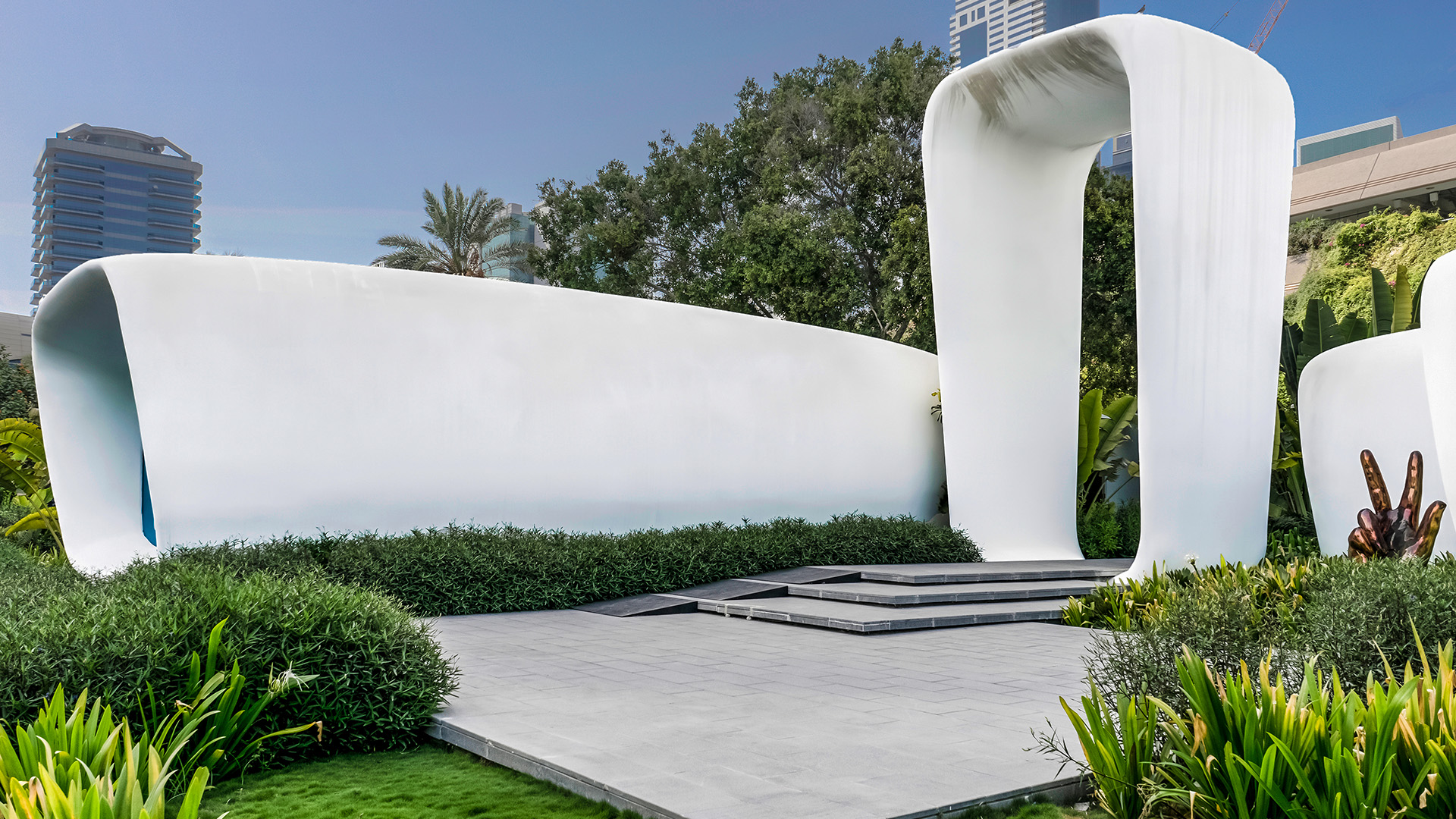
In 2020, the UAE was awarded the Guinness World Record for the first 3D-printed commercial building which served as the headquarters for the Dubai Future Foundation. After a swift 17-day print, followed by interior outfitting, it stands as a testament to rapid, efficient construction, offering up to 60 percent less waste.

The UAE is also home to the world’s largest 3D-printed building and plans to inaugurate the first 3D-printed, fully-functioning mosque by 2025.