A new form of biometrics:
We’re all ears

Previously, it took biometrics such as facial recognition, fingerprints or retinal scans to identify the unique physical characteristics of each human, but now identification might be as simple as measuring your ear.

Using ears to identify humans isn’t new, but our favorite crime shows still rely on old faithful methods — dusting for fingerprints or collecting DNA — to land a suspect. In all fairness, criminals are much more likely to touch things with their hands than rub their ears all over a crime scene.

It was, however, used in a 1997 murder trial after an investigation lifted an ear-print from the window the killer entered through. The subsequent conviction was the first using ear prints as an identifier. However, the verdict in 2004 was overturned on appeal as DNA from the ear print indicated a different suspect. It was the opinion of the expert used in the trial that solidified the guilty verdict.

That case was flawed, but recent studies show ears are just as reliable an identifier as our fingerprints.


A team of researchers from the University of Georgia in 2022 developed software that scans your ear. It was intended to serve a post-COVID world in which people wear masks — muffling voice recognition — and are conscious of what they touch.

Masks aren’t the problem they used to be, but there are other security operations in which ear identification can be instrumental.

Ears are fully formed and developed at birth. Except for the consequences of age they really don’t change over time. Each ear is unique, and your ears are even unique from each other. This makes them a reliable source of identification – even from a distance.

You can’t access someone’s fingerprints or DNA from a photo, but even a photograph of your ear can tell us who you are. And with the number of crimes recorded on video, ear biometrics can help identify the culprits.

A more recent development in ear identification came when a team of forensic and dental scientists from all over the world built on a 2011 study by Roberto Cameriere that measured the four anatomic regions of the ear and combined the measurements to produce a code that is unique to each person.

They implemented a larger specimen group and divided it across multiple ethnic groups to stretch the method and determine further accuracy. They found that when they added the codes for each person’s ears together, there were zero code repeats. This means 814 unique ear identifiers. The team concluded that “the probability of two different individuals having the same code (false-positive identification) was found to be less than .07 percent.”

So, if you’re planning to launch a crime wave, make sure to wear ear muffs. They’ll protect you from the cold and from getting caught.

But if you happen to forget, perhaps you can simply slouch your way through your criminal activity. Or not.


A team of researchers from Khalifa University suggest the factors that inhibit accurate ear identification in 2D and 3D images — posture, light and scaling — can be overcome with combining both, “To the best of our knowledge, this is the first time two-dimensional and three-dimensional ear attributes have been merged to build a detector and descriptor for matching a pair of 3D ears. Combining features from the 2D domain and features from the 3D domain considerably increased recognition efficiency.”

The team suggests that a keypoint detector and a descriptor, built from angular features of 2D ears and textures of 3D ears, can lead to more accurate ear identification. The texture and shape combined enhance the veracity of the results.

“This holistic approach culminates in the achievement of state-of-the-art results while simultaneously ensuring robustness to illumination and pose variations,” says Iyyakutti Iyappan Ganapathi. He is lead author on the study and a post-doctoral fellow in the electrical engineering and computer science department at Khalifa University.

Ganapathi says while there is comparable accuracy between other commonly used biometrics and ear identification, a lack of data is a challenge.

However, he is hopeful going forward.

“Looking ahead, it is foreseeable that, as more ear data becomes accessible, researchers will increasingly turn their attention towards ear biometrics as a viable means of human recognition. This nascent avenue holds significant promise for the future of biometric identification,” he tells KUST Review.

Protecting your produce

When we purchase fresh produce from our local grocery store, we aren’t usually consumed with worry about whether it contains fecal matter. But the threat is real, and current testing methods are tedious and expensive. That’s why a team of researchers from Purdue University in the United States has developed a reliable and quick method to ensure the produce on our table isn’t contaminated.

Listen to the Deep Dive

But what is the threat?

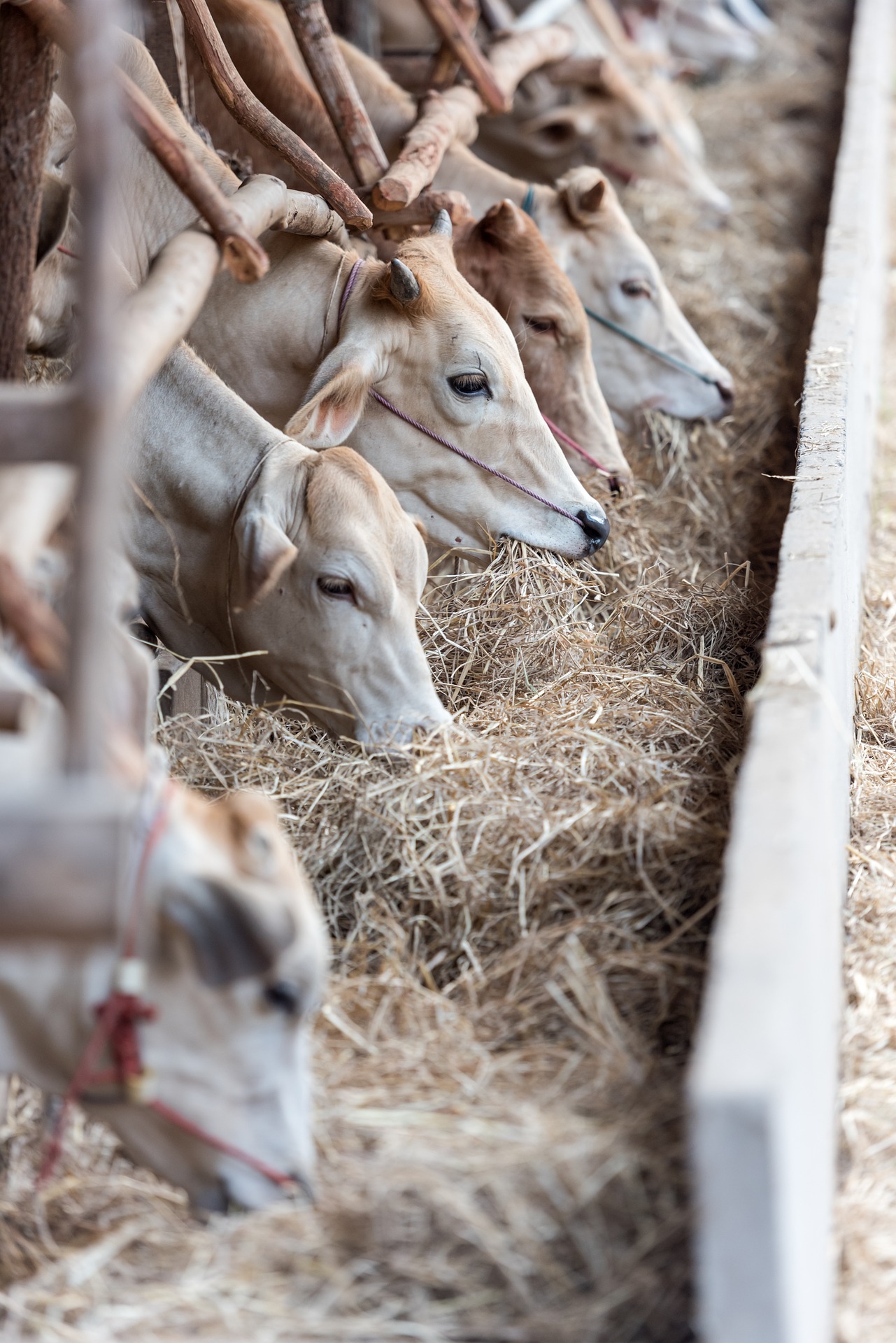
A cattle farm in Arizona’s Yuma County in the United States produces 115,000 cows annually. Just three miles from the facility is a lettuce farm that is threatened by dust or irrigation water contaminated with feces. An investigation found E. coli bacteria in a nearby canal, and because Yuma County produces 90 percent of the USA’s winter lettuce, these risks need to be mitigated.

In fact, a 2018 outbreak of the same strain of E. coli killed five people after they consumed produce from the Yuma Valley.

“With changes in climate and emergence of new threats (e.g., most recently highly pathogenic avian influenza), maintaining the status quo will increase the burden of these threats,” the Purdue team’s Mohit Verma tells KUST Review.

IMAGE: Pixabay

His team’s new biosensor aims to mitigate these threats.

For a method of detection to be easily integrated, it needs to be accurate, cost effective and simple.

The biosensor detects DNA using loop-mediated isothermal amplification (LAMP), which is simpler than the polymerase chain reaction (PCR) method because it operates at a constant temperature, rather than requiring temperature changes. And to detect fecal contamination, the team uses Bacteriodales, which is an order of bacteria found in animal feces and intestines, but not usually in the surrounding environment. This makes Bacteriodales the best measure of fecal-matter presence.

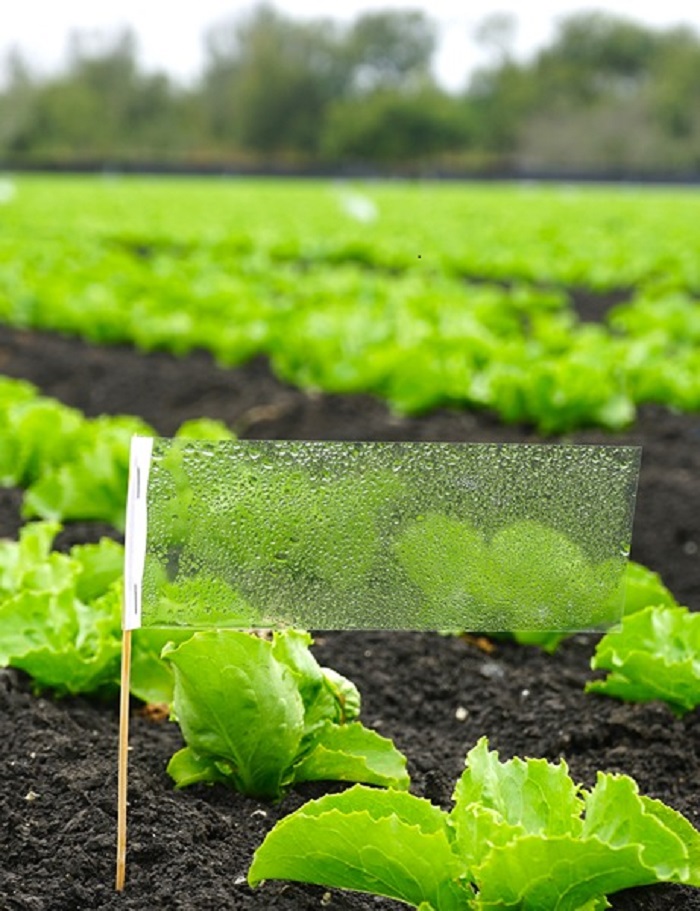
CAPTION: Verma lab’s molecular tests(using loop-mediated isothermal amplification or LAMP), that can be completed with just some warm water incubation. Results can be read within one hour. IMAGE: Purdue Agricultural Communications

Small plastic sheets on wooden skewers, called collection flags, are placed around the farm and left for a week to collect samples. The flags are then collected and swabbed to transfer bioaerosols — small particles from any nearby animal operations — to the team’s biosensor, which use LAMP to amplify Bacteriodales DNA. The presence and amount of this DNA will cause a color change that can be measured instantly, detecting any level of fecal contamination ranging from safe to high-risk.

The current method of detection is typically lab-based. The biosensor, however, when compared with lab results of the lab-based quantitative polymerase chain reaction results, proved 100 percent accurate.

The team does admit, however, that the testing was done in extreme conditions (very high and very low levels in the field), but still anticipates more than 90 percent sensitivity and specificity at intermediate-level testing.

“These biosensors have the potential to serve as a site-specific risk-assessment tool. They can provide a faster response and thus help in curbing problems before they become too large. They can also help in guiding decisions quickly compared to current lab-based approaches,” Verma says.

Traditional methods of testing also require expensive equipment, expert staffing, take 24-48 hours or more to produce results, and each test runs about U.S.$50. The new biosensor, however, requires simple equipment costing about U.S.$200 and provides equally accurate results within one hour at U.S.$10 per test.

Verma says the collection flags will help producers make important decisions about where to plant and the type of crops based on biosensor results. Also, it can help farmers determine if harvest timings should be adapted due to environmental risk or changing weather patterns by providing site-specific data.


“The biosensor is designed with the end user in mind. Thus, it is meant for use by producers and food safety professionals. The biosensors come with an operation manual and the user can be trained within an hour to run the assays.”

Mohit Verma, associate professor of agricultural and biological engineering — Purdue University

The applications are not limited to fecal detection on produce farms, however.

“These biosensors are broadly applicable because they can detect DNA or RNA. Specifically, when detecting Bacteroidales, they could be applied for measuring water quality as well. In addition, Bacteroidales can be used for microbial source tracking, i.e., determining where fecal contamination might be coming from. Thus, it applies to water safety as well,” Verma says.

Verma’s new start-up company, Krishi Inc., will develop the biosensor technology commercially and work to enhance its versatility and ease of distribution. Verma says he hopes to also target the health market for companion animals such as cats and dogs, developing biosensors to detect antimicrobial resistance in urinary-tract infections and skin and ear infections.

Bigger picture, Verma hopes to alleviate the current limitation to lab-based methods for surveillance and diagnostics. “The biosensors have the potential to overcome this bottleneck by becoming widely available, providing a rapid response and enabling use in the field,” he tells KUST Review. “Currently, our response time to microbial threats is very slow.”

Funding from the Center for Produce Safety and several other industrial partners supported the team’s work on Bacteroidales.

The 2024 paper was published in Science Direct.

History of the mRNA vaccine

Nearly every function in the human body is carried out by proteins. Cells are constantly manufacturing them using single-strand messenger RNA, which is made from a DNA template. Each strand of mRNA holds the information on how to make one type of protein. The cell reads the mRNA, follows the instructions and makes a protein.

mRNA is a recipe book for the body’s cells. The idea? Make precise edits to the recipe, inject people with it, sit back and watch the body make all the proteins you need.

 IMAGE: Anas Al Bounni-KUST Review

Viruses come in different shapes and sizes. Some are DNA viruses, which contain DNA that integrates with the host DNA in certain cells, using that cell’s replication mechanism to multiply. These viruses can activate cancer genes in the host — the human papillomavirus (HPV) is known to cause cervical cancer, for example.

RNA viruses carry RNA and do not integrate that RNA into a host’s DNA. Instead, the RNA is directed to the host ribosomes in cells, with the ribosomes replicating the virus. These viruses do not interact with host DNA.

Once inside the body, the cell reads the vaccine mRNA and begins to make harmless spike proteins of its own. From there, the body recognizes them as a foreign threat and launches an immune response, teaching itself to respond to spike proteins. Should the actual coronavirus come knocking, your cells now know what to do.

The main drawback to mRNA vaccines? The mRNA breaks down very easily. It needs to be delivered inside a protective fatty barrier and kept cold.

mRNA vaccines are a groundbreaking way to elicit an immune response and their real impact is just beginning. Their applications don’t stop at COVID-19; we might be able to figure out the recipe for a cancer or HIV vaccine.

mRNA VACCINE HISTORY

1961-mRNA discovered.

1963-Interferon induction by mRNA discovered.

1965-First liposomes produced.

1969-First proteins produced from isolated mRNA in lab.

1971-Liposomes first used for drug delivery.

1974-Liposomes first used for vaccine delivery.

1978-First liposome-wrapped mRNA delivery to cells.

1984-mRNA synthesized in lab.

1989-First time synthetic mRNA in liposomes is delivered to human cells.

1992-mRNA tested as a treatment in rats.

1993-First mRNA vaccines tested for influenza in mice.

1995-mRNA tested as cancer vaccine in mice.

2005-Discovery that modified RNA evades immune detection.

2013-First clinical trial of mRNA vaccine for infectious disease (rabies).

2020-First mRNA-based COVID-19 vaccine approved for emergency use.

Camels switch off their kidneys
to survive dehydration threats

To better understand how the Arabian camel manages to preserve water, a team from University of Bristol, United Arab Emirates University and Khalifa University examined the genes in the kidneys of Arabian camels exposed to chronic dehydration to determine how the animals can survive long periods of time in harsh conditions without access to water and what humanity could possibly learn from this.

The results were published in Communications Biology.

“Extensive evidence shows the impressive set of adaptations that allows a camel to thrive in desert environments, despite sometimes needing to survive for weeks without access to water,” says team lead Abdu Adem, Ph.D., a professor of pharmacology at Khalifa University. “Behavioral and physiological adaptations ensure that water is never wasted. Camels will only eat the leaves of plants, they avoid exposure to direct sunlight where possible, restrict reproduction to the cooler winter season, and drink very large amounts of water when available to compensate for any fluid deficiency from their desert wandering.”

Camels have been known to drink 30 gallons of water in just 13 minutes, but even here they have an evolutionary adaptation to avoid osmotic shock, or a sudden change in the solute concentration around a cell: They absorb the water very slowly.

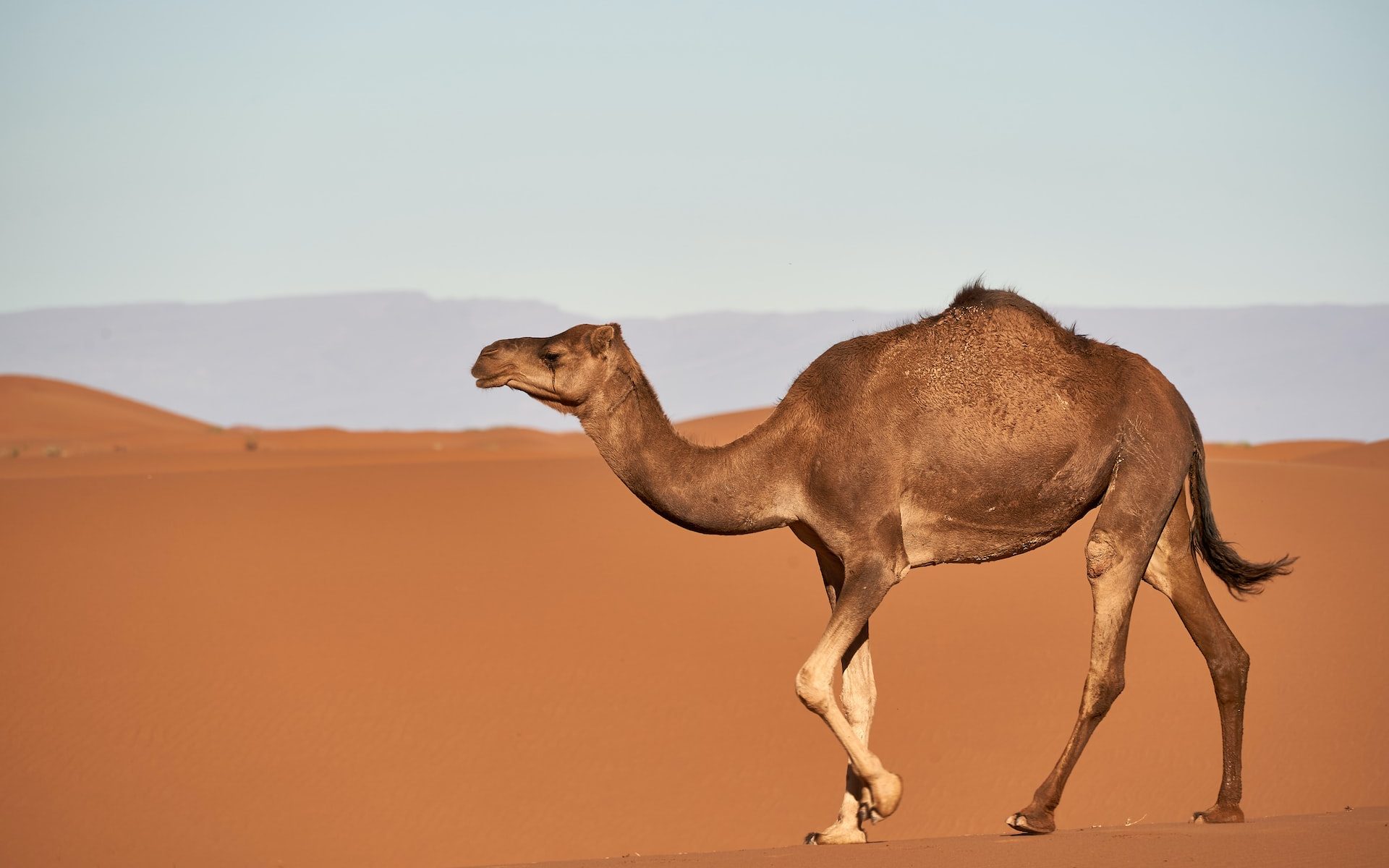
The kidney that plays the largest role in conserving water for a camel, and it is from the camel kidney that humans can take inspiration. IMAGE: Unsplash

An intricate nasal passage prevents too much water loss when the camel breathes out, but more importantly, water evaporates from the surface of the nostrils to moisturize dry air when the camel breathes in, helping to cool the blood in the veins of the nose.

Thanks to thin blood-vessel walls, this cooler venous blood can help cool the blood in the arteries leading to the brain, meaning the camel’s brain is considerably lower in temperature than the body core.

Even the red blood cells themselves have a special shape shown to be advantageous in withstanding dehydration.

On top of all this, camels rarely sweat, even in the searing temperatures of the desert, all helping to conserve water.

Our analysis suggests that genes with known roles in water conservation are affected by changes in cholesterol levels. Suppressing the production of cholesterol may help the kidney retain water.

Abdu Adem, Khalifa University professor of pharmacology

Yet, despite all these advantages, it is the kidney that plays the largest role in conserving water for a camel, and it is from the camel kidney that humans can take inspiration.

“In the current context of climate change, there is renewed interest in the mechanisms that enable camels and camelids to survive in arid conditions,” Adem says. “We investigated the camel kidney to see how gene expression has been influenced by chronic dehydration and rapid rehydration. Our analysis suggests that genes with known roles in water conservation are affected by changes in cholesterol levels. Suppressing the production of cholesterol may help the kidney retain water.”

Yet, despite all these advantages, it is the kidney that plays the largest role in conserving water for a camel, and it is from the camel kidney that humans can take inspiration.

“In the current context of climate change, there is renewed interest in the mechanisms that enable camels and camelids to survive in arid conditions,” Adem says. “We investigated the camel kidney to see how gene expression has been influenced by chronic dehydration and rapid rehydration. Our analysis suggests that genes with known roles in water conservation are affected by changes in cholesterol levels. Suppressing the production of cholesterol may help the kidney retain water.”

Camels produce highly concentrated urine, preserving as much water as possible. To produce such urine, the kidney must possess certain anatomical features.

Previous research has shown that the kidney of a young camel differs in structure from that of an adult, suggesting that the differences may be related to a greater degree of water deprivation experienced by adult animals. This would suggest that chronic dehydration causes genes in the adult camel kidney to be expressed differently, allowing the kidney to better preserve water.

The research team noted that the amount of cholesterol in the kidney has a role in the water-conservation process. In dehydrated camel kidneys, there was less cholesterol in the kidney membranes, and the genes that control the production of cholesterol were suppressed.

“We found remarkable changes in the amounts of specific genes and proteins in the kidney of the one-humped Arabian camel during severe dehydration and subsequent acute rehydration,” Adem says. “Our data suggests that the suppression of genes involved in cholesterol biosynthesis and the subsequent reduction in membrane cholesterol are a global response in the kidney to dehydration.”

We found remarkable changes in the amounts of specific genes and proteins in the kidney of the one-humped Arabian camel during severe dehydration and subsequent acute rehydration.

Abdu Adem

Several ion channels and transporters are regulated by changes in the level of cholesterol in the cell. Dehydration and excessive heat cause electrolyte imbalances in the body, and the kidneys are one factor in keeping electrolyte levels balanced.

If there is an increase of cholesterol in the membrane of the kidney, movement through the ion channels is blocked. When cholesterol levels are lowered, water and electrolytes can move across different parts of the kidney, which helps reabsorb water and produce a highly concentrated urine.

The researchers found that during the summer, the gene that regulates the production of a protein called aquaporin 2 is expressed more, presumably in preparation for the more challenging conditions of the season.

Aquaporin 2 forms a channel in cell membranes to allow water molecules to pass through. During periods of dehydration, aquaporin 2 channels are inserted into the membranes of kidney cells, which allows water to be reabsorbed into the bloodstream, making the urine more concentrated.

The researchers found that when cholesterol was depleted, aquaporin 2 levels increased.

When the camel rehydrates, the gene expression is suppressed, the channels close and the expression of cholesterol synthesis genes returns to normal levels.

While this new knowledge contributes to our understanding of the immense evolutionary advantages the Arabian camel uses to survive in the desert, it could more importantly help humanity better adapt to advancing desertification amid climate change. Understanding the mechanisms of water control in dehydration could allow us to apply the principles to water conservation across a wide variety of disciplines.