

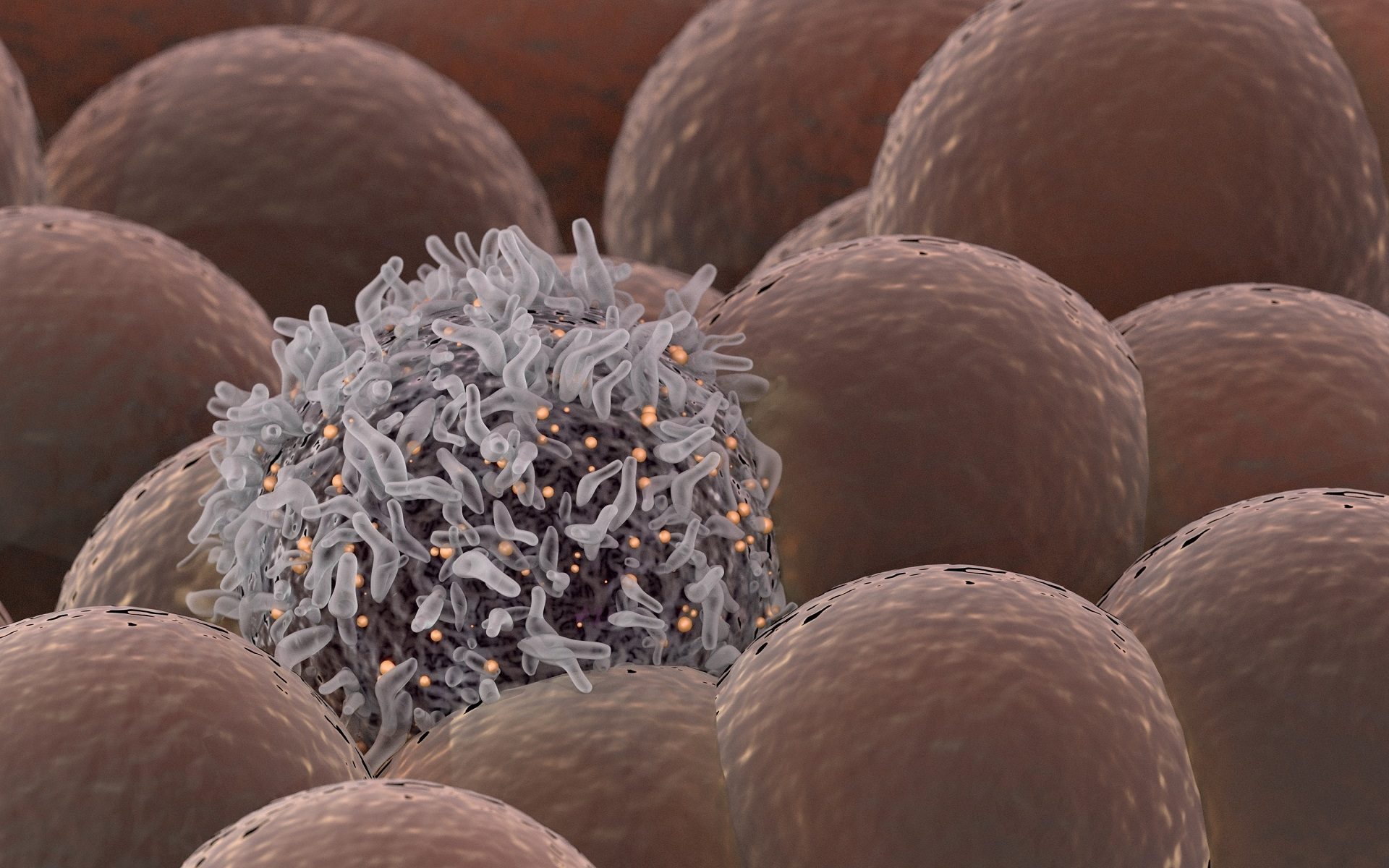
Cellular processes are maintained by the function of proteins, which means finding ways to control protein function dictates the development of biotech tools.
This is incredibly difficult to do with precision. But it can be done with thermogenetics — a bit of heating or cooling of the protein to activate or deactivate it.
Researchers from Kanazawa University have achieved this heat-triggered on/off switch by combining two parts: caspase-8 (a protein that instructs cells when it’s time to die) and elastin-like polypeptides, or ELPs, which clump together when the temperature rises above 35-40 degrees Celsius.
Fuse these together and the result is a protein that stays quiet until things warm up, at which time the ELPs bunch up, dragging the caspase-8 molecules close enough to flip on the self-destruct signal.
By testing in human cell lines and adding a fluorescent “glow” reporter, the team was able to watch the process live. The heat was added with a precise infrared laser and cell death was triggered in single cells.
The results, published in ACS Nano, mean scientists now have a novel way to study and control cell behavior with pinpoint accuracy. This opens doors for therapies targeting certain cells (like cancer therapies) and leaving the others untouched.
More like this: Cancer can run, but it can no longer hide