Think the Amazon River is the largest river on Earth? Technically, you’d be right but the river with twice the amount of water than the Amazon can be found in the sky.
Atmospheric rivers are long, narrow bands of concentrated water vapor that produce major amounts of rainfall. They exist on a global scale, transporting moisture from the tropics to the higher latitudes.
And they can have a huge effect on the way you live. “Atmospheric rivers are responsible for important impacts throughout the Earth’s middle and polar latitudes, such as flooding, influence on water resources, and melting of polar ice sheets,” explains Kyle Mattingly of the University of Wisconsin.
 IMAGE: Unsplash
Like a hurricane
but not
Atmospheric rivers are not big hurricanes. Read more›››
A 1998 paper from Yong Zhu and Reginald Newell, the researchers who coined the term, says on any given day, atmospheric rivers account for over 90 percent of the global north-south water-vapor transport.
There are typically three to five rivers present within a hemisphere at any given time, and any single one can carry a greater flux of water than the Amazon River. For context, that’s about 6,592 cubic kilometers of water every year, or more water than the next seven largest independent rivers combined. It’s just water vapor instead of liquid water.
These rivers in the sky help replenish reservoirs and redistribute water in the Earth system, but they can also be detrimental to the places they deposit water.
Extreme weather events such as severe flooding and high winds are now found to be associated with atmospheric rivers. These elongated tendrils of moisture stretching from the tropics poleward act as conveyor belts, feeding huge amounts of tropical moisture into existing weather systems, intensifying the rainfall. Record-breaking rainfall is often associated with an atmospheric river making landfall.
However, this water content doesn’t just fall out of the sky on a whim. The rivers pass through various atmospheric conditions on their journey, and where conditions are right for precipitation, water is released as rain or snow. Mountainous regions are particularly effective at squeezing moisture out of these sky rivers as wind travels up their sides.
A NEW ANCIENT PHENOMENON
Despite earning a name only in 1998, atmospheric rivers have been meandering through the skies for millions of years — they’re not new. So why are atmospheric rivers making a splash in the current zeitgeist?
Climate change, of course.
Plus, it’s a useful and versatile term, says Mattingly. “The ‘rivers in the sky’ metaphor helps to vividly communicate these scientific ideas to the public. In places such as California, where they have major impact, the concept helps people connect weather they experience personally with processes operating at much larger scales in the climate system.”
Understanding atmospheric rivers is key to improving weather forecasts for better managing water resources and predicting flood risk. However, atmospheric rivers are also influenced by climate change.
Previous work has examined the relationship between weather patterns and atmospheric-river development, but with climate change, these features may become more variable — and therefore harder to predict. This could mean a less reliable source of precipitation for those areas depending on the water redistribution, but could also mean extreme flooding in other places.
To those living in the Middle East, huge amounts of rainfall are pretty rare and would likely be welcomed to recharge oases, water crops and wash away the dust that accumulates in cities. The reality can be much more detrimental than beneficial, unfortunately.
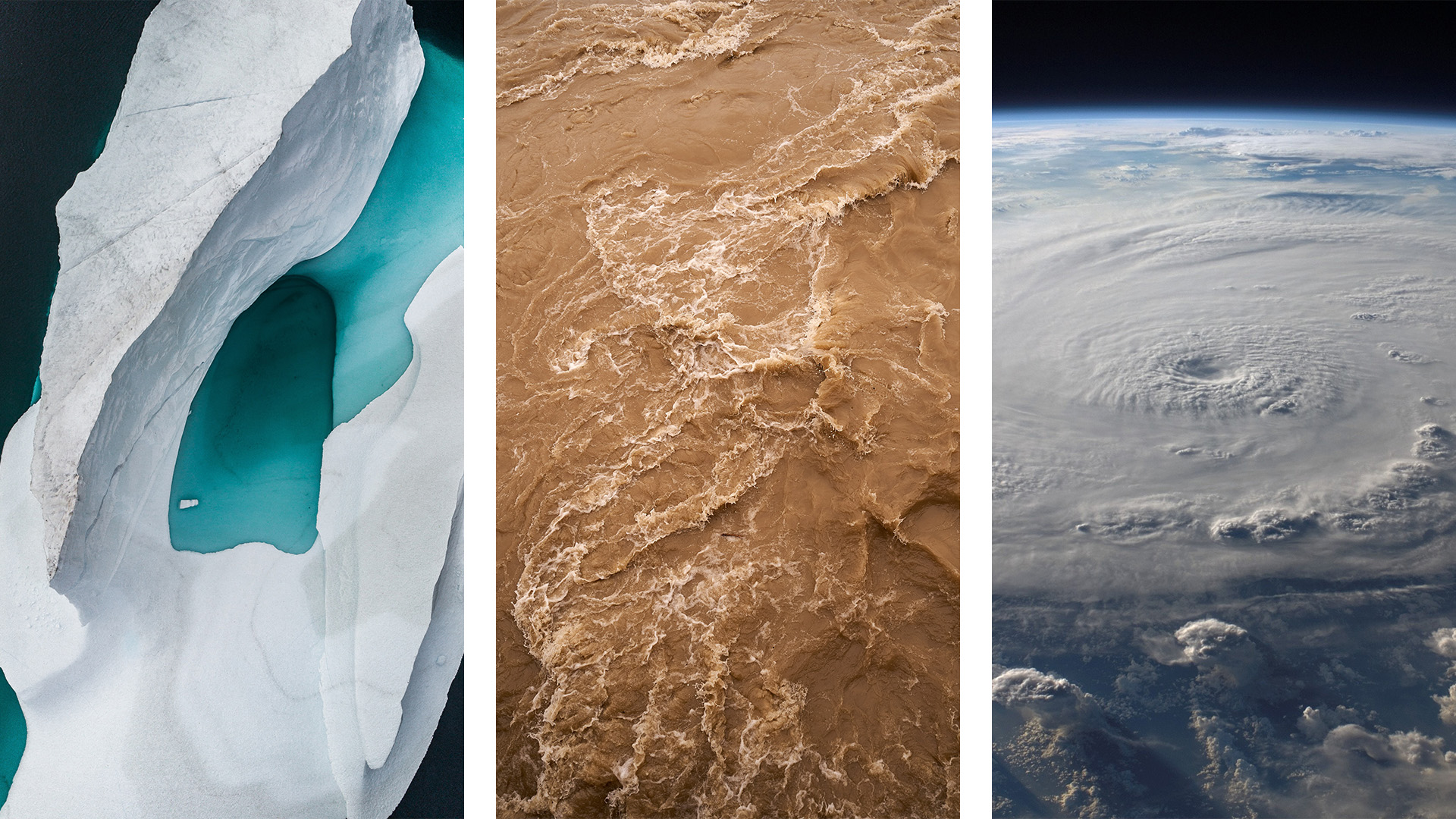 A global phenomenon, atmospheric rivers have far-reaching influences on weather patterns and natural disasters. IMAGES: Unsplash and Pexels
 Although a large body of research has shown the impacts of atmospheric rivers on weather-related natural disasters over the western United States and Europe, little is known about their mechanisms and contribution to flooding in the Middle East.
However, a rare atmospheric river was found responsible for the record floods of March 2019 in Iran that damaged one-third of the country’s infrastructure and saw the death of 76 people. This river started its 9,000-kilometer journey in the Atlantic Ocean before making landfall over the Zagros Mountains. It needed special conditions to make this trek across North Africa, including anomalously warm sea-surface temperatures.
What do we know is a symptom of global warming? Rising sea temperatures. The moisture transported by this rare atmospheric river was equivalent to more than 150 times the accumulated flow of the four major rivers in the region: the Tigris, Euphrates, Karun and Karkheh. Even now, people are still wrestling with the aftermath.
It was a rare atmospheric river for 2019. But like hurricanes, atmospheric rivers are projected to grow longer, wider and wetter in a warming climate. Several recent studies have modelled how atmospheric rivers will change in the coming decades: The planet warms, more water evaporates and a wetter atmosphere makes for stronger storms.
BLOWING HOT AND COLD
Challenging our understanding of atmospheric-river genesis is the increasing activity in the polar regions. Atmospheric rivers developing near the poles transport large amounts of moisture and heat and have been playing a significant role in short-duration but high-volume melt events over the Arctic and Antarctic in recent years.
There are several reasons for this, explains Mattingly. “Research to date has shown that atmospheric rivers can increase ice melt by enhancing the water-vapor greenhouse effect, releasing condensational latent heat into the air over the ice, forming bands of cloud that reflect heat back to the surface, and providing more water to the cyclones ahead of which they develop. In addition, atmospheric rivers are closely related to the atmospheric fronts over the Southern Ocean, which, in turn, reinforce subantarctic cyclone dynamics.”
The number and intensity of cyclones around Antarctica over the past few decades have increased as the storm tracks shift toward the pole under enhanced greenhouse-gas concentrations.
In the largest calving event from the Amery Ice Shelf since 1963, an iceberg 1,636 square kilometers with an estimated weight of 315 billion tons broke away from its glacier in September 2019.
Melting polar ice is concerning enough, but global warming and atmospheric changes could lead to more such calving events.
Atmospheric rivers can increase ice melt by enhancing the water-vapor greenhouse effect.
– Kyle Mattingly, University of Wisconsin
Cyclogenesis, the formation of cyclones, is a major factor in this, and an increase in the frequency and intensity of atmospheric rivers in the region will only exacerbate the problem. It’s not just calving events we need to be worried about.
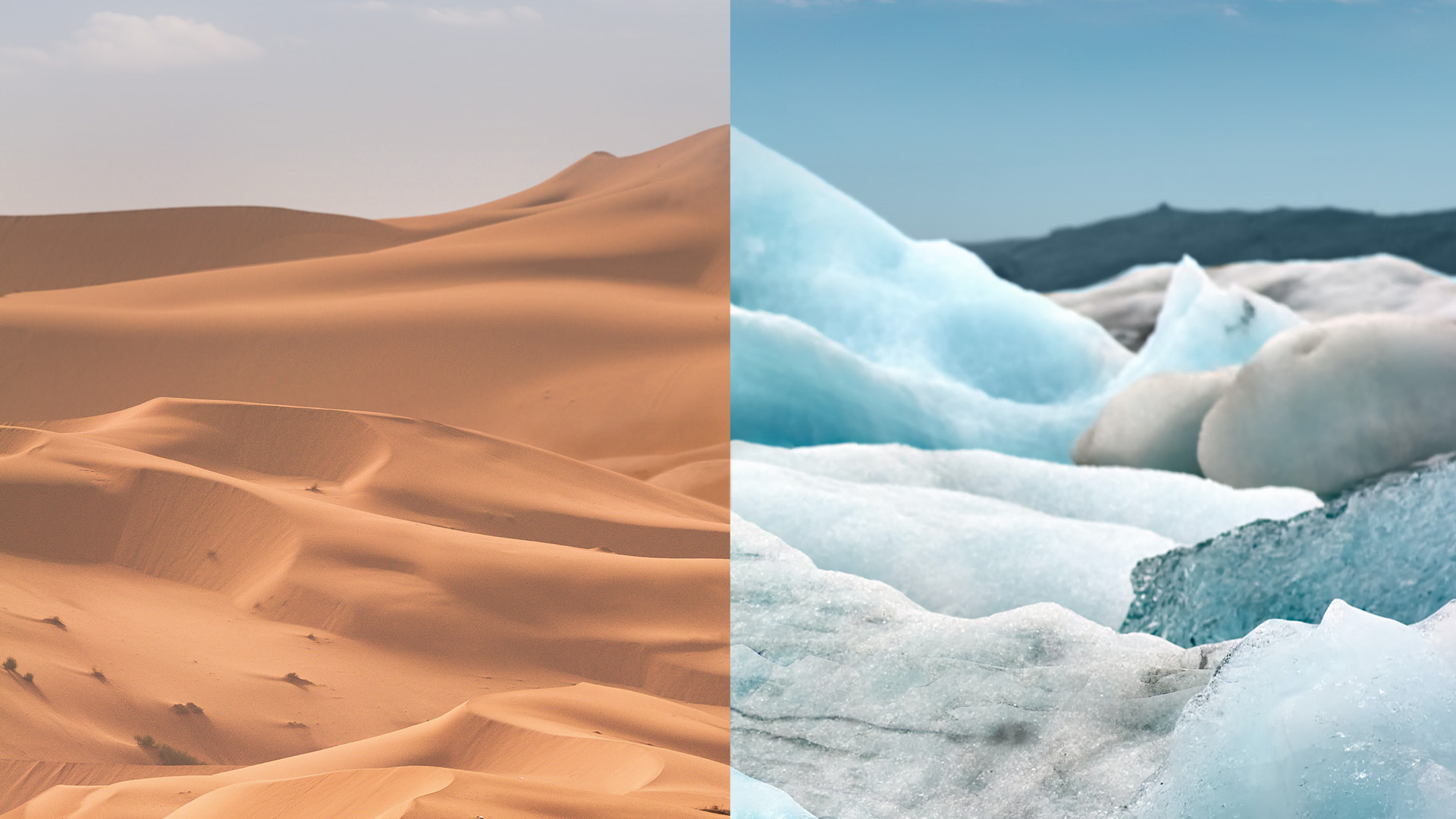 Despite their distance, the sand dunes of the Sahara and the ice caps of the Antarctic are linked by global atmospheric phenomena. CREDIT: Anas Albounni, KUST Review
“Our analysis of the polynya event in September 2017, where a body of unfrozen ocean appeared within a thick body of ice during Antarctica’s winter, shows that the atmospheric rivers that initiated this were the most intense on record,” Mattingly says. “Surprisingly, these atmospheric rivers resulted in the highest amount of snowfall on record over the study area, but because of the warm temperatures, it was this warm snow that enhanced the ice melt and inhibited refreezing.”
It may be rare now, but under a warmer climate, atmospheric-river activity is expected to intensify considerably: a scary thought when we now know it can melt the sea ice in the middle of the Antarctic winter.
It’s not all bad, though. Within the sea-ice zones of both hemispheres these polynyas act as oases, enabling marine mammals such as walruses, narwhals and belugas to overwinter.
Some polynyas, such as the North Water Polynya between Canada and Greenland, occur at the same time and place each year. Animals can adapt their life strategies to this regularity, with polynyas in McMurdo Sound in the Antarctic providing a vital winter feeding place for the Cape Royds penguin colony.
 IMAGE: Unsplash
 A bad year for oysters
Aside from crazy weather, atmospheric rivers can have unexpected secondary consequences. Read more›››
The problem arises in the intensification of the atmospheric rivers affecting a larger area than that of the natural polynya, which may prevent sea-ice growth around the polynya and contribute to keeping it open even after the river moves on.
Jonathon Wille, postdoctoral researcher at the Université Grenoble Alpes, is also investigating the impacts of atmospheric rivers on Antarctica.
“The Antarctic continent, like many deserts in the world, receives a large percentage of its yearly precipitation from just a few intense events,” Wille explains. “They may be rarer here, but they still have a major influence on the surface-mass balance of the ice sheet and are responsible for 10 to 20 percent of the total snowfall across East Antarctica.
“This may seem a modest percentage, but this contribution to the snowfall budget has been driving parts of the positive annual snowfall trends in some areas and the negative trends in others. Atmospheric rivers also control the year-to-year variability of precipitation across most of the ice sheet.”
Given this link, increased future atmospheric river activity would result in higher snowfall accumulation on the Antarctic continent. Combine this with Mattingly’s results showing it was snow that melted the sea ice, and we have a problem.
CLOSER TO HOME
If Antarctica feels too far flung to worry about, you can always turn your attention to the European Alps.
Over the past four decades, there has been a pronounced reduction in the snow depth in the Alps, says Diana Francis, senior research scientist at Khalifa University, and, for once, it’s not a warming planet that is directly to blame. A new atmospheric river route has appeared, originating in the eastern Atlantic Ocean and drifting over the Sahara Desert on its way to Europe, bringing desert dust with it.
“Dust may actually play a bigger role in melting snow than ambient air temperature,” Francis explains. “It’s estimated that a single dust event in March 2018, where Saharan sand blew in over the Caucasus Mountains, may have shortened the snow-cover duration by up to 30 days, with this effect even more pronounced at higher elevations.”
 Cryoconite is dust made up of microscopic mineral and organic particles that are carried by the winds and fall on the ice. IMAGE: Shutterstock
The dust magnifies the snowmelt in a number of ways.
Dust may actually play a bigger role in melting snow than ambient air temperature.
– Diana Francis, senior research scientist at Khalifa University
For starters, airborne dust enhances the radiative effects of the water vapor in the atmospheric river, meaning the air can hold higher amounts of moisture, and the dust particles can act as cloud-condensation nuclei, promoting the development of clouds that then rain on the mountain snow.
Then, there’s the dust that is deposited on the snow. Dust on the snow impedes the albedo effect, where the white snow reflects the UV radiation back, reducing the heat and keeping things cool.
Dust-covered snow can’t do this, with the darker surface absorbing a larger fraction of the incoming solar radiation, causing it to melt. Drastically, in fact, as Francis confirms the snow-albedo feedback in response to Saharan dust can lead to the snow melting up to 38 days earlier than normal.
That’s not all.
Mineral dust on snow and ice can provide nutrients to the microalgae that grow there. That might not sound so bad, but when microbes grow in abundance they can cause holes in the ice and snow cover, called cryoconite holes.
Among the 21 countries in the MENA region, Iran, Egypt and Saudi Arabia have benefited the most from this phenomenon.
– Mehry Akbary, assistant professor at the University of Tehran
The microalgae tend to concentrate at the bottom of these holes, creating a dark mass, which further reduces the albedo effect. As the snow melts, more of the darker material is exposed on the surface, creating a vicious circle.
The jet streams that zoom over the Earth often bring dust to northern latitudes, but with new atmospheric rivers lending a hand, alpine skiers won’t get much opportunity to enjoy the slopes.
But again, it’s not all bad. In a world without atmospheric rivers, drought would reign supreme. Atmospheric rivers are crucial to rebalancing water distribution around the planet, and while an increase in rain may be devastating, no rain at all would be just as bad. A better understanding of the future of rivers in the sky may also help water-resource managers on the ground.
THE GOOD NEWS
Mehry Akbary, assistant professor at the University of Tehran, thinks her findings on the development of atmospheric rivers in the Middle East and North Africa could be used to compensate for the shortage of water resources in this desert region.
The MENA region lies at the interface of the subtropics and mid-latitudes, and its geographical location means there is significant uncertainty about the magnitude of future changes to precipitation in much of the region.
However, because atmospheric water vapor will increase with increasing temperatures, researchers from Jet Propulsion Laboratory, University of Balamand Dubai, University of California and California State University say in their 2020 paper, confidence is high that precipitation extremes will increase in frequency and intensity throughout the MENA region.
Akbary thinks this could be more beneficial than detrimental, though. “As the most arid deserts of the world are located in the MENA region, atmospheric rivers can be counted as good sources of precipitation. Among the 21 countries in the MENA region, Iran, Egypt and Saudi Arabia have benefited the most from this phenomenon.”
Atmospheric rivers account for more than 30 percent of the total rainfall across the MENA region, with some areas seeing almost half their precipitation from rivers in the sky. “I believe if water storage systems are suitable, this huge amount of rainfall could be stored for coming droughts,” Akbary says.
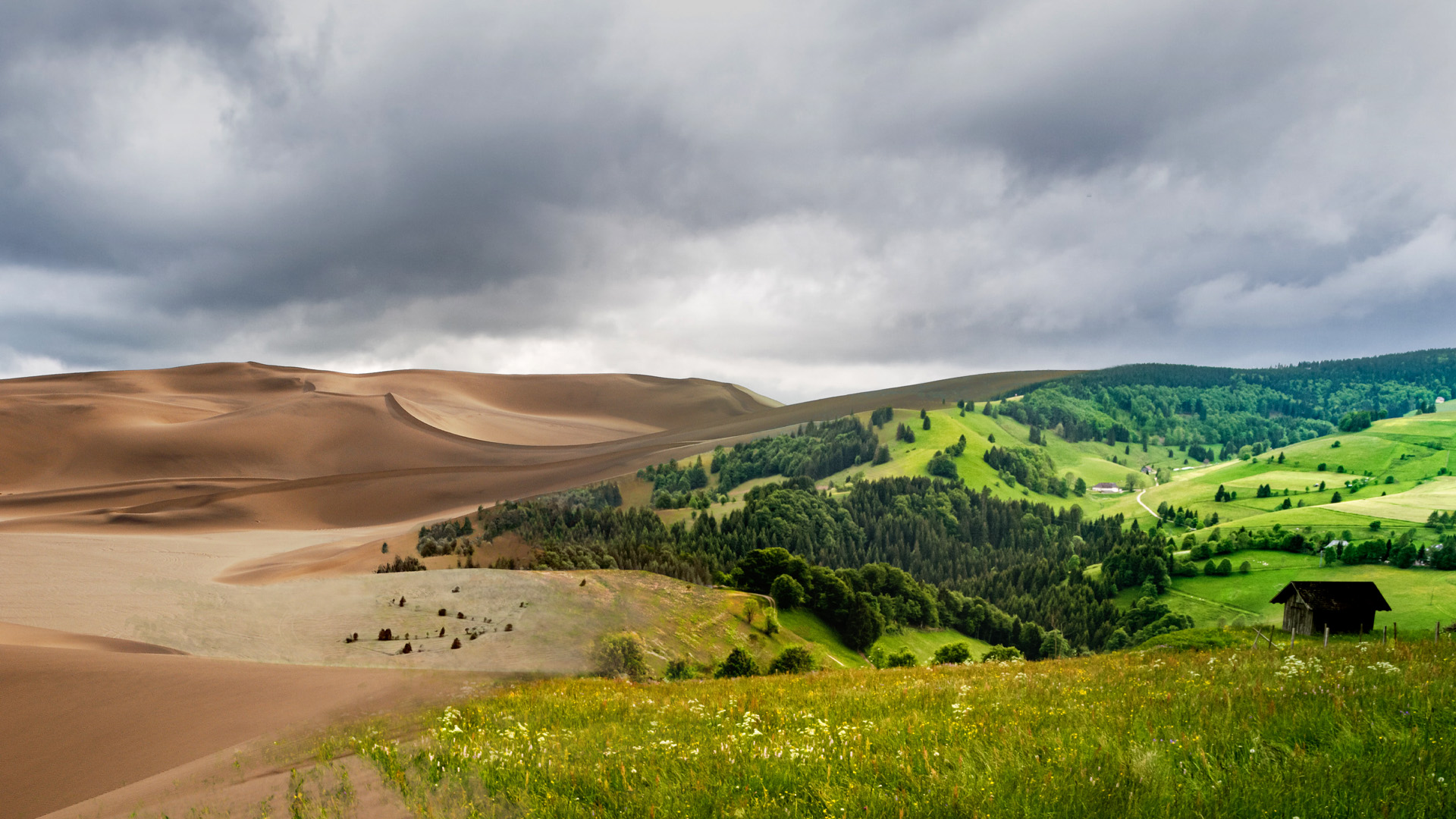 Desertification may be kept at bay by the live-giving moisture in atmospheric rivers. CREDIT: Anas Albounni, KUST Review
In models simulating the year 2100, calibrated to represent a high-emissions future, we can see increases in atmospheric-river frequency in the North African coast, Turkey and Iran. This doesn’t mean the rest of the region will dry up: on the contrary, there is an expected increase in precipitation for the Arabian Peninsula.
From the Horn of Africa to the United Arab Emirates, more rain is coming. More water for a parched land can only be welcomed, but locals need to prepare for the accompanying high winds and flooding potential.
Mattingly thinks the largest impact from more frequent atmospheric rivers will be their effects on flooding and water resources. “More intense atmospheric rivers will lead directly to more intense floods in the future, and we are already seeing examples of extreme floods in recent years that were likely exacerbated by the fact a warmer atmosphere can hold more water vapor.
Although more rainfall might help replenish water resources in some areas, wetter and warmer atmospheric rivers will also present challenges to water managers in the future. For example, in areas such as the western U.S. that are heavily dependent on snow pack for their water resources, atmospheric rivers are expected to bring more rain to the region, rather than snow, which will likely result in depleted snow packs and stressed water resources during the dry summer months.”
In general, water managers are working to be more flexible in their approach to managing resources in the future.
– Kyle Mattingly, University of Wisconsin
It’s not all doom and gloom, though, Mattingly is keen to point out. “I do think that in general, water managers are working to be more flexible in their approach to managing resources in the future. California is, again, a good example, because in the past few years they have had to deal with a few wet seasons against the backdrop of a long-term drought and overall warming that has depleted reservoirs and snow packs. The challenge seems to be to develop approaches that conserve the water delivered quickly during more intense rain events to help ride out drought years.”
Models from around the world agree: Atmospheric rivers will become more frequent and intense as the planet warms. The researchers behind these models also agree: Knowing how atmospheric rivers develop and move – and what they may pick up along the way – is an important step toward accurately predicting them and their associated rainfall.