
Say ‘ahhh’

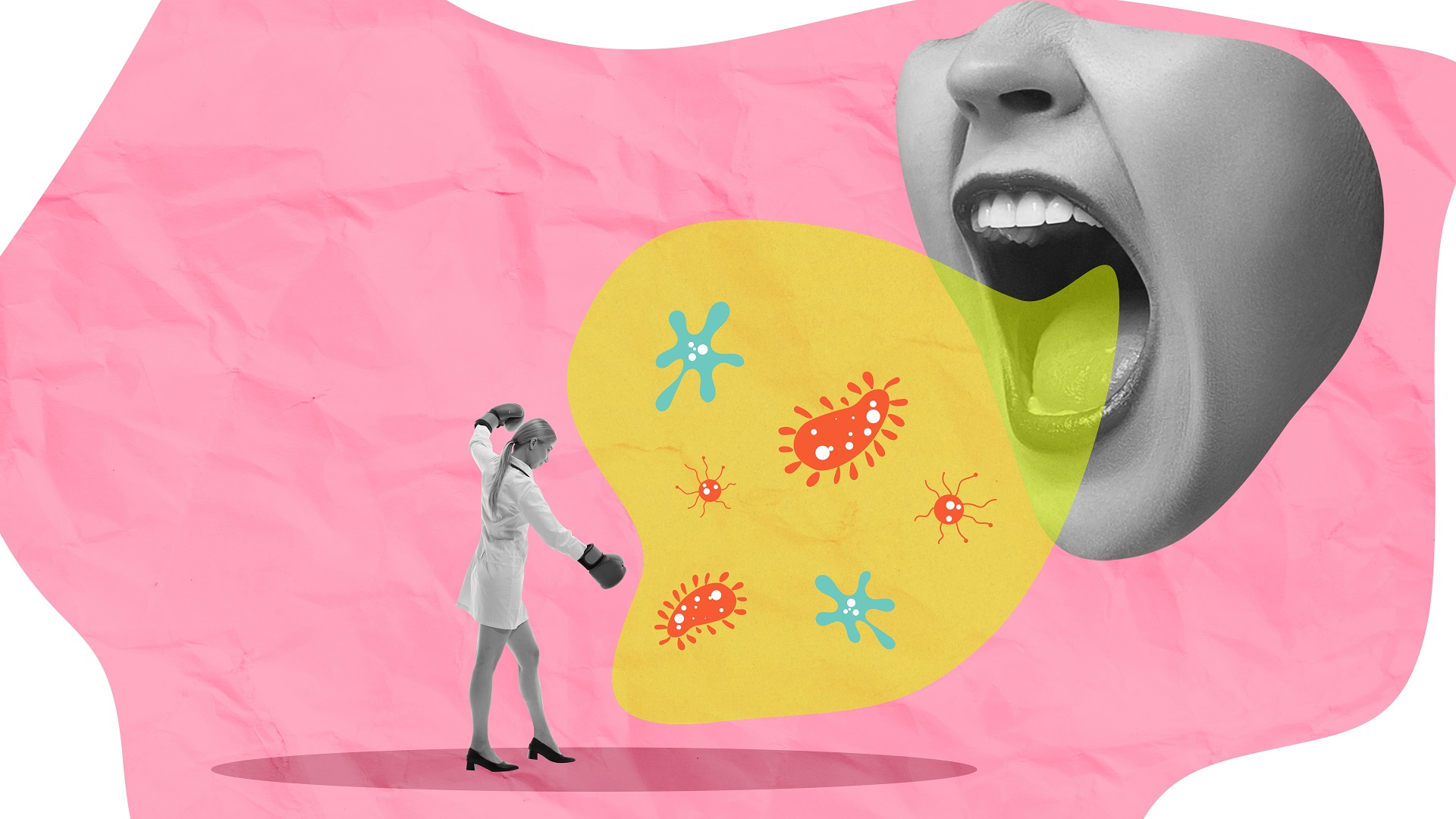
When the doctor tells you to stick out your tongue and say “ahhh,” he’s usually using a tongue depressor to move it out of the way to get a look at your throat. But the look of the tongue itself can tell a physician a lot about a person’s overall health, and now thermal imaging and AI are joining the tongue-diagnosis game that’s been around for centuries.

Traditional Chinese Medicine, or TCM, has been using the tongue as a diagnostic tool for at least 3,000 years.

It observes three tongue criteria to reveal our health: color, shape and type of coating covering the surface. For example, a healthy tongue would be some shade of pink but if it’s dark red, it might indicate sleep issues or anxiety, and a bluish tinge could indicate poor circulation.

While TCM uses the tongue as a main diagnostic tool, Western medicine might observe the tongue’s condition alongside many other indicators, like medical history and lab results.

This “gap” between the two, however, is nearing bridge status as technology develops — thermal imaging and AI-powered tools in particular.

A team of researchers recently introduced an AI health detector tool designed for TCM using thermal radiation image recognition and showcasing the seamless integration of human computer interaction (HCI) principles into health-care applications.


Infrared thermography captures detailed tongue images and records tongue-heat distribution to create thermal images that represent temperature variations.

The team says its portable, hand-held thermal radiation diagnostic tool, integrated with HCI, and created in collaboration with TCM practitioners, sets their research apart.

The dental mark tongue recognition model, using DenseNet T algorithm architecture, resulted in an average accuracy of 25 percent higher than other dentate tongue-recognition models that are designed to standardize and automate traditional Chinese medicine tongue diagnostics.

Another recent advance in tongue diagnosis leans on AI and machine learning for results.

A paper, published in Technologies, presents a new computer vision system that analyzes tongue color changes, offering potential for real-time diagnosis.

These analyses and machine learning predict health conditions with an accuracy exceeding 98 percent.

The researchers used a webcam to capture images in real time of both sick and healthy individuals and were able to differentiate between them simply by tongue color.

The system applies six machine learning algorithms to classify tongue images under a variety of lighting conditions.

“There have been studies where people tried to (diagnose via tongue color) without a controlled lighting environment, but the color is very subjective,” says co-author Javaan Chahl of the University of Australia.

The model was trained on more than 5,000 images across seven color classes. The results show that AI systems for tongue diagnosis are accurate, efficient, cost-effective and non-invasive. This is particularly important in areas with minimal access to health care, addressing the impact of lighting on the colors of the tongue, a key challenge for tongue diagnosis.

So, the next time you’re looking in the mirror, make sure to observe the conditions of your tongue and see what might be a little out of the ordinary. Sticking out your tongue at yourself might just be the key to preventing health issues.

More like this: How often you breathe could help detect Alzheimer’s
Back down to Earth

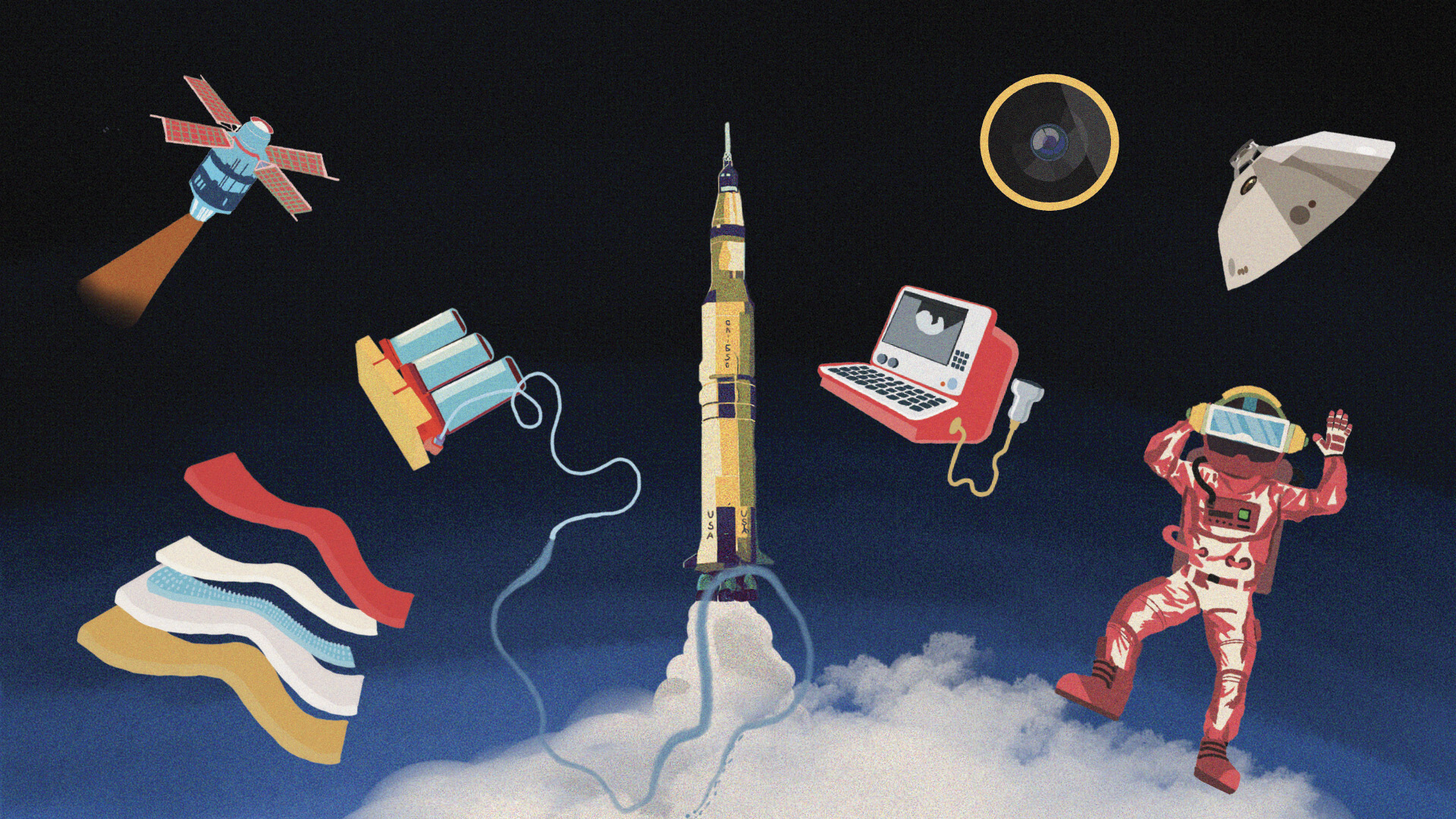
The space race — the Cold War competition between the United States and the Soviet Union — brought innovations not just into the aerospace realm but into everyday life. Here are eight technologies that came out of that period — and three you thought came out of NASA but really didn’t.


| SATELLITE TECHNOLOGY AND GPS

Satellites were developed as a way to communicate with spacecraft and relay information back to Earth. Today, satellites are used for a wide range of purposes, including communication, navigation and weather forecasting. The Global Positioning System (GPS) was developed to navigate and track the position of spacecraft. Now, the average consumer uses GPS for navigation, while farmers use it for precision agriculture. By combining GPS location data with readings from sensors on farming machinery, farmers are able to determine crop yields in different areas of their fields.

| LISTEN TO THE DEEP DIVE

| COMPOSITE MATERIALS

The need for lightweight materials that could withstand the extreme conditions of space led to the development of advanced composite materials. These are now used in a wide range of applications, including aircraft, automobiles and sports equipment. Innovations in shock-absorption materials coupled with robotic and extravehicular activities in space are now being adapted to create more functionally dynamic artificial limbs on Earth.

| WATER-PURIFICATION SYSTEMS

Water in space is precious, so systems were developed to recycle and purify it for reuse. These systems are now used in such settings as hospitals, disaster-relief efforts and developing nations. The electrolytic silver ionizer developed by NASA in the 1960s is widely used on Earth to clean recreational pools.

| MEDICAL EQUIPMENT

The space race led to the development of medical equipment that monitored astronauts’ health during long-duration missions. Plus, digital imaging technology developed for use in space helped create CAT scanners and radiography.

| SMARTPHONE CAMERAS

Experiments miniaturizing cameras for use in space led to the active pixel sensor now used in the standard smartphone camera. Today’s smartphones also employ embedded web technology used onboard the International Space Station to conduct experiments remotely over the internet.

| INTERNET OF THINGS

From embedded web technology came the Internet of Things: remote wireless connectivity between devices in smart homes, smart cities and wearable technology.

| INSULATION MATERIALS

To combat extreme temperatures in space, NASA developed insulation from aluminized polyester called Radiant Barrier, used today in home insulation. Plus, the foil blankets draped over athletes at the end of a grueling event evolved from a lightweight insulator NASA developed to protect spacecraft and people in space.

| WIRELESS HEADSETS AND VIRTUAL REALITY

Astronauts need to float free, hence the development of wireless headsets. Earth-bound high-resolution virtual-reality systems use the head-mounted panoramic display developed to let astronomers and geologists study 3D images of other worlds.

| 3 THINGS NOT INVENTED FOR SPACE

Urban myths link NASA to many materials and gadgets. In fact, the agency didn’t invent Teflon, Velcro or the powdered-drink mix Tang. Teflon had been around since the 1930s, Velcro since the 1950s and Tang was on the market just as NASA was finding its feet.

Mercury astronaut John Glenn drinking Tang in orbit as part of an experiment did, however, do a lot for the brand. NASA may not have invented these products, but it helped to popularize them. Having your product associated with astronauts and the space race connected it with science and discovery.