The placebo problem

Leigh Frame, Ph.D., Master of Health Science, likes vitamin D. Executive director of the Office of Integrative Medicine and Health at George Washington School of Medicine and Health Sciences, she is especially interested in the role of vitamin D as an immune modulatory hormone.

She was starting a pilot study to determine the effectiveness of vitamin D supplementation via patch delivery (through the skin) versus pill delivery (via the gut) when the pandemic hit.

Vitamin D is a fat-soluble nutrient that also functions as a steroid hormone. Many of the body’s organs and tissues have receptors for vitamin D, which suggest important roles beyond what we currently know about its role in bone health.
Principles of research ethics

Respect for persons: Treat participants as autonomous; protect participants with decreased autonomy. Read more›››

Beneficence: First, do no harm; maximize benefits to participants; minimize risks to participants.

Justice: Fair recruitment of participants; participants asked to bear the risk should benefit from the research.

From “Ethical Concerns in Placebo-Controlled Supplementation Studies: How to Design a Rigorous Randomized Controlled Trial.” Permission from Leigh Frame.‹‹‹ Read less

“We had planned to bring 30 healthy subjects to the medical campus, who would otherwise not have needed to visit the campus,” Frame says. “Now, each visit would represent an added risk to them, which raises concerns in terms of the principles of beneficence and justice. Given that the benefit to these subjects is minimal as this study is not looking at potential therapeutic benefits, the risk of contracting COVID-19 through being on campus greatly outweighs the potential benefit to society. It would not have been ethical to proceed with this trial during the COVID-19 pandemic.”

 A SUDDEN HALT

The sudden emergence of COVID-19 meant clinical research was halted — or even terminated — in deference to the immediate needs of caring for patients and clinical trials focusing on the treatment and prevention of coronavirus infection were prioritized over studies focusing on other diseases. Once social distancing had been introduced by governments as a public health measure to prevent or slow the spread of disease, trial sponsors and investigators were required to determine whether ongoing trials should proceed. Several factors determined the fate of these trials, including trial location, the indication for the trial, the urgency of continuation, the safety of participants and staff, and risks to trial integrity.

The main question: Would it be ethical to continue?

“The field of research ethics has developed in response to research conducted without proper consideration for ethical issues or with blatant disregard for ethical concerns,” Frame wrote in a 2020 publication on ethical concerns in placebo-controlled supplementation studies. “The design of most research studies today involves more nuanced issues of research ethics relating to the Principles of Research Ethics.”

While Frame’s trial was put on hold, numerous studies were conducted on the potential of vitamin D to reduce risk of infection with COVID-19. Frame’s study looked at the efficacy of different supplementation methods: we already know that vitamin D supplementation can be beneficial, so investigating how this is best achieved fell short of the principle of beneficence. Using vitamin D as a preventative and potential adjunct treatment in COVID-19, however, was an unknown and potentially important in the fight against COVID-19.

“If you do a PubMed search for ‘vitamin D’ and ‘COVID,’ 936 results are returned from 2020 to 2021, plus 273 in 2022 as of June,” Frame says. “Those are substantial numbers, however if you restrict those results to clinical trials only, 30 results ranging from study protocols to completed results are returned from 2020 to Jun 2022. That is actually a very large number considering the extremely tight timeline from the emergence of COVID-19. Many of these studies, however, are observational in nature, meaning they are looking at vitamin D status in relation to COVID-19 infection and its progression and outcomes.”

ADDRESSING THE RISK

Observational studies are very low risk for the subjects, introducing very little additional risk to participants but offering potential benefit to society, though not the individual, Frame stresses. “Prioritizing this type of study during a pandemic makes sense ethically, not just due to the low risk, but because we have some evidence to inform a potential intervention that may prove beneficial. Vitamin D has known actions in viral infections and in the immune system more broadly. Therefore, it could be reasoned that vitamin D supplementation for prevention or as a potential adjunct therapy would be beneficial with minimal potential for harm.”

In these studies, the risk/benefit ratio is in favor of continuing. Keeping in mind the principles of beneficence and justice, it would be ethical to proceed.

“In fact, you could argue it would be unethical not to proceed,” Frame says. “Given the potential benefit to society, especially in a global pandemic, coupled with the potential benefit to the individual and the minimal risk they’d face. As this research would be done in those mostly likely to be affected by Covid-19, this bolsters the ethical nature of such studies. Plus, conducting research in those of greatest risk to morbidity and mortality from Covid-19 would further strengthen the justice component and could be used to improve health equity.”

Many of these studies found the same thing: insufficient blood levels of vitamin D were associated with increased risk of COVID-19 susceptibility, severity, and mortality.
Further research is still needed to determine the precise role and efficacy of vitamin D as a preventative or therapeutic measure in cases of COVID-19, but since vitamin D deficiency is common around the world, any link to its possibly helping surely justifies investigation.

Frame, and the principles of ethics in trial design, have concerns: One major concern with such studies is their use — or not — of placebo. Using a true placebo, an inert substance that participants believe is the therapeutic, has small positive effects in most cases, known as the placebo effect. However, this is likely smaller than an active control, in this case, a low dose vitamin D supplement.

Research is revealing that vitamin D has much broader effects than previously assumed, as it is an immune-modulating hormone. Vitamin D deficiency may lead to health issues involving infection, autoimmunity, cancer, chronic diseases such as cardiovascular disease, and even mental illness. Withholding vitamin D in clinical trials, therefore, may see harm done.

“As demonstrated in the Tuskegee Study of Untreated Syphilis, it is unethical to withhold treatment when there is a known, effective therapy,” Frame writes in Ethical Concerns in Placebo-Controlled Supplementation Studies. “This becomes less clear when talking about nutrition.”

COULD IT CAUSE HARM?

An individual may be found to have suboptimal or deficient stores of the nutrient in question. If they receive the therapy during the trial, their nutritional status should improve at least, even if the dose is insufficient to bring their levels to those required for the effect in question. If they are unfortunate enough to be placed in the control group, their nutritional status will not improve and may even worsen over the course of their treatment. This is the crux of the ethical issue, Frame says.

“Are we doing harm to these participants? That answer depends on many factors, but to be ethical we must maximize the benefits to participants and minimize the harm. I recommend using the current Recommended Dietary Allowance (RDA) as the active control in nutrition studies, which is the minimum amount most people need each day to avoid disease, but not to optimize health. A low dose of vitamin D would minimize risk, improving the risk/benefit ratio. However, this may make detecting differences between the groups more difficult by reducing the difference in effect sizes between the groups, requiring a larger sample size and increasing the cost of the study.”

As demonstrated in the Tuskegee Study of Untreated Syphilis, it is unethical to withhold treatment when there is a known, effective therapy.

Leigh Frame

Above all, Frame advocates for weighing the risk/benefit ratio for each individual study during the study design process to optimize the potential for meaningful results from the study while protecting those participating:

“As a member of the research study team, it is your duty to protect your study participants and to ensure that your research is conducted ethically.”

Frame’s supplementation technique trial is still on hold. “We are hoping to start it very soon, as the risk of both contracting COVID-19 and the consequences of such infection have greatly decreased.”

Making this the last pandemic

There are a lot of people, Bill Gates included, who could have said “I told you so” at the start of the COVID-19 pandemic. In 2015, Gates warned a pandemic could happen and that the world was unprepared.

In How to Prevent the Next Pandemic, published seven years later, two years into a pandemic, Gates says, “Outbreaks are inevitable, but pandemics are optional.” At first glance, this seems optimistic, if not impossible: In a world this interconnected and interdependent, how can we reasonably and ethically contain outbreaks?

But the experts agree with Gates.


The World Health Organization’s Independent Panel for Pandemic Preparedness and Response says the COVID-19 pandemic was a sign of how vulnerable our world is:

“Our careful scrutiny of the evidence has revealed failures and gaps in international and national responses that must be corrected,” the panel writes in a 2021 report. “Current institutions, public and private, failed to protect people from a devastating pandemic. Without change, they will not prevent a future one. That is why the panel is recommending a fundamental transformation to a new system of complete pandemic preparedness. If we fail to take this goal seriously, we will condemn the world to successive catastrophes.”

Current institutions, public and private, failed to protect people from a devastating pandemic. Without change, they will not prevent a future one.

WHO’s Independent Panel for Pandemic Preparedness and Response


“No one wants to live through this again ¬— and we don’t have to,” Gates writes. “If we make key investments that benefit everyone, COVID-19 could be the last pandemic ever.”

These key investments? Make and deliver better tools, including vaccines; improve disease monitoring; and strengthen health systems. Gates also advocates for a cross-disciplinary Global Epidemic Response and Mobilization (GERM) team that could contain outbreaks with speed and efficiency.

Some of these investments are already in the making: wastewater monitoring could keep an eye on infections in a community; mRNA vaccine technology has proved its efficacy; telehealth and health wearables changed the way we interact with health-care systems.

Others need more work. Gates calls for data to be available in real time, but data-protection laws and systems lag, and ethical concerns should not be ignored. Plus, changes need to be implemented worldwide, not just in countries that can afford it.

Gates’ calls for monitoring and responding to outbreaks are admirable, but a global coordinated effort is not realistic right now. Pandemics cross borders; they need countries to work together. They need collective investment and effective communication strategies. The COVID-19 pandemic proved some places are not ready, for socioeconomic and political reasons.


Dr. Eeshani Kandpal, senior economist in the Development Research Group of the World Bank, says pandemic-preparedness efforts should focus on the relationship between health inequity and broader social and economic vulnerability.

“The COVID-19 pandemic demonstrates that pandemic preparedness planning cannot be divorced from the fight against inequality,” Dr. Kandpal writes in a 2022 editorial for the British Medical Journal. “Addressing these dual challenges will require investment and political will. Gaps in countries’ capacity to finance health were large before the pandemic and have further widened in its wake, creating a fault line that threatens health security for all. Centering health equity in pandemic preparedness planning is not just the right thing to do, but also the smart thing.”

How UAE managed the COVID-19 pandemic

The UAE was quick to turn to wastewater monitoring when the COVID-19 pandemic struck.

“The United Arab Emirates was the first in the region and the fifth worldwide,” Habiba Al Safar, the director of Khalifa University’s Center for Biotechnology, tells KUST Review.

Al Safar and teammates Shadi Hasan and Ahmed Yousef, in partnership with the Ministry of the Interior and Abu Dhabi Department of Energy, established the surveillance pipeline and strategic plan to tackle the pandemic in its earliest days.

It wasn’t an easy task, Al Safar says.

The team worked around the clock to prepare in-house reagents in this country. We had the full support from the government, and that helped the program to keep going non-stop.

Habiba Al Safar

“We established a scientific committee to discuss the best way to approach this pandemic by introducing an environmental surveillance program in the UAE. And given the full lockdown and the shortage of the supply chain of chemicals, equipment and reagents, we had to come up with a plan with existing equipment and laboratory facilities in the country. We had to build a dedicated laboratory for this program, and we did it in less than four months.”

Supply-chain issues made importing chemicals and consumables from abroad difficult.

“However, the team worked around the clock to prepare in-house reagents in this country,” Al Safar says. “We had the full support from the government, and that helped the program to keep going non-stop,” she adds.

Over the course of the pandemic, the university and government team members in Abu Dhabi helped inform UAE response policy, meeting weekly with top government officials and providing alerts when they spotted incoming waves, variants and disease hotspots.

This project also led the team to publish, with many surveillance programs established around the world using the project’s protocol, Al Safar says.

The wastewater monitoring, which has since been turned over to Ministry of the Interior, gave the government the information it needed for early detection of upcoming waves. This helped it create procedures and manage lockdowns.

“The UAE has managed the pandemic very well,” she says. “All the procedures and precautions that the decision makers were conducting and the massive PCR testing drives were to the benefit of our society and beloved people.” We are very lucky to have a leadership that cares for our well-being.”

Among other benefits from the project: It also provided training to UAE nationals and police officers, Al Safar says. “We didn’t just provide services. We provided training, knowledge, research and discoveries.”

In addition, the team recently filed a patent for a sensor that can detect the COVID-19 virus in wastewater in less than one minute.

In other responses to the pandemic, Khalifa University launched in 2020 a research and development program to rapidly develop knowledge and solutions in the areas of epidemiology; digital tools for virus-spread mitigation and resiliency; and diagnostics and medical devices. Sixteen projects were funded at a total level exceeding AED 10M. These included developing membranes for anti-viral masks; detailed knowledge regarding how the COVID-19 virus transmits between mammals and humans; and a mobile app that captures health data and detects early signs of COVID-19 symptoms.

Keep an eye on the animals

If we’ve learned anything from COVID-19, it’s that we need to keep an eye on emerging diseases.

“Surveillance for emerging diseases contributes to global security. If basic surveillance and laboratory capacities are compromised, will health authorities catch the next severe acute respiratory syndrome (SARS) or spot the emergence of a pandemic virus in time to warn the world and mitigate the damage?” Dr. Margaret Chan, director-general of the World Health Organization, asked. In 2009.

The answer is obvious now.

Tracking zoonoses, pathogens that jump from animals to humans, is crucial for detecting disease emergence at the earliest time possible. Zoonotic pathogens will continue to emerge, and it will be impossible to track everything and prevent disease outbreaks, but a global zoonotic disease surveillance system could minimize the opportunity for emergence, transmission and global spread.

Surveillance for emerging diseases contributes to global security. If basic surveillance and laboratory capacities are compromised, will health authorities catch the next severe acute respiratory syndrome (SARS) or spot the emergence of a pandemic virus in time to warn the world and mitigate the damage?

Margaret Chan

Most new pathogens are zoonotic. Driving their increasing emergence are land-use and food-production practices and population pressure. SARS-CoV-2 is just an example of a zoonotic virus whose emergence was highly likely, says the Independent Panel on Pandemic Preparedness. Experts also say zoonotic outbreaks are becoming more frequent, increasing the urgency for better detection and more robust preparedness.

The earlier a zoonotic disease can be detected, the better. Data sources need to distinguish an abnormal disease pattern from a typical one. Data can be sourced from animal owners, veterinarians, community members and health care providers, for example, and the data can range from informal observations to biological samples.

As data is collected, it needs to be analyzed and presented in easily understood formats for decision-makers to properly interpret and use the information.

Evolving IT has led to breakthroughs and new ways to collect and transmit epidemiological, clinical and demographical information. Data management and decision software and systems to analyze, present, interpret and use information are also rapidly improving.

Widespread Internet access also allows more timely dissemination of information. Real-time information about outbreaks was shared on dedicated forums, social media networks and other unofficial channels during the pandemic’s early days. Even the World Health Organization’s Global Outbreak Alert and Response Network relies on web-based data for daily surveillance.

Disease-surveillance systems are judged on their timeliness, simplicity, flexibility, reliability and sensitivity. In a 2009 report, the National Research Council (U.S.) Committee on Achieving Sustainable Global Capacity for Surveillance and Response to Emerging Diseases of Zoonotic Origin was unable to identify “a single example of a well-functioning, integrated zoonotic disease surveillance system across human and animal health sectors.”

An effective global, integrated zoonotic disease surveillance and response system did not exist in 2009. Following the COVID-19 pandemic, building one should be a priority.

Meanwhile, keeping an eye on the animals could also help prevent threats.

Bats, perhaps the original source for the COVID-19 virus (continuing on to humans possibly via raccoon dogs), could be key to avoiding the next catastrophe. “Bats have the potential to teach us a great deal about how to fight off disease,” University College Dublin’s Emma Teeling says in the Guardian.

The next generation of face masks
might diagnose disease as well

People around the world wore masks in their daily lives during the pandemic to help prevent infection. Now, a new kind of mask might help diagnose illness.

Engineers from MIT and Harvard say their new prototype can produce a COVID-19 test result in 90 minutes.

The wearer breathes normally into the mask, and droplets produced by exhaling and coughing collect on a pad. The wearer then presses a button to activate the test. A small bit of water is released, flowing through the pad and rehydrating freeze-dried cells that react to the presence of coronavirus markers.

After about 90 minutes, a colored line indicates whether the result is positive or negative. It looks like a pregnancy test.

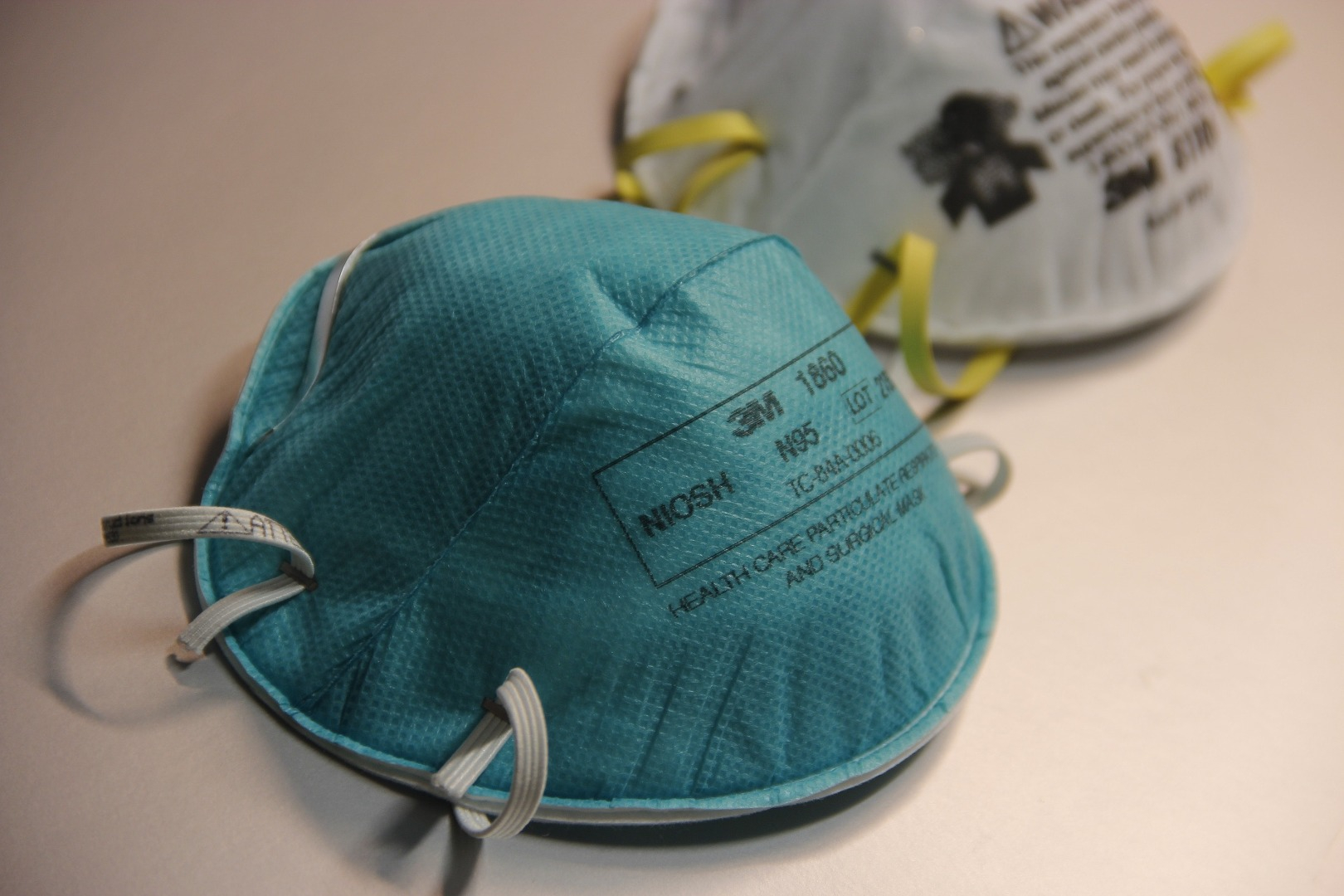
The team uses a typical N95 mask and the results were published in Nature Biotechnology. This technology had been developed to detect other viruses such as Ebola. The MIT and Harvard teams have further plans for the technology.

CAPTION: The team uses a typical N95 mask.

“We’ve demonstrated that we can freeze-dry a broad range of synthetic biology sensors to detect viral or bacterial nucleic acids, as well as toxic chemicals, including nerve toxins. We envision that this platform could enable next-generation wearable biosensors for first responders, health-care personnel and military personnel,” MIT researcher James Collins tells  MIT news