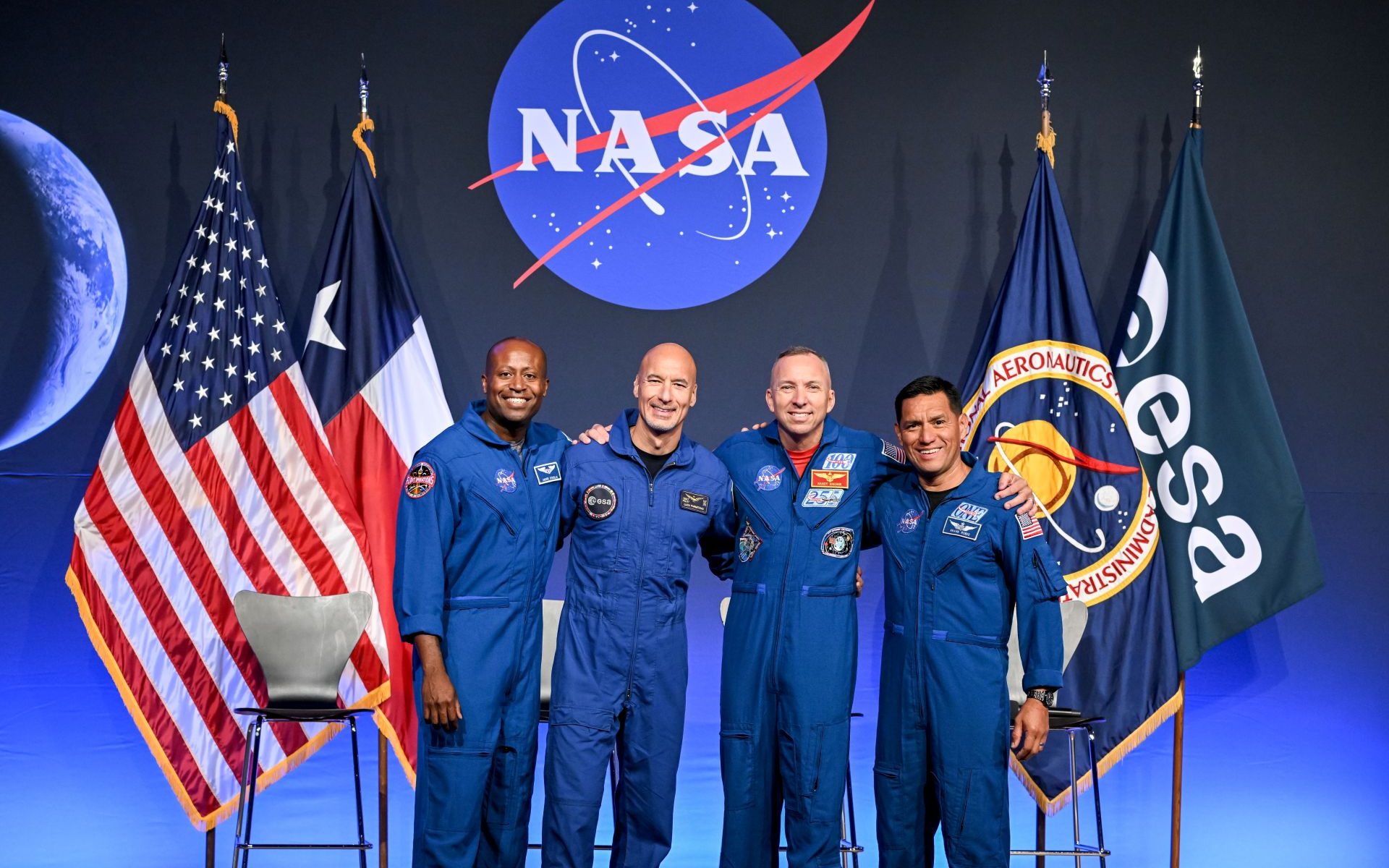
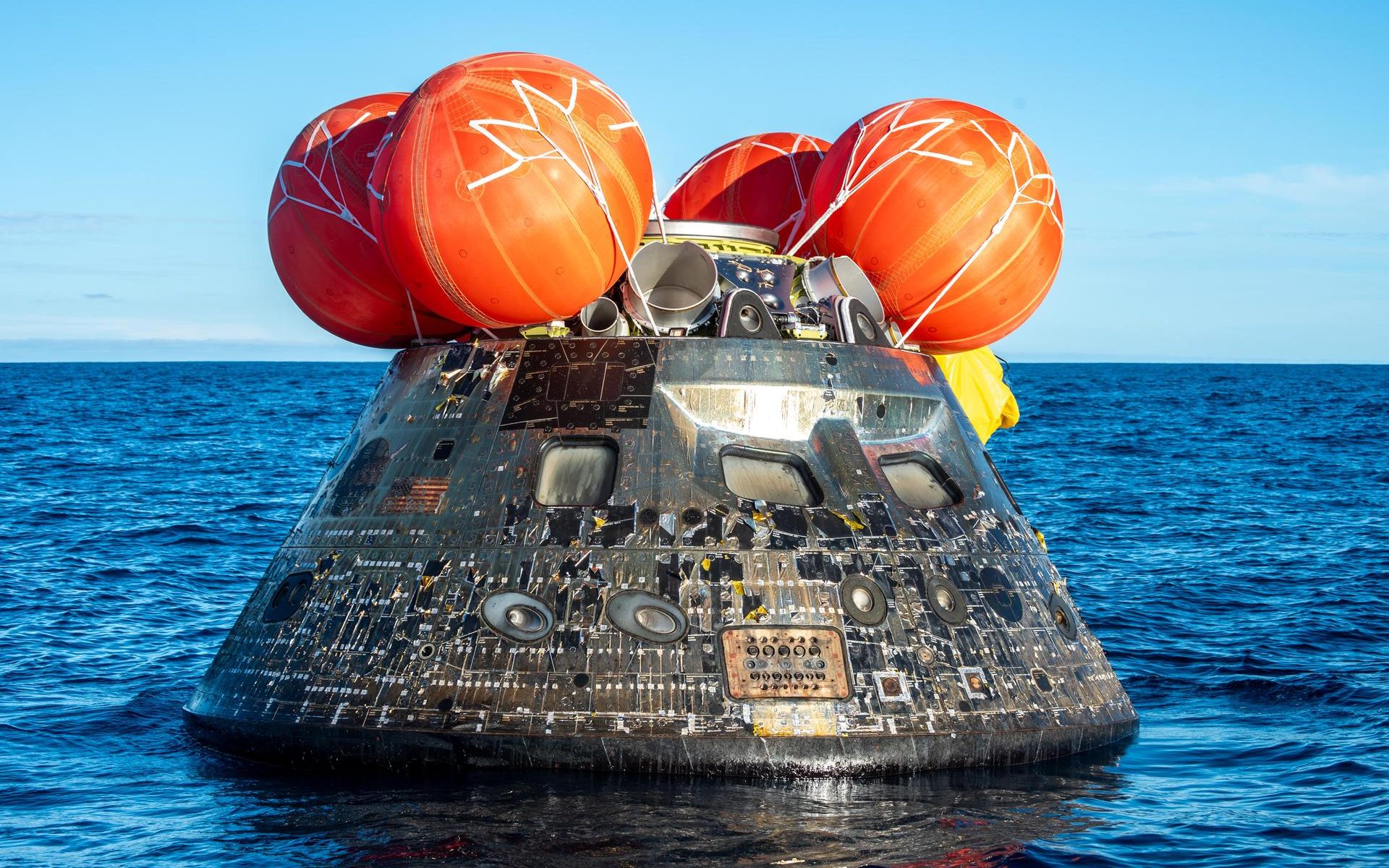
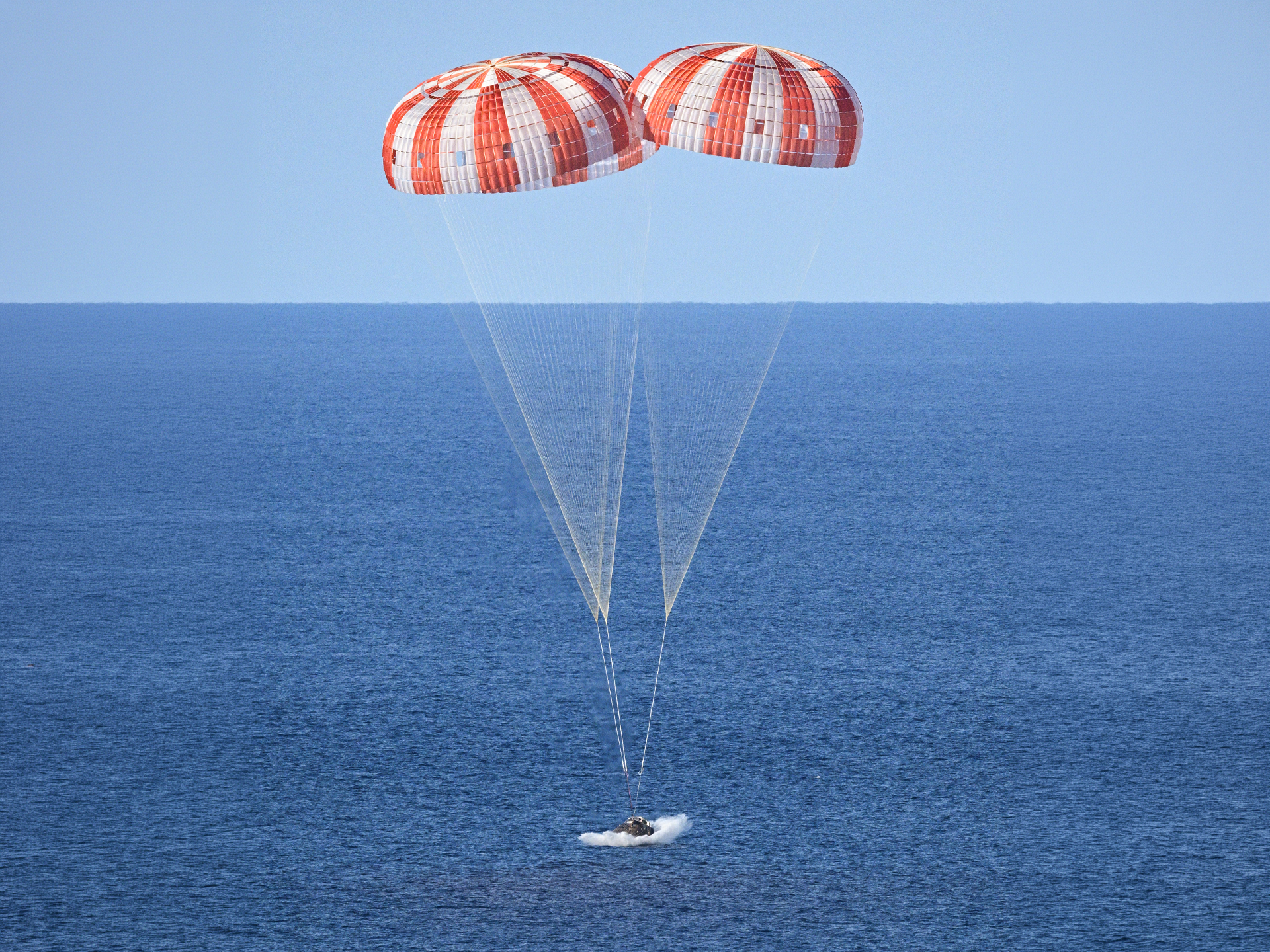
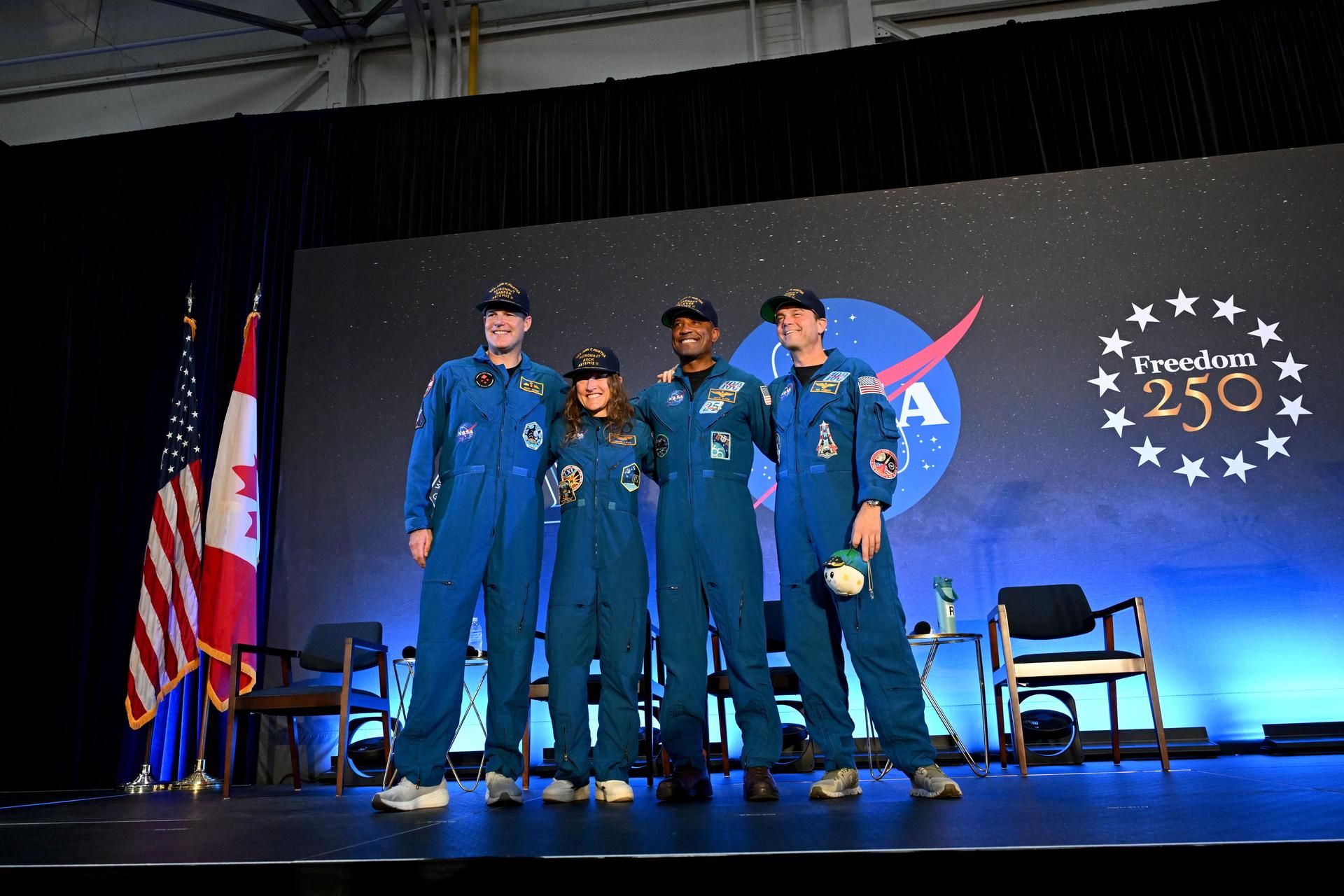
2026 was a big year for NASA’s Artemis program with the successful completion of the crewed Orion spacecraft’s lunar flyby. And with two successful missions in the bag, NASA is rocketing forward with the introduction of the Artemis III crew in a recent press conference.
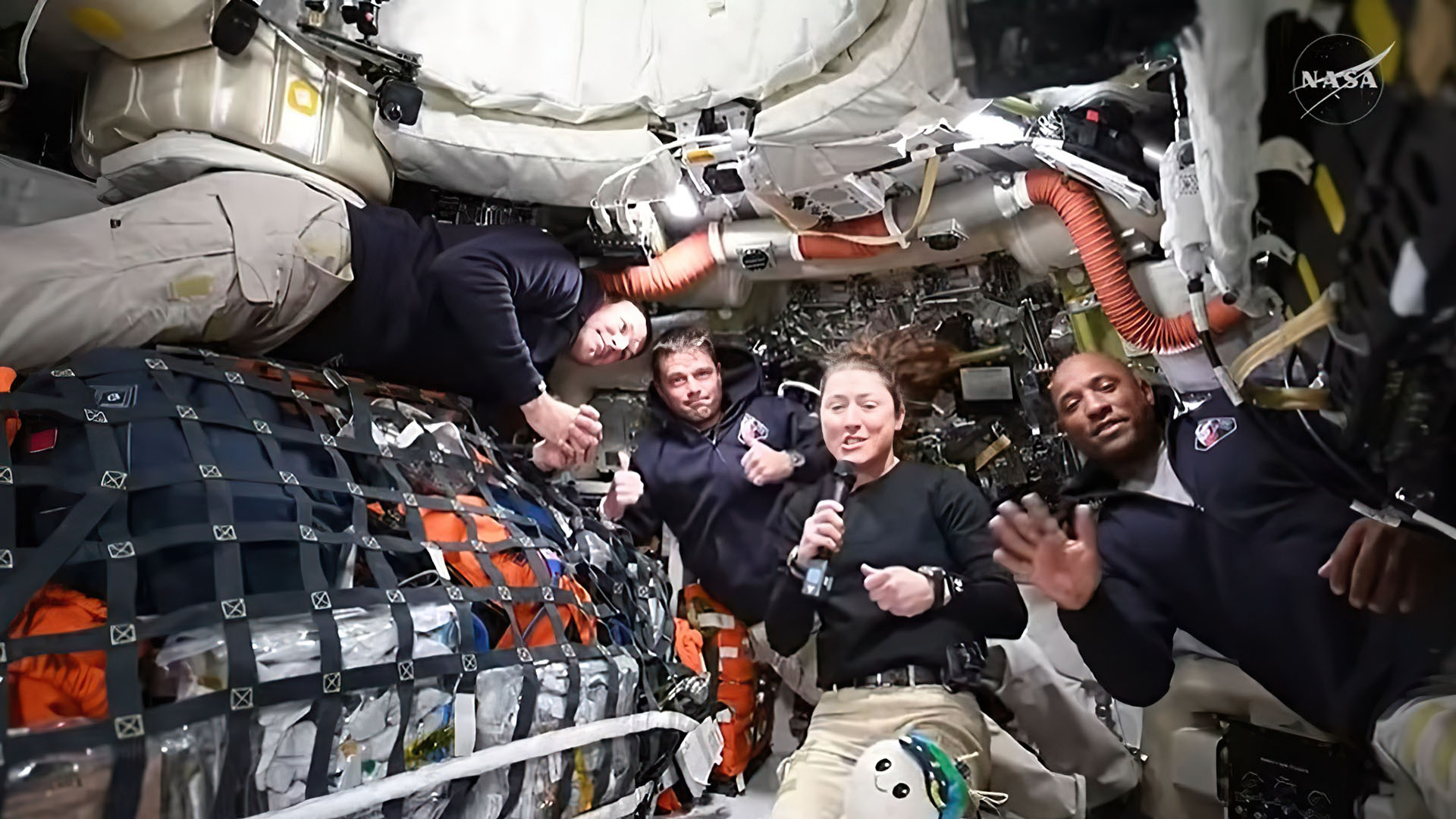
World, meet the crew taking one for the team: commander Randy Bresnik (NASA), pilot Luca Parmitano (European Space Agency), mission specialist Andre Douglas (NASA) and mission specialist Frank Rubio (NASA).
Artemis III, scheduled for late 2027, will evaluate life support and control systems, mission software and determine required vital systems for the next missions. The testing will occur aboard the Orion spacecraft in low-Earth orbit.
The five-mission program’s endgame is to set up lunar lodgings for long-term stays on the moon with the opportunity for further deep space exploration. While Artemis III’s crew will not visit the moon, their mission is critical for the operations and safety for subsequent crews.
The work of the Artemis III crew will allow for 2028’s Artemis IV mission to go where no one has gone before — the lunar south pole.
Artemis II has returned to Earth after a successful lunar flyby. Though astronauts have been to the moon before, Artemis II achieved many firsts.
One of these firsts is something most of us don’t consider when thinking about a mission to the moon, but it’s as simple as one, two, three — well one and two anyway. Yep, among other firsts, we’re talking about space toilets.
But let’s discuss the other Artemis II firsts first.
Only Americans had made the trip to and around the moon until Canadian Jeremy Hansen became the first non-American to make such a journey.
Hansen grew up on a farm in Ontario and wanted to be an astronaut since he was a kid. He’s come a long way from the treehouse he converted into a spaceship to mission specialist on Artemis II at age 50. Hansen represents the Canadian Space Agency, where he’s been since 2009.
But Hansen’s isn’t the only first among the crew members. Christina Kocha, selected by NASA in 2013, has set a few records in her time as an astronaut.
In 2019 she participated in the first all-female space walk and broke the record for the longest spaceflight by a woman, serving 328 days as flight engineer aboard the International Space Station (ISS). Now she becomes the first woman to fly around the moon.
But wait, there’s more.
The Artemis II pilot, Victor Glover, is the first African-American to circle the moon. He holds three master’s degrees and spent time aboard the ISS.
We’ve discovered a lot about our crew, now let’s check out the hardware: the ship.
Analysis of the Orion vehicle that was part of the uncrewed Artemis I mission revealed over 100 spots where heat-shield material Avcoat had broken away. Gas built up inside the material and wasn’t able to escape. The resulting pressure caused damage.
CAPTION: NASA astronauts Reid Wiseman, commander; Victor Glover, pilot; Christina Koch, mission specialist; and CSA (Canadian Space Agency) astronaut Jeremy Hansen, shared brief remarks with friends, family, and colleagues after they landed at Ellington Airport near NASA’s Johnson Space Center in Houston on Saturday, April 11, 2026, after a nearly 10-day journey around the Moon and back to Earth. IMAGE: NASA/Helen Arase Vargas
This needed to be rectified before sending up a crewed ship.
Rather than alter the material, the team altered the physics.
“NASA has modified the trajectory by shortening how far Orion can fly between when it enters Earth’s atmosphere and splashes down in the Pacific Ocean. This will limit how long Orion spends in the temperature range in which the Artemis 1 heat shield phenomenon occurred,” Orion public affairs official Kenna Pell told Space.com. She also said the temperature inside the capsule would still have been comfortable and safe had the ship been crewed.
Also tested on this mission are the essential life-support systems designed and constructed by Airbus, courtesy of the European Space Agency (ESA). The European Service Model (ESM) sustains the crew by providing air, drinking water, power and temperature regulation within Orion.
Once the Orion separates from the SLS rocket, the service module distributes four solar wings. The wings track the sun and convert its energy into electricity that powers the ship’s systems like computers, temperature control, navigation and communications. Batteries are also charged for when the sun is not accessible.
The mission itself expects to boast the fastest crewed Earth re-entry ever attempted at 25,000 mph. Having traveled 252,765 miles, Artemis II set the record for the farthest distance from Earth ever traveled by a human.
Now that we’ve covered all of the “easy” stuff, let’s get down to the complicated part of sending humans into space, including human bodily functions and how those work in microgravity.
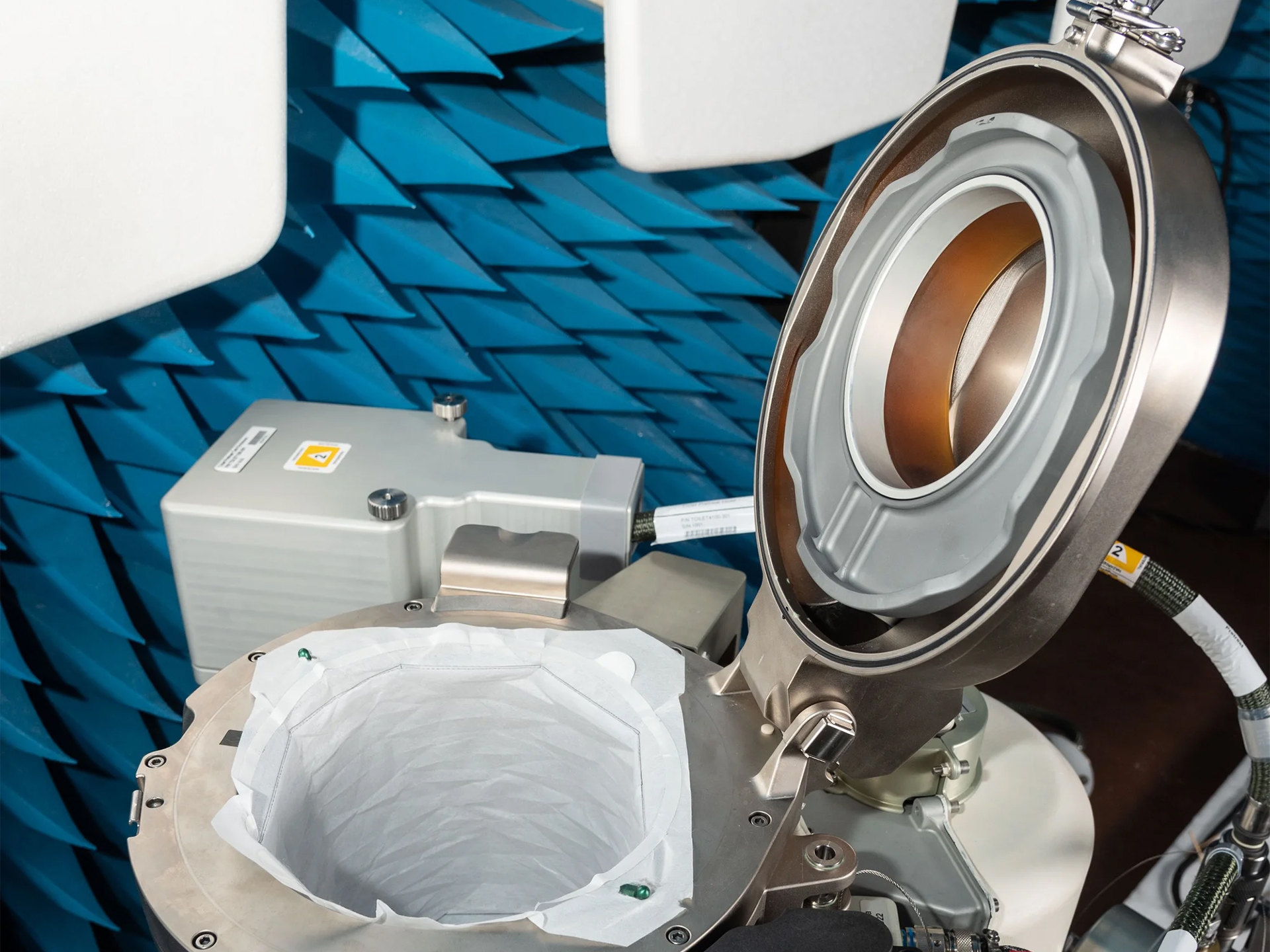
Say hello to the Artemis II loo. Well a version of it.
CAPTION: This version of NASA’s Universal Waste Management System was sent to the International Space Station; a special lunar version will accompany the space agency’s Artemis astronauts onboard Orion spacecraft bound for the moon. IMAGE: NASA/JSC/James Blair
The crews of the Apollo had a different experience when they had to boldly go. But the space program has come a long way from plastic baggies and funnels.
It can handle feces and urine simultaneously — a great “relief” to female astronauts. Unlike previous space toilets, this system takes their anatomy into consideration.
“The toilet has built on designs from Apollo, the space shuttle and even the International Space Station. … There is so much learning that goes into it,” says Melissa McKinley, project manager and principal investigator for NASA’s waste disposal and management systems.
The toilet cabin is loud to the point that the inhabitants require protective ear wear, but that’s not the only complication — once inside, you can’t determine which way is up and which is down.
This isn’t the best time to make directional errors. Previous missions on the Apollo resulted in escapees that had to be chased down by the crew. Not cool.
Who knew that one of the most imperative firsts of modern space missions and deep space exploration would be human waste management?
It seems the luxury of a coveted door on the loo is also a source of mission success.
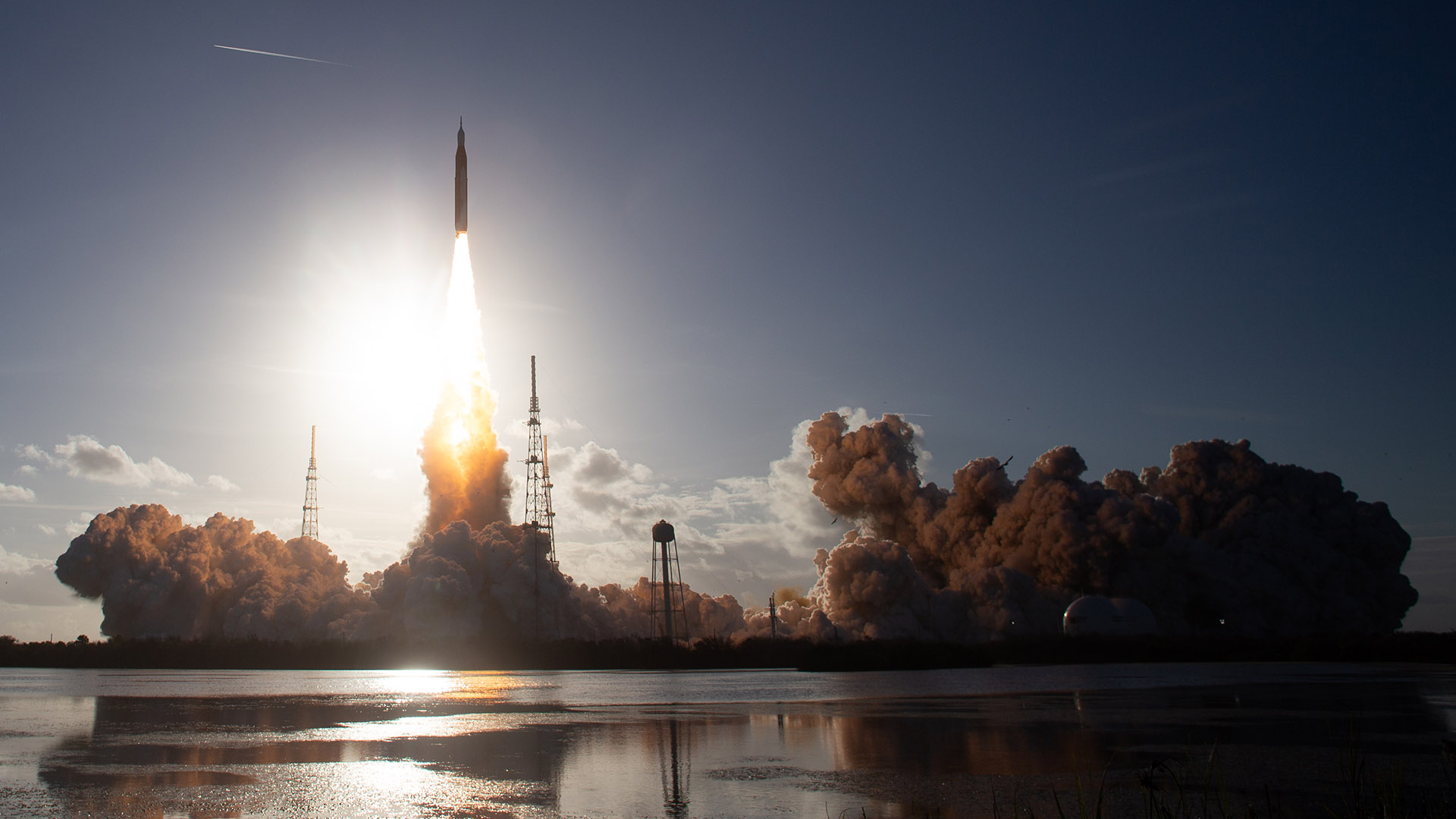
After more than 50 years, NASA aims to return humans to the moon with the April 1 launch of the Artemis II mission.
The last mission to land astronauts on the moon took place in December 1972 and was about planting a flag on the moon. So, what’s the difference this time?
NASA has bigger plans.
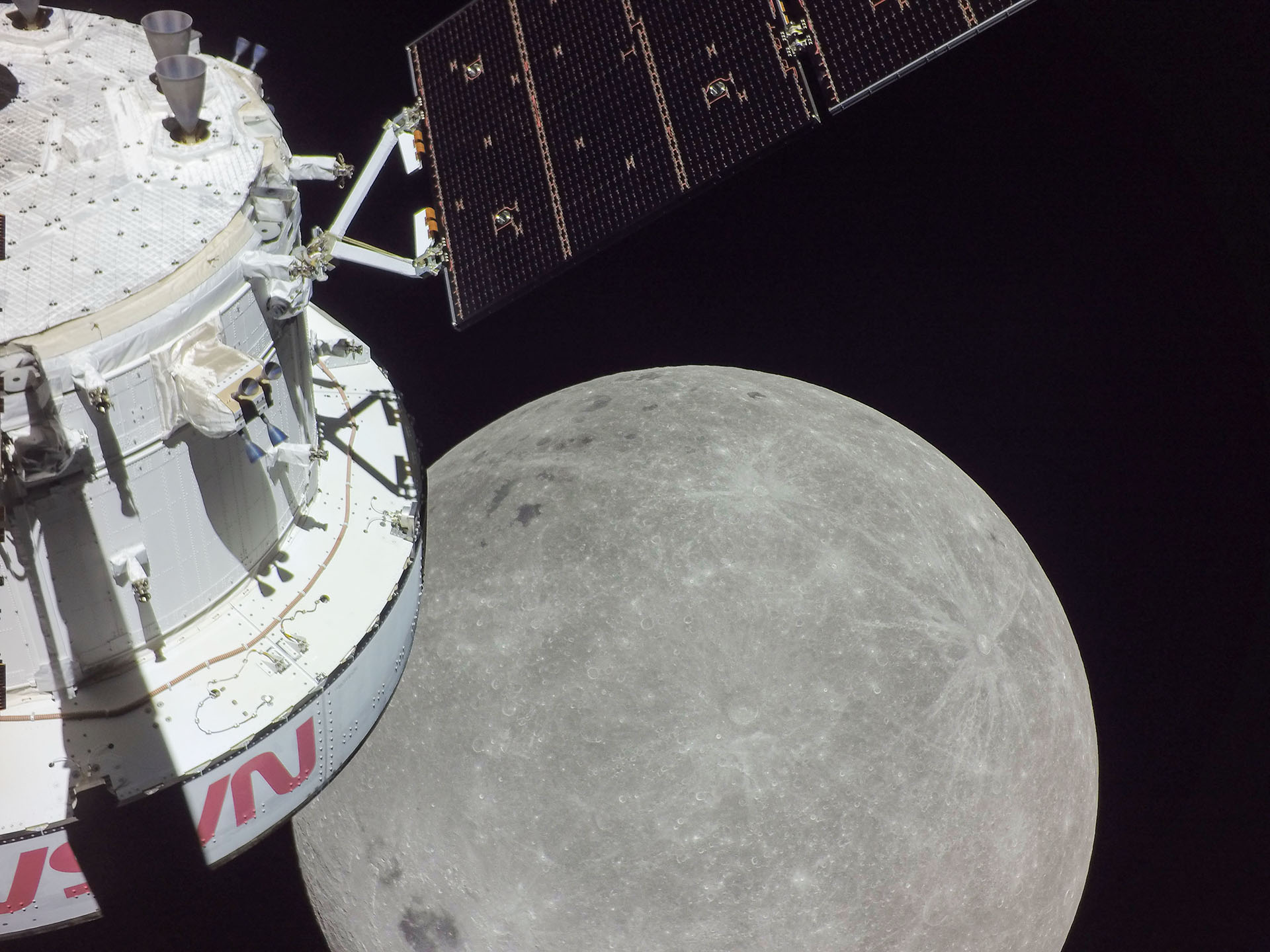
The Artemis program started with the 2022 launch of Artemis I, an unmanned flight test of NASA’s latest deep-space exploration systems. These include the Orion capsule — the vehicle that will launch from the Space Launch System (SLS) and sustain the mission crew. The mission lasted 25 days.
CAPTION: A portion of the far side of the moon looms large just beyond Orion in this image taken on the sixth day of the Artemis I mission by a camera on the tip of one of Orion’s solar array wings. IMAGE: NASA
Artemis II is the first manned part of the mission. A four-person crew – commander Reid Wiseman, pilot Victor Glover, mission specialist Christina Koch and mission specialist Jeremy Hansen – are on a 10-day trip that will circle the moon and return to Earth.
The Artemis II mission is critical because, according to NASA, it will “confirm the spacecraft’s systems operate as designed with crew aboard in the actual environment of deep space.”
CAPTION: From right: NASA astronauts Reid Wiseman, commander; Christina Koch, mission specialist; Victor Glover, pilot; and Canadian Space Agency astronaut Jeremy Hansen, mission specialist, wave to family and friends. IMAGE: NASA
Tests for the Orion capsule team include: life-support environment; systems from ground to launch; flight and recovery; retrieval of flight hardware and data; emergency operations, including systems capabilities, abort operations and rescue processes; and finally verifying subsystems and validating data.
Artemis III is intended to test meeting and docking capabilities between the Orion capsule and commercial spacecraft from SpaceX, Blue Origin or both, required for landing boots on the moon. This mission will occur in low-Earth orbit.
The fourth Artemis mission is targeted for early 2028 and is expected to be the program’s first lunar landing. Once the craft is within lunar orbit, two astronauts will head down to the surface for a week of exploring close to the moon’s south pole.
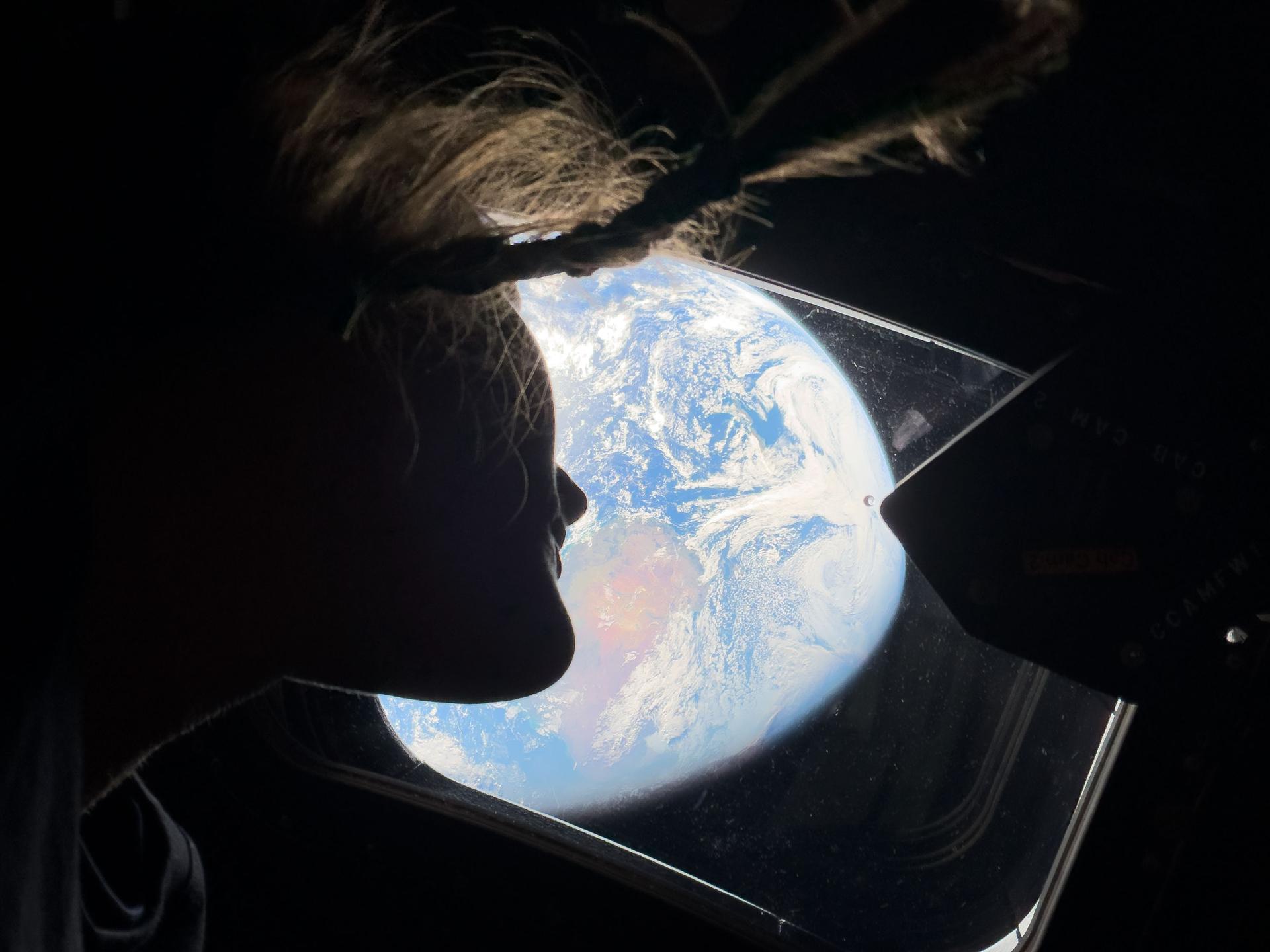
CAPTION: NASA IMAGE: Christina Koch peers out of one of the Orion spacecraft’s main cabin windows, looking back at Earth, as the crew travels toward the moon.
Artemis V is set for late 2028, landing another two crew members on the moon to begin constructing a lunar base for longer-term science missions.
After this final journey, missions are intended to occur approximately once a year.
The established lunar base will serve as a steppingstone for deeper space exploration, ultimately intent on sending crews to Mars.
Though this is an American mission, remember NASA’s motto: “For the benefit of all.” Space exploration has the unique ability to bring nations together, as countries collaborate in the shared pursuit of discovery, innovation and an enhanced comprehension of our place in the universe.
CAPTION: Artemis II crew members Jeremy Hansen, Reid Wiseman, Christina Koch and Victor Glover answer questions from reporters during the first downlink event of their mission. IMAGE: NASA
From onboard the Orion capsule, looking back at the Earth, mission pilot Glover says, “Trust us, you look amazing, you look beautiful, and from up here you look like one thing. Homo sapiens are all of us; no matter where you’re from or what you look like, we’re all one people.”
After traveling a record-breaking 252,760 miles from Earth (within 4,006 miles from the moon’s surface), the Artemis II crew is expected to splash down April 10 in the Pacific Ocean, likely off the California coast near San Diego.
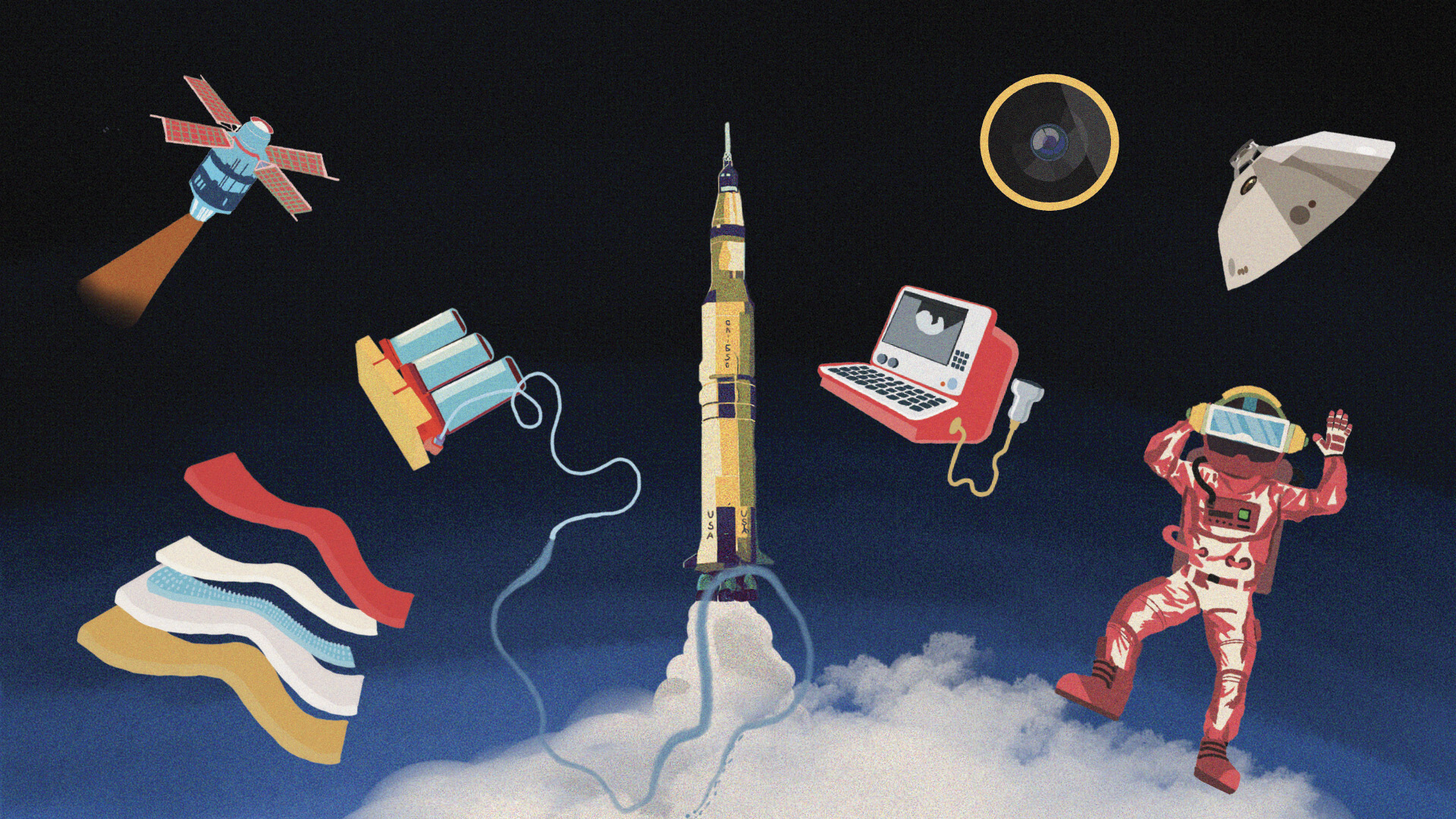
The space race — the Cold War competition between the United States and the Soviet Union — brought innovations not just into the aerospace realm but into everyday life. Here are eight technologies that came out of that period — and three you thought came out of NASA but really didn’t.
| SATELLITE TECHNOLOGY AND GPS
Satellites were developed as a way to communicate with spacecraft and relay information back to Earth. Today, satellites are used for a wide range of purposes, including communication, navigation and weather forecasting. The Global Positioning System (GPS) was developed to navigate and track the position of spacecraft. Now, the average consumer uses GPS for navigation, while farmers use it for precision agriculture. By combining GPS location data with readings from sensors on farming machinery, farmers are able to determine crop yields in different areas of their fields.
| LISTEN TO THE DEEP DIVE
| COMPOSITE MATERIALS
The need for lightweight materials that could withstand the extreme conditions of space led to the development of advanced composite materials. These are now used in a wide range of applications, including aircraft, automobiles and sports equipment. Innovations in shock-absorption materials coupled with robotic and extravehicular activities in space are now being adapted to create more functionally dynamic artificial limbs on Earth.
| WATER-PURIFICATION SYSTEMS
Water in space is precious, so systems were developed to recycle and purify it for reuse. These systems are now used in such settings as hospitals, disaster-relief efforts and developing nations. The electrolytic silver ionizer developed by NASA in the 1960s is widely used on Earth to clean recreational pools.
| MEDICAL EQUIPMENT
The space race led to the development of medical equipment that monitored astronauts’ health during long-duration missions. Plus, digital imaging technology developed for use in space helped create CAT scanners and radiography.
| SMARTPHONE CAMERAS
Experiments miniaturizing cameras for use in space led to the active pixel sensor now used in the standard smartphone camera. Today’s smartphones also employ embedded web technology used onboard the International Space Station to conduct experiments remotely over the internet.
| INTERNET OF THINGS
From embedded web technology came the Internet of Things: remote wireless connectivity between devices in smart homes, smart cities and wearable technology.
| INSULATION MATERIALS
To combat extreme temperatures in space, NASA developed insulation from aluminized polyester called Radiant Barrier, used today in home insulation. Plus, the foil blankets draped over athletes at the end of a grueling event evolved from a lightweight insulator NASA developed to protect spacecraft and people in space.
| WIRELESS HEADSETS AND VIRTUAL REALITY
Astronauts need to float free, hence the development of wireless headsets. Earth-bound high-resolution virtual-reality systems use the head-mounted panoramic display developed to let astronomers and geologists study 3D images of other worlds.
| 3 THINGS NOT INVENTED FOR SPACE
Urban myths link NASA to many materials and gadgets. In fact, the agency didn’t invent Teflon, Velcro or the powdered-drink mix Tang. Teflon had been around since the 1930s, Velcro since the 1950s and Tang was on the market just as NASA was finding its feet.
Mercury astronaut John Glenn drinking Tang in orbit as part of an experiment did, however, do a lot for the brand. NASA may not have invented these products, but it helped to popularize them. Having your product associated with astronauts and the space race connected it with science and discovery.
The space race of the 1960s was about which country would put boots on the moon first. While some of the frontrunners are the same, today’s space race is quite different: Today it’s about who might build on the moon first.
It’s been more than 50 years since a human set foot on the moon. Now China and the United States are working toward habitable long-term structures.
But why would we want to build on the moon?
Listen to the Deep Dive
Basically, it’s a first-come, first-served situation. No one owns the moon — there is no border divide, no land-ownership dispute and no indigenous aliens to bargain with (that we know of) — it’s all just there for the taking. So, it only makes sense that everyone wants to take it.
Though the Outer Space Treaty states no one owns the moon and no one can own parts of the moon, the rules for private companies are ambiguous. In 2020 the U.S. Trump administration produced an executive order that allows private companies to mine on the moon.
IMAGE: Darya Kawa Mirza
Charting a journey through the history of lunar water exploration
For centuries, scientists have theorized about whether water exists on the moon. From bountiful lunar oceans to arid, thirsty regolith, theories of water on the lunar surface have been extreme. Today there is no longer need for theory as the lunar surface provides answers to the question: Can I get a drink of water on the moon? Follow the science as it reveals how early theories led to what we know today: Read more›››
1645: First map of the moon is produced by Dutch astronomer Michael van Langren, suggesting the dark holes on the moon visible to the naked eye are oceans.
1892: American astronomer William Pickering suggests that because the moon has no atmosphere, any water would evaporate.
1960s: Scientists theorize the extreme cold of parts of the moon that never see the sun could be home to frozen water.
1969-’72 Regolith collected by the Apollo mission turns up devoid of water.
2008: Re-examination of lunar soil samples reveals H2O molecules.
2018: A team of scientists confirms ice rests inside craters at both lunar poles. The temperature here never rises above -250 degrees Fahrenheit.
2020: NASA confirms water on the sunlit surfaces as well.
2023: China mission discovers tiny glass beads containing water in lunar soil where meteorites smash into the moon. There are billions, perhaps trillions, on the surface, each no bigger than the width of two hairs.‹‹‹ Read less
And now that we know the moon isn’t made of cheese, players are hard at work to get pieces of what it is made of.
It must be something spectacular for them to want it so badly, right?
Sorry to disappoint, but with the exception of a handful of new minerals, it’s really not much different from what we have here on Earth.
“The Earth and the moon are made out of the same stuff because the solar system was made out of the same stuff,” says Ian Crawford, professor of planetary science and astrobiology at Birbeck University of London.
Locally sourced materials
The problem is that stuff here on Earth doesn’t help us build structures in space, and that‘s the long-term plan: Build on the moon without carting materials all the way from Earth or robbing Earth of its resources. “Gradually increasing access to lunar resources may help bootstrap a space-based economy from which the world economy, and possibly also the world’s environment, will ultimately benefit,” Crawford says.
Don’t forget about the cost, says Sean Swei, director of the Space Technology & Innovation Center at Khalifa University. “Here, the cost is most likely measured by the amount of energy needed to perform mining and conversion. For example, sending 1 liter of water to the moon costs about U.S.$1.2 million. If we could come up with a much more effective launch vehicle, the cost could drop to U.S.$10,000. Hence, large payload delivery to the moon might still be reasonable, though for sustainability we’d still want to enable in-situ resource utilization.”
Progress is underway
NASA in 2022 announced it hired four private companies to mine the lunar surface. The first is Lunar Outpost, a company with a mission to settle humans on the moon. Lunar Outpost charged NASA a dollar for the private company’s rover to pick up a bit of lunar soil, take a snapshot of it and transfer ownership to NASA.
This marked the beginning of commercializing lunar minerals. It also marked the first action in NASA’s plan to build a long-term dwelling for humans on the lunar surface by 2030
NASA’s Artemis program launched its first phase to test its new mega-spaceship in 2022. It was uncrewed — by humans — and it successfully returned to Earth with all of its mannequins and stuffed toy Shaun the Sheep unharmed.
Artemis II will take astronauts on a junket around the moon, and Artemis III will be the boots-on-the-moon finale with an ultimate goal of establishing habitable bases.
Printing a place to live
But for those bases they’ll need building materials. And they’ll use modern technology to produce them. This is where 3D printing comes in.
NASA has toyed in the past with 3D printing on the International Space Station, using lunar regolith for research purposes. But in 2022 the agency announced it had awarded a U.S.$60 million contract to tech-construction company Olympus to construct a 3D laser printer that will build on the moon and Mars.
Meanwhile, Khalifa University is working on autonomous/robotic assembly of large habitat infrastructures on the moon. This race is on.
The Chinese space program also aims to mine the moon for exploration purposes. And while building a safe, sustainable shelter on the moon is paramount for all players, so is the discovery of possible energy sources.
China, too, is pursuing 3D printing. According to a 2023 Reuters report, China is hoping to use the technology to 3D print a lunar station. Its 2028 mission has a robot tasked with constructing a brick from moon minerals.
CAPTION: This photo might look a bit strange, yet those are the actual colors of the lunar surface (with a bit of a push to make them distinguishable and more visible). Those colors come from the minerals found there. Areas rich in iron, for example, have an orange tint, while areas rich in titanium have a blue tint. IMAGE: Ritesh Biswas
The United States and Russia have discovered five new minerals on the moon. But China’s 2020 lunar mission resulted in the discovery of a sixth: a phosphorus mineral named Changesite-(Y). On Earth, phosphate plays an essential role in plant growth. While it is not known what the phosphate from the barrel-shaped moon crystals will reveal, it could be a possible energy source for those long-term lunar visits.
Scientists in China analyzing the Changesite-(Y) crystal determined it contains an isotope of helium-3, which is scarce on Earth.
A better nuclear material?
This discovery could be an energy game-changer, says Gerald Kulcinski, director emeritus of the Fusion Technology Institute at the University of Wisconsin-Madison.
“The amount of energy in the helium-3 on the moon could produce all the electricity needed on the Earth for about 1,000 years,” he says. Astronauts from the U.S. Apollo program discovered in 1970 that helium-3 is in almost every sample brought back from the moon, Kulcinski says.
Helium-3 is effused by the sun and transported through the solar system by solar winds. But Earth’s magnetic field repels helium-3; only a small amount penetrates the atmosphere.
The moon, however, has about 1 million metric tons of the material, Kulcinski tells KUST Review.
The moon’s resources could be a proverbial goldmine for nuclear energy. Experts say 40 grams (eight teaspoons) of helium-3 could provide the energy equivalent of 5,000 tons of coal. Because helium-3 is not radioactive itself, it could provide safer and cleaner nuclear energy.
“He-3 is one of the advanced fusion fuels that can release enormous amounts of energy without the drawbacks of greenhouse gases from fossil fuels or large amounts of radioactive waste from fission reactors,” Kulcinski says.
What else is there?
So if there’s energy resources in abundance on the moon, surely, you might think, there are many other untapped assets there too. Sadly, you’d be wrong, says Birbeck University’s Crawford.
Though much of the moon is unexplored, Crawford says he believes there won’t be any significant future finds to benefit us on Earth. He contends this race is about what we can use while in space — whether it’s a lunar station or a Jeff Bezos hotel in Earth’s low orbit — and the media hype of the race is geo-politics at play.
“It’s interesting and important from a scientific point of view, and though there are only 10 locations on the surface of the moon from which we’ve actually collected samples and analyzed them, I doubt there are going to be any big surprises that are going to be relevant,” he tells KUST Review.
Join our mailing list
Get the latest articles, news and other updates from Khalifa University Science and Tech Review magazine