
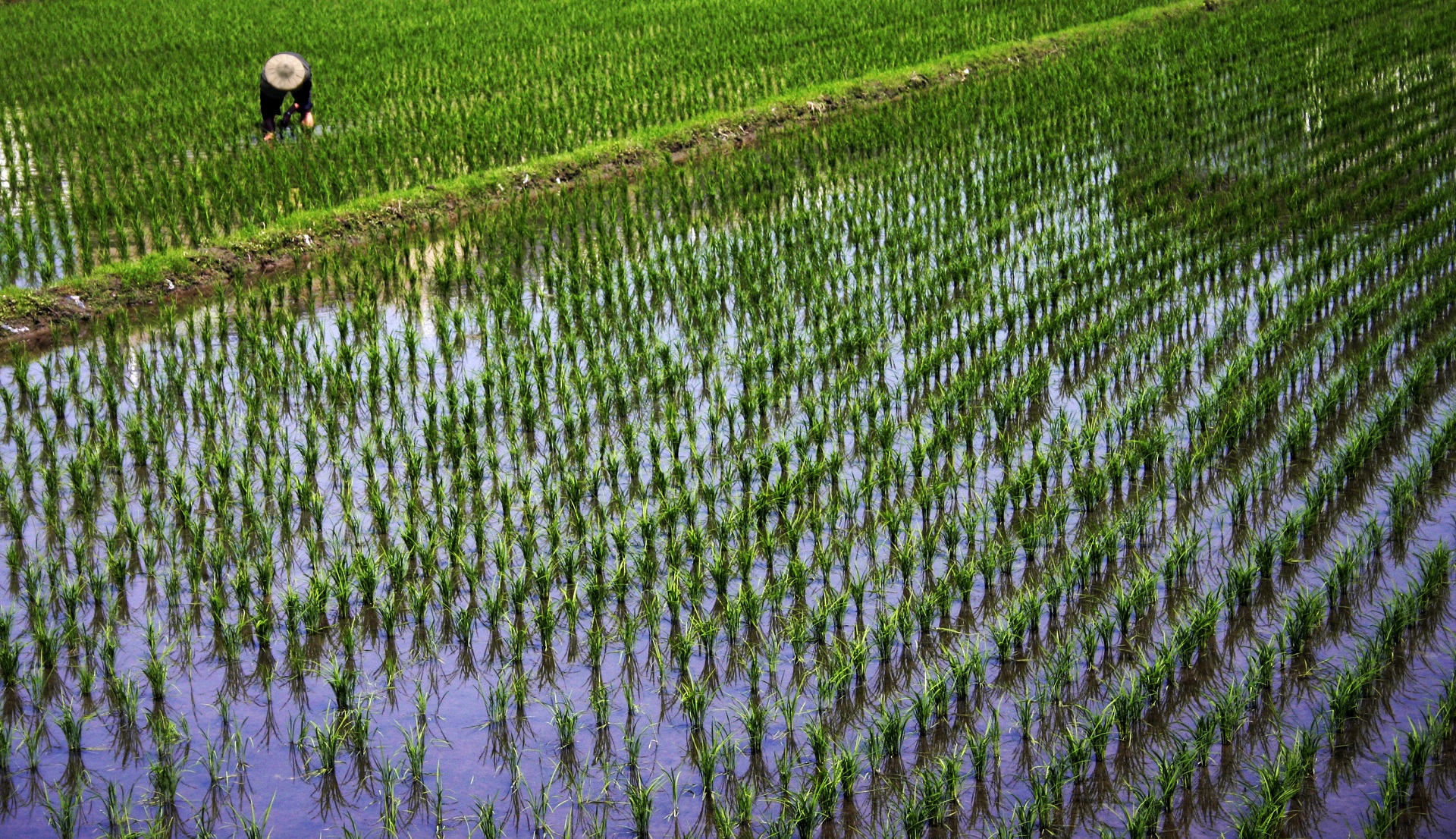
Rice fields using electric biochar
release more methane

Rice paddies take up about 9 percent of global agricultural land and pump out loads of methane, which is 28 times more potent than carbon dioxide.

Adding electrically charged biochar, though it increases crop yield and has often been used for its sustainable properties, makes them even gassier. A new study, in Springer Nature Link, reveals that soils treated with graphene-enhanced biochar produce up to 70 percent more methane.

This is because biochar’s conductivity helps electrons move faster through dissolved organic matter — like giving soil a power boost. The extra electron flow enhances methane production.

This means biochar isn’t always a climate-friendly option. In rice farming, its electrical side effects could mean more greenhouse gas than less.

More like this: Brewing strength by transforming coffee grounds waste
From pollution to power

A team of scientists in China has developed a way to turn methane and carbon dioxide, the two main drivers of global warming, into clean air while creating a useful fuel.

Converting these greenhouse gases into syngas, a useful blend of hydrogen and carbon monoxide using solar and wind electricity, not only reduces carbon emissions — it goes net-negative. This means the process removes more CO2 from the air than it adds.

Running electricity through a mix of nickel, which is good at helping chemical reactions along, and lanthanum oxide (Ni–La₂O₃), a rare Earth element, syngas is created without the need for hot furnaces or burning fossil fuels. The system works longer and more efficiently than anything previously attempted.

This research, published in Science Advances, can help fight climate change while producing valuable fuel that industries use to make chemicals, plastics and clean hydrogen.

More like this: Hydrogen: The future fuel for aviation?