Say ‘ahhh’

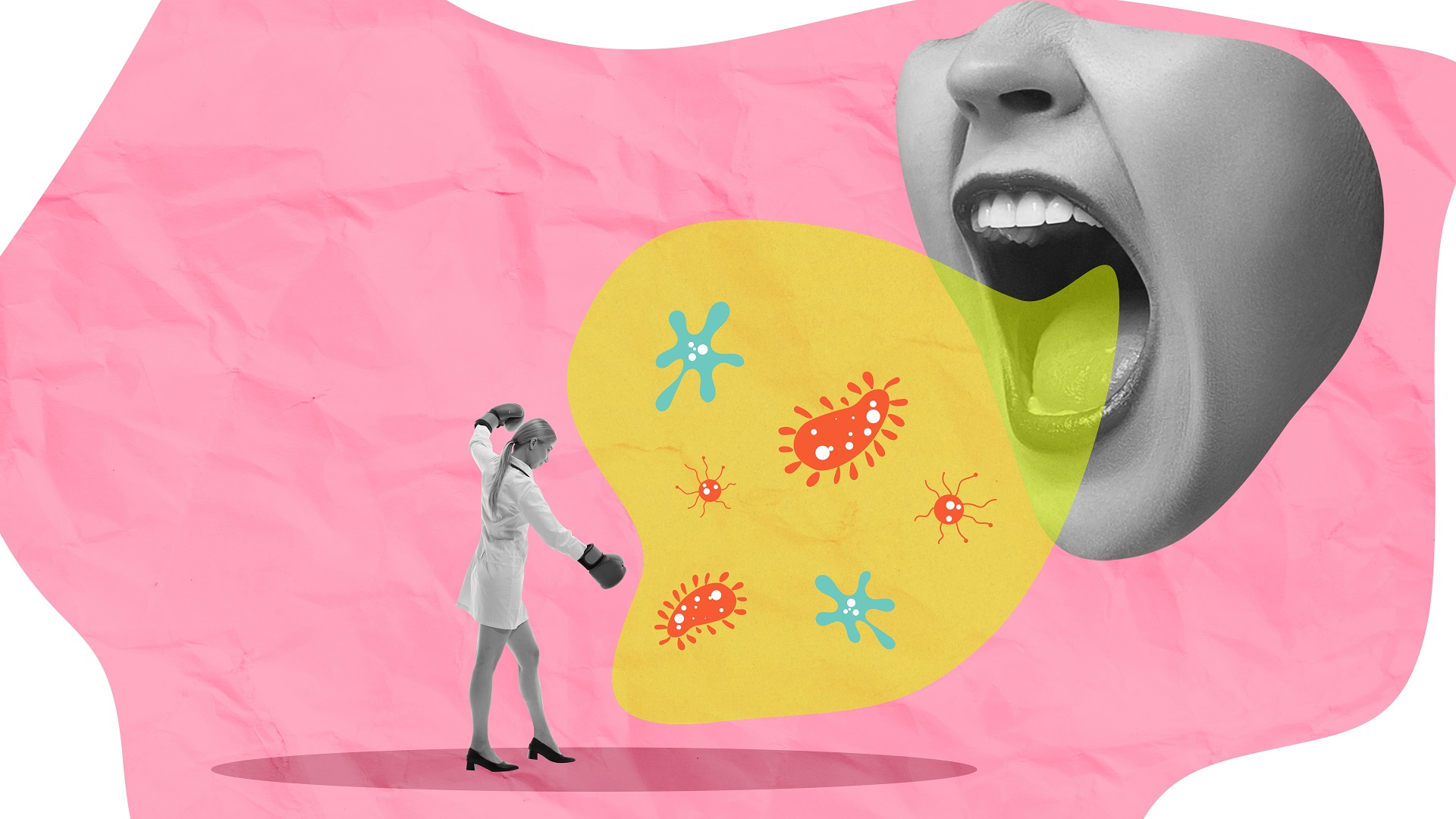
When the doctor tells you to stick out your tongue and say “ahhh,” he’s usually using a tongue depressor to move it out of the way to get a look at your throat. But the look of the tongue itself can tell a physician a lot about a person’s overall health, and now thermal imaging and AI are joining the tongue-diagnosis game that’s been around for centuries.

Traditional Chinese Medicine, or TCM, has been using the tongue as a diagnostic tool for at least 3,000 years.

It observes three tongue criteria to reveal our health: color, shape and type of coating covering the surface. For example, a healthy tongue would be some shade of pink but if it’s dark red, it might indicate sleep issues or anxiety, and a bluish tinge could indicate poor circulation.

While TCM uses the tongue as a main diagnostic tool, Western medicine might observe the tongue’s condition alongside many other indicators, like medical history and lab results.

This “gap” between the two, however, is nearing bridge status as technology develops — thermal imaging and AI-powered tools in particular.

A team of researchers recently introduced an AI health detector tool designed for TCM using thermal radiation image recognition and showcasing the seamless integration of human computer interaction (HCI) principles into health-care applications.


Infrared thermography captures detailed tongue images and records tongue-heat distribution to create thermal images that represent temperature variations.

The team says its portable, hand-held thermal radiation diagnostic tool, integrated with HCI, and created in collaboration with TCM practitioners, sets their research apart.

The dental mark tongue recognition model, using DenseNet T algorithm architecture, resulted in an average accuracy of 25 percent higher than other dentate tongue-recognition models that are designed to standardize and automate traditional Chinese medicine tongue diagnostics.

Another recent advance in tongue diagnosis leans on AI and machine learning for results.

A paper, published in Technologies, presents a new computer vision system that analyzes tongue color changes, offering potential for real-time diagnosis.

These analyses and machine learning predict health conditions with an accuracy exceeding 98 percent.

The researchers used a webcam to capture images in real time of both sick and healthy individuals and were able to differentiate between them simply by tongue color.

The system applies six machine learning algorithms to classify tongue images under a variety of lighting conditions.

“There have been studies where people tried to (diagnose via tongue color) without a controlled lighting environment, but the color is very subjective,” says co-author Javaan Chahl of the University of Australia.

The model was trained on more than 5,000 images across seven color classes. The results show that AI systems for tongue diagnosis are accurate, efficient, cost-effective and non-invasive. This is particularly important in areas with minimal access to health care, addressing the impact of lighting on the colors of the tongue, a key challenge for tongue diagnosis.

So, the next time you’re looking in the mirror, make sure to observe the conditions of your tongue and see what might be a little out of the ordinary. Sticking out your tongue at yourself might just be the key to preventing health issues.

More like this: How often you breathe could help detect Alzheimer’s

Autism diagnosis within our grasp

Approximately 75 million people in the world have been diagnosed with autism, a complex neurodevelopmental disorder that impacts individuals across a large scale of severity and symptoms.

Symptoms are scored from 15 to 60, with scores under 30 considered low, 30-36.5 at moderate level and 37 to 60 indicating severe autism.

Experts say that early intervention is imperative to help each individual meet their potential, no matter where they fall on the spectrum.

Researchers from York University in Toronto and University of Haifa have used machine learning to impart early autism diagnoses to make sure intervention is timely.

They used kinematic features, namely a natural grasping task with only two finger-tracking markers that are indicative of motor control integrity. Using reach-to-grasp movements as data with those on the spectrum and those not, they were able to use machine learning to determine autism identification at 95 percent accuracy.

These findings complement emerging views that movement variability may reveal autism subtypes and could enhance early detection or intervention strategies.

The study was published in Autism Research.

More like this: Making the grade with EdTech

From Nobel-winning breakthroughs to
local innovation

Advances in protein design and the use of AI for predicting protein structures made the headlines with the 2024 Nobel Prize in Chemistry. But closer to home, researchers at Khalifa University in Abu Dhabi are leading the way in using computational methods to predict the crystal structures and properties of materials.

This foundational work is driving progress in energy storage, drug development and the creation of components for advanced optoelectronic devices.

Listen to the Deep Dive

“The basic idea is to use computers to predict the atomic arrangement of solids before we synthesize them in the lab,” says Sharmarke Mohamed, head of the Chemical Crystallography Laboratory (CCL) at Khalifa University. “If we can do this accurately for all target molecules of interest, then this gets us one step closer to answering the scientifically interesting question of what experimental conditions are necessary to target the crystallization of a material with this particular structure.”

Using computers is time-saving, cost-effective and minimizes trial-and-error experiments. But why is this important?


Today, the challenge is not whether we can use computers to predict crystal structures, but how the predicted crystal structures can be used to guide experiments in the synthesis and discovery of functional materials.

Sharmarke Mohamed, head of the Chemical Crystallography Laboratory (CCL) at Khalifa University


Crystallizing proteins allows scientists to understand their structure in detail.

Proteins are complex macromolecules, and their shape determines how they function in the body. By creating crystals of proteins, researchers can use techniques like X-ray crystallography to study their 3D structure. This helps in designing medicines that fit a protein perfectly to treat diseases. It also advances understanding of conditions like cancer and Alzheimer’s by revealing malfunctions in the protein structure.

CAPTION: Sharmarke Mohamed (from left), Praveen Managutti and Thomas Delclos

“Fifteen years ago, when I was doing my Ph.D. in chemical crystallography and computational structure prediction, the question of whether computers can predict crystal structures was still an open question. The problem was also somewhat niche and confined to the academic community because very few industrial researchers were engaged in method development and testing. Today, most pharmaceutical companies around the world have some sort of computational crystal structure prediction research program in-house,” Mohamed says.

But the field has developed immensely over the past couple of decades thanks to a little healthy competition.

Critical Assessment of Structure Prediction (CASP) is a biennial event where researchers assess the performance of methods used to predict protein structures. Scientists worldwide participate in testing algorithms that aim to determine how proteins fold into their 3D shapes based solely on their amino acid sequences. Given the importance of protein structure in areas like drug development and disease research, CASP plays a critical role in advancing computer-based biology research and guiding improvements in prediction methods.

A similar blind test has been ongoing since 1999 for assessing progress in using computers to predict the crystal structures of small molecules.

The Crystal Structure Prediction (CSP) Blind Tests, organized by the Cambridge Crystallographic Data Centre, bring together scientists from academia and industry to evaluate their methods on real-world examples in a controlled setting. These tests also foster collaboration within the CSP community.

Mohamed and his team — including M.Sc. student Mubarak Almehairbi, Ph.D. student Zeinab Saeed and postdoctoral research fellows Tamador Alkhadir and Bhausaheb Dhokale — participated in the most recent CSP blind test.


“This seventh blind test featured the most challenging target molecules to date,” Mohamed tells KUST Review. “The results show that the field has progressed significantly since the first blind test in 1999, as reflected in the success rate in both structure generation and ranking. But as with all advancements in science, when we make progress in one area, new questions and challenges arise.

“Today, the challenge is not whether we can use computers to predict crystal structures, but how the predicted crystal structures can be used to guide experiments in the synthesis and discovery of functional materials,” Mohamed says. “This is now the focus of many researchers in the field, including our group in the Chemistry Department of Khalifa University.”

For example, machine learning has improved how we rank predicted crystal structures, helping researchers identify which ones are likely to form successfully under normal temperature and pressure conditions.

Ranking crystal structures helps researchers figure out which ones are most likely to be observed under real-life conditions. This saves time and effort by focusing on the best options for experiments.

Mohamed’s group is developing new methods and codes to help experiments target new materials with desirable solid-state properties. For example, the team recently created the MechaPredict code, which is able to predict the mechanical properties of crystals on any surface of interest without the need for sensitive nanoindentation experiments.

CAPTION: MechaPredict code summary IMAGE: Khalifa University

This code is already being used by academics around the world and has attracted interest from pharmaceutical companies for its potential to extend the shelf life and improve the solubility and stability of drug products. Additionally, the code can be applied in designing new materials like hole-transport layers for solar cells, which can lead to more efficient, versatile, cost-effective and longer-lasting solar panels.

But with all the advances made in computational CSP methods, a well-equipped crystallography laboratory is necessary to validate the accuracy of the computational predictions.

“The Chemical Crystallography Laboratory (CCL) is the best-equipped crystallography lab in the UAE for performing single-crystal X-ray diffraction, the gold standard for determining the crystal structures of materials,” Mohamed says. “The CCL provides experimental crystallographic services to Khalifa University researchers as well as to collaborators in the UAE and around the world. The synergy between experimental chemical crystallography and computational CSP methods is the key to seeing further advances such as those recognized in the 2024 Nobel Prize in Chemistry.”

DATA to delivery

Welcome to Industry 4.0, considered by many experts to be the fourth industrial revolution. Artificial intelligence and data analytics are a big part of it and are already changing how supply chains work. Here are just some of the ways they make getting a product from the manufacturer to your home cheaper and more efficient.

IN THE FACTORY

Generative design: An algorithm receives design parameters (such as cost and information on available materials) and generates thousands of options to find the best one.

LISTEN TO THE DEEP DIVE

Order management: AIs handle complicated order information from multiple channels.

Quality control: Sensors inspect products for defects.

Predictive maintenance: AI monitors systems and machines for early signs something is about to break down, preventing expensive factory shutdowns.

Compliance management: AI manages the red tape when the same product is sold in different markets with different regulations.

Customization: AI may be used to create such customized orders as bespoke suits and made-to-order shoes. And in a process called “reshoring” or “nearshoring,” products made far away can be customized closer to the sale point at the last minute.

IN THE WAREHOUSE

Stocking: Digital cameras monitor inventory levels and AI robots pick, sort and pack products.

Finding damaged packages: Machine learning models scan and analyze images to spot damaged objects.

Helping workers with wearable technology: Smart glasses “read” barcodes. Natural language processing helps humans work hands-free to pick items more safely.

THROUGHOUT THE PROCESS

Supply chain visibility: Internet of Things (IoT) devices provide instant information about such conditions as the location and temperature of shipments. Businesses can spot bottlenecks, manage disruptions in real time and make data-driven decisions.

Collaborative supply chains: Multiple companies use data and analytics to work together to plan and execute supply chain operations. The cooperative approach allows the companies to serve similar customers or achieve a common goal.

DELIVERIES

Optimal routes: Vehicle routing algorithms (without problems) use such factors as capacity, delivery priorities and time windows to plot the most efficient routes.

Real-time conditions: AI can monitor weather, traffic and other conditions to reroute as necessary.

Autonomous vehicles: Truck platooning technology can permit a group of vehicles to operate extremely closely, reducing wind resistance and decreasing fuel consumption for transportation between factory and warehouse or retailer. Smaller vehicles will be used for deliveries. Algorithms optimize routes while AI helps vehicles avoid collisions.

It’s a robot invasion —
in the operating room

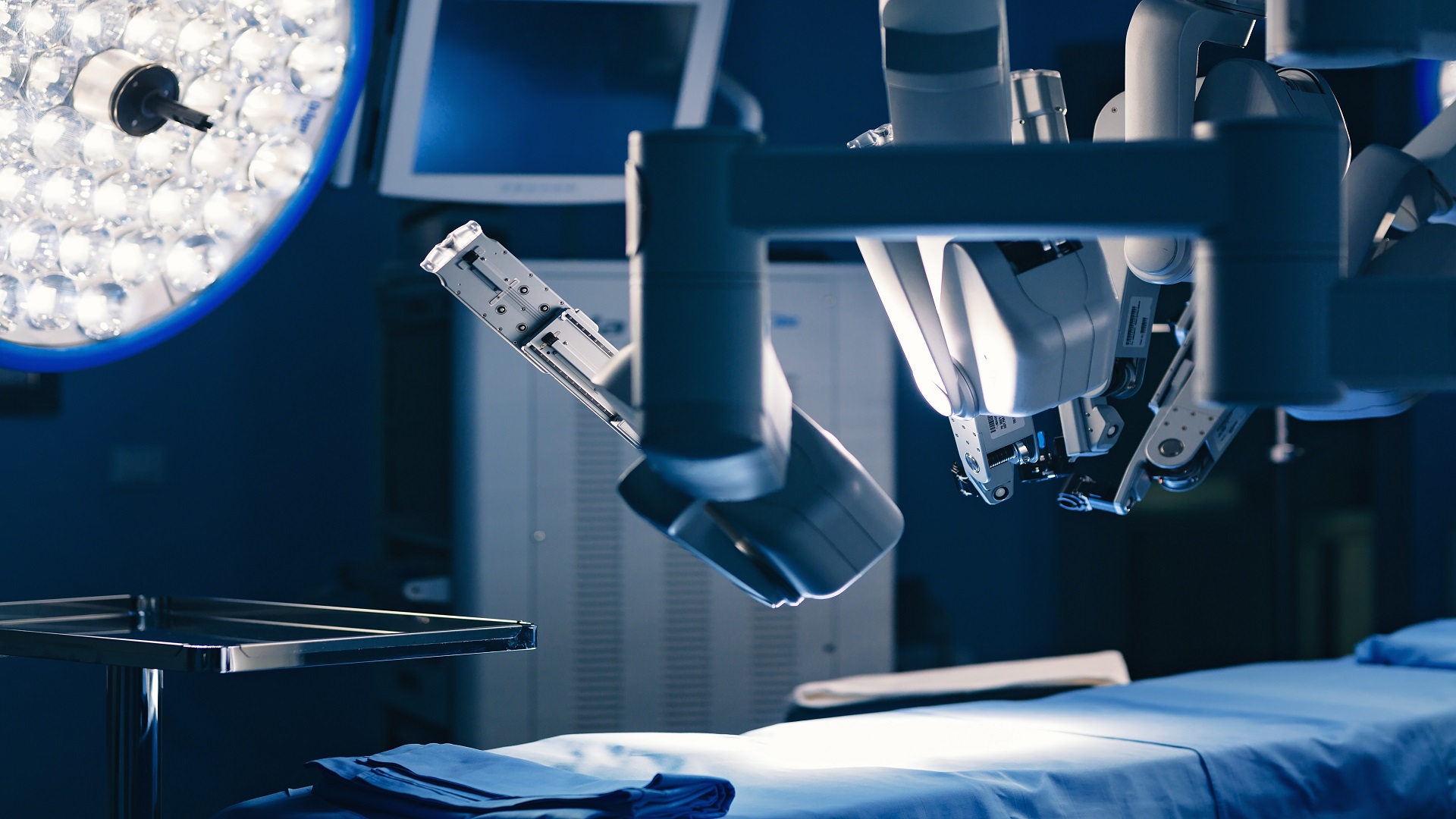
Telehealth evolved rapidly during the COVID-19 pandemic, with phrases like tele-triage and tele-consultants becoming household words as governments adapted policies and encouraged remote services to manage an unprecedented health emergency. At the same time, a halt in most elective surgeries worldwide highlighted a need for advancements in robotic surgeries.

Now with progress in machine learning, AI the 5G network and robotic surgery equipment, surgeons can operate on patients from across the room and across the world.


As with most technology developments, there are kinks to iron out. Since the first telesurgery in 2001, skepticism, network issues, legislative differences between countries and the high cost of robotic equipment hindered growth. After the development of 5G, however, a team in China in 2019 performed successful telerobotic spinal surgeries on 12 patients from six cities.

While both robotic surgery and telesurgery offer more precision, are less invasive and result in quicker recovery time, telesurgery also eliminates logistical issues like travel health risks and cost of travel. It also offers better access to much needed surgeries for underserved countries.

CAPTION: Neurosurgeon remotely operates on a patient IMAGE: Shutterstock

The Lancet in 2015 published a study in which researchers estimate 5 billion people lack access to necessary surgical care. The main problem with this is not only the expense of the robotic systems, but also access to high-speed internet.

Gary Guthart, CEO of Intuitive — the company that created the Da Vinci surgical robotic system, which was the first to be approved by the U.S. Food and Drug Administration — said the company is developing innovative strategies to increase the number of surgically trained clinicians in low-resource regions.

“This is an urgent problem,” he says, “because of the significant global shortage of surgeons, particularly in low-resource countries. Every year, an estimated 16.9 million people die who might otherwise be treated.”


With the need for telesurgery development at the forefront, advancements in machine learning, AI and the 5G network, the market is expected to surge to an estimated compound annual growth rate of 11.9 percent between 2022 and 2029. The growth can be attributed to things like a desire for less invasive surgeries, precision ability, a 3D surgical viewpoint and the increasing volume of surgeries worldwide. A paper published in 2020 in Elsevier estimates that there are 310 million major surgeries each year.

Further benefits include data sharing ability between institutions, remote consultations and training surgeons.

Anthony Fernando, president and CEO of Asensus Surgical, a medical devices company that focuses on digitizing the interface between surgeon and patient, believes that using AI, machine learning and adding deep-learning abilities to robotics will result in “the best possible patient outcomes independent of surgeon skill level, training, and experience. This transition of thinking and innovation is what will drive the larger digital transformation needed to enable the future of telesurgery and other future surgical improvements that we have not even imagined yet.”

Robotic-assisted surgeries have been around for nearly four decades. The first procedure was a brain biopsy in 1985, which led the way for a gallbladder removal in 1997. This robot did not have a camera, so a human assistant had to hold the endoscope. The first telesurgery – also a gallbladder removal – was four years later.