
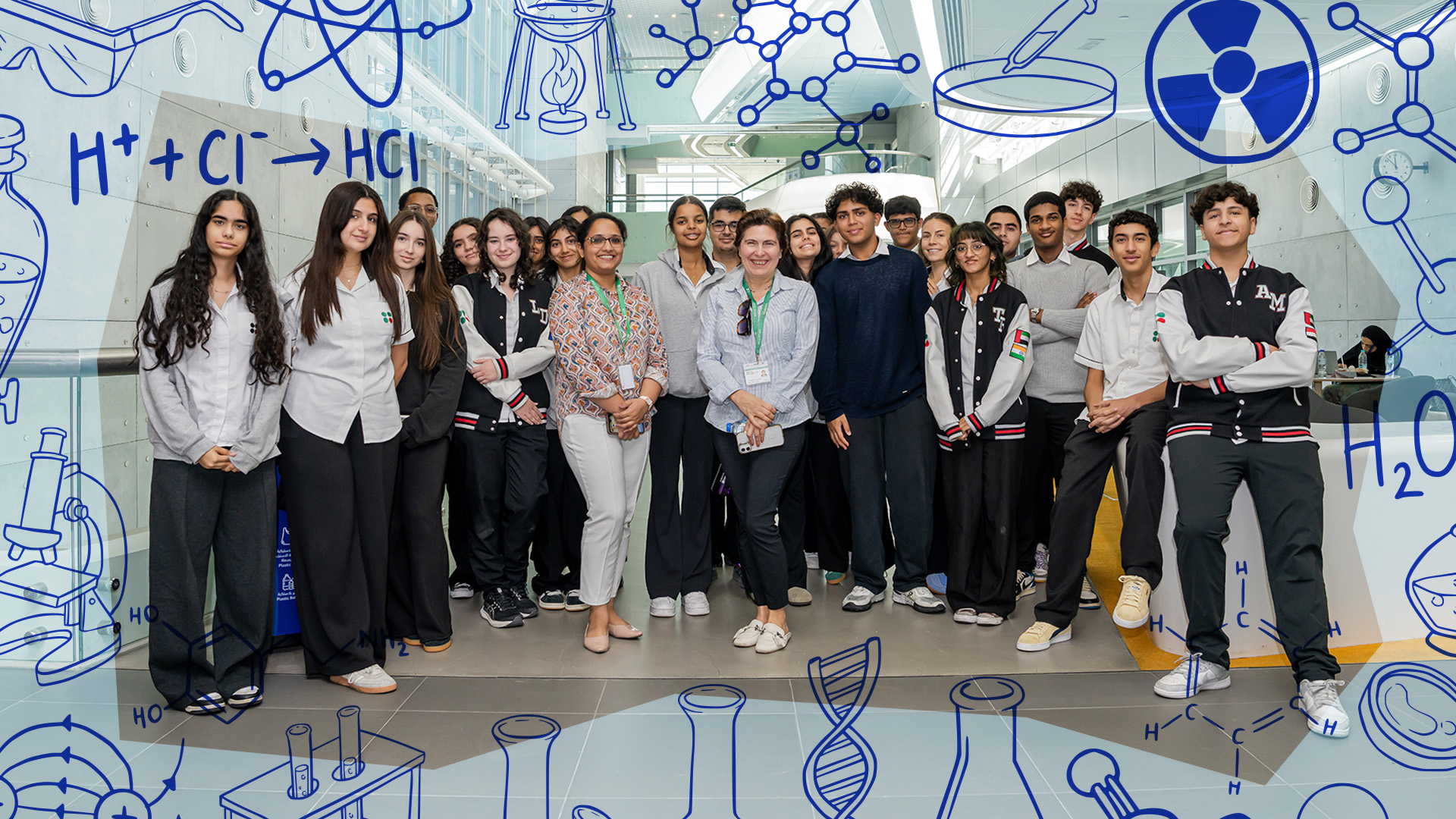
A crew of curious biology and chemistry students recently marched into Khalifa University’s main campus in Abu Dhabi for the science lesson of a lifetime.
 IMAGE: Courtesy of UAE Year of Community website
With two packed days meeting med students, seeing how genome sequencing can help diagnose a centuries-old mummy and learning how to anesthetize a mouse, this was a field trip to remember.
The Raha International School, Khalifa City campus students’ bus was met by the academic coordinator of KU’s College of Medicine and Health Sciences, Hibba Samir El-Atar, and members of the KU public outreach team that had orchestrated experiences and welcome packs with their first (but hopefully not their last) lab coats.
“Our primary goal with these outreach programs is to make higher education in STEM fields tangible and accessible. We want to show students the ‘why’ behind the ‘what’ they learn in school. By bringing a piece of the KUST campus experience to them, we hope to plant a seed, showing them the incredible opportunities and dynamic environment that await them at a university like ours,” Khawla Alsaedi, specialist with the KU outreach team, tells KUST Review.
Next, the students visited the KU Experiential Learning and Clinical Simulation Center, where KU students are exposed to life-like situations and advanced imaging technology for an immersive learning experience.
The students, led by Ahmed Khalam Mohamed and his team, observed CPR demos, tried out vital-signs equipment and participated in a clinical-skills workshop.
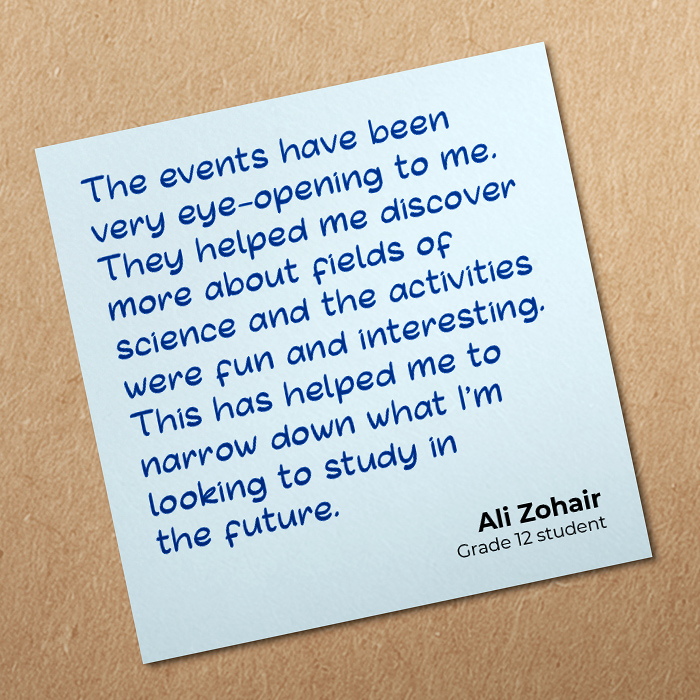
“I got to experience the facilities that I plan on studying in,” says Ali Zoheir, a Grade 12 student and self-proclaimed future plastic surgeon.
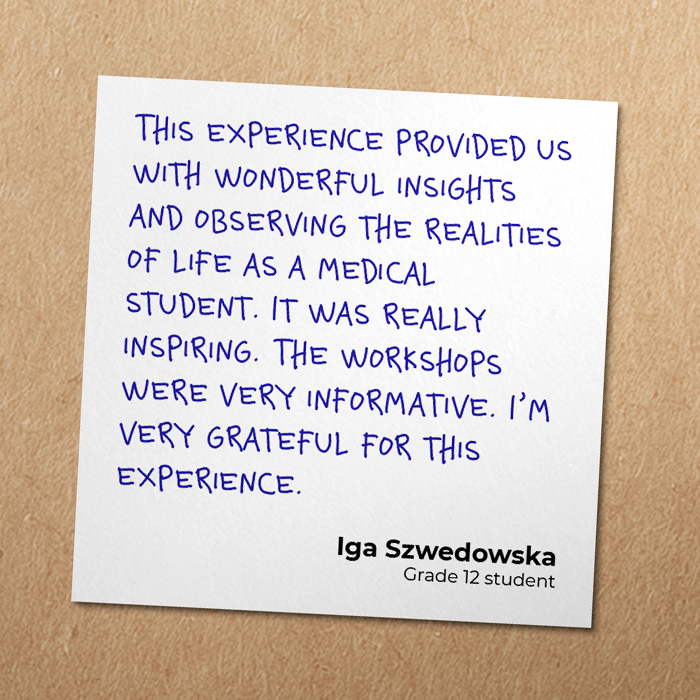
The remainder of the first day was a bit of a dream for potential future docs as they worked with the team from the medical sciences through a real-life case study and spent the final hour with a couple of KU med students, Layth Rafat and Carl Kassab, to find out what it’s really like to live in their lab coats.
The soon-to-be Raha graduates threw questions at the duo and received valuable advice: Take chances, manage your time well and get involved in research right out of the undergrad gate.
KU lab instructors Trust Nyirenda and Samson Chengetanai and KU faculty member Okobi Ekpo led the students on a guided tour of the anatomy and histology labs.
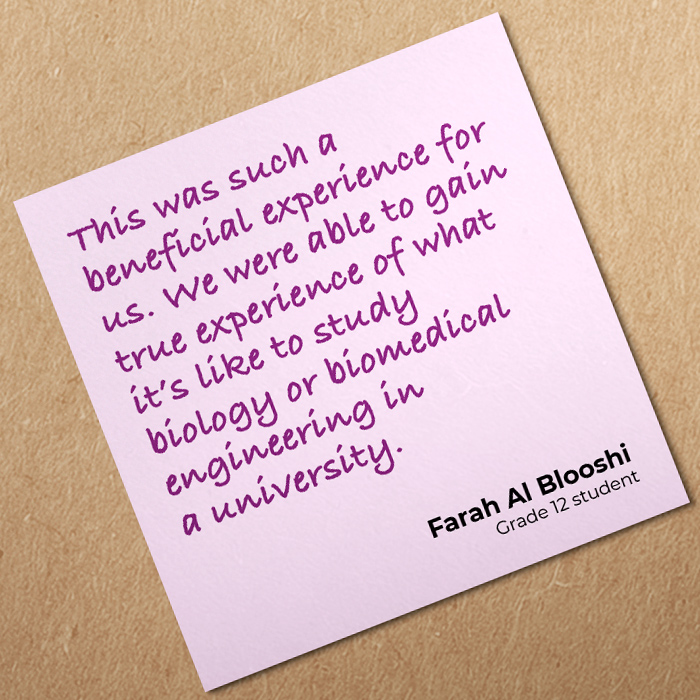
“It was very unconventional for us as (high school) students to be put in such a developed lab,” said Grade 12 student Farah Al Blooshi.
Next came the KU Body Museum tour. The museum opened in 2023 and is a permanent exhibition of dissected human bodies presenting both regional and systems-based anatomy in healthy and diseased adults. It is open to the public and often hosts school tours.
Within its walls the Raha students witnessed what a brain looks like after a stroke; what a person’s internal organs can tell us about their lifestyle and quality of life; the vastness of a fully extracted and intact human nervous system; and much more.
Siobhan O’Sullivan from the Department of Biological Sciences talked about her career path and an Egyptian mummy she studied as an undergraduate to determine the cause of death.
FYI, it was sickle cell anaemia.
O’Sullivan used the DNA extracted from the mummy’s toenails, which sat in a jar on her desk for a time. Gross or super cool? We’re going with cool.
There was more “cool” to come as the students moved on to a talk about what a biomedical engineer does with faculty member Anna-Maria Pappa and a demonstration of medical technology by Rateb Katmah.
They discussed wearable technologies like foot and heart sensors, sleep-pattern monitoring caps and stress-testing tech currently in use.
In the final part of the KU journey, students spent more lab time with Hamdan Hamdan for a talk about neurological conditions like ADHD, autism and Alzheimer’s.
They watched a video of a surgery on a mouse, learned how to anesthetize said mouse and why mice are used in the lab more than other animals (FYI, it’s cheaper and we can increase the testing size).
KU hopes to share these experiences with the Raha Grade 11 class soon and will continue to open its doors to other academic institutions.
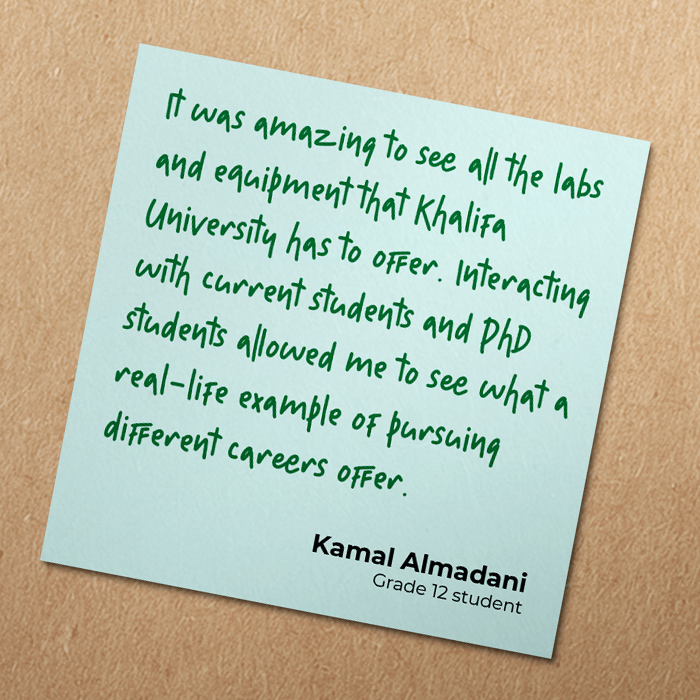
“Our DP2 Science students’ visit to Khalifa University was an inspiring and intellectually enriching experience.
The students learned a tremendous amount — from exploring the body museum and how different parts of the body function, how genetic testing is conducted on ancient Egyptian mummies, to understanding how artificial intelligence can be used to personalize medical treatment, to observing how multiple sclerosis is diagnosed and treated, among many other fascinating insights.
“We are deeply grateful for the warmth, guidance, and professionalism shown to us throughout the visit — particularly to Ms. Hibba (Samir El-Atar), who was present and continually sought ways to enrich the experience, and to Ms. Khawla, who accompanied and supported us throughout the two days.
This visit was truly memorable and profoundly educational for our students, and we extend our sincere thanks to everyone who made it possible,” said Margarita Lozinova, secondary chemistry teacher at the Raha, Khalifa City campus.
El-Atar says she very much enjoyed being part of organizing and hosting the visit is thrilled with the outcome and participation from the students and KU team alike, “Seeing everything come together and watching everyone engage so enthusiastically made it all worthwhile. I’m so grateful for the teamwork and support that made the day a success. I am looking forward to many more events like this in the future and welcoming students from schools all over Abu Dhabi.”
More like this: Every splash counts

