The placebo problem

Leigh Frame, Ph.D., Master of Health Science, likes vitamin D. Executive director of the Office of Integrative Medicine and Health at George Washington School of Medicine and Health Sciences, she is especially interested in the role of vitamin D as an immune modulatory hormone.

She was starting a pilot study to determine the effectiveness of vitamin D supplementation via patch delivery (through the skin) versus pill delivery (via the gut) when the pandemic hit.

Vitamin D is a fat-soluble nutrient that also functions as a steroid hormone. Many of the body’s organs and tissues have receptors for vitamin D, which suggest important roles beyond what we currently know about its role in bone health.

Principles of research ethics

Respect for persons: Treat participants as autonomous; protect participants with decreased autonomy. Read more›››

Beneficence: First, do no harm; maximize benefits to participants; minimize risks to participants.

Justice: Fair recruitment of participants; participants asked to bear the risk should benefit from the research.

From “Ethical Concerns in Placebo-Controlled Supplementation Studies: How to Design a Rigorous Randomized Controlled Trial.” Permission from Leigh Frame.‹‹‹ Read less

“We had planned to bring 30 healthy subjects to the medical campus, who would otherwise not have needed to visit the campus,” Frame says. “Now, each visit would represent an added risk to them, which raises concerns in terms of the principles of beneficence and justice. Given that the benefit to these subjects is minimal as this study is not looking at potential therapeutic benefits, the risk of contracting COVID-19 through being on campus greatly outweighs the potential benefit to society. It would not have been ethical to proceed with this trial during the COVID-19 pandemic.”

 A SUDDEN HALT

The sudden emergence of COVID-19 meant clinical research was halted — or even terminated — in deference to the immediate needs of caring for patients and clinical trials focusing on the treatment and prevention of coronavirus infection were prioritized over studies focusing on other diseases. Once social distancing had been introduced by governments as a public health measure to prevent or slow the spread of disease, trial sponsors and investigators were required to determine whether ongoing trials should proceed. Several factors determined the fate of these trials, including trial location, the indication for the trial, the urgency of continuation, the safety of participants and staff, and risks to trial integrity.

The main question: Would it be ethical to continue?

“The field of research ethics has developed in response to research conducted without proper consideration for ethical issues or with blatant disregard for ethical concerns,” Frame wrote in a 2020 publication on ethical concerns in placebo-controlled supplementation studies. “The design of most research studies today involves more nuanced issues of research ethics relating to the Principles of Research Ethics.”

While Frame’s trial was put on hold, numerous studies were conducted on the potential of vitamin D to reduce risk of infection with COVID-19. Frame’s study looked at the efficacy of different supplementation methods: we already know that vitamin D supplementation can be beneficial, so investigating how this is best achieved fell short of the principle of beneficence. Using vitamin D as a preventative and potential adjunct treatment in COVID-19, however, was an unknown and potentially important in the fight against COVID-19.

“If you do a PubMed search for ‘vitamin D’ and ‘COVID,’ 936 results are returned from 2020 to 2021, plus 273 in 2022 as of June,” Frame says. “Those are substantial numbers, however if you restrict those results to clinical trials only, 30 results ranging from study protocols to completed results are returned from 2020 to Jun 2022. That is actually a very large number considering the extremely tight timeline from the emergence of COVID-19. Many of these studies, however, are observational in nature, meaning they are looking at vitamin D status in relation to COVID-19 infection and its progression and outcomes.”

ADDRESSING THE RISK

Observational studies are very low risk for the subjects, introducing very little additional risk to participants but offering potential benefit to society, though not the individual, Frame stresses. “Prioritizing this type of study during a pandemic makes sense ethically, not just due to the low risk, but because we have some evidence to inform a potential intervention that may prove beneficial. Vitamin D has known actions in viral infections and in the immune system more broadly. Therefore, it could be reasoned that vitamin D supplementation for prevention or as a potential adjunct therapy would be beneficial with minimal potential for harm.”

In these studies, the risk/benefit ratio is in favor of continuing. Keeping in mind the principles of beneficence and justice, it would be ethical to proceed.

“In fact, you could argue it would be unethical not to proceed,” Frame says. “Given the potential benefit to society, especially in a global pandemic, coupled with the potential benefit to the individual and the minimal risk they’d face. As this research would be done in those mostly likely to be affected by Covid-19, this bolsters the ethical nature of such studies. Plus, conducting research in those of greatest risk to morbidity and mortality from Covid-19 would further strengthen the justice component and could be used to improve health equity.”

Many of these studies found the same thing: insufficient blood levels of vitamin D were associated with increased risk of COVID-19 susceptibility, severity, and mortality.
Further research is still needed to determine the precise role and efficacy of vitamin D as a preventative or therapeutic measure in cases of COVID-19, but since vitamin D deficiency is common around the world, any link to its possibly helping surely justifies investigation.

Frame, and the principles of ethics in trial design, have concerns: One major concern with such studies is their use — or not — of placebo. Using a true placebo, an inert substance that participants believe is the therapeutic, has small positive effects in most cases, known as the placebo effect. However, this is likely smaller than an active control, in this case, a low dose vitamin D supplement.

Research is revealing that vitamin D has much broader effects than previously assumed, as it is an immune-modulating hormone. Vitamin D deficiency may lead to health issues involving infection, autoimmunity, cancer, chronic diseases such as cardiovascular disease, and even mental illness. Withholding vitamin D in clinical trials, therefore, may see harm done.

“As demonstrated in the Tuskegee Study of Untreated Syphilis, it is unethical to withhold treatment when there is a known, effective therapy,” Frame writes in Ethical Concerns in Placebo-Controlled Supplementation Studies. “This becomes less clear when talking about nutrition.”

COULD IT CAUSE HARM?

An individual may be found to have suboptimal or deficient stores of the nutrient in question. If they receive the therapy during the trial, their nutritional status should improve at least, even if the dose is insufficient to bring their levels to those required for the effect in question. If they are unfortunate enough to be placed in the control group, their nutritional status will not improve and may even worsen over the course of their treatment. This is the crux of the ethical issue, Frame says.

“Are we doing harm to these participants? That answer depends on many factors, but to be ethical we must maximize the benefits to participants and minimize the harm. I recommend using the current Recommended Dietary Allowance (RDA) as the active control in nutrition studies, which is the minimum amount most people need each day to avoid disease, but not to optimize health. A low dose of vitamin D would minimize risk, improving the risk/benefit ratio. However, this may make detecting differences between the groups more difficult by reducing the difference in effect sizes between the groups, requiring a larger sample size and increasing the cost of the study.”

As demonstrated in the Tuskegee Study of Untreated Syphilis, it is unethical to withhold treatment when there is a known, effective therapy.

Leigh Frame

Above all, Frame advocates for weighing the risk/benefit ratio for each individual study during the study design process to optimize the potential for meaningful results from the study while protecting those participating:

“As a member of the research study team, it is your duty to protect your study participants and to ensure that your research is conducted ethically.”

Frame’s supplementation technique trial is still on hold. “We are hoping to start it very soon, as the risk of both contracting COVID-19 and the consequences of such infection have greatly decreased.”

It’s a robot invasion —
in the operating room

Telehealth evolved rapidly during the COVID-19 pandemic, with phrases like tele-triage and tele-consultants becoming household words as governments adapted policies and encouraged remote services to manage an unprecedented health emergency. At the same time, a halt in most elective surgeries worldwide highlighted a need for advancements in robotic surgeries.

Now with progress in machine learning, AI the 5G network and robotic surgery equipment, surgeons can operate on patients from across the room and across the world.


As with most technology developments, there are kinks to iron out. Since the first telesurgery in 2001, skepticism, network issues, legislative differences between countries and the high cost of robotic equipment hindered growth. After the development of 5G, however, a team in China in 2019 performed successful telerobotic spinal surgeries on 12 patients from six cities.

While both robotic surgery and telesurgery offer more precision, are less invasive and result in quicker recovery time, telesurgery also eliminates logistical issues like travel health risks and cost of travel. It also offers better access to much needed surgeries for underserved countries.

CAPTION: Neurosurgeon remotely operates on a patient IMAGE: Shutterstock

The Lancet in 2015 published a study in which researchers estimate 5 billion people lack access to necessary surgical care. The main problem with this is not only the expense of the robotic systems, but also access to high-speed internet.

Gary Guthart, CEO of Intuitive — the company that created the Da Vinci surgical robotic system, which was the first to be approved by the U.S. Food and Drug Administration — said the company is developing innovative strategies to increase the number of surgically trained clinicians in low-resource regions.

“This is an urgent problem,” he says, “because of the significant global shortage of surgeons, particularly in low-resource countries. Every year, an estimated 16.9 million people die who might otherwise be treated.”


With the need for telesurgery development at the forefront, advancements in machine learning, AI and the 5G network, the market is expected to surge to an estimated compound annual growth rate of 11.9 percent between 2022 and 2029. The growth can be attributed to things like a desire for less invasive surgeries, precision ability, a 3D surgical viewpoint and the increasing volume of surgeries worldwide. A paper published in 2020 in Elsevier estimates that there are 310 million major surgeries each year.

Further benefits include data sharing ability between institutions, remote consultations and training surgeons.

Anthony Fernando, president and CEO of Asensus Surgical, a medical devices company that focuses on digitizing the interface between surgeon and patient, believes that using AI, machine learning and adding deep-learning abilities to robotics will result in “the best possible patient outcomes independent of surgeon skill level, training, and experience. This transition of thinking and innovation is what will drive the larger digital transformation needed to enable the future of telesurgery and other future surgical improvements that we have not even imagined yet.”

Robotic-assisted surgeries have been around for nearly four decades. The first procedure was a brain biopsy in 1985, which led the way for a gallbladder removal in 1997. This robot did not have a camera, so a human assistant had to hold the endoscope. The first telesurgery – also a gallbladder removal – was four years later.

Polluted oceans:
Let the trash take itself out

Up to 12.7 million tons of waste makes its way into the world’s oceans each year, forming massive “plastic islands” in oceanic gyres and devastating birds and marine life in the process.

Cleanup, in which plastics are currently collected at sea, stored and shipped to shore for disposal, is estimated to take from 50 to 130 years with annual costs expected by some at nearly US $37 million. In the meantime, the trash is degrading faster than it can be gathered, disintegrating into harmful and even more difficult to mitigate microscopic forms.

Listen to the Deep Dive

Now a team of researchers from Massachusetts in the United States is suggesting a new approach: self-powered cleanup vessels that turn the trash they harvest from the seas into the fuel they use for the job.

RELATED: Microplastics: The invisible threat

The “blue diesel”-powered ships could reduce the amount of fuel and roundtrips needed to remove ocean waste, the researchers write in a paper published in the Proceedings of the National Academy of Sciences of the United States of America.

The researchers, representing Harvard University, the Woods Hole Oceanographic Institution and the Worcester Polytechnic Institute, suggest using high temperatures and high pressure in a process called hydrothermal liquefaction to depolymerize the plastics into a harnessable energy, creating self-powered cleanup that eliminates the need to refuel or unload plastic waste and potentially reduces total cleanup times.

Of course, it isn’t enough to clean up the oceans faster and with less fuel waste. The world needs to address the amount of garbage that makes it into the oceans in the first place, the researchers write. “Reducing or eliminating the amount of plastic waste generated is critically important, especially when the current loading may persist for years to even decades,” they say.

 COVID’s toll on the oceans 

Meanwhile, researchers from China’s School of Atmospheric Sciences at Nanjing University and the Scripps Institute of Oceanography at the University of California-San Diego say the COVID-19 pandemic is making an already bad situation in the oceans even worse.

Also writing in the Proceedings of the National Academy of Sciences of the United States of America, the scientists say that of the 8 million tons of plastic waste generated until recently in the fight against the virus, about 25,000 tons of medical waste, mostly from hospitals, has entered the world’s oceans. And more is expected to come, not only damaging marine species but potentially spreading contaminants including the COVID-19 virus.

The hospital trash, they say, dwarfs the amount of waste from discarded personal-protective equipment (PPEs) and plastic packaging produced by a surge of online shopping in the wake of the pandemic. For a little perspective, the authors cite another study estimating that 1.56 million face masks made it to the oceans in 2020.

Plastics that wash into the oceans are endangering wildlife. IMAGE: Shutterstock

Five of the top six rivers associated with medical-waste discharge are in Asia (Shatt al Arab, Indus, Yangtze,Ganges Brahmaputra and Amur). The other, the Danube, is in Europe.

The authors call for increased public awareness of plastics’ environmental impacts; better collection, treatment and recycling of plastic waste; and improved waste-management practices at pandemic epicenters, particularly in developing countries.

 Microbots to the rescue? 

A solution to microplastics in water might come in an equally small package: microbots.

The bacterium-size bots when added to water with a little hydrogen peroxide attach to microscopic bits of plastic and begin to break them down. The research was recently published in ACS Applied Materials & Interfaces.

“They can sweep a much larger area than you would be able to touch with stationary technology,” says study co-author Martin Pumera, a researcher at the University of Chemistry and Technology, Prague.

Pumera envisions setting the microbots loose in the oceans to collect microplastics, but Win Cowger, an expert in plastic pollution at the University of California, Riverside, who was not involved with the study, tells Scientific American that closed systems such as those for drinking-water or wastewater treatment would probably be better potential targets.

The next generation of face masks
might diagnose disease as well

People around the world wore masks in their daily lives during the pandemic to help prevent infection. Now, a new kind of mask might help diagnose illness.

Engineers from MIT and Harvard say their new prototype can produce a COVID-19 test result in 90 minutes.

The wearer breathes normally into the mask, and droplets produced by exhaling and coughing collect on a pad. The wearer then presses a button to activate the test. A small bit of water is released, flowing through the pad and rehydrating freeze-dried cells that react to the presence of coronavirus markers.

After about 90 minutes, a colored line indicates whether the result is positive or negative. It looks like a pregnancy test.

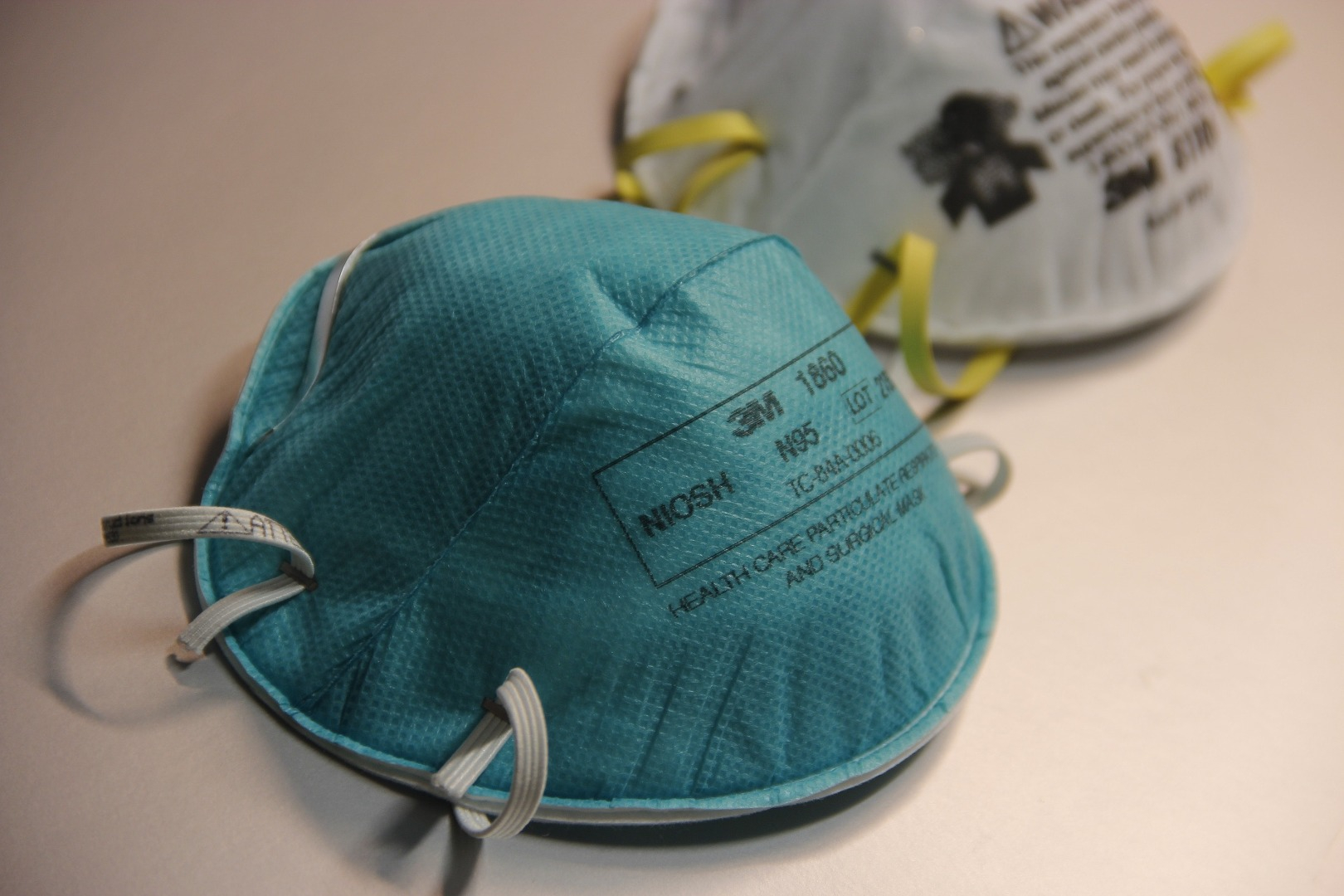
The team uses a typical N95 mask and the results were published in Nature Biotechnology. This technology had been developed to detect other viruses such as Ebola. The MIT and Harvard teams have further plans for the technology.

CAPTION: The team uses a typical N95 mask.

“We’ve demonstrated that we can freeze-dry a broad range of synthetic biology sensors to detect viral or bacterial nucleic acids, as well as toxic chemicals, including nerve toxins. We envision that this platform could enable next-generation wearable biosensors for first responders, health-care personnel and military personnel,” MIT researcher James Collins tells  MIT news