To better understand how the Arabian camel manages to preserve water, a team from University of Bristol, United Arab Emirates University and Khalifa University examined the genes in the kidneys of Arabian camels exposed to chronic dehydration to determine how the animals can survive long periods of time in harsh conditions without access to water and what humanity could possibly learn from this.
The results were published in Communications Biology.
“Extensive evidence shows the impressive set of adaptations that allows a camel to thrive in desert environments, despite sometimes needing to survive for weeks without access to water,” says team lead Abdu Adem, Ph.D., a professor of pharmacology at Khalifa University. “Behavioral and physiological adaptations ensure that water is never wasted. Camels will only eat the leaves of plants, they avoid exposure to direct sunlight where possible, restrict reproduction to the cooler winter season, and drink very large amounts of water when available to compensate for any fluid deficiency from their desert wandering.”
Camels have been known to drink 30 gallons of water in just 13 minutes, but even here they have an evolutionary adaptation to avoid osmotic shock, or a sudden change in the solute concentration around a cell: They absorb the water very slowly.
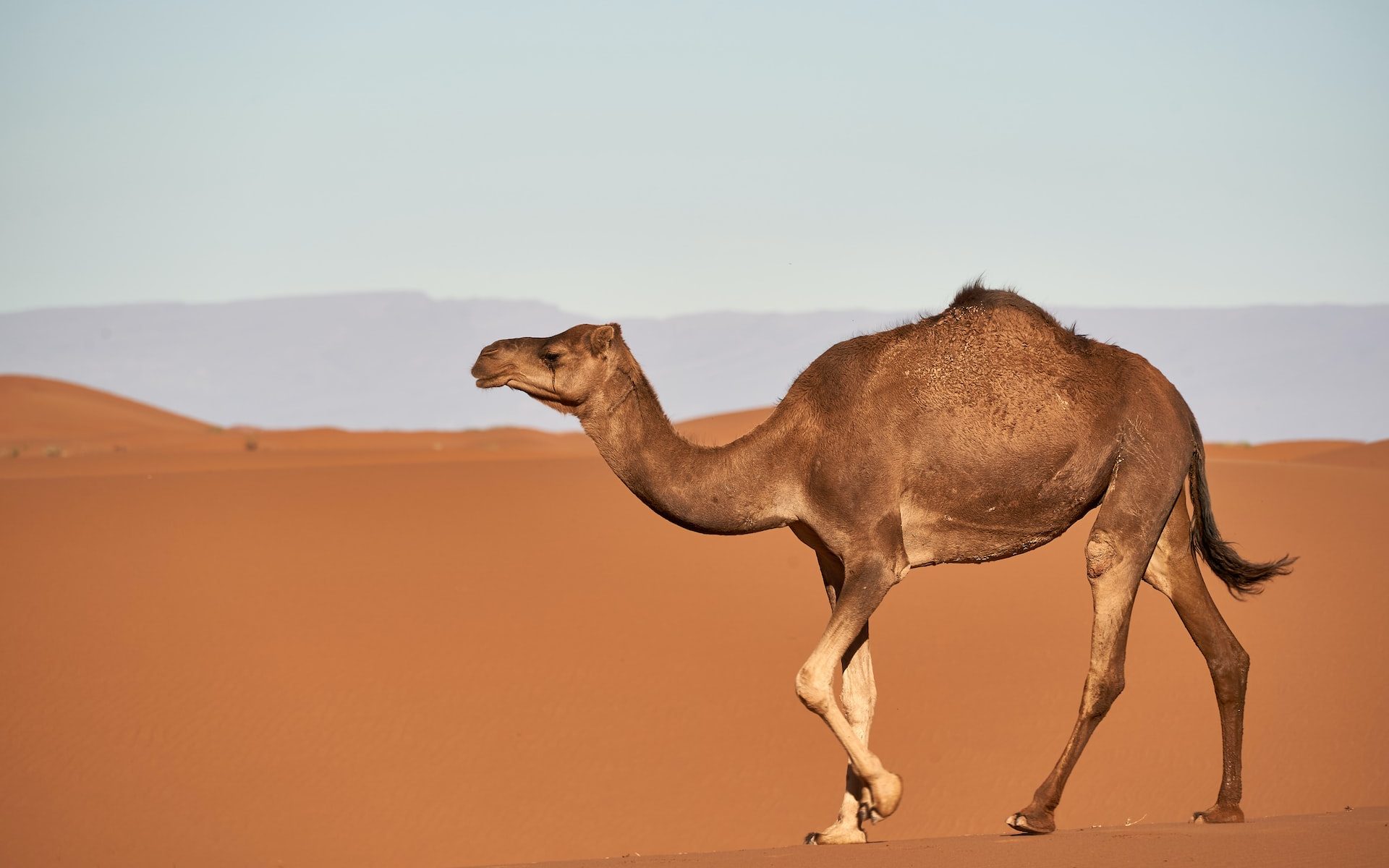
 The kidney that plays the largest role in conserving water for a camel, and it is from the camel kidney that humans can take inspiration. IMAGE: Unsplash
An intricate nasal passage prevents too much water loss when the camel breathes out, but more importantly, water evaporates from the surface of the nostrils to moisturize dry air when the camel breathes in, helping to cool the blood in the veins of the nose.
Thanks to thin blood-vessel walls, this cooler venous blood can help cool the blood in the arteries leading to the brain, meaning the camel’s brain is considerably lower in temperature than the body core.
Even the red blood cells themselves have a special shape shown to be advantageous in withstanding dehydration.
On top of all this, camels rarely sweat, even in the searing temperatures of the desert, all helping to conserve water.
Our analysis suggests that genes with known roles in water conservation are affected by changes in cholesterol levels. Suppressing the production of cholesterol may help the kidney retain water.
– Abdu Adem, Khalifa University professor of pharmacology
Yet, despite all these advantages, it is the kidney that plays the largest role in conserving water for a camel, and it is from the camel kidney that humans can take inspiration.
“In the current context of climate change, there is renewed interest in the mechanisms that enable camels and camelids to survive in arid conditions,” Adem says. “We investigated the camel kidney to see how gene expression has been influenced by chronic dehydration and rapid rehydration. Our analysis suggests that genes with known roles in water conservation are affected by changes in cholesterol levels. Suppressing the production of cholesterol may help the kidney retain water.”
Yet, despite all these advantages, it is the kidney that plays the largest role in conserving water for a camel, and it is from the camel kidney that humans can take inspiration.
“In the current context of climate change, there is renewed interest in the mechanisms that enable camels and camelids to survive in arid conditions,” Adem says. “We investigated the camel kidney to see how gene expression has been influenced by chronic dehydration and rapid rehydration. Our analysis suggests that genes with known roles in water conservation are affected by changes in cholesterol levels. Suppressing the production of cholesterol may help the kidney retain water.”
Camels produce highly concentrated urine, preserving as much water as possible. To produce such urine, the kidney must possess certain anatomical features.
Previous research has shown that the kidney of a young camel differs in structure from that of an adult, suggesting that the differences may be related to a greater degree of water deprivation experienced by adult animals. This would suggest that chronic dehydration causes genes in the adult camel kidney to be expressed differently, allowing the kidney to better preserve water.
The research team noted that the amount of cholesterol in the kidney has a role in the water-conservation process. In dehydrated camel kidneys, there was less cholesterol in the kidney membranes, and the genes that control the production of cholesterol were suppressed.
“We found remarkable changes in the amounts of specific genes and proteins in the kidney of the one-humped Arabian camel during severe dehydration and subsequent acute rehydration,” Adem says. “Our data suggests that the suppression of genes involved in cholesterol biosynthesis and the subsequent reduction in membrane cholesterol are a global response in the kidney to dehydration.”
We found remarkable changes in the amounts of specific genes and proteins in the kidney of the one-humped Arabian camel during severe dehydration and subsequent acute rehydration.
– Abdu Adem
Several ion channels and transporters are regulated by changes in the level of cholesterol in the cell. Dehydration and excessive heat cause electrolyte imbalances in the body, and the kidneys are one factor in keeping electrolyte levels balanced.
If there is an increase of cholesterol in the membrane of the kidney, movement through the ion channels is blocked. When cholesterol levels are lowered, water and electrolytes can move across different parts of the kidney, which helps reabsorb water and produce a highly concentrated urine.
The researchers found that during the summer, the gene that regulates the production of a protein called aquaporin 2 is expressed more, presumably in preparation for the more challenging conditions of the season.
Aquaporin 2 forms a channel in cell membranes to allow water molecules to pass through. During periods of dehydration, aquaporin 2 channels are inserted into the membranes of kidney cells, which allows water to be reabsorbed into the bloodstream, making the urine more concentrated.
The researchers found that when cholesterol was depleted, aquaporin 2 levels increased.
When the camel rehydrates, the gene expression is suppressed, the channels close and the expression of cholesterol synthesis genes returns to normal levels.
While this new knowledge contributes to our understanding of the immense evolutionary advantages the Arabian camel uses to survive in the desert, it could more importantly help humanity better adapt to advancing desertification amid climate change. Understanding the mechanisms of water control in dehydration could allow us to apply the principles to water conservation across a wide variety of disciplines.



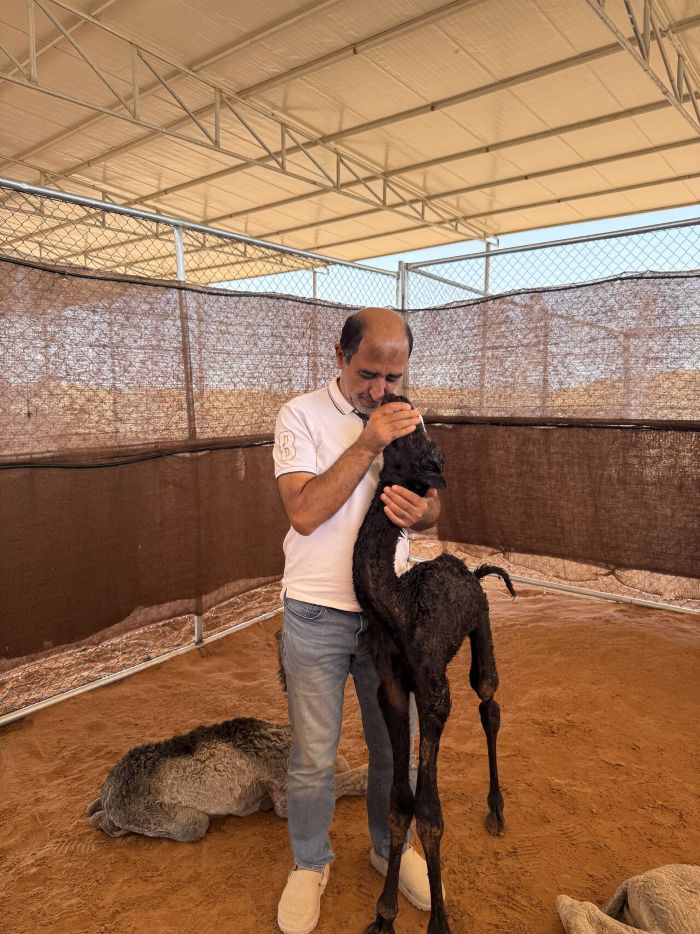 CAPTION: Kakar gets camel nuzzles at a farm in Masakin IMAGE: Raziq Kakar
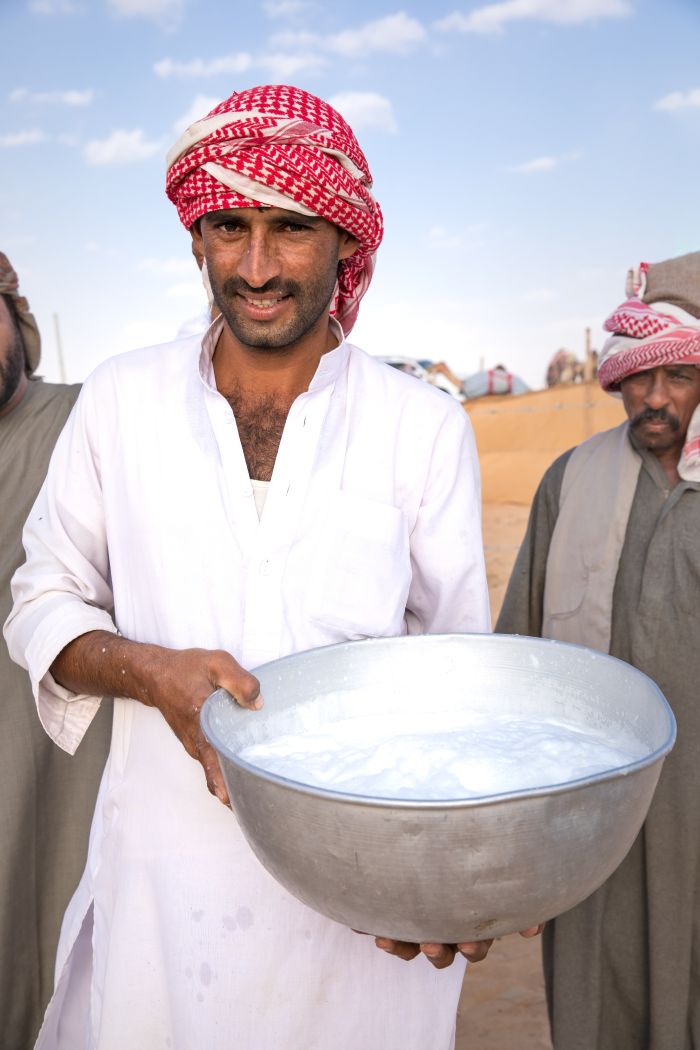 CAPTION: Freshly produced camel milk at Al Dhafra camel festival IMAGE:Shutterstock