The next generation of face masks
might diagnose disease as well

People around the world wore masks in their daily lives during the pandemic to help prevent infection. Now, a new kind of mask might help diagnose illness.

Engineers from MIT and Harvard say their new prototype can produce a COVID-19 test result in 90 minutes.

The wearer breathes normally into the mask, and droplets produced by exhaling and coughing collect on a pad. The wearer then presses a button to activate the test. A small bit of water is released, flowing through the pad and rehydrating freeze-dried cells that react to the presence of coronavirus markers.

After about 90 minutes, a colored line indicates whether the result is positive or negative. It looks like a pregnancy test.

The team uses a typical N95 mask and the results were published in Nature Biotechnology. This technology had been developed to detect other viruses such as Ebola. The MIT and Harvard teams have further plans for the technology.
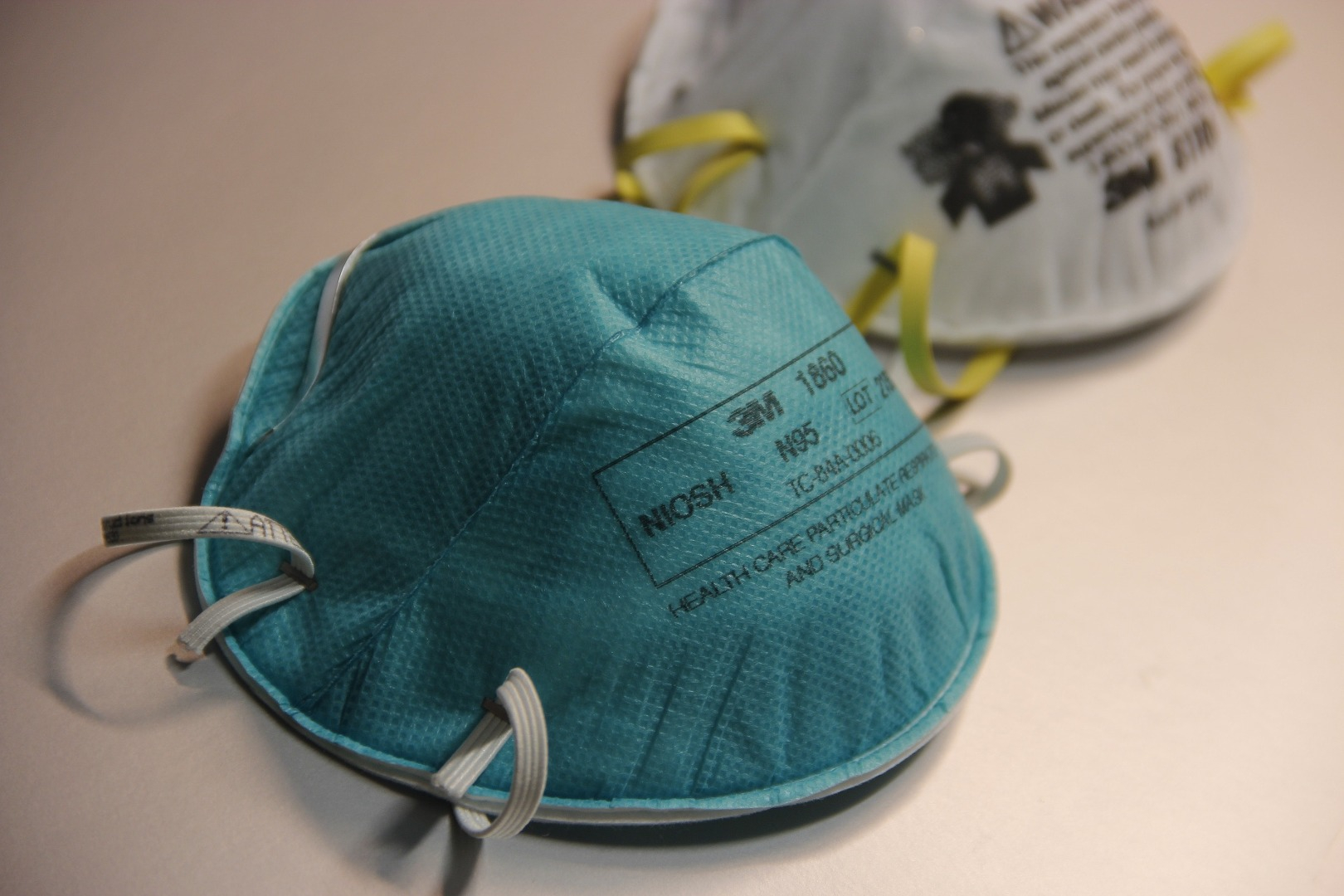
CAPTION: The team uses a typical N95 mask.

“We’ve demonstrated that we can freeze-dry a broad range of synthetic biology sensors to detect viral or bacterial nucleic acids, as well as toxic chemicals, including nerve toxins. We envision that this platform could enable next-generation wearable biosensors for first responders, health-care personnel and military personnel,” MIT researcher James Collins tells  MIT news

In the world of smart everything,
fingertips are no exception

Virtual reality has given us the sensations of sight and sound, but now engineers have created a sensory fingertip to mimic the sense of touch.

The team of Chinese researchers used the practical example of being able to virtually pet a cat. They said that one of the motivators of this project was the isolation of COVID-19 lockdowns and the possibility to, at least virtually, hug a family member.

While previous technology consisted of bulky gloves, the fingertips, similar to the thickness of human skin, let the wearer feel pressure, vibration and textures. By adjusting the frequency and voltage of the signal, they are able to mimic the roughness of certain textures like sandpaper or rocks or the smoothness of silk or glass. The results were published in the September 2022 edition of Science Advances.

This technology could be used on gloves to assist the likes of firefighters, astronauts or deep-sea divers whose bulky, insulated safety suits interfere with the sense of touch, the team says.

It is very hard to mimic the feeling of sustained pressure without vibration.

Weikang Lin, researcher

Weikang Lin, the lead researcher on the paper, discusses the challenge of simulating the sensation of holding a mobile phone: If it is held for a time, sustained pressure will be felt, but if it starts to vibrate, the vibration will be felt and the pressure ignored. “It is very hard to mimic the feeling of sustained pressure without vibration,” Weikang tells KUST Review.

A common weakness of electrical-based stimulators is the inability to precisely stimulate one kind of receptor without activating others, says Zhengbao Yang, one of the researchers on the project. “In our future work, we want to overcome this challenge.”

The team also envisions a Braille tool for the visually impaired or a virtual shopping experience whereby the shopper can feel the fabric of the clothes.