

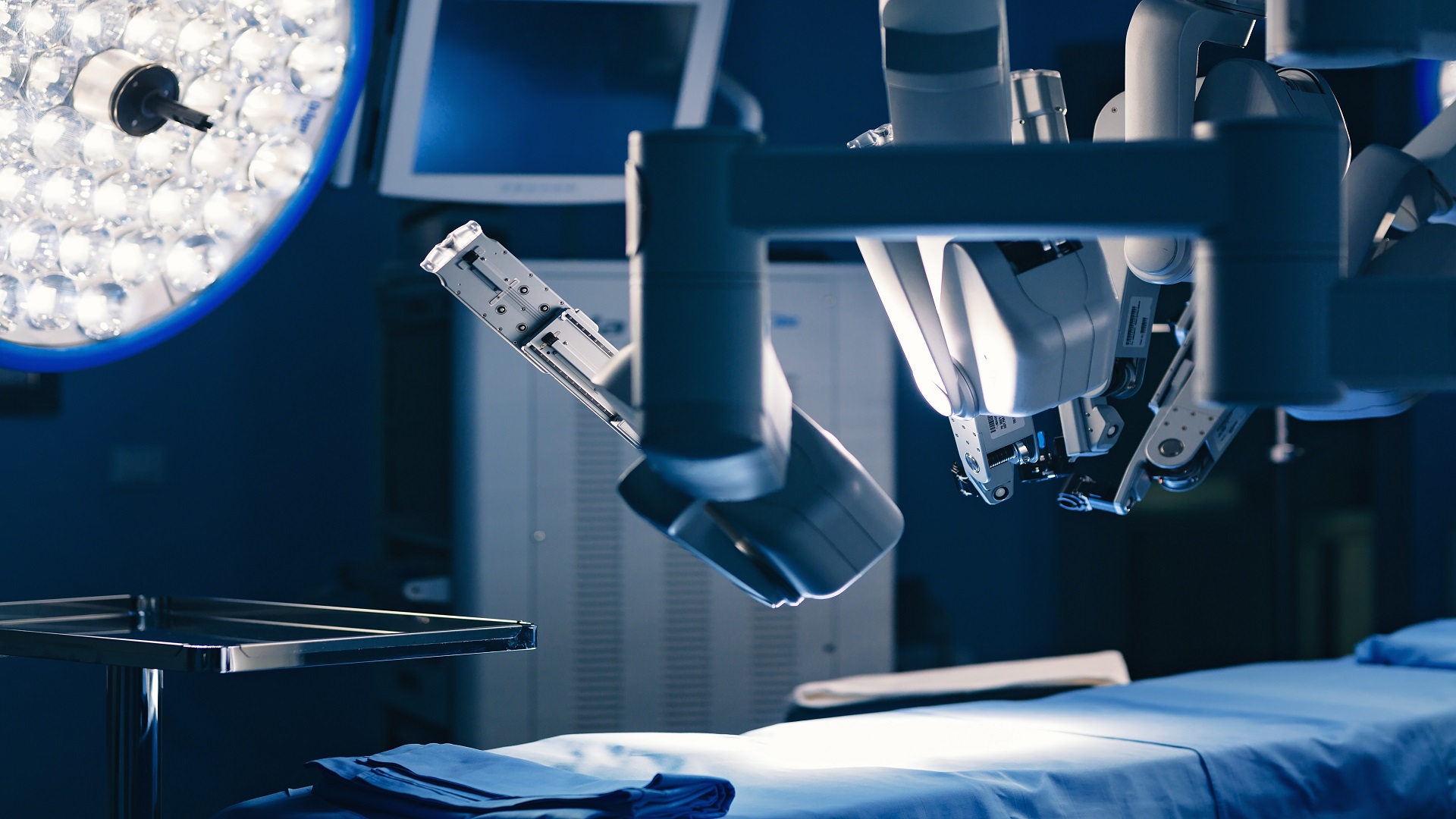
Telehealth evolved rapidly during the COVID-19 pandemic, with phrases like tele-triage and tele-consultants becoming household words as governments adapted policies and encouraged remote services to manage an unprecedented health emergency. At the same time, a halt in most elective surgeries worldwide highlighted a need for advancements in robotic surgeries.
Now with progress in machine learning, AI the 5G network and robotic surgery equipment, surgeons can operate on patients from across the room and across the world.
As with most technology developments, there are kinks to iron out. Since the first telesurgery in 2001, skepticism, network issues, legislative differences between countries and the high cost of robotic equipment hindered growth. After the development of 5G, however, a team in China in 2019 performed successful telerobotic spinal surgeries on 12 patients from six cities.
While both robotic surgery and telesurgery offer more precision, are less invasive and result in quicker recovery time, telesurgery also eliminates logistical issues like travel health risks and cost of travel. It also offers better access to much needed surgeries for underserved countries.
 CAPTION: Neurosurgeon remotely operates on a patient IMAGE: Shutterstock
The Lancet in 2015 published a study in which researchers estimate 5 billion people lack access to necessary surgical care. The main problem with this is not only the expense of the robotic systems, but also access to high-speed internet.
Gary Guthart, CEO of Intuitive — the company that created the Da Vinci surgical robotic system, which was the first to be approved by the U.S. Food and Drug Administration — said the company is developing innovative strategies to increase the number of surgically trained clinicians in low-resource regions.
“This is an urgent problem,” he says, “because of the significant global shortage of surgeons, particularly in low-resource countries. Every year, an estimated 16.9 million people die who might otherwise be treated.”
With the need for telesurgery development at the forefront, advancements in machine learning, AI and the 5G network, the market is expected to surge to an estimated compound annual growth rate of 11.9 percent between 2022 and 2029. The growth can be attributed to things like a desire for less invasive surgeries, precision ability, a 3D surgical viewpoint and the increasing volume of surgeries worldwide. A paper published in 2020 in Elsevier estimates that there are 310 million major surgeries each year.
Further benefits include data sharing ability between institutions, remote consultations and training surgeons.
Anthony Fernando, president and CEO of Asensus Surgical, a medical devices company that focuses on digitizing the interface between surgeon and patient, believes that using AI, machine learning and adding deep-learning abilities to robotics will result in “the best possible patient outcomes independent of surgeon skill level, training, and experience. This transition of thinking and innovation is what will drive the larger digital transformation needed to enable the future of telesurgery and other future surgical improvements that we have not even imagined yet.”
Robotic-assisted surgeries have been around for nearly four decades. The first procedure was a brain biopsy in 1985, which led the way for a gallbladder removal in 1997. This robot did not have a camera, so a human assistant had to hold the endoscope. The first telesurgery – also a gallbladder removal – was four years later.

