Cancer can run, but it can no
longer hide

Envision cancer sneaking around your immune system by feeding certain cells fatty snacks that make them too sleepy or bossy to help.

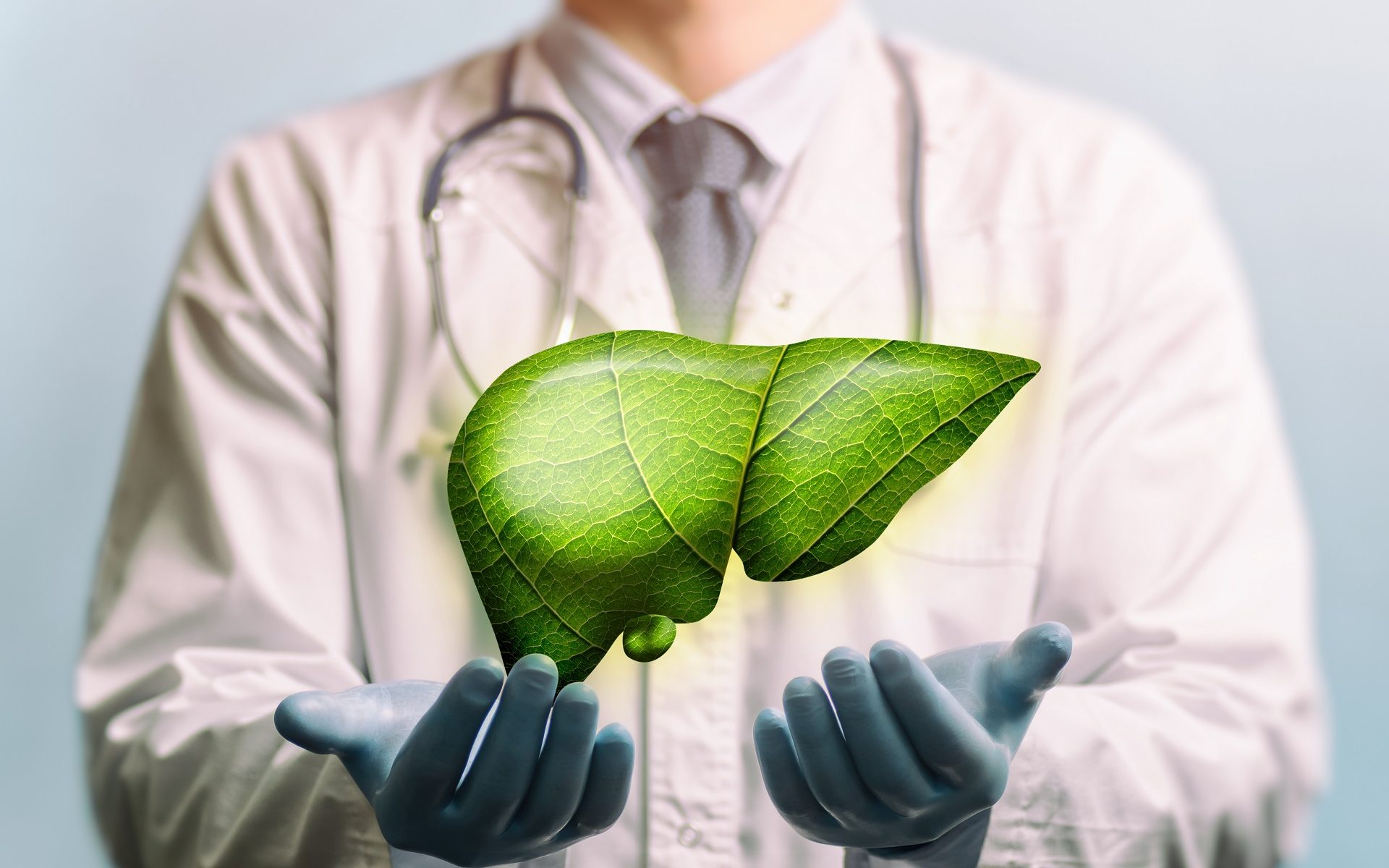
That’s what liver cancer does — it hijacks your body’s immune response by jamming immune cells full of fat, turning some into lazy pushovers (called exhausted T cells) and others into overbearing peacekeepers (Tregs) that tell patrolling cancer-killing cells to back off.

But scientists have a new trick up their sleeve to outmaneuver the fatty snack giving — a lab-made antibody called PLT012. It blocks a protein called CD36, which acts like a fatty-acid vacuum cleaner for these sneaky immune cells. When PLT012 steps in, it cuts off the fat supply, helping the immune system to snap out of its slump and start attacking cancer cells again.

In mice — even the tough-to-treat ones — and in human liver-cancer samples in the lab, PLT012 not only boosts cancer-killing immune cells, it also works well alongside other cancer treatments. More notably, it holds strong in high-fat environments that normally limit the effectiveness of treatments.

PLT012 is shaping up to be a potential game changer in liver cancer treatment by targeting the tumor’s tricks and offering the immune system a second wind.

The paper was published in Cancer Discovery.

More like this: Launching medical research

Minecraft and microscopes

Scientists at the University of Illinois Urbana-Champaign found a way to turn real-life 3D images of cells into explorable worlds inside Minecraft. Now, instead of just reading about cells in a textbook, you can walk through them, block by block, just like exploring a Minecraft castle.

Using cutting-edge, super powerful microscopes, the team captured extremely detailed images of things like yeast cells, bacteria and even human breast cells. They built these microscopic worlds into Minecraft, so anyone — whether they’re a student, a gamer or just curious — can dive right in and explore the tiny inner workings of life.

They also created different cell models, like healthy cells and cancer cells, so the differences are visible.

These Minecraft worlds are free to download on GitHub, along with coding tools that allow for building or tweaking your own scientific playground

More like this: Going new school

Shoddy Wi-Fi, a thing of the past?

Ever wondered why your Wi-Fi or phone signal sometimes gets all glitchy, even when you’re not moving? A lot of it comes down to multipath interference — when a wireless signal bounces off walls, cars, trees, you name it — and your device gets peppered by the same signal from different directions at slightly different times. Chaos!

A team of scientists from the Nagoya Institute of Technology have engineered a solution — a passive metasurface that acts like a smart bouncer.

The surface requires no electricity or complicated tech to organize things. It inertly lets in the first signal — the real one — and blocks all of the other echoey signals responsible for interference.

Using things like metal-oxide-semiconductor field-effect transistors (MOSEFETs) and diodes, they build small structures that can alter the signal when signals arrive. First-come, first-served, so to speak.

Testing revealed their design cut out over 90 percent of unwanted echo signals.

The system is still in its infancy, and there is work to be done. For example, it currently requires strong signals to work and can catch interference only from certain angles. But with a few alterations, it has the potential to make wireless networks, smart gadgets and the Internet of Things much more reliable and less expensive to operate.

More like this: Fingertips are smart now too

Balancing flavor and forests

In northeast Madagascar, vanilla isn’t just for ice cream — it’s how many families make a living. But vanilla prices bounce up and down like a yo-yo. So, what do farmers do when prices crash?

A new study finds they get creative, planting other crops like cassava and peanuts to keep food on the table and money coming in.

This kind of diversification helps keep forest areas intact.

Payments for conservation tell a different story. While farmers are encouraged to leave more land forested, they also reduce crop variety, and, in some cases, push younger farmers to expand into shared lands, creating new challenges.

Ultimately the results show that supporting both farming and forests isn’t one size fits all. Consideration must be given to farmers’ ages, land access and the rhythms of the vanilla market.

More like this: A greener education

I can see the light

On this day, in 1960, the first functioning laser was invented by Theodore Maiman. Often referred to as the father of the electro-optics industry, Maiman was then an employee of Hughes Aircraft Co. and later went on to receive many awards, including two nominations for Nobel Prizes.

Every now and then a scientific breakthrough happens that has a massive and continuous impact on not only scientific development, but on daily life. This is one of them. The invention of the laser (light amplification by stimulated emission of radiation) is one of the light-infused reasons we celebrate the International Day of Light on May 16.

But scientific innovations made possible because of light are not limited to lasers.

Albert Einstein’s theory of relativity — specifically, special relativity — is based on his recognition of the constant speed of light. Whether the light source is stationary or moving, the speed remains at 300,000 kilometers per second. This may seem a simple and unimpressive discovery, but it changed how the world understands time, space, energy and gravity.

For example, the speed at which something falls determines its mass. The faster it falls, the higher its mass.

Or every time you use your phone to check directions, track a delivery, or find someone’s location, you’re relying on Einstein’s theory of relativity to make sure it works correctly.

IMAGE: Shutterstock

This discovery also led to technologies used globally like the CERN particle accelerators doing revolutionary work in particle physics, contributing to our deeper understanding of matter.

Einstein’s theory also laid the foundation for high-speed electronics and materials science and contributes to numerous scientific fields like astrophysics and cosmology.

Light has enabled us to explore the universe, understand it and ultimately protect ourselves against its threats.

Today we enjoy therapies like laser eye surgery, life-saving imaging like X-rays, CT scans and PET scans that use light to see inside the human body. These technologies, plus fiber optic communication that uses light to contribute to telemedicine, make remote surgeries possible and save lives daily.

CAPTION: The logo of UNESCO on the main building in Paris, France. IMAGE: Shutterstock

A little closer to home, light also has enabled us to kill bacteria and viruses on surfaces and in water, and this makes hospitals, air filters and water purification systems available for use during times of global pandemics. It also enables traffic lights and emergency lighting that contribute to road safety and ensure quick emergency or crisis response.

And though light allows us to kill disease on surfaces and on the food we eat, it also allows us to grow it, maintain our circadian rhythms and build green technologies to save our planet.

From the ancient Greeks — the first to study the nature of light — to the most intricate mysteries of the universe, the impact light has had on science and technology throughout history is ample and endless. “Without light, our planet would be but a cold and barren place. Indeed, where there is light, there is often an abundance of life. Yet light represents even more for humanity. Light goes hand in hand with knowledge; it is a lens through which to see and understand the world,” says Audrey Azoulay, United Nations Educational, Scientific and Cultural Organization (UNESCO) director-general.

UNESCO leads the International Day of Light alongside a committee of representatives from global partners. It was created as an extension of the International Year of Light and was first celebrated in 2018. Celebratory events are listed on the UNESCO website.

More like this: Underwater light tech helps corals survive bleaching