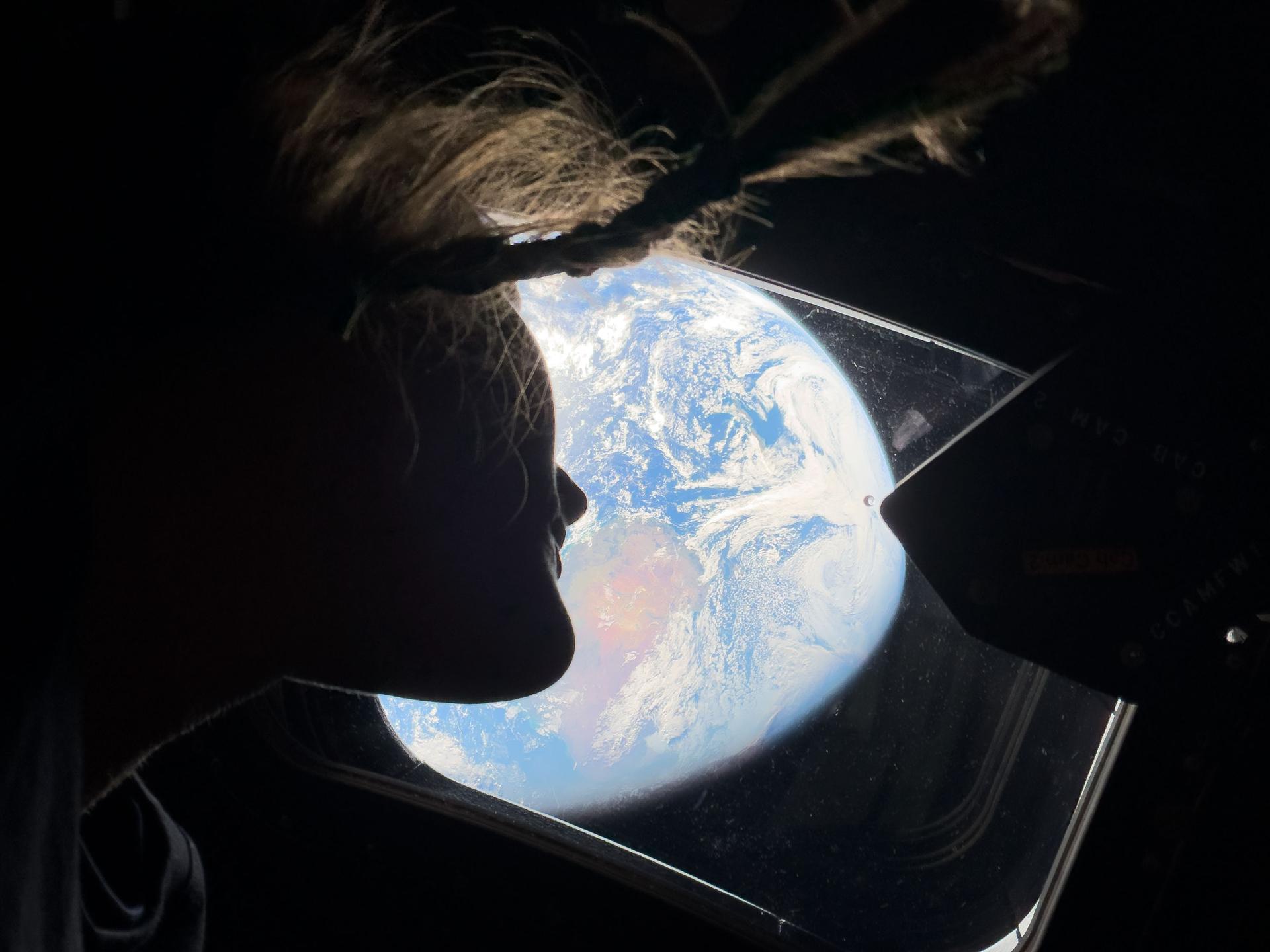
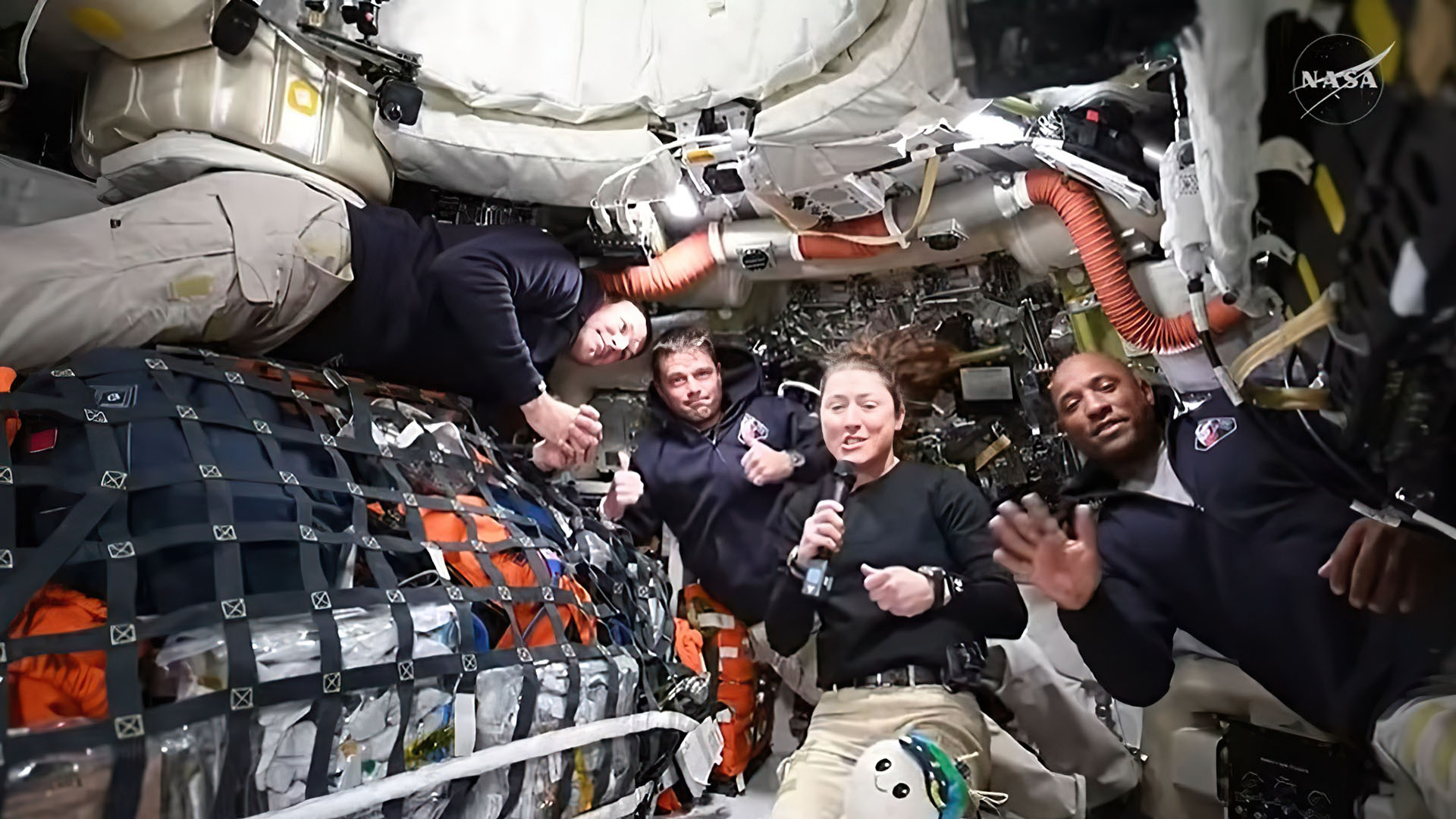
Artemis II has returned to Earth after a successful lunar flyby. Though astronauts have been to the moon before, Artemis II achieved many firsts.
One of these firsts is something most of us don’t consider when thinking about a mission to the moon, but it’s as simple as one, two, three — well one and two anyway. Yep, among other firsts, we’re talking about space toilets.
But let’s discuss the other Artemis II firsts first.
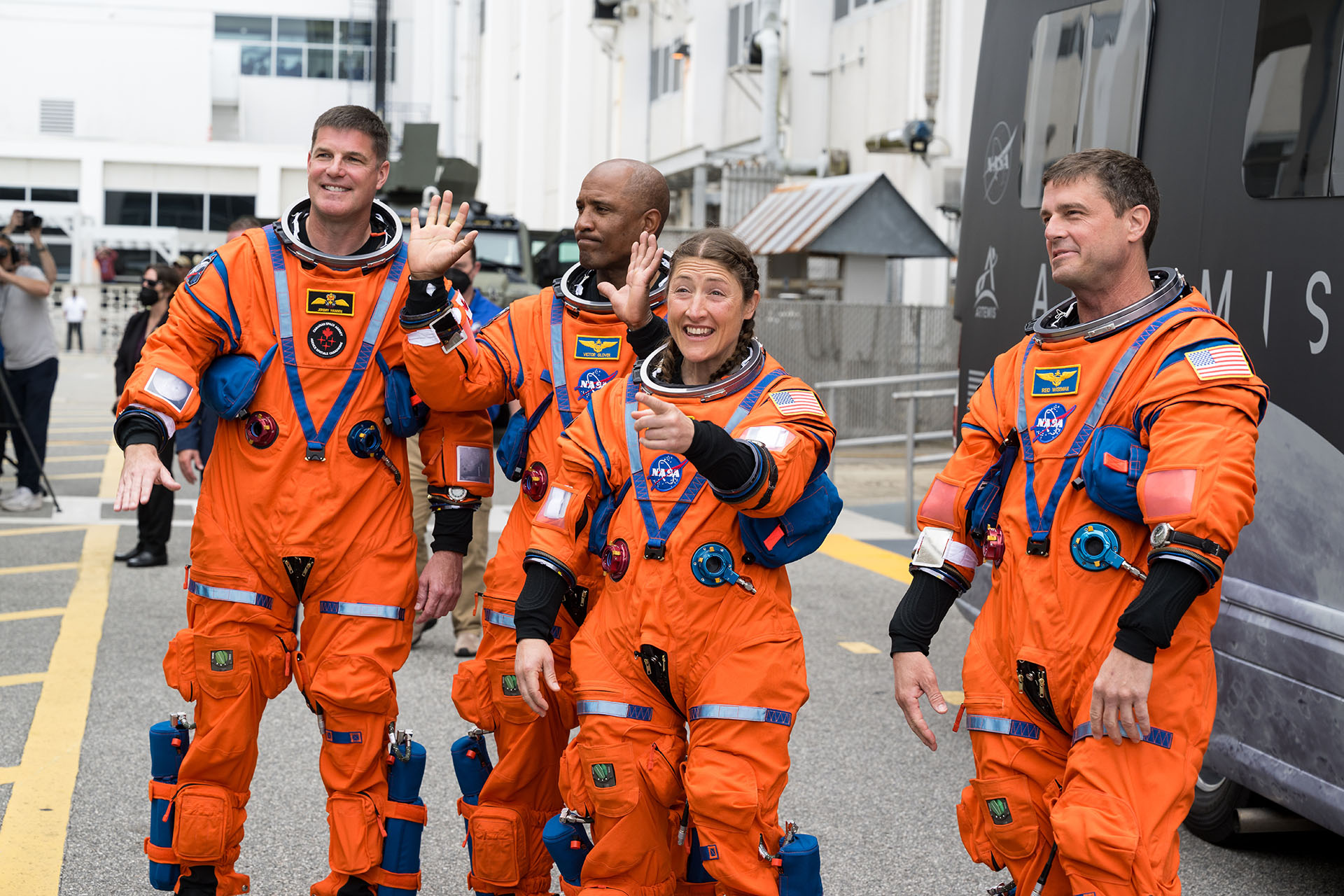
Only Americans had made the trip to and around the moon until Canadian Jeremy Hansen became the first non-American to make such a journey.
Hansen grew up on a farm in Ontario and wanted to be an astronaut since he was a kid. He’s come a long way from the treehouse he converted into a spaceship to mission specialist on Artemis II at age 50. Hansen represents the Canadian Space Agency, where he’s been since 2009.
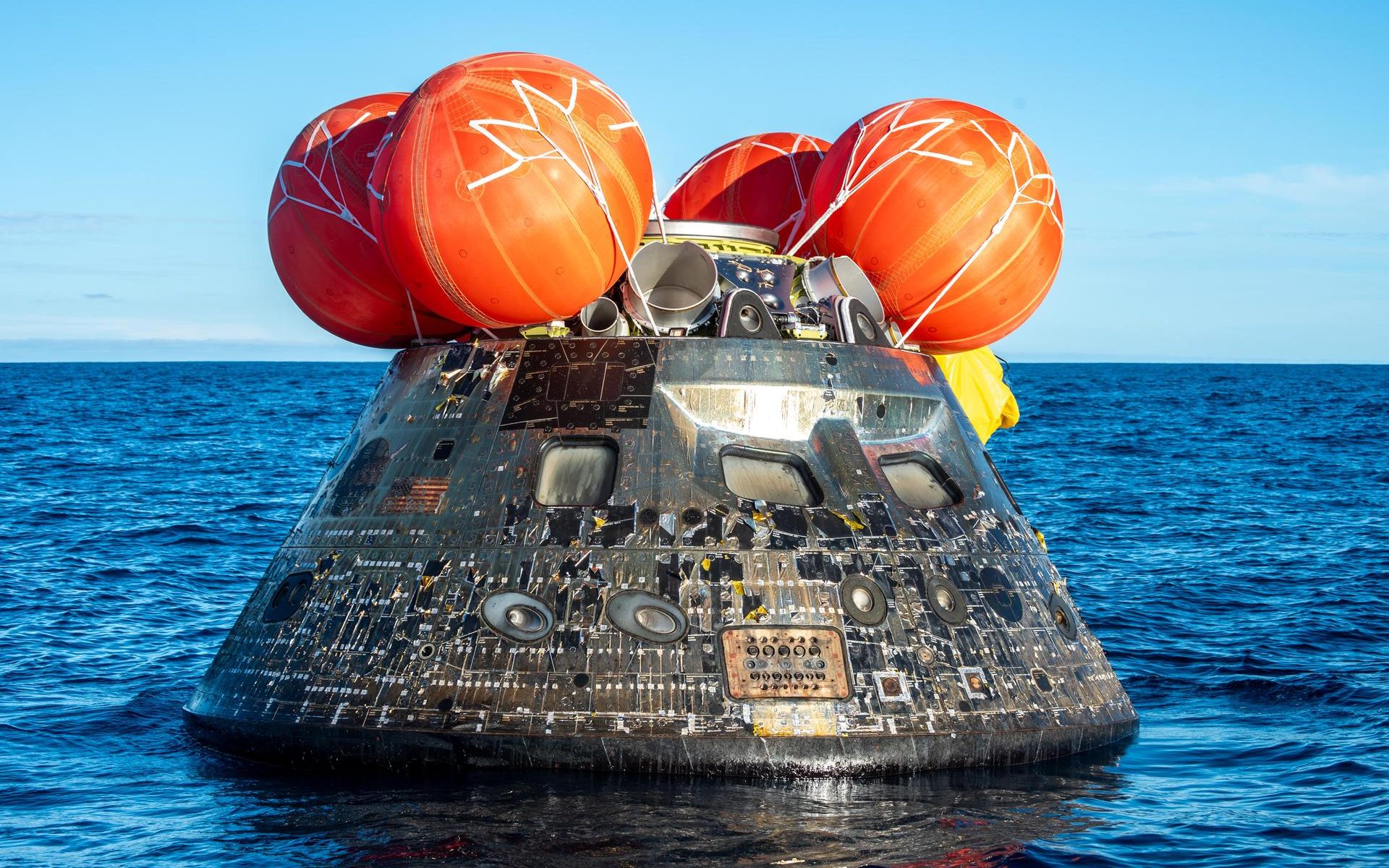
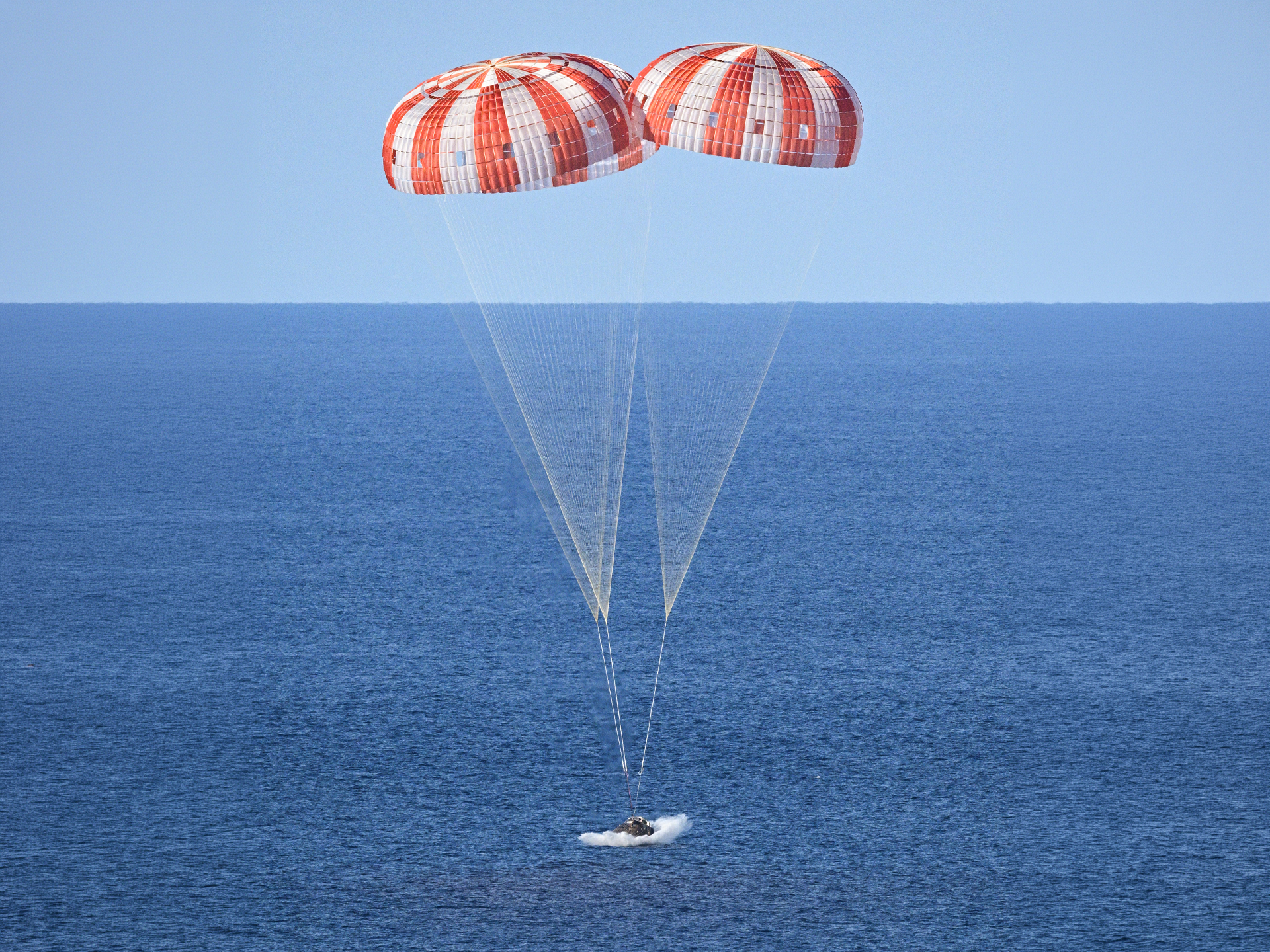 CAPTION: Orion splashdown IMAGE: NASA/Bill Ingalls
But Hansen’s isn’t the only first among the crew members. Christina Kocha, selected by NASA in 2013, has set a few records in her time as an astronaut.
In 2019 she participated in the first all-female space walk and broke the record for the longest spaceflight by a woman, serving 328 days as flight engineer aboard the International Space Station (ISS). Now she becomes the first woman to fly around the moon.
But wait, there’s more.
The Artemis II pilot, Victor Glover, is the first African-American to circle the moon. He holds three master’s degrees and spent time aboard the ISS.
We’ve discovered a lot about our crew, now let’s check out the hardware: the ship.
Analysis of the Orion vehicle that was part of the uncrewed Artemis I mission revealed over 100 spots where heat-shield material Avcoat had broken away. Gas built up inside the material and wasn’t able to escape. The resulting pressure caused damage.
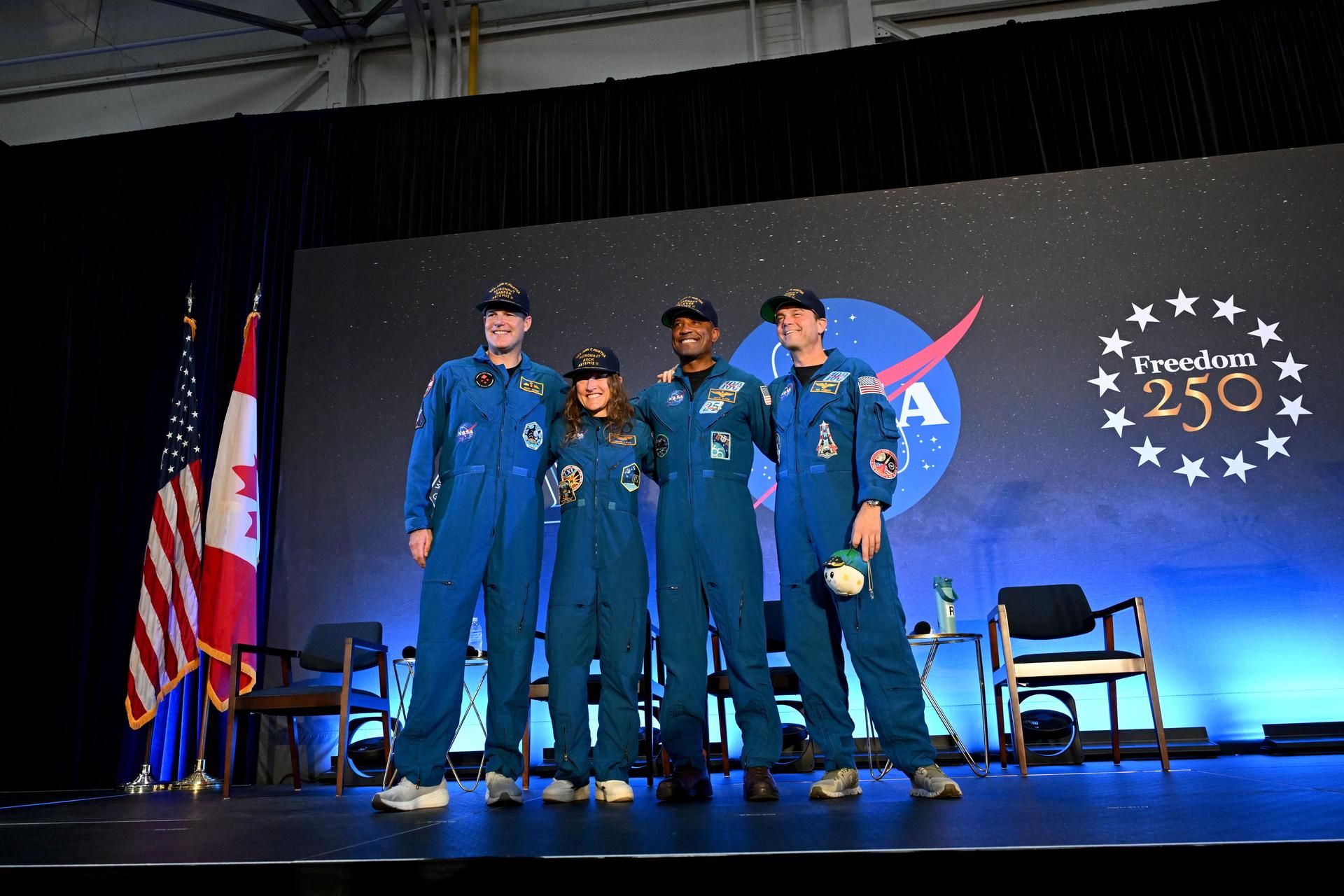 CAPTION: NASA astronauts Reid Wiseman, commander; Victor Glover, pilot; Christina Koch, mission specialist; and CSA (Canadian Space Agency) astronaut Jeremy Hansen, shared brief remarks with friends, family, and colleagues after they landed at Ellington Airport near NASA’s Johnson Space Center in Houston on Saturday, April 11, 2026, after a nearly 10-day journey around the Moon and back to Earth. IMAGE: NASA/Helen Arase Vargas
This needed to be rectified before sending up a crewed ship.
Rather than alter the material, the team altered the physics.
“NASA has modified the trajectory by shortening how far Orion can fly between when it enters Earth’s atmosphere and splashes down in the Pacific Ocean. This will limit how long Orion spends in the temperature range in which the Artemis 1 heat shield phenomenon occurred,” Orion public affairs official Kenna Pell told Space.com. She also said the temperature inside the capsule would still have been comfortable and safe had the ship been crewed.
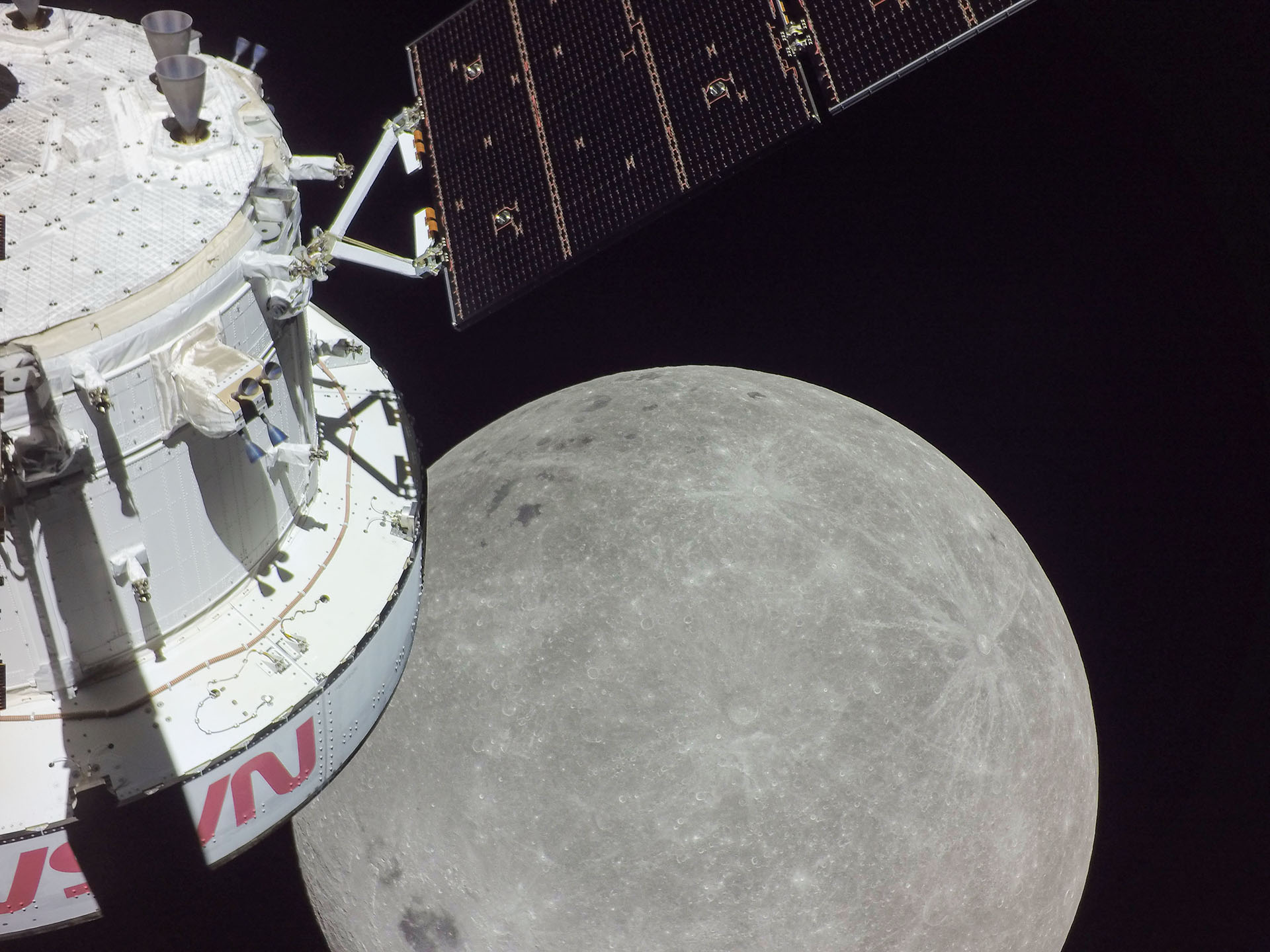
Also tested on this mission are the essential life-support systems designed and constructed by Airbus, courtesy of the European Space Agency (ESA). The European Service Model (ESM) sustains the crew by providing air, drinking water, power and temperature regulation within Orion.
Once the Orion separates from the SLS rocket, the service module distributes four solar wings. The wings track the sun and convert its energy into electricity that powers the ship’s systems like computers, temperature control, navigation and communications. Batteries are also charged for when the sun is not accessible.
The mission itself expects to boast the fastest crewed Earth re-entry ever attempted at 25,000 mph. Having traveled 252,765 miles, Artemis II set the record for the farthest distance from Earth ever traveled by a human.
Now that we’ve covered all of the “easy” stuff, let’s get down to the complicated part of sending humans into space, including human bodily functions and how those work in microgravity.
Say hello to the Artemis II loo. Well a version of it.
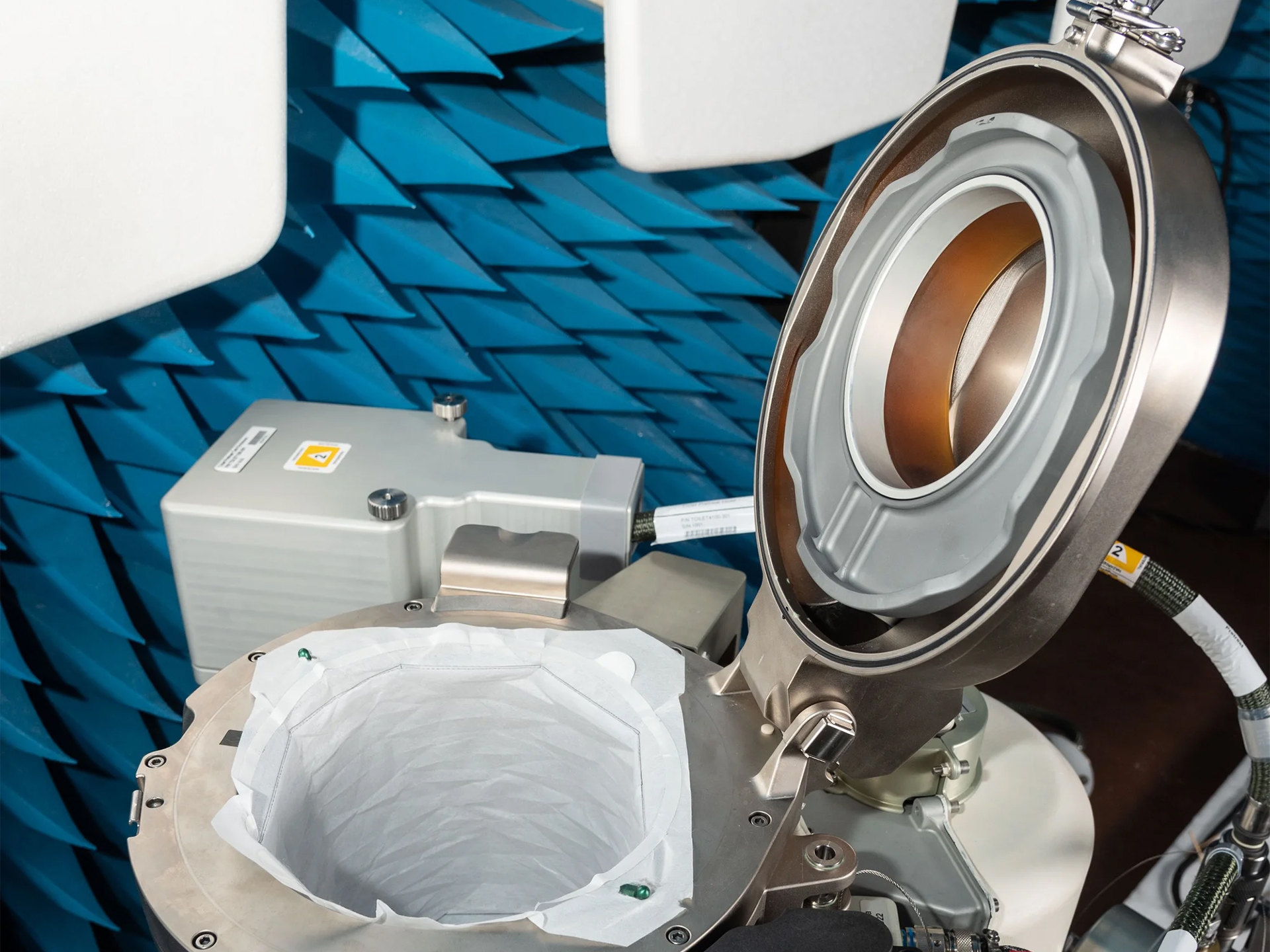 CAPTION: This version of NASA’s Universal Waste Management System was sent to the International Space Station; a special lunar version will accompany the space agency’s Artemis astronauts onboard Orion spacecraft bound for the moon. IMAGE: NASA/JSC/James Blair
The crews of the Apollo had a different experience when they had to boldly go. But the space program has come a long way from plastic baggies and funnels.
The crew of the Artemis missions have the luxury of the Universal Waste Management System, or space toilet for short.
It can handle feces and urine simultaneously — a great “relief” to female astronauts. Unlike previous space toilets, this system takes their anatomy into consideration.
“The toilet has built on designs from Apollo, the space shuttle and even the International Space Station. … There is so much learning that goes into it,” says Melissa McKinley, project manager and principal investigator for NASA’s waste disposal and management systems.
The toilet cabin is loud to the point that the inhabitants require protective ear wear, but that’s not the only complication — once inside, you can’t determine which way is up and which is down.
This isn’t the best time to make directional errors. Previous missions on the Apollo resulted in escapees that had to be chased down by the crew. Not cool.
Who knew that one of the most imperative firsts of modern space missions and deep space exploration would be human waste management?
It seems the luxury of a coveted door on the loo is also a source of mission success.
More like this: To the moon, Artemis II!