
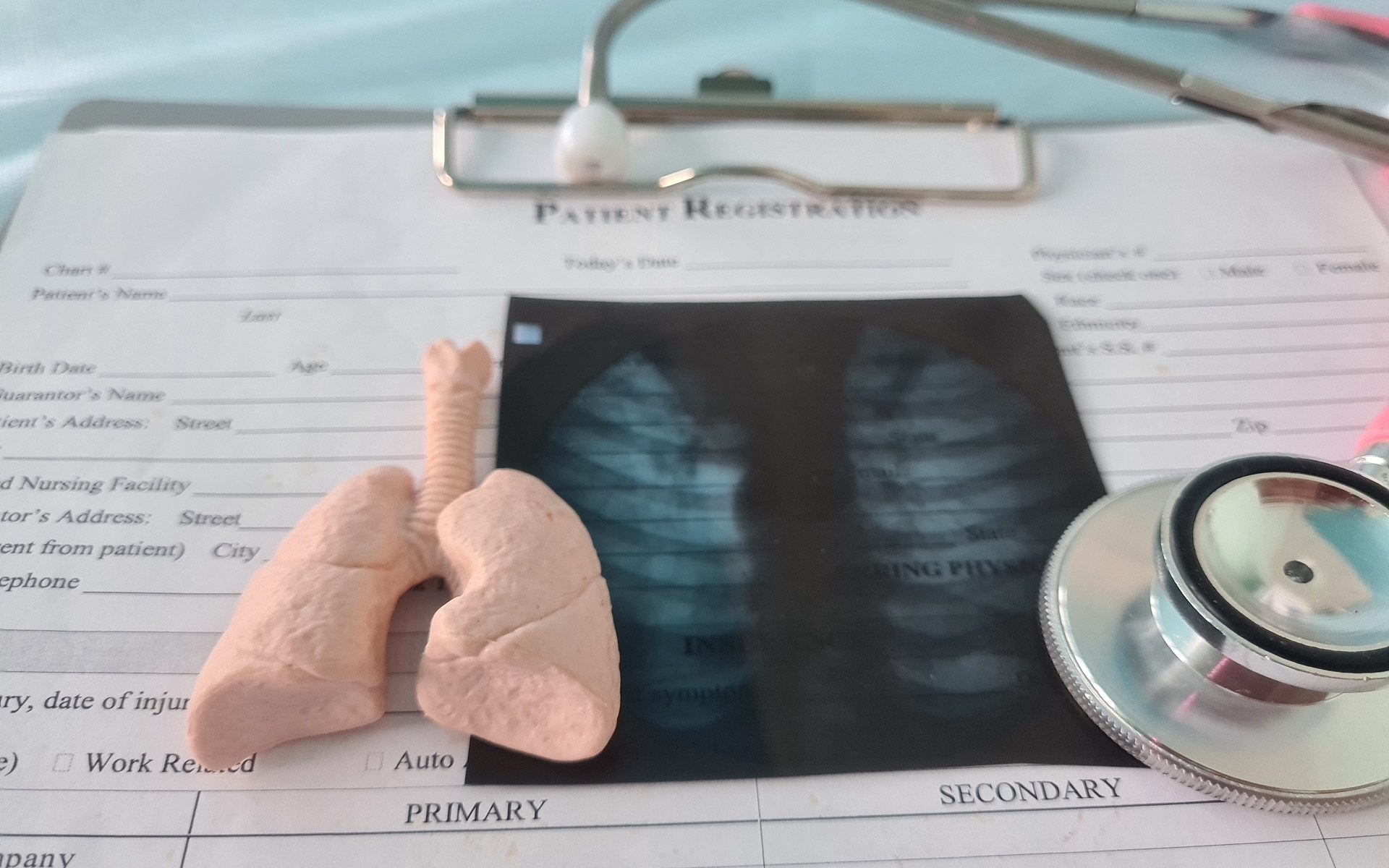
Mini 3D-printed lungs enhance
disease research

Using light-based printing, a miniature 3D-printed human lung model was created by Canadian researchers at the University of British Columbia.

The team’s tiny lung creation mimics real human airways including airway-lining cells, connective tissue cells and mini blood vessels.

The structure is printed with a special gel-like material that supports healthy cell growth and behavior. When exposed to cigarette smoke extract, it responded just like real lung tissue — releasing inflammation signals such as IL-6 and IL-8, without harming the cells.

The model also contains features like fibroblasts that move to heal soft tissue and endothelial cells forming vessel-like layers.

It’s a more realistic, customizable platform for studying lung diseases and testing treatments and offers a new tool that could help replace animal testing and improve research on asthma, COPD and more.

More like this: Immune cell sabotage

A new type of brain cell identified
for object permanence

Not all memory functions are handled by the same type of neuron. Research published in Nature Communications identified a previously unknown class of neuron in the hippocampus, the region known as the brain’s memory center, that is dedicated solely to object memory.

“Ovoid” neurons, named for their shape, were found to play a crucial role in recognizing objects over both short and long time periods. Unlike the pyramidal neurons that process spatial information like remembering a location, ovoid neurons activate only when encountering new objects and are silent when seeing familiar objects, even months later.

Researchers from the University of British Columbia used a technique that allows neurons to be activated or silenced with light in mice trained in an object-recognition task. When ovoid neurons were silenced, mice were unable to recognize objects they had previously seen, effectively “erasing” object memories. When the ovoid neurons were artificially activated, mice showed a strong preference for familiar objects.

This discovery challenges the long-held belief that the hippocampus flexibly encodes both spatial and non-spatial information. Instead, the brain appears to have separate, specialized circuits for different types of memory. This could have profound implications for neurodegenerative diseases like Alzheimer’s, where memory loss often affects object recognition before spatial memory.

RELATED: Collaboration between humans and AI could enhance patient care

1 in 4 chance space junk will fall
back to earth

Uncontrolled rocked re-entries pose a growing risk to the aviation industry, a new study in Scientific Reports warns.

As space launches increase, more rocket bodies are abandoned in orbit, eventually falling back to Earth unpredictably.

Researchers at the University of British Columbia estimate that in high-traffic airspace, such as over northern Europe or the northeastern United States, there is a 26 percent annual chance of a re-entry passing through busy skies, posing a collision risk to aircraft.

While the likelihood of a direct impact remains low, even small debris could cause catastrophic damage.

The study highlights a 2022 incident when European airspace was temporarily closed due to a re-entry threat, delaying hundreds of flights. With rocket launches and flights increasing, the researchers say policymakers need to take action.