“Milk, it does a body good” is a vintage 1980s advertising slogan used to emphasize the health benefits of cow’s milk on the human body. Milk is still packed with loads of nutritional value required for optimal health, but the next time your palate craves an icy, cold glass of refreshing milk, consider a shift in sourcing from animals in green pastures to those wandering the dunes.
According to Home Food and Agriculture Organization of the United Nations, milk offers 48 percent of the protein and 9 percent of the calories a child of 5 to 6 years with light physical activity needs. Cow’s milk is packed with 13 essential vitamins and nutrients like calcium and vitamins A and D that contribute to a healthy diet.
But the impact of the dairy industry on the environment and the subsequent impact of the environment on dairy farms has farmers shifting to camel-milk production to meet demand and their environmental commitments.
It seems camel milk can provide the health benefits of cow’s milk and then some with the bonus of a much lower carbon hoofprint.
THE ENVIRONMENT TAKES THE HIT
With 270 million dairy cows producing milk along with 2.1 gigatons of carbon dioxide every year, the dairy industry is responsible for 30 percent of all anthropogenic emissions. The environmental impact is ample, and with dairy product demand expected to triple by 2050 due to population growth and increased consumption, it is primed to worsen.
Primarily, methane emissions are a ruminant’s worst offender. Methane is produced in the digestive process and expelled into the atmosphere through cows belching, accounting for 20 percent of total global emissions. What’s worse: It’s 20 times more potent than carbon dioxide.
 IMAGE: Unsplash
To be fair, all livestock emit their fair share of methane but pound for pound, camels are the eco-friendlier option.
Emissions aren’t the only environmental issue with dairy farming — there’s also land use to grow feed, pesticides for those crops, and all the water required to get milk from cow to shelf.
WHAT-ER?
The average water volume used to produce 1 liter of milk, including to grow the livestock feed, is 911 liters. This will differ between farms but it’s a big ratio, and when water supplies are also threatened, the cost could escalate.
Water pollution due to manure mismanagement can also impact surrounding water supplies. Overflowing and cracking manure vats sometimes cause seepage and, subsequently, groundwater contamination. This makes its way over time to all manner of bodies of water including rivers and oceans.
 IMAGE: Unsplash
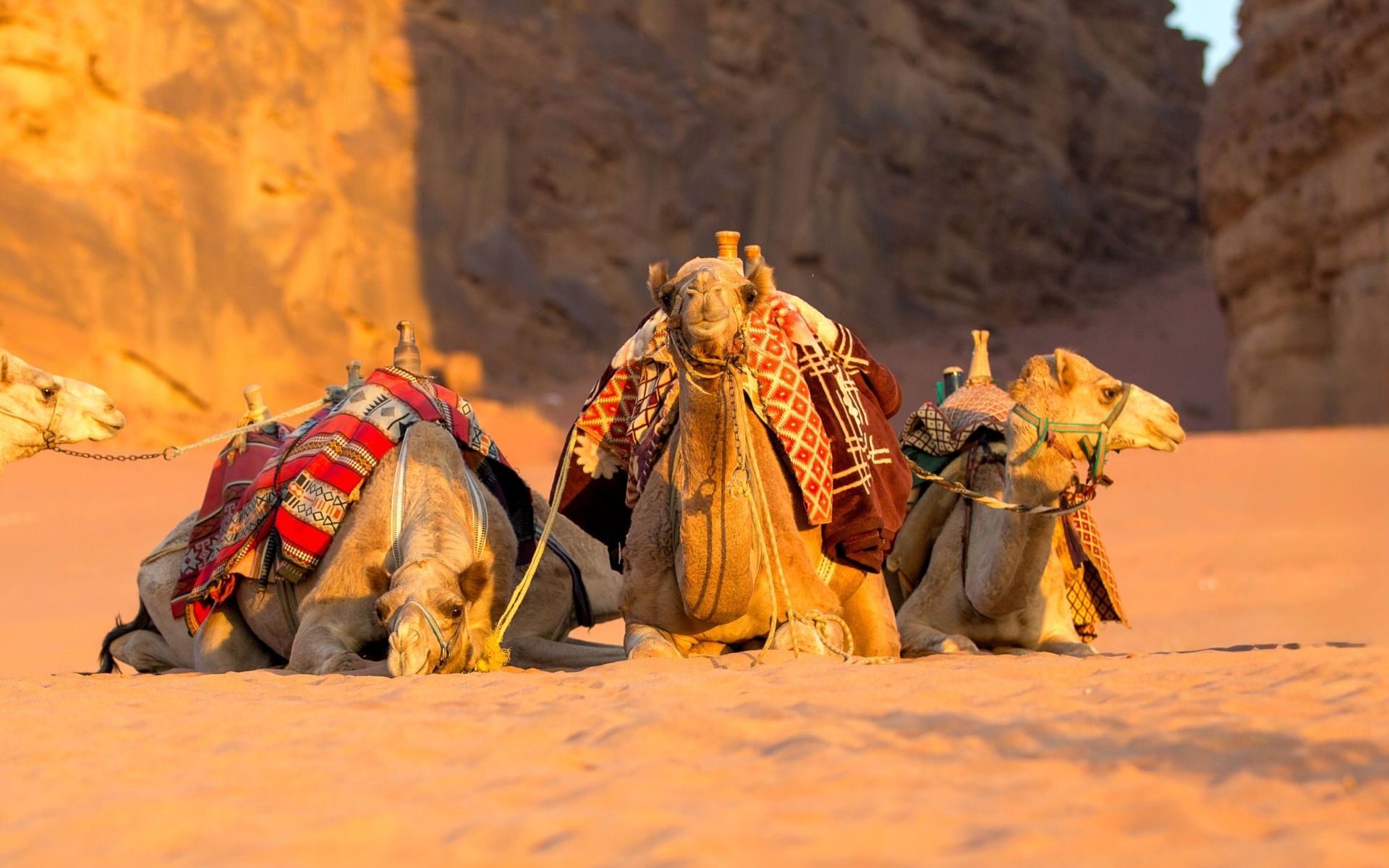
Camels, however, require significantly less water and can go two weeks without any, compared with two days for a cow. With a high threshold for extreme conditions, and the ability to lose 30 percent of their body weight and still survive, camels emerge as a definitively more resilient choice as global temperatures rise and food security becomes a pressing concern.
Food security is also impacted by the abundant land mass required to meet the nutrition needs of grazing animals and the pastures for grazing. This leads to not only extensive deforestation but the knock-on effects of further emissions and impacts on biodiversity and ecosystems.
Whereas camels can eat almost any plant that grows where they live. Their long necks also mean they can reach higher for trees and will happily snack on shrubs, grass or even thorny plants.
Camel milk sounds like the clear winner when it comes to nutrition and sustainability, but it’s not easy to transition a massive industry. Dairy farms have been around for generations and in many cases are still family businesses. Plus, in places rich with grasslands and more temperate weather, cow farms still make sense. But when it’s more a matter of survival than that of public buy-in, people find a way.
FARMS IN AMERICA ARE LEADING THE CHARGE HERE
Historically, cows have been an essential part of many African economies, diets and traditions but heading into what could be another year of drought, the Horn of Africa and surrounding areas are in a state of emergency. A three-year drought that began in 2020 resulted in crop destruction, loss of grazeable land, livestock depletion and dried-up water sources.
Camel milk offers a lot of benefits, but the key is a stable market.
– James Salfer, dairy educator-University of Minnesota Extension
In Samburu, a Kenyan county with a population of almost 310,000, people were struggling with malnutrition as most of their cattle perished.
Cattle farmers noticed neighboring villages with camel farms struggled very little, however.
The government had started a camel program offering one camel to each person eight years prior. So far, 4,000 camels have been gifted. Other African countries are also seeing their camel populations grown.
CAMELS TRAVEL TO AMERICA
Camel farms are not limited to sub-Saharan African countries — they’re also gaining popularity in the United States.
A 35-acre family farm in Nebraska called Camelot Camel Dairy offers camel milk to consumers who struggle with milk allergies or who just might be curious and somewhat adventurous. They are one of only two licensed camel-milk providers in the country and are hopeful that with demand, the price of a liter of milk, currently U.S.$16, will eventually become affordable and accessible.
“Camel milk offers a lot of benefits, but the key is a stable market. Farmers need assurance of demand, and consumers must be willing to pay the price of what it costs to raise and milk camels,” says James Salfer, a University of Minnesota Extension dairy educator.
The global camel-milk trade could exceed U.S.$13 billion by the end of the decade, up from $1.3 billion in 2022.


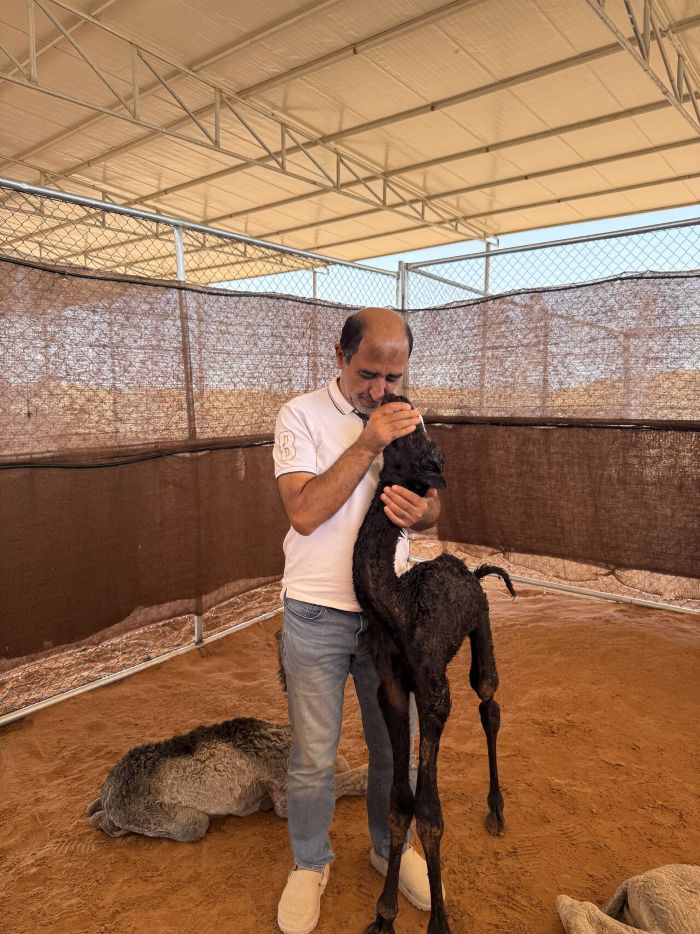 CAPTION: Kakar gets camel nuzzles at a farm in Masakin IMAGE: Raziq Kakar
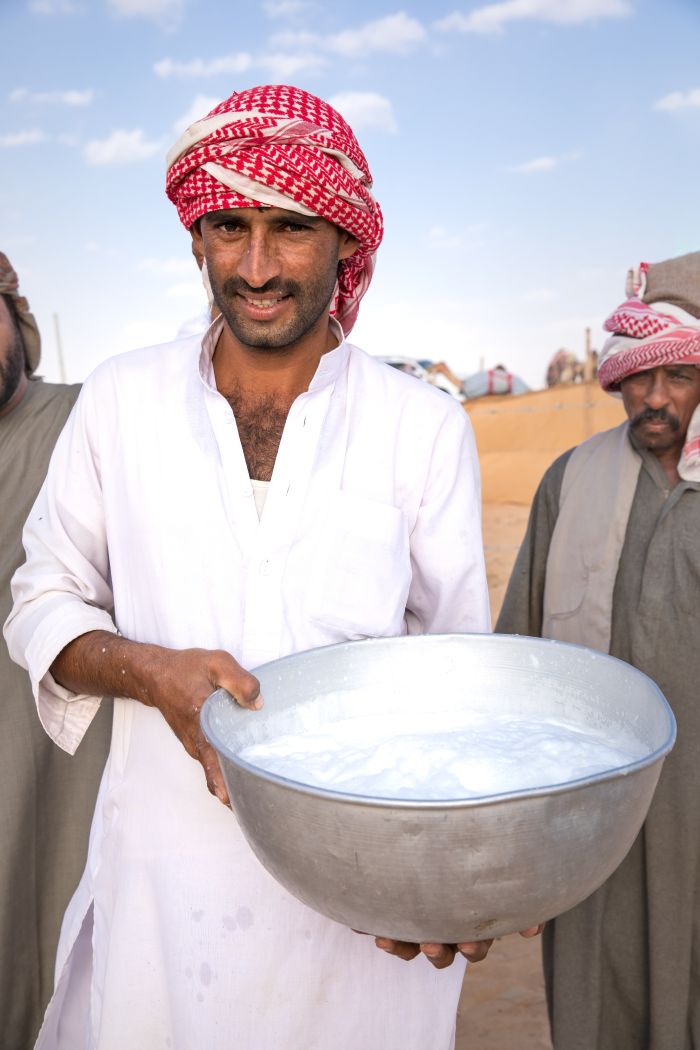 CAPTION: Freshly produced camel milk at Al Dhafra camel festival IMAGE:Shutterstock