
The annual Geminids meteor shower is something. The annual Geminids meteor shower observed from Abu Dhabi’s dark desert is something else.
Abu Dhabi amateur astrophotographer Anas Albounni recently led a group on a cosmic safari to view the Geminids, which are traditionally active each December. Peak viewing is around mid-month with 120 meteors visible per hour, depending on visibility.
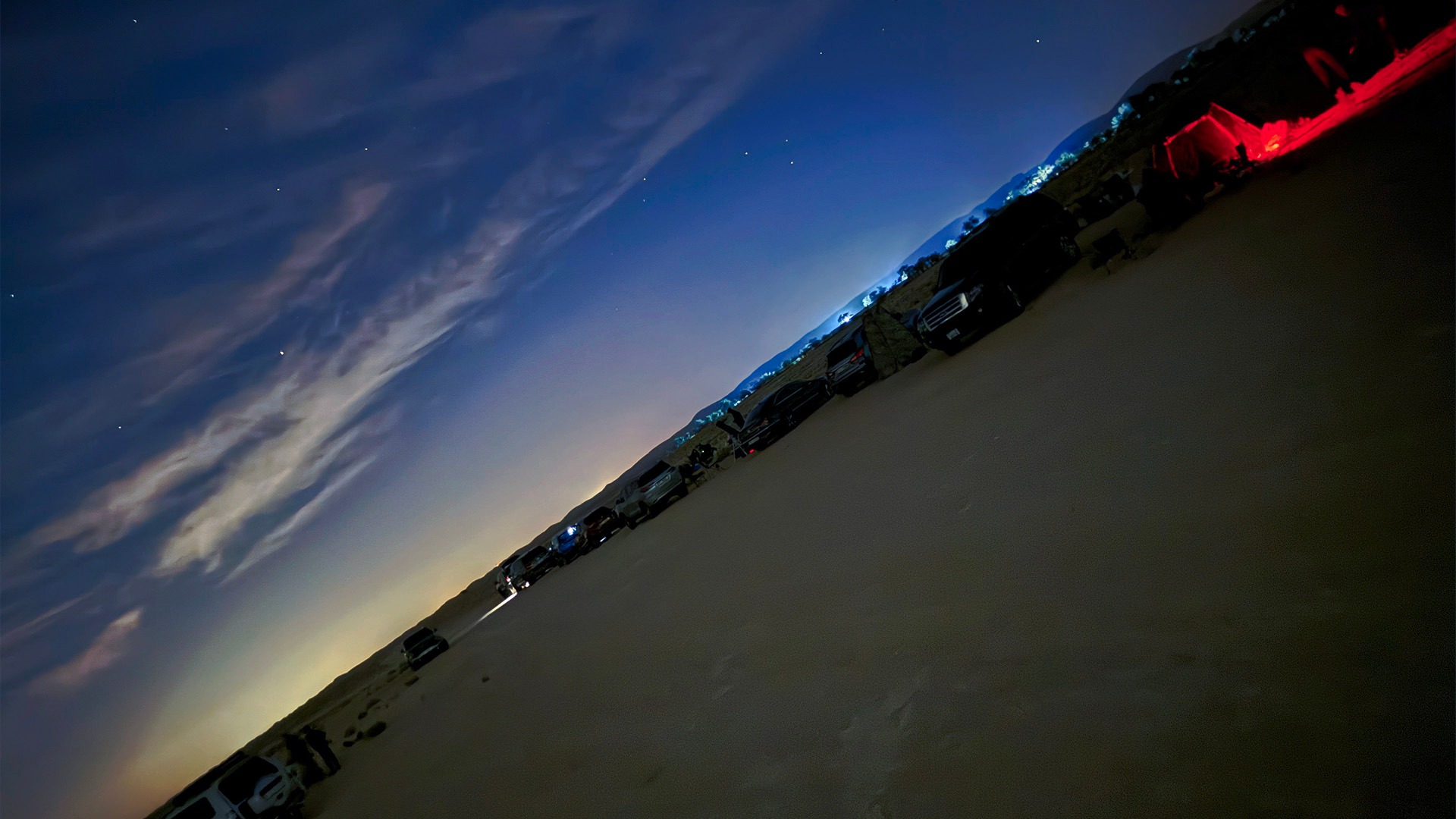
Albounni took 20-30 adults and kids out to one of his favorite dark spots between Abu Dhabi and Al Ain. Where exactly? That’s a closely held secret.
He says protecting these areas from light pollution and from being overrun is essential for night-sky viewing.
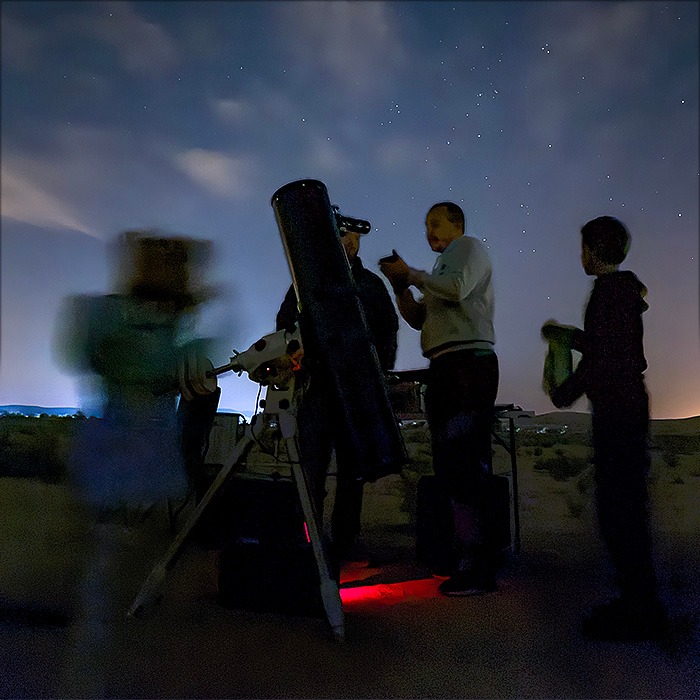 CAPTION: Night sky viewing IMAGE: Syed Awais Ahmed
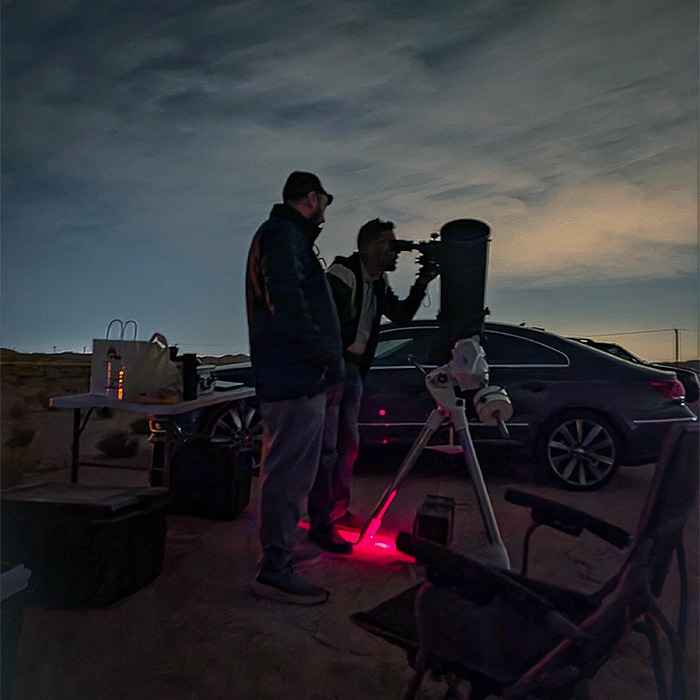 CAPTION: Night sky viewing IMAGE: Syed Faryab Shah
Most meteor showers originate with a comet, but the Geminids are produced by debris from 3200 Phaethon, an asteroid that behaves like a comet. It “brightens and grows a faint tail (when close to the sun), helping make this shower especially bright,” says National Geographic. The magazine describes it as “one of the best meteor showers of the year — and the weirdest.”
The Geminids are active each December. Peak viewing is around mid-month with 120 meteors visible each hour, weather permitting, of course.
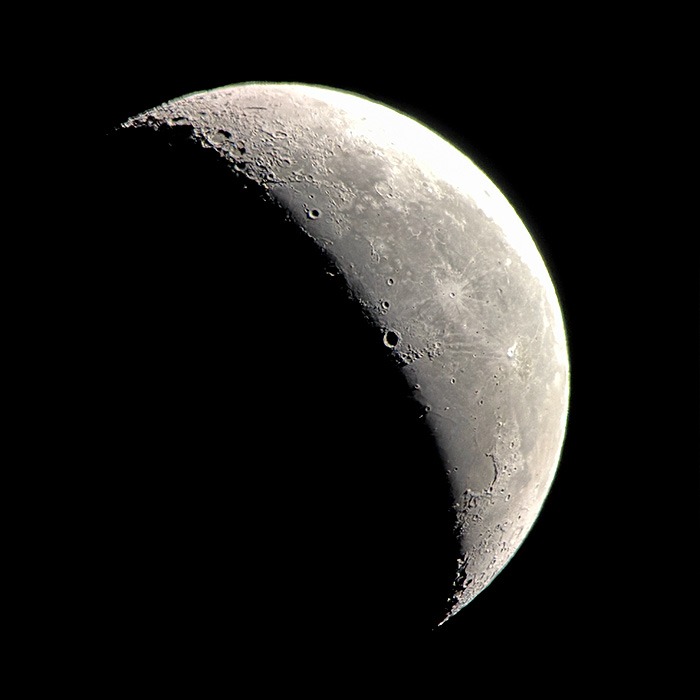 CAPTION: The moon as seen through the telescope that night, photo captured using a phone on the telescope eyepiece IMAGE: Anas Albounni
Prime visibility needs clear skies. Light pollution can also reduce visibility, so you need to be somewhere dark, ideally between midnight and dawn. New and thin crescent moons are best.
If the stars align, you’re in for a treat. Not only are the Geminids plentiful, they’re also colorful.
Syed Faryab Shah wasn’t overly keen on attending the event initially as it was his birthday.
He tagged along with friends for a road trip in a seven-seater, some pizza and good company. Much to his surprise, it was a birthday to remember.
“Going there was the best decision ever,” he says. “We talked, laughed and looked up at the beautiful sky. Anas even showed us Jupiter through his telescope. We took dozens of photos, made memories, and spent time talking under the stars in the chilly weather.”
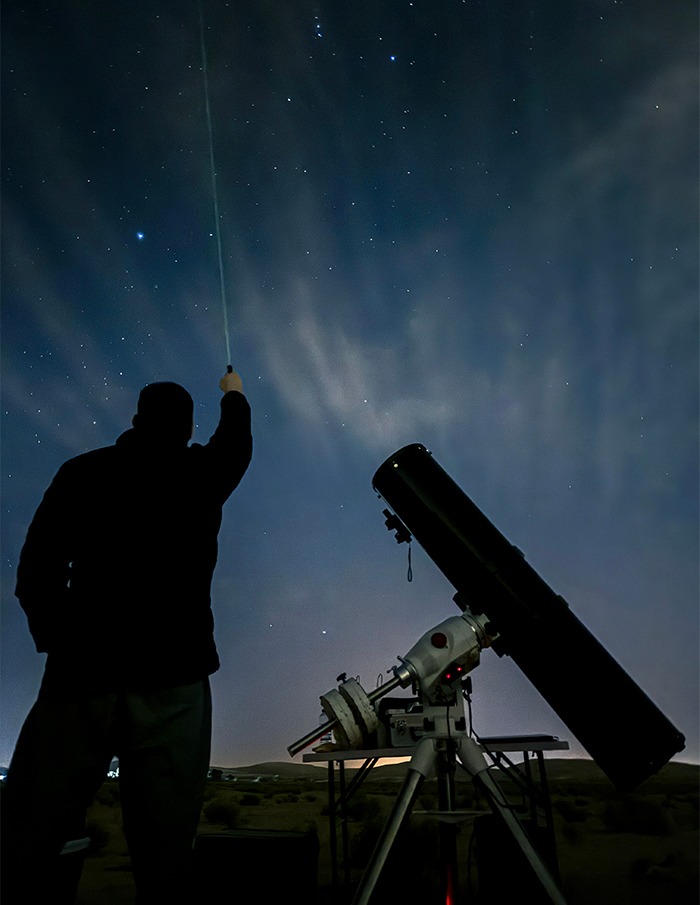 IMAGE: Syed Awais Ahmed
Five tips from Anas Albounni:
1. Cast away hesitation and just do it! Trust me, I’ve been there. Read more›››
2. I strongly recommend that everyone join such a trip at least once to experience it firsthand. It will tell you if this is for you or not. Plus, if you find interest in it, it’s better to have someone with experience to guide you during this first step with the right gear.
3. Bring your kids to introduce them to the topic. Astronomy is a fascinating subject that many have interest in but can’t imagine where or how to step into it.
4. Don’t hesitate to ask questions. The only stupid question is the question that is not asked. That’s how we all got into it.
5. Stay connected, keep an eye on celestial events and socialize with like-minded people.‹‹‹ Read less
Longtime enthusiast Albounni, stargazer by night, creative lead of the Khalifa University Science and Tech Review by day, was fascinated by the cosmos long before he began his artistic professional path. But it became a true passion after attending an event organized by the UAE Astronomy Group. He later became the main organizer of the group.
“I was truly hooked after that and started religiously absorbing everything I could get my hands on, through equipment, researching online, reading books and asking the experienced members for help and guidance,” he says.
Stargazing is often imagined as a solo pursuit, but Albounni says he believes it is something to be shared. He reserves desert ventures of solitude for astrophotography sessions.
“Astrophotography doesn’t go well with large and inexperienced groups; it requires a tremendous amount of focus, accuracy and patience. A tiny unintentional foot bump to the telescope can ruin hours of work. Personally, I love inviting others to join, but when I do, I keep my expectations reasonable. I don’t plan for serious astrophotography, especially when large numbers turn up, in many cases, with kids.”
Fellow astrophotographer and co-organizer, Syed Awais Ahmed, says it was a night of learning, “We had a full astrophotography setup to take deep sky images of various nebulas and galaxies.
The guests were shown the basics on how everything works, what equipment would be needed, how everything works.”
When he does these group events, Albounni says it’s exciting for him to see the reactions of those viewing celestial elements for the first time.
At a recent outing, the group viewed Jupiter and Saturn, which Albounni calls “the true lord of the rings.”
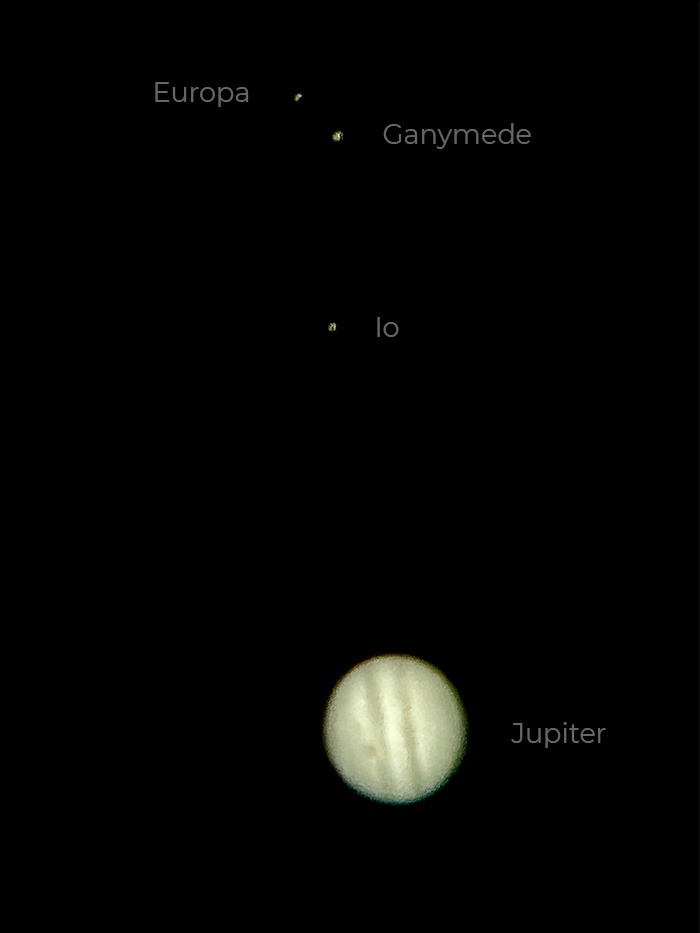 CAPTION: Jupiter and 3 of its moon as seen through the telescope that night IMAGE: Anas Albounni
He was delighted when one woman jumped up and down and squealed with delight that she could see its rings. “People’s reactions the first time looking through a telescope is priceless,” he says.
Zainab Ali Altal attended the Geminids event, a first for her. “I took my family out to the desert in Abu Dhabi to watch the meteor shower, and it turned into this beautiful mix of stargazing and science. Watching my niece and nephew get excited every time a meteor streaked across the sky was the best part.”
Albounni tells KUST Review the Geminids are now observable only every second year because of an 11- to 12-day difference between the lunar and solar calendars.
The forecast was unfavorable, but he opted to go ahead with the outing anyway. “I’m glad I did. The night was beautiful, even with clouds,” he says. “We counted over 70 meteors that night.
The cool thing about it is that it depends on where you are looking. You will see the meteors at one angle and others looking at another part of the sky will see different meteors.”
Interested in joining a future event? Check Meetup.com, UAE Astronomy Group, where the group posts upcoming outings.
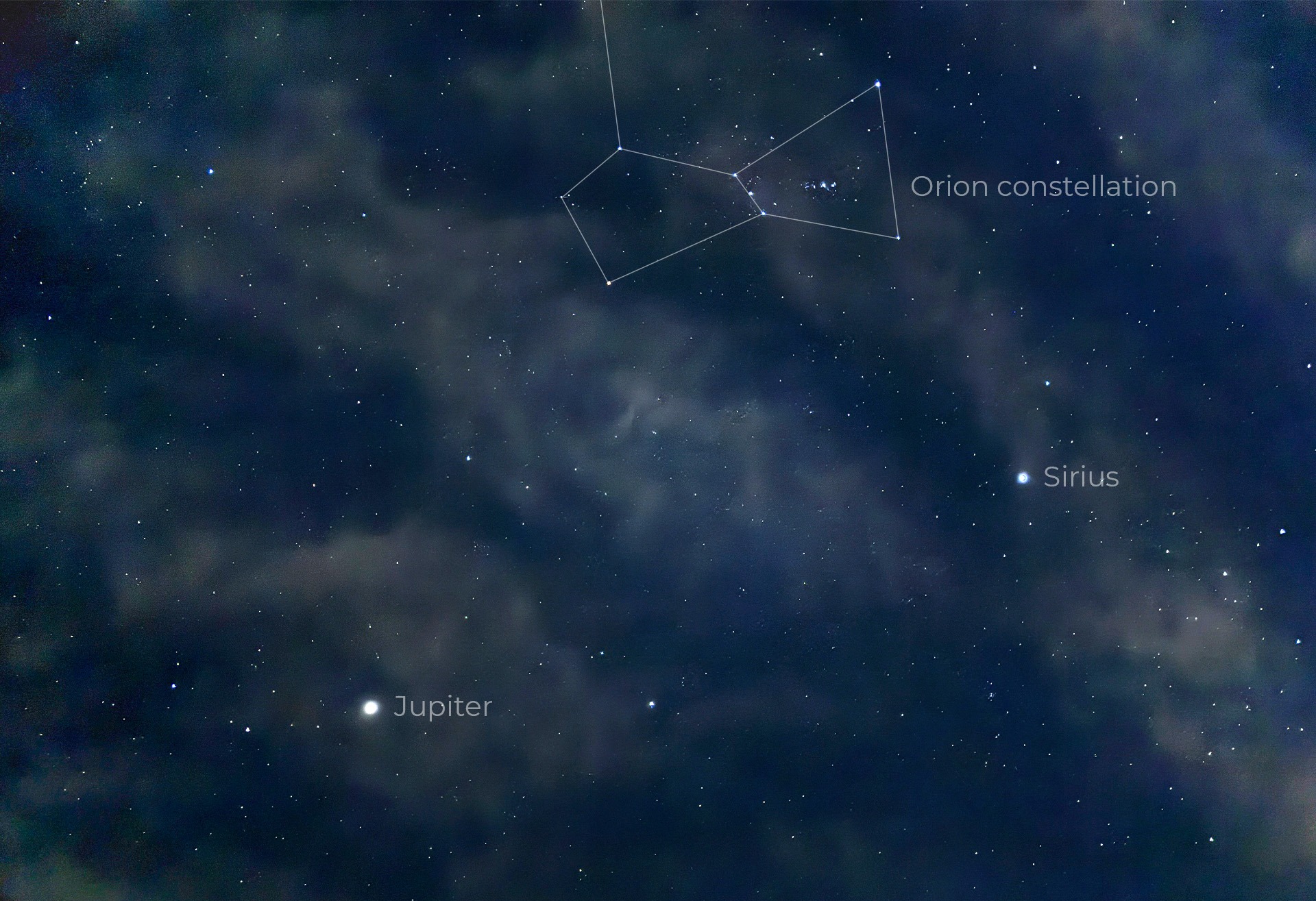 CAPTION: A phone shot of the sky showing Jupiter, Sirius (the brightest star in the sky) and the Orion constellation, to the right of Orion’s belt (the three stars in the middle) you can see a group of bright spots, that’s the Orion nebula. See close up below. IMAGE: Anas Albounni
 
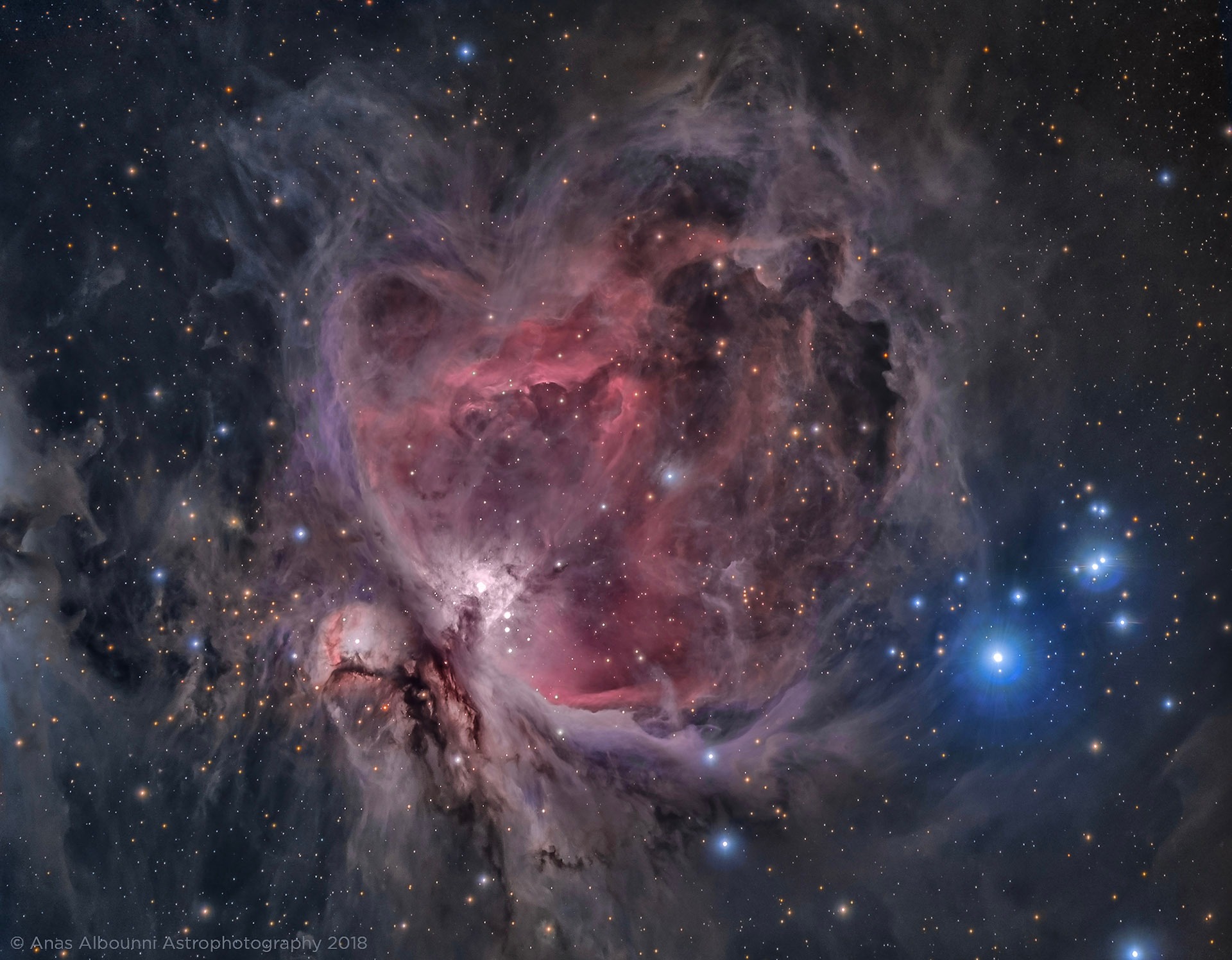 CAPTION: Orion nebula located 1.344 light years away from earth. This can be seen with the naked eye from a dark location. Photo taken over 4 nights in 2017. IMAGE: Anas Albounni
More like this: Lost in the light