An electric motor is typically built in a factory full of stamped steel and copper wire, but MIT researchers recently produced their own linear motor — it was cheap, fully functioning and produced from a 3D printer.
The outcome stems from teaching the printer new tricks.
The team used a commercial extrusion system that could handle the full caboodle of materials, including plastic filament, magnetic pellets and conductive silver ink and produced all of the structural parts: printed coils, permanent magnets, a flexible spring and soft magnetic cores.
The only thing left to do was magnetize the printed magnets.
The resulting linear actuator was able to move back and forth by 318 micrometers at 41.6 hertz. The produced solenoids (coils) generated magnetic intensity up to 2.03 millitesla and the permanent magnets reached 71 millitesla.
These numbers are small, but the proof of concept is anything but.
Other 3D-printed motors rely on store-bought magnets and copper coils, but these mechanical necessities were printed in-house and on the same platform.
Though this won’t power a car in the very near future, the big-picture implications could be significant. Printed motors and other electromechanical systems may one day be printed completely on-site. This could reduce costs and reliance on complicated global supply chains for fields including robotics and space-based manufacturing.
If you’ve ever folded a sheet of paper and placed small cuts throughout to create a snowflake design, you’ve participated in the Japanese artform of kirigami.
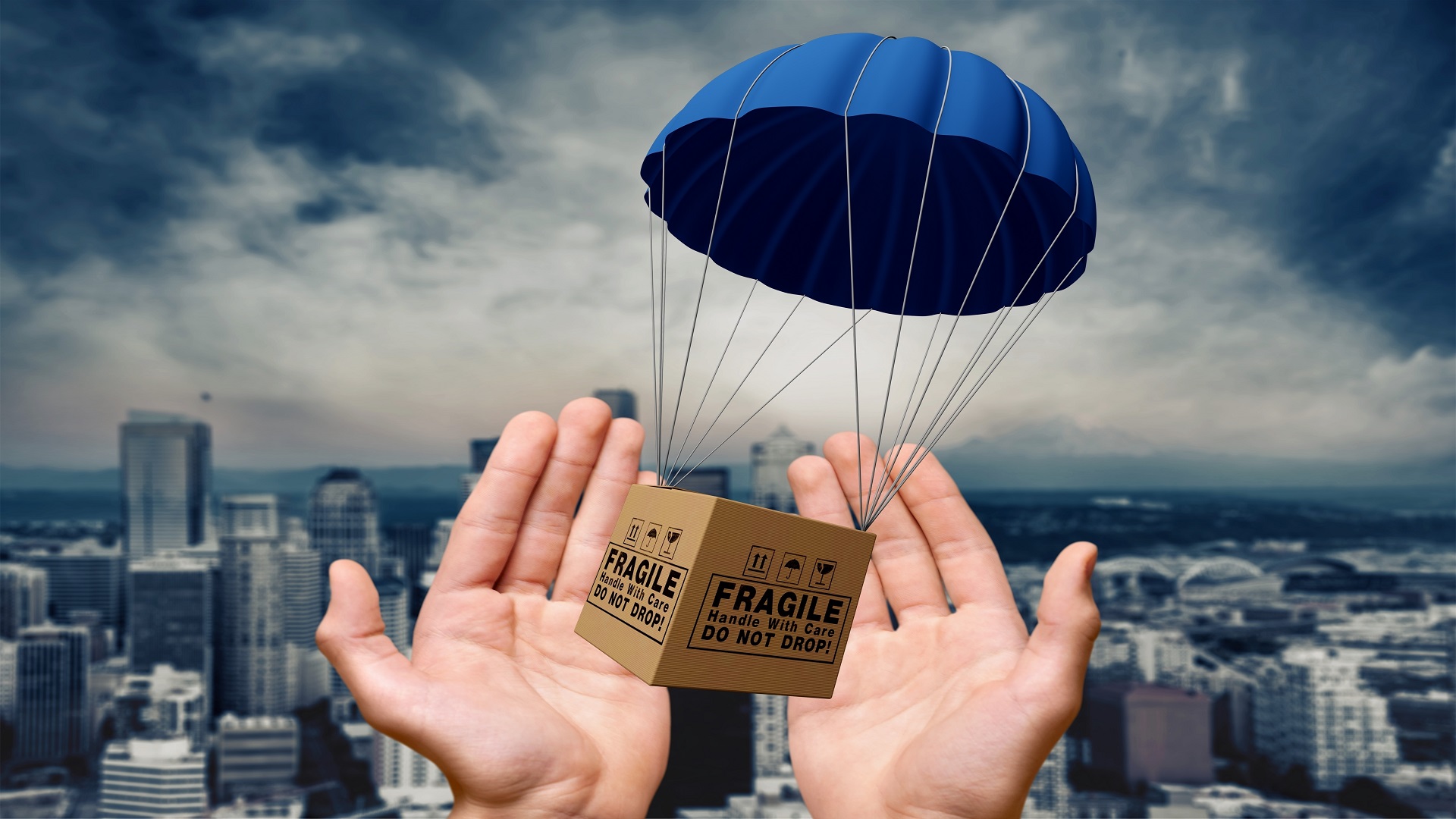
A team of researchers from Polytechnique Montréal and École Polytechnique has applied the kirigami technique using a laser cutter to create parachutes that demonstrate stable, predictable descents in real-world tests.
The results are a reduction in materials, more accurate landing and less complex designs, compared with traditional parachutes.
The chutes are made of thin, laser-cut polymer discs programmed to reconfigure themselves during descent. Upon release, kirigami patterns prompt the material to deform into shapes that slow their descent and reduce sideways drifts.
Unlike typical parachutes that must be released at a specifically angled trajectory, the new model descends vertically, regardless of the release angle.
The design’s practicality was proven during a full-scale test dropping a water bottle from a 60-meter drone flight.
Manufacturing of this technology can be achieved at scale utilizing die-cutters or laser processes and can offer ample cost and deployment advantages in situations where humanitarian airdrops or drone-based logistics are required. It could also potentially have aerospace applications.
Results are published in Nature and suggest geometric-cut patterns, not just material or size, play a significant role in parachute stability and performance.
3D printing has long been used in manufacturing and medicine. But now food companies are using the technology to serve up sustainable practices and customized nutrition.
The food industry is responsible for about a third of global greenhouse gas emissions, according to the United Nations. And agriculture takes up half of the world’s livable land mass and uses over 70 percent of fresh water, per Our World in Data.
But 3D-printed food utilizes more sustainable food sources like algae, insects and plant-based materials, which can also add valuable protein to a plant-based diet without the “ick” factor. In addition, printing exactly what we plan to eat could mean less waste, less packaging and reduced transport needs.
The process starts with a digital design of whatever you’re hungry for. A specialized printer heats the contents for malleability and produces the item layer by layer, much like a piping bag expelling icing. This is the most common technique and is called fused deposition modeling. As each layer hits the cold surface beneath, cooling for the next layer, it solidifies, and dinner is served.
With customization, food can be created with specific nutrient and calorie content, and it can be designed to look appealing to the diner. And when food is printed made-to-order, there’s no need to add chemicals to extend the shelf life.
“Options could include using food waste as a 3D substrate from which mushrooms or other edible fungi can be grown.”
– Bryan Quoc Le, food scientist
The ingredients are typically food elements like fats, carbohydrates or proteins in the form of purees or pastes. From intricate chocolate work to pasta to plant-based meat, the edible food ink possibilities seem endless.
There’s still research to be done, however.
“3D printing of food waste to generate new foods can be challenging. The ingredients need to be processed such that the materials are rendered safe from microbiological contamination.
They also need to maintain excellent taste and texture when converted into new food,” says Bryan Quoc Le, food scientist and author of “150 Food Science Questions Answered.”
“Possibilities may be to convert food waste into dried powders and transformed into 3D-printable edible inks. Other options could include using food waste as a 3D substrate from which mushrooms or other edible fungi can be grown,” he tells KUST Review.
According to Allied Market Research, the 3D printing food market is expected to pass U.S.$15 billion globally by 2031, up from U.S.$226.2 million in 2021.
A new way to embed gold nanoparticles into 3D-printed hydrogels could improve medical implants, optical devices and even contact lenses for colorblindness.
Scientists at Khalifa University published their research in Materials & Design. It introduces an eco-friendly method that places nanoparticles exactly where they are needed, without waste or extra chemicals.
3D-printed materials with nanoparticles are not new: The particles have previously been mixed into the printing material or applied as a coating afterwards. Both approaches limit device performance.
This new approach allows for better control over nanoparticle placement, making it useful for drug delivery, biosensors and light-based medical treatments.
Astronaut health care — prior to, during and post mission — has historically been served by specialized medical doctors called “flight surgeons.” While the name suggests surgeries are taking place in the air, it is rather misleading. But with longer space missions on the horizon, flight surgeons may soon be aptly named.
The role of flight surgeons, or aerospace medicine specialists, is varied but they are primarily responsible for the care of crews whether they are flying in space or in the air.
The current protocol is to stabilize the patient and send him or her back to Earth for medical intervention. That won’t work for a seven-month journey from Mars, so is it time for flight surgeons to up their game with actual surgery?
LISTEN TO THE DEEP DIVE
But what could go wrong? Doing surgery. In space. In microgravity.
The problem: There is little knowledge and even less experience. To date, there have been only minor procedures in space. But there is a lot of research focused on medical obstacles to deep-space, moon and Mars missions to come.
PREVENTING BLOOD LOSS
IMAGE: Freepik
What happens to the human body in space?
On Earth, we spend our days walking from room to room, home to car, car to office, running around the office, exercising and running errands. Every single step includes flexion and extension at the hip, knee, and ankle, involving 200 muscles. Read more›››
Strong muscles contribute to bone density health. The stronger a muscle is, the more it pulls on the bones it’s attached to, making them stronger.
This also means the weaker the muscles, the weaker the bones. So imagine if you were just floating about your day and not using any of the muscles or joints your body was designed for. What might happen to those muscles? And those bones?
According to NASA, lengthy stays in space can lead to muscle atrophy (loss) — a condition that astronauts aim to avoid with intensive strength-training sessions during missions on the International Space Station. Astronauts on a mission from five to 11 days can lose up to 20 percent of their body’s muscle mass. Short-term missions don’t have much impact on bone-density loss but longer missions do — and the effects are really noticeable upon return to Earth.
The normal weight bearing on the skeletal system on Earth can be a shock to weakened bones and would put them at higher risk of breakage and for osteoporosis. This risk factor continues to be an obstacle for long-term space stays for astronauts, with a monthly average of 1 to 2 percent bone mineral density loss. The World Health Organization says that an osteoporosis diagnosis is based on a 25 percent deficit on the average bone density of a 30-year-old. And osteoporosis is not reversible.
The International Space Station orbits the Earth at 400 kilometers from sea level and can be reached in anywhere from four hours to several days. NASA estimates a journey to Mars will take approximately seven months. This means by the time astronauts reach Mars, they could experience a 20 percent mineral loss.
But flight surgeons counter this with rigorous cardiovascular exercise and resistance training up to two hours daily. And after a six-month stay on the International Space Station, astronauts return with minimal loss.
Dr. Sergi Vaquer Araujo of the European Space Agency says the hydraulic resistance machines to maintain muscle mass and strength enable the astronauts to walk very quickly after their return to Earth.
“They all lose bone, but the amount is always within a very big safety margin that would classify as a normal human bone mineral density,” Vaquer Araujo tells KUST Review.
“All in all, what I’m trying to say is that if you look at the commonalities on how to treat those three things, bone, muscle and heart and vessels, they all benefit from exercise, our main drug, and we treat it as a drug.
“So that means what we’re doing in space works for six months, the one-year mission (on the Russian and American side) showed that, yes, it (effects of time in microgravity) is more pronounced, but still within manageable ranges.”‹‹‹ Read less
Innovations are underway to prevent blood or other fluids escaping the surgical site in microgravity conditions.
A surgical fluid management system developed by the astrosurgical team at University of Louisville in the United States was tested in 2021 aboard a Virgin Galactic flight. The technology, funded by NASA’s program to prepare for long missions, is basically a dome that fits over the surgical site to contain fluid. It is fitted with specific points where surgical instruments can be inserted without fluid escaping.
The fully automated test included injecting a blood-like fluid into the dome and manipulating the pressure within it to control bleeding. But the technology is multi-faceted and included tests of its irrigation abilities, suction and ability to vacate fluids from the dome. The dome keeps fluid in but also protects the surgical site from contaminants.
George Pantalos, head of the University of Louisville’s astrosurgery team, said the device operated as expected. “There was a little bit of variation in how things worked compared to gravity on Earth, but they weren’t showstoppers by any means.”
The team is also working on ways to allow non-surgeons to perform emergency surgeries as well as a space-saving 3D printer that will print recyclable surgical tools.
SURGICAL ROBOTS
Another potential path to success: robotic surgeries.
Remotely operated surgical robot MIRA (Miniature In-Vivo Robotic Assistant), created by Virtual Incisions’ Shane Farritor, will make a jaunt to the International Space Station for testing in 2024.
The tiny MIRA robot will conduct small surgical-type functions inside a small compartment with simulated materials.
Robotic surgeries contain the internal organs and bodily fluids while reducing contamination. They also offer less invasive procedures with quicker recovery time, which means lower risk of infection – especially important considering microgravity’s damaging effects on the human immune system.
MICROGRAVITY AND WOUNDS
Microgravity also appears to have an effect on wound healing. Current research indicates slowed cellular growth and decrease in collagen fibers. A 2022 paper published in Nature suggests that time spent in space leads to a reduction in red blood cell count in astronauts — a condition known as anemia. Oxygen-rich red blood cells are instrumental in building tissue for wound healing.
Space anemia was originally thought to be caused by initial exposure to microgravity resulting from bodily fluids shifting upward. Further research, however, shows that the anemia is present during and after exposure. This also should be considered for surgical aftercare on long-term missions.
These are only a handful of challenges.
Then there is the matter of who is going to perform such surgeries. Currently medical officers on board spacecraft aren’t doctors — they are flight crew with 60 hours of medical training. Flight surgeons monitoring the health of astronauts currently do so from the ground.
Flight surgeons for astronauts aren’t typically astronauts themselves or surgeons for that matter. If flight surgery is in your path, however, you are in for a bit of a long haul. On top of a four-year degree, four years of medical school and three years of residency, it will be another two years of specializing in space medicine to reach the final frontier, says NASA flight surgeon Rick Sheuring in an interview with the University of Strathclyde in Glasgow, Scotland.
That’s a 13-year journey, plus astronaut training. But it could just land you on the cutting edge of space-medicine development.
THE CURE
Though many of these developments are in process, Dr. Sergi Vaquer Araujo, intensive care medicine specialist and leader of the European Space Agency’s space medicine team, says there will be limits to what can be done. This means astronauts will have to accept that there are health issues that simply can’t be properly addressed in space.
But some conditions can be anticipated and prepared for.
Vaquer Araujo’s team works closely with NASA to prepare a kit that will address as many likely emergent scenarios as possible. Not necessarily open-cavity surgeries, but treating illnesses and performing procedures, such as suturing small wounds or extracting teeth, that have been performed on the International Space Station.
“Imagine a micrometeorite penetrates the vehicle and penetrates the chest of an astronaut, for instance, and then not having the tools to manage that. That would be a pity, and the person dies because I didn’t have the tools,” Vaquer Araujo says.
What tools to take to space can be a high-stakes guessing game.
“That’s a very frustrating thing, but one has to be also realistic, and if you cannot have everything you need to assess the chances of that happening and if the chances are low, you need to take a gamble,” he tells KUST Review.
IMAGE: Abjad Design
He says astronauts are well aware of the risks, but as a doctor, there are still ethical concerns with sending people on a mission without every possible means to maintain their health and safety.
The European Space Agency and NASA have different approaches to how they build their medical kits, but they are complementary. The organizations continue to work to combine them.
The philosophy goes something like this: It’s not what happens, it’s what the body needs to solve the problem.
“For example, if I’m bleeding, what I need is to stop the bleeding and administer fluids. But if I have septic shock, meaning I have a completely uncontrolled infection, I also need fluid and I will also need the same tools for both things to know the status,” he says.
“What this all means is when you’re in a critical medical situation and conditions escalate to a failure of a system, those failures are diagnosed with almost the same tools. So, our approach is to try to find all those commonalities and build our kit, so at least we have something to treat those commonalities. So, you do not think whether this could be a micrometeorite that penetrates the chest — you just know that if you have insufficient lung function, you will need oxygen,” Vaquer Araujo says.
OTHER THINGS TO CONSIDER
He is encouraged by the fact that the ESA’s kit and NASA’s are in line up to 90 percent now. They also agree that at this stage, major surgery in space is not feasible. And the challenges of microgravity are not necessarily the major concerns.
For complicated open surgeries, a full operating room is imperative, which means more space in space is required.
But this space would also require an amount of flammable oxygen that would put the entire crew at risk.
Also to consider are the sterilization capabilities, which Vaquer Araujo believes is the biggest concern.
You also need the skill of an actual surgeon on board, but what if that surgeon is the patient? And what type of medical doctor do you put on board as the surgeon? What if you place an internal medicine doctor in the field and there is a trauma issue? And that ”surgeon” spends the two years prior to the mission training as an astronaut but not treating patients — what risks does two years away from practicing pose?
The list of questions is unending. The cure, it seems, is time, innovation and a lot of money.
Join our mailing list
Get the latest articles, news and other updates from Khalifa University Science and Tech Review magazine