While there have been many changes in the modern Olympic Games, two of the most notable are athletic performance and the rise of technology.
Back in the 1896 games, for example, stop watches marked the start and finish of a race and the timing of the althletes’ performances. This, however, has evolved over the years as technology changed.
In a sprint race, every millisecond counts, so even the starting gun now is electronic. The speakers connected to it are positioned such that no runner will hear the shot of the gun even a millisecond before another runner.
At the finish line, a laser is projected across to a light sensor, also called a photoelectric cell or electric eye, positioned to receive the beam. The system includes two photocells set at different heights to prevent false readings from arm movements. When a runner crosses the finish line and interrupts the beam, the electric eye triggers a signal to the timing console, recording the runner’s time.
In marathons, however, there are so many competitors; not everyone can start at the same time. Wearable timers called radio-frequency identification tags are essential.
In some events, athletes wear timing monitors that record split times as they pass, offering information that can assist in future training.
Training elite athletes has also evolved.
IMAGE: Unsplash
In the 1932 Olympic Games, the winner of the men’s 100-meter swim was clocked at 58.2 seconds. Fast forward to 2016 and the winner touches the wall more than 10 seconds sooner at 47.58 seconds.
What’s the difference?
Well, we know a lot more about human conditioning, the science behind how our bodies work and respond to different exercise. Athletes are now training differently to maximize performance. We also know that sprint athletes need different training than endurance athletes, so competitors have become faster and stronger, training specifically for their sport.
There is engineering going on for the outside factors that might enhance performance, as well.
“There is no natural athlete. In fact, [being an] elite athlete is a very unnatural way of life — but that doesn’t make it bad,”
— Andy Miah, media researcher — University of Salford
It begins with materials science and comes down to things like friction and lubrication.
Friction, where body parts rub together, can result in painful sores. Not enough friction, though, can inhibit balance and grip. For these, materials like polytetrafluoroethylene and silicone elastomers are known for their low resistance measure, causing less chafing.
Frictional heat can also cause injury. So, today’s athletic wear is equipped with fabrics that absorb and expel heat and maintain an ideal skin temperature. Some materials are also equipped with lubrication to reduce friction and manage moisture.
These materials also need to be durable yet flexible.
Other materials enhance an athlete’s ability by making minute changes to aspects of their bodies.
For example, some gear is fitted with compression technology — originally developed to mitigate circulatory issues in medical patients — that increases blood flow, subsequently reducing muscle exhaustion. Gear might also be made of materials with coatings that repel water using nanotechnology.
And footwear with carbon plates offer the runner enhanced energy return.
These sorts of performance-enhancing materials, however, strike some as unfair advantages. Some call this “tech doping.”
Doping, or taking performance-enhancing drugs, cost cyclist Lance Armstrong seven Tour de France victories and an Olympic bronze medal in 2012.
While technology isn’t being ingested to increase performance, it is still altering an athlete’s physical ability with enhancements. And while the Olympic athletes are monitored for drug doping by a global agency, the yays and nays of gear is left up to each sport’s own regulatory authority, like when World Aquatics banned full-body swim suits after swimmers who wore the LZR Racer set 93 world records. The organization banned the suit because it reduced muscle vibration and smoothed skin texture.
At the current summer Olympic Games taking place in Paris, more enhancing equipment is being used, like Nike’s super spike running shoes, which are reported to improved running performance by 1.5 percent.
IMAGE: Unsplash
“Elite sports performances are always a combination of biological capability and the training of that ability through technological means,” says Andy Miah, a
media researcher at the University of Salford.
Miah published a book on the topic in 2018 and helps investigate doping technology for the World Anti-Doping Agency (WADA) and the British Government. He is often consulted for his opinions on new technologies. Additionally, Miah serves as an academic adviser to the International ESport Federation.
“There is no natural athlete. In fact, [being an] elite athlete is a very unnatural way of life — but that doesn’t make it bad,” Miah says.
That may be true, but it doesn’t necessarily make it fair, either. If everyone had access to everything, it may even out the playing field, but Nike’s previously mentioned super shoe, for example, can be worn only by athletes sponsored by Nike.
As with most things, it will come down to what’s fair and doing the right thing.
The slogan for anti-doping in the sports world is ”Play True.” It’s just a matter of finding the definition of what this means in the age of technology.
The domain google.com was registered on September 15, 1997. Prior to that, Google’s founders, Larry Page and Sergey Brin, were a couple of computer science doctoral candidates at Stanford University.
Take two theses, one algorithm, an initial prototype that used nearly half of Stanford’s entire network bandwidth, and a patent citing another patent that turned into the Chinese search engine Baidu, and you’ve got Google, a trillion dollar tech company.
LISTEN TO THE DEEP DIVE
And it all started with a university research project.
The university research community has always been under outside pressure — political, economic and institutional — that has had the potential to impact, for better or worse, the nature and direction of academic research. In recent years, a new type of pressure has descended on university-based research: increased emphasis on the commercialization of research.
Commercialization is the process by which a product or service is introduced to the market. It is the entrepreneurial push that translates research discoveries and new technologies from laboratory to market. Universities around the world offer incubation and accelerator programs and assistance to commercialize the research conducted in their facilities.
This makes sense: Research that can be used to solve pressing problems or improve quality of life are most impactful when in the hands of those who can benefit from them. To reach these people, research needs to hit the market. Additionally, taking innovations to market also provides an economic benefit. Whether it be through licensing technology to other companies or developing startups, commercialization provides new revenue streams.
A CRUCIAL ROLE
“Universities play a crucial role in society as producers and transmitters of knowledge,” says Parimal Patel, University of Sussex. “In recent years, the discussion about whether universities can encompass a third mission of economic development, in addition to research and teaching, has received greater attention. Many have argued that within the remit of the third mission, university-industry research collaborations are extremely important mechanisms for generating technological spillovers. At the same time, many governments have introduced an increasing range of policies encouraging the involvement of universities in technology transfer.”
Things have not always been so. Licensing of inventions by academics became prevalent only in the early 20th century: In 1908, Frederick Cottrell received a patent to reduce industrial pollution, and in 1925, the University of Wisconsin-Madison founded its technology-transfer office to disseminate Harry Steenbock’s discovery that irradiating food to increase vitamin D could treat rickets.
Quaker Oats requested that technology, and the office licensed it in 1927.
IMAGE: Abjad Design
The UK established the National Research Development Corporation in 1948, leading to the first hovercraft in the 1950s, but it took until 1985 for an increase in academic entrepreneurship to appear.
Things changed in the US with the 1980 Bayh-Dole Act. Formerly known as the Patent and Trademark Act Amendments, the Bayh-Dole Act created a uniform patent policy among the federal agencies that fund research, motivating more and more universities to become actively involved in the transfer of technology from lab to market. In the US in 2018, approximately USD$2.94 billion in licensing revenue was generated directly from technology transfer.
Now, there’s another push.
THE ARAB WORLD ENTERS THE CHAT
Sami Bashir, director of Khalifa University’s technology management and innovation office, says it is increasingly evident that universities in the Middle East want to make their mark in the world of research and development through sponsored research and technology transfer.
“In recent years, there has been a great emphasis in the Arab world for universities to incorporate an ‘economic development mission’ within their strategic vision and operation so as to contribute towards their local and regional economies,” Bashir says. “Innovation and entrepreneurship have become cornerstones for the vision of new economies in this region. Universities are viewed as promising outlets that not only provide scientific discoveries, but can also create business opportunities in the form of technology-based startups.”
DWINDLING RESOURCES
Bashir says he believes the drive for economic benefits from scientific research stems from the global economic downturn and the drop in oil prices. He says most Arab countries have relied on natural resources, such as oil and minerals, to support their economies, but these resources face scarcity and environmental challenges that would slow or hinder their economies in the near- and long-term. Accordingly, he says, research and education funding has increased in most Arab countries.
“Technology patenting and commercialization has increasingly led to significant advances in cutting-edge research, focusing primarily on innovations in life sciences, information technology, and software and data management,” Bashir says. “Unfortunately, the existing regulatory framework does not suit development of new technologies, nor the creation of technology-based startups, but this is changing. Additionally, universities are steadily being regarded as more relevant to the technology marketplace and easy to do business with. As a result, more universities have begun to create formal research-administration or technology-transfer offices to support translation of business ideas into viable technology products or processes.”
NOT EVERYONE IS A FAN, THOUGH
Ubaka Ogbogu, associate professor in the Faculty of Law at the University of Alberta, Canada, says the increasing push to commercialize university research has emerged as a significant science-policy challenge, with socio-economic benefits but also potential risks that are not as often considered.
IMAGE: Abjad Design
“Studies of research-policy trends suggest that the commercialization ethos and associated pressures are unlikely to relent anytime soon and may, in fact, become the central or defining mission of university-based research,” Ugbogu said. “These studies also show that the push to commercialize is almost always presented as an unqualified social good that warrants broad governmental and institutional focus and support. Conversely, its risks and challenges are largely absent from policy statements and discussions.
A 2014 Pew Research Center survey of members of the American Association for the Advancement of Science found that 47 percent believed the pressure to develop marketable products was having an undue influence on the direction of their research, while 69 percent viewed a focus on projects expected to yield rapid results as having a similar influence.
Hyun Ju Jung and Jeongsik Lee, both at the Georgia Institute of Technology, reviewed nanotechnology patents filed between 1996 and 2007 in a study conducted in 2014, finding that the “government-initiated emphasis on commercialization” of US university research “may undermine open paths towards novel technologies and hinder explorations of unknown fields.”
NARROWING RESEARCH SCOPE
The government-initiated emphasis in this case came in the form of the National Nanotechnology Initiative (NNI), a US government science and technology program launched in 2000. Jung and Lee consider the NNI a policy intervention that targeted the commercialization of technology with a focused research direction to promote national economic growth. They found that once the NNI was implemented, US universities have benefited from increased interest — and funding — from industry but have narrowed down their research scope. This ultimately reduces their discovery of potential novel technologies, meaning they are less likely to generate technological breakthroughs — which “appear[s] to be inconsistent with the NNI’s objectives,” as the authors say.
Nanotechnology may be a narrow area to focus on, but these findings do suggest that a focus on commercialization forces a narrow focus for research.
Ogbogu was hardly surprised: “Several studies have found associations between commercialization activity and data withholding, the erosion of collaborative research relationships, and an unwillingness or reluctance to engage in certain research trends, such as open science initiatives, which conflict with the financial considerations that underlie the pursuit of commercialization.”
A POSITIVE IMPACT THROUGH KNOWLEDGE
One important aspect of knowledge sharing is the capacity to move research results from the laboratory into new or improved products and services in the marketplace. Commercialization of research is an important part of how science makes it to the public, which Ogbogu acknowledges. “It is a primary means through which medical products and services reach the market and consumers, which can, in turn, advance public health.”
He’s not wrong: A study by Boston University found 153 drugs and vaccines were developed by public research institutions between 1981 and 2011. The Covid-19 mRNA vaccine originated from research at a University of Pennsylvania bench.
Consider also, that sharing knowledge from a university in an open-access manner would result in another company springing up to profit from its usage. If a company will exist or a license could be issued anyway, why shouldn’t a university benefit directly?
This is where the publish-versus-patent argument comes in.
PUBLISHING DILEMA
In most jurisdictions, a patent cannot be obtained if an invention was previously known or used by other people in the US. Understandable, but publishing results counts as making an invention known. To be awarded a patent, you have to file your application before you publish, speak about or present your work.
In a publish-or-perish world, however, researchers can hardly afford to not publish papers, present at meetings or discuss their work.
Gangotri Dey works in Cornell University’s technology-transfer office, focusing on the physical sciences. She recognizes that the main goal of most of the university’s inventors is to publish their work in peer-reviewed journals but highlights that this differs between colleges: “A newly appointed assistant professor in the chemistry department is more eager to publish, whereas a person from an engineering college will likely think of patenting their invention before it is sent out for publication.”
IMAGE: Abjad Design
In Dey’s experience, of the academics that do file and secure a patent, less than 10 percent are licensed to companies, with life sciences and the medical school securing the most funding. The physical science division brings in less than 10 percent of the total revenue, showing that market success also tends to be field-specific and university goal-oriented. The other issue is the timeline.
“A typical patent takes about four years to be issued,” says Dey. “This varies and some fields are so heavily backlogged it may take ten years to get a patent. I assume there is no peer-review journal article that takes this long! My biggest concern though is that we are comparing apples to oranges in this scenario. A peer-reviewed journal article should be for the basic science that needs to be communicated to the public that is paying for this research with their taxes. A patent is filed to benefit the public from a ready product. You can win a Nobel Prize for an invention, but you might not be able to patent that same invention. In my view, you can’t compare the two.”
So is it possible to have the best of both worlds? At the Khalifa University technology-transfer office, Bashir says with a laugh: “That’s where we come in!”
Time to visit your local TTO, folks.
THE SHIFT TO STARTUPS
In recent years, there has been a paradigmatic shift toward commercializing technology through startups, rather than patents. University inventions tend to need substantial development before they are ready to go to market, and universities are now trending toward funding these startups. Potential is evident: Stanford University alone birthed Google and HP.
Thomas Astebro, professor of entrepreneurship at HEC Paris, says the dramatic increase in the rate of university spinoffs can be attributed to the germination of biomedical research in the 1970s; the passage of the Bayh-Dole Act in 1980; increased financing of research by industry; changes in university guidelines and behavior; and changes in the scientific ethos of faculty and researchers.
Creating companies takes extensive work, expertise and focus, and academic institutions are not historically designed or optimized for this. Those that can shift focus quickly and create and support startup companies built around innovations designed within their walls can increase the likelihood that those innovations make an impact. Just as university research creates many innovations, universities can also participate in the startup-creation process in many ways.
LOCAL CHALLENGES
“We can and should learn from the experiences of universities in the US and Europe, but the adoption of impactful technology-transfer models in the Arab world must be established through our own learning and experiences in ever-changing operating environments,” Bashir says. He says he believes universities in the Arab region experience challenges that can be categorized as internal and external, with the most pressing being the adoption of intellectual-property policies.
Among internal challenges, most universities seem to lack policies and guidelines that clarify the rights of researchers whose discoveries are commercialized. The lack of such policies renders researchers more apprehensive in disclosing inventions to their universities or technology-transfer offices, Bashir says, which in turn reduces the chance of research commercialization.
Additionally, universities in the Middle East have been traditionally viewed as beit al hikma, or “houses of wisdom” — entities that provide academic scholarly activities, not industry-relevant applied research and development.
Establishing progressive external industry partnerships will be essential for attracting industry funds to university research activities and enhancing the delivery of research results to market.
IMAGE: Abjad Design
“The biggest challenge is we mostly deal with technology readiness level one or, at maximum, level two,” says Dey. Technology readiness levels are used to assess the maturity of a particular technology, with level one the lowest and level nine the highest. When a technology is at level one, scientific research is just beginning to be translated into future research and development, while level two occurs once the basic practical applications have been applied to those research findings. Level two is very speculative as there is little to no experimental proof of concept for the technology.
“University research does not easily translate into a patent, product or company at such an early stage,” adds Dey. “But this problem can be partially mitigated with more industry-university collaborative research or sponsored research projects.”
As far as external challenges, the issue of patent or IP law comes top of the list.
“Patent law in general has been enacted only recently in the Arab world; for instance, in Saudi Arabia in 1985,” Bashir says. “In most cases, the patent system was established to protect technologies and businesses coming from outside and not home-grown inventions and technologies. It’s clear that the patent legal framework here needs modernization and reforms to accommodate for the registration and protection of research discoveries coming out of universities.
“Technology transfer is not a stationary model. It is a dynamic and progressive model and continuously needs evaluation, assessment and modernization to be relevant and fit for purpose.”
If you were active on social media in the final months of 2022, odds are good you noticed a spike in avatars of your friends as fairies or anime characters or figures from a high-fantasy video game.
The images were from a company called Lensa, which uses artificial intelligence to turn selfies into art. And they had more than the social-media influencers buzzing. The technology set off a new wave of debate about the role of artificial intelligence in art as well as ethical issues involving racism, stolen images and revenge porn. But others look ahead to a future where AI assists artists instead of competing with them.
LISTEN TO THE DEEP DIVE
The Lensa app, which uses the Stable Diffusion deep-learning model to render images in various art styles, was not the first use of AI technology to disturb artists worried about being replaced by computers.
In 2018, a piece of digital art called Edmond De Belamy, which was generated by a machine-learning algorithm, sold at a Christie’s art auction for U.S.$432,500, well above its U.S.$10,000 estimate, setting off alarm bells among creatives fearing for jobs and the nature of art itself.
A similar cry erupted in September 2022 when Jason M. Allen won first prize in a digital category at the Colorado State Fair’s annual art competition with an AI-generated piece called Théâtre D’opéra Spatial. Allen used Midjourney, which translates text descriptions into digital artwork (and has been used to produce images in KUST Review).
CAPTION: Training apps with a wide variety of pictures of people from a wide range of ethnicities will help reduce AI bias, says Mutale Nkonde, founder and CEO of AI for the People.
But both images show that computer-generated art has more human involvement than the AI tag and Christie’s promotional language for Edmond De Belamy (“This portrait … is not the product of a human mind”) might lead you to believe.
Both pieces were products of humans: Edmond De Belamy by a Parisian art collective called Obvious. Both were initiated, selected, printed and promoted by those humans. And humans created the code that built them, infusing the final works with human aesthetics, biases and potential moral issues.
HUMANS BEHIND THE CODE
Remembering that it’s humans, not soulless code, ultimately behind the AI product is important to keep in mind, says Ziv Epstein, a Ph.D. student in MIT Media Lab’s Human Dynamics group who has an eye on the emerging technology.
“When we talk about AI as a creator instead of a tool, it undermines credit and responsibility to the artists involved in the creation of AI art,” Epstein tells KUST Review. “Anthropomorphizing AI can undermine our capacity to hold people responsible for the wrongdoings of sociotechnical systems when an AI system commits a moral transgression: The perceived agency of the AI could be a sponge, absorbing responsibility from the other human stakeholders.
“We must be careful how we talk about AI and fight the current conceptualization of AI, typified by corporate-metaphysical circuit brains or embodied androids, lit by blue light and here to take your job. These narratives are not neutral and often cut along lines of power.”
BAKED-IN BIASES
A wrongdoing Epstein might have in mind: Among initial users of the Lensa avatar generator, some people who wear hijabs and/or have dark skin reported that their images seemed to have more glitches than others’ or didn’t look much like them. And this cuts to deeper issues of racism and sexism baked into the code and reported on frequently in recent years.
“AI bias in art hurts Black and other communities of color in two very specific ways,” says Mutale Nkonde, founder and CEO of AI for the People and a UN advisor on AI and human rights. “The app Lensa used AI to create ‘artist’ impression avatars for users and a beauty filter that made non-white women appear more European. This may seem innocuous, but there is data that shows algorithmic recommendation systems used within the image-sharing app Instagram has been found to increase mental-health complaints among young girls because it amplifies images of women with unhealthy bodies.
“This could be true of women with non-European features who watch their physical appearance being erased and devalued,” she tells KUST Review. “This ethnic erasure contributes to the sales of skin-lightening creams in countries in Asia, Africa and the Gulf region and could result in women in these regions engaging in even more self-harming behavior.
A piece of digital art called Edmond De Belamy, which was generated by a machine-learning algorithm, sold at a Christie’s art auction for U.S.$432,500.
“The second concern is the data privacy of the people using these apps in order to work,” Nkonde says. “Users have to upload pictures, and in doing so give the company their biometric data which could be shared and/or sold to data brokers and then used to develop technologies like facial recognition. Facial-recognition systems in the West being used by law-enforcement agencies have problems recognizing people with dark skin and have led to the wrongful arrest of Black men.”
Again: Blame the humans behind the code.
EXPANDED DATASETS
Nkonde sees a solution, however.
“The best way to reduce these biases is by expanding the training datasets used to develop each app. In terms of the Europeanization of visual culture that means training those apps with a wide variety of pictures of people from a wide range of ethnicities. That way an Arab woman using it will be given an image that shows her unique beauty,” she says.
Without expanded datasets, apps and AI risk reflecting – and perhaps amplifying – biases.
“The Stable Diffusion model was trained on unfiltered internet content. So it reflects the biases humans incorporate into the images they produce,” Lensa says in its FAQ.
That unfiltered content used to train the model is also concerning to artists who fear their work is being used without their consent – and may damage their livelihoods by allowing the masses to replicate their style without paying for it.
ARTISTS WORRY
One of them is Greg Rutkowski, a Polish artist whose high-fantasy digital illustrations of defiant wizards and rampaging orcs are familiar to fans of such games as Dungeons & Dragons and Magic: The Gathering.
His style was commonly requested on Stable Diffusion before the model in November 2022 changed its code to make it harder to copy specific artists’ styles.
“It’s a cool experiment,” he says of the people who used his name as a prompt. “But for me and many other artists, it’s starting to look like a threat to our careers,” he tells the MIT Technology Review.
When we talk about AI as a creator instead of a tool, it undermines credit & responsibility to the artists involved in the creation of art.
Artists have countered with a site called Have I Been Trained, which allows creatives to search for examples of their own work among the 5.8 billion images scraped from the internet, including sites such as Pinterest, to train Stable Diffusion and Midjourney.
Some groups have responded by banning AI-generated art, including online artist community Newgrounds and visual-media company Getty Images, which cited fears of future copyright claims as laws eventually catch up with technology.
Among the laws catching up with the accelerating technology: The United Kingdom in November 2022 announced plans to criminalize the sharing of pornographic deepfakes, often created as a form of revenge porn victimizing primarily women who don’t know their faces have been digitally attached to others’ bodies.
At the same time it changed its code to make copying styles harder, Stable Diffusion also introduced changes that make creating pornographic content more difficult. AI systems Midjourney and DALL-E 2 had previously banned adult-content creation. But other systems remain accessible to deepfake abuses.
A PROMISING TOOL
Still, some creators remain optimistic about AI-assisted art.
Alexander Reben used a machine-learning algorithm called GPT-3 to slough off a creative slump during the early months of the COVID-19 pandemic.
The algorithm, a language model trained by OpenAI like ChatGPT, which came later, writes original text – essays, fiction, news articles, even dad jokes – from a prompt. Reben played with the tool until he learned he could prod it to write the sort of text one might find on a label next to a piece of art on a gallery wall.
Reben poured through the outputs until he found some he liked, then created in real life the art they described. A whimsical story about an anonymous art collective known as The Plungers that created art with actual toilet plungers, for example, became an IRL installation as part of a series the AI titled “AI Am I?”
CAPTION: AI training encompassing billions of images allows tools to produce a wide variety of styles. Artists, however, are concerned that their work has been scraped from the internet without their consent, possibly threatening their livelihoods.
“As technology becomes more of an extension and amplification of our minds – just as a wrench is an extension of our hands and amplifies our physical ability – AI becomes more of a collaborator rather than a calculator,” he writes for BBC.com. “Unlike creative tools of the past, such as Photoshop, photographs or pigments, we are now working with tools that seem to have generative imagination, but perhaps no ‘taste.’ The human in the loop adds an important curatorial role in determining the ‘good’ versus ‘bad.’”
Or as AI-avatar creator Lensa says in a tweet: “As cinema didn’t kill theater and accounting software hasn’t eradicated the profession, AI won’t replace artists but can become a great assisting tool.”
Architecture student Qasim Iqbal, for example, uses Midjourney to visualize his designs.
“With Midjourney primarily being a text-to-image generator, it encourages you to summarize and define ideas through words and teaches you to be specific,” he tells My Modern Met.
He says it helps him “test concepts, ideas and directions for projects,” but “it should never be the originator of the idea.”
COLLABORATORS, NOT COMPETITORS
Others are embracing the technology by trading the pen or the brush for the word to create visual art. This is the emerging domain of “promptology” or the “prompt engineer,” using a new set of skills to coax a desired image out of the models with carefully crafted text.
And then there is the utility of the technology for, well, anyone.
NightCafe, launched in 2019 and named after Vincent Van Gogh’s The Night Café, is one of the systems looking to fulfill the tech’s promise of democratized art:
“We create tools that allow anyone — regardless of skill level — to experience the satisfaction, the therapy, the rush of creating incredible, unique art,” it says, with the caveat that it does not seek to “make artists redundant.”
But for the “but is it art?” crowd, there’s still opportunity to invest skill, thought, talent and effort beyond the push of a button to create with AI tools.
Allen, the Colorado State Fair winner, spent 80 hours on Midjourney and sifted through 900 images before he settled on a picture to print on canvas.
Remembering that it’s humans, not soulless code, ultimately behind the AI product is important to keep in mind, says Ziv Epstein, a Ph.D. student in MIT Media Lab’s Human Dynamics group
Other artists take much longer for their process, investing considerable time and brainpower to learn the technology and make tweaks to the code for the specific result they seek.
“Using machine learning is such a steep learning curve for me,” says Jake Elwes in the paper “AI and the Arts: How Machine Learning Is Changing Artistic Work.
“I understand enough of the technology to use it and hack it, but I’m not writing algorithms myself, so it often takes months of research to work out how to use a model and get it to do what I want it to do. To be able to see some of my artistic voice coming through a black box or a ready-made, and then find an interesting way of subverting it. It’s a long process, not something you can just play with lightly.”
Astronaut health care — prior to, during and post mission — has historically been served by specialized medical doctors called “flight surgeons.” While the name suggests surgeries are taking place in the air, it is rather misleading. But with longer space missions on the horizon, flight surgeons may soon be aptly named.
The role of flight surgeons, or aerospace medicine specialists, is varied but they are primarily responsible for the care of crews whether they are flying in space or in the air.
The current protocol is to stabilize the patient and send him or her back to Earth for medical intervention. That won’t work for a seven-month journey from Mars, so is it time for flight surgeons to up their game with actual surgery?
LISTEN TO THE DEEP DIVE
But what could go wrong? Doing surgery. In space. In microgravity.
The problem: There is little knowledge and even less experience. To date, there have been only minor procedures in space. But there is a lot of research focused on medical obstacles to deep-space, moon and Mars missions to come.
PREVENTING BLOOD LOSS
IMAGE: Freepik
What happens to the human body in space?
On Earth, we spend our days walking from room to room, home to car, car to office, running around the office, exercising and running errands. Every single step includes flexion and extension at the hip, knee, and ankle, involving 200 muscles. Read more›››
Strong muscles contribute to bone density health. The stronger a muscle is, the more it pulls on the bones it’s attached to, making them stronger.
This also means the weaker the muscles, the weaker the bones. So imagine if you were just floating about your day and not using any of the muscles or joints your body was designed for. What might happen to those muscles? And those bones?
According to NASA, lengthy stays in space can lead to muscle atrophy (loss) — a condition that astronauts aim to avoid with intensive strength-training sessions during missions on the International Space Station. Astronauts on a mission from five to 11 days can lose up to 20 percent of their body’s muscle mass. Short-term missions don’t have much impact on bone-density loss but longer missions do — and the effects are really noticeable upon return to Earth.
The normal weight bearing on the skeletal system on Earth can be a shock to weakened bones and would put them at higher risk of breakage and for osteoporosis. This risk factor continues to be an obstacle for long-term space stays for astronauts, with a monthly average of 1 to 2 percent bone mineral density loss. The World Health Organization says that an osteoporosis diagnosis is based on a 25 percent deficit on the average bone density of a 30-year-old. And osteoporosis is not reversible.
The International Space Station orbits the Earth at 400 kilometers from sea level and can be reached in anywhere from four hours to several days. NASA estimates a journey to Mars will take approximately seven months. This means by the time astronauts reach Mars, they could experience a 20 percent mineral loss.
But flight surgeons counter this with rigorous cardiovascular exercise and resistance training up to two hours daily. And after a six-month stay on the International Space Station, astronauts return with minimal loss.
Dr. Sergi Vaquer Araujo of the European Space Agency says the hydraulic resistance machines to maintain muscle mass and strength enable the astronauts to walk very quickly after their return to Earth.
“They all lose bone, but the amount is always within a very big safety margin that would classify as a normal human bone mineral density,” Vaquer Araujo tells KUST Review.
“All in all, what I’m trying to say is that if you look at the commonalities on how to treat those three things, bone, muscle and heart and vessels, they all benefit from exercise, our main drug, and we treat it as a drug.
“So that means what we’re doing in space works for six months, the one-year mission (on the Russian and American side) showed that, yes, it (effects of time in microgravity) is more pronounced, but still within manageable ranges.”‹‹‹ Read less
Innovations are underway to prevent blood or other fluids escaping the surgical site in microgravity conditions.
A surgical fluid management system developed by the astrosurgical team at University of Louisville in the United States was tested in 2021 aboard a Virgin Galactic flight. The technology, funded by NASA’s program to prepare for long missions, is basically a dome that fits over the surgical site to contain fluid. It is fitted with specific points where surgical instruments can be inserted without fluid escaping.
The fully automated test included injecting a blood-like fluid into the dome and manipulating the pressure within it to control bleeding. But the technology is multi-faceted and included tests of its irrigation abilities, suction and ability to vacate fluids from the dome. The dome keeps fluid in but also protects the surgical site from contaminants.
George Pantalos, head of the University of Louisville’s astrosurgery team, said the device operated as expected. “There was a little bit of variation in how things worked compared to gravity on Earth, but they weren’t showstoppers by any means.”
The team is also working on ways to allow non-surgeons to perform emergency surgeries as well as a space-saving 3D printer that will print recyclable surgical tools.
SURGICAL ROBOTS
Another potential path to success: robotic surgeries.
Remotely operated surgical robot MIRA (Miniature In-Vivo Robotic Assistant), created by Virtual Incisions’ Shane Farritor, will make a jaunt to the International Space Station for testing in 2024.
The tiny MIRA robot will conduct small surgical-type functions inside a small compartment with simulated materials.
Robotic surgeries contain the internal organs and bodily fluids while reducing contamination. They also offer less invasive procedures with quicker recovery time, which means lower risk of infection – especially important considering microgravity’s damaging effects on the human immune system.
MICROGRAVITY AND WOUNDS
Microgravity also appears to have an effect on wound healing. Current research indicates slowed cellular growth and decrease in collagen fibers. A 2022 paper published in Nature suggests that time spent in space leads to a reduction in red blood cell count in astronauts — a condition known as anemia. Oxygen-rich red blood cells are instrumental in building tissue for wound healing.
Space anemia was originally thought to be caused by initial exposure to microgravity resulting from bodily fluids shifting upward. Further research, however, shows that the anemia is present during and after exposure. This also should be considered for surgical aftercare on long-term missions.
These are only a handful of challenges.
Then there is the matter of who is going to perform such surgeries. Currently medical officers on board spacecraft aren’t doctors — they are flight crew with 60 hours of medical training. Flight surgeons monitoring the health of astronauts currently do so from the ground.
Flight surgeons for astronauts aren’t typically astronauts themselves or surgeons for that matter. If flight surgery is in your path, however, you are in for a bit of a long haul. On top of a four-year degree, four years of medical school and three years of residency, it will be another two years of specializing in space medicine to reach the final frontier, says NASA flight surgeon Rick Sheuring in an interview with the University of Strathclyde in Glasgow, Scotland.
That’s a 13-year journey, plus astronaut training. But it could just land you on the cutting edge of space-medicine development.
THE CURE
Though many of these developments are in process, Dr. Sergi Vaquer Araujo, intensive care medicine specialist and leader of the European Space Agency’s space medicine team, says there will be limits to what can be done. This means astronauts will have to accept that there are health issues that simply can’t be properly addressed in space.
But some conditions can be anticipated and prepared for.
Vaquer Araujo’s team works closely with NASA to prepare a kit that will address as many likely emergent scenarios as possible. Not necessarily open-cavity surgeries, but treating illnesses and performing procedures, such as suturing small wounds or extracting teeth, that have been performed on the International Space Station.
“Imagine a micrometeorite penetrates the vehicle and penetrates the chest of an astronaut, for instance, and then not having the tools to manage that. That would be a pity, and the person dies because I didn’t have the tools,” Vaquer Araujo says.
What tools to take to space can be a high-stakes guessing game.
“That’s a very frustrating thing, but one has to be also realistic, and if you cannot have everything you need to assess the chances of that happening and if the chances are low, you need to take a gamble,” he tells KUST Review.
IMAGE: Abjad Design
He says astronauts are well aware of the risks, but as a doctor, there are still ethical concerns with sending people on a mission without every possible means to maintain their health and safety.
The European Space Agency and NASA have different approaches to how they build their medical kits, but they are complementary. The organizations continue to work to combine them.
The philosophy goes something like this: It’s not what happens, it’s what the body needs to solve the problem.
“For example, if I’m bleeding, what I need is to stop the bleeding and administer fluids. But if I have septic shock, meaning I have a completely uncontrolled infection, I also need fluid and I will also need the same tools for both things to know the status,” he says.
“What this all means is when you’re in a critical medical situation and conditions escalate to a failure of a system, those failures are diagnosed with almost the same tools. So, our approach is to try to find all those commonalities and build our kit, so at least we have something to treat those commonalities. So, you do not think whether this could be a micrometeorite that penetrates the chest — you just know that if you have insufficient lung function, you will need oxygen,” Vaquer Araujo says.
OTHER THINGS TO CONSIDER
He is encouraged by the fact that the ESA’s kit and NASA’s are in line up to 90 percent now. They also agree that at this stage, major surgery in space is not feasible. And the challenges of microgravity are not necessarily the major concerns.
For complicated open surgeries, a full operating room is imperative, which means more space in space is required.
But this space would also require an amount of flammable oxygen that would put the entire crew at risk.
Also to consider are the sterilization capabilities, which Vaquer Araujo believes is the biggest concern.
You also need the skill of an actual surgeon on board, but what if that surgeon is the patient? And what type of medical doctor do you put on board as the surgeon? What if you place an internal medicine doctor in the field and there is a trauma issue? And that ”surgeon” spends the two years prior to the mission training as an astronaut but not treating patients — what risks does two years away from practicing pose?
The list of questions is unending. The cure, it seems, is time, innovation and a lot of money.
According to the World Health Organization, right up there with climate change, air pollution and pandemics, growing resistance to antimicrobials is one of the top 10 threats to public health globally. But the solution may lie in a tiny honey bee.
Antimicrobials are medications used to remedy and avert infections. You might be familiar with some of them — antibiotics, antivirals, antifungals — to name a few. Some have been described as the most effective medicines created. The antibiotic penicillin is approaching its 95rd birthday on Sept. 28, and in 2021, it was estimated to have saved over 200 million lives.
The problem is antimicrobials are overused and misused, and this causes bacteria and other disease-causing organisms to develop resistance to their effects. Also at risk are areas where resistant microbes spread due to lack of clean water and public sanitation. So it is imperative to understand where the resistance exists to combat the problem.
This is where our friends the bees come in.
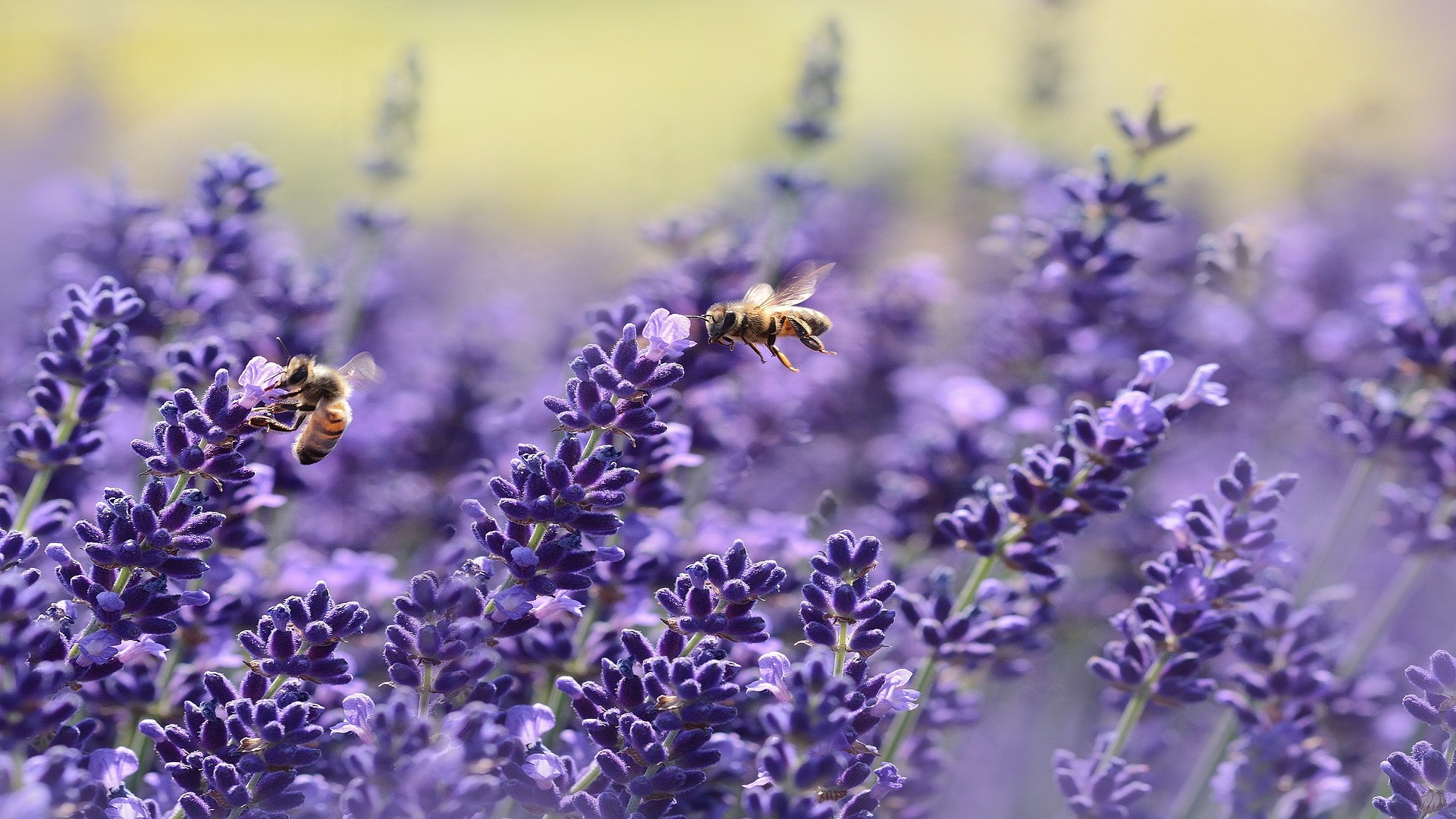
Bees come in contact daily with natural substances like water, soil, air and pollen — all containing evidence of antimicrobial resistance. A 2023 study revealed that honey bees, because they live where humans live, are an effective indicator of whether microbial resistance affects a population. And with an estimated 10 million annual deaths due to antimicrobial resistance expected globally by 2050, these small biomonitors could save a lot of lives.
The team from Macquarie University in Australia tested 144 European honey bees from 18 hives and determined that 83 percent tested positive for one or more antimicrobial resistance targets and 39 percent tested positive for two or more.
The short lifespan of the honey bee of only four to eight weeks and its 2.5 kilometer foraging area means the data is current and local. And with 700,000 deaths annually from drug-resistant diseases, the data needs to be accurate.
While honey bees can be found in almost every country in the world, the team acknowledges there are flaws in nearly every method of antimicrobial monitoring, and a global system of combined monitoring results would be most effective in combating the issue of antimicrobial resistance. Consistency in the methods would also enhance accuracy.
IMAGE: Pixabay
Antimicrobial resistance isn’t limited to humans — plants and animals are also at risk. So, it’s imperative to also determine the sources of the resistant bacteria. The study reports, “It is crucial to determine the major sources that introduce resistant bacteria into the environment, which include sewage and sewage treatment plants, industrial sources, as well as agriculture and aquaculture.” It also indicates that there is far too little research in this area.
So, knowing whether these bacteria are picked up at the beach, local swimming pool or from eating local fruits and veggies could be a catalyst for temporary interventions.
Across the board, the team concludes a rounded and effective program includes a comprehensive surveillance system; determination of the extent of the resistance; understanding where monitoring is required; the most effective method of monitoring; and testing of microorganisms at the genetic level.
Regardless of the ”what,” everyone needs to be on the same page so the world needs a consistent and controlled handle on antimicrobial resistance and it needs to extend to areas where resistant bacteria have high risk of transmission.
Essentially, there is a ways to go before there is a cohesive system of monitoring and testing antimicrobial resistance, but the honey bees, with more than 3 billion colonies in the United States alone and an increase in the population by 80 percent since the 1960s, are a reliable and abundant resource.
Join our mailing list
Get the latest articles, news and other updates from Khalifa University Science and Tech Review magazine



 IMAGE: Unsplash
 IMAGE: Unsplash