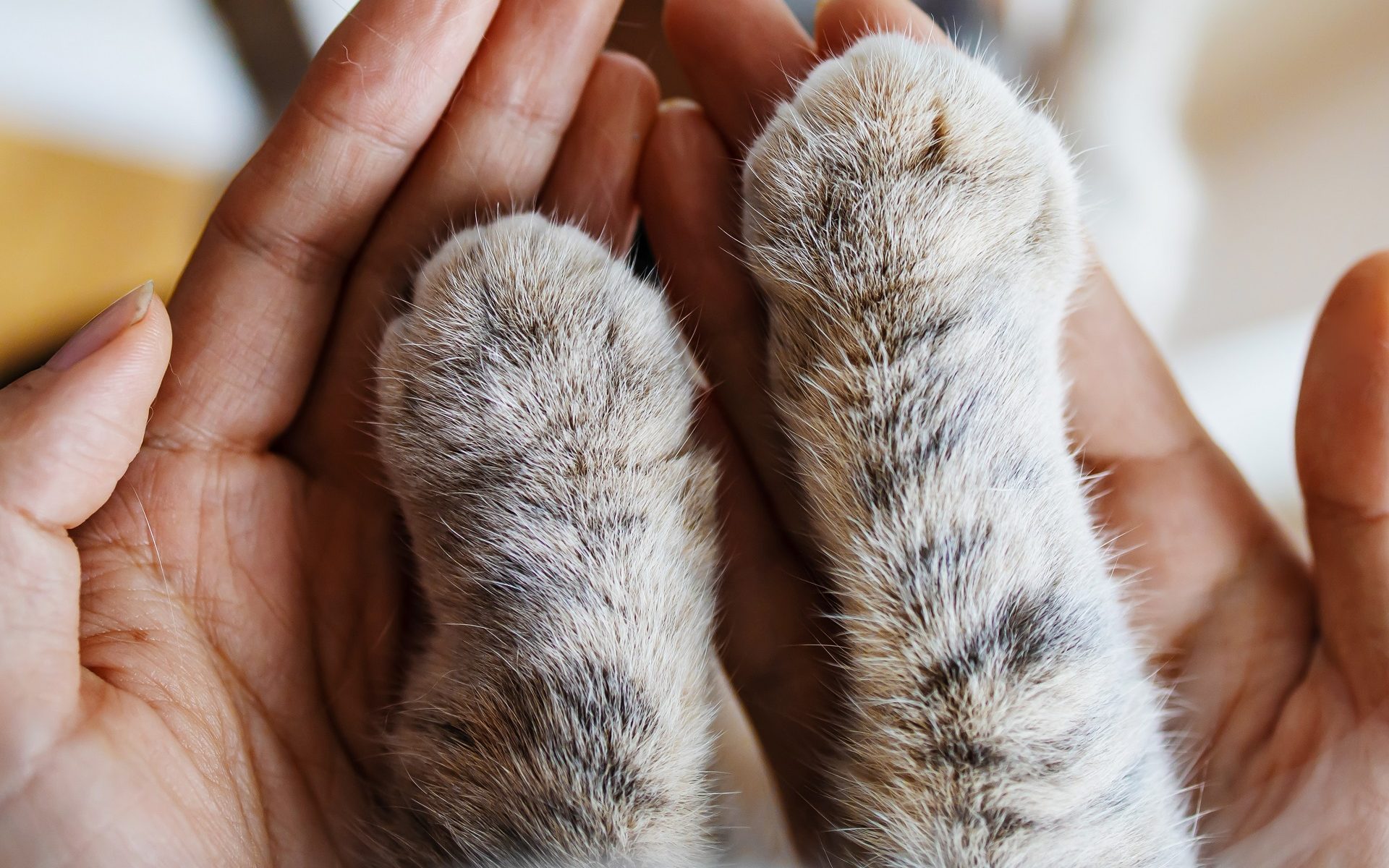
Coco, an Arabian Mau kitten, was born on the streets of Abu Dhabi near Raha International School. Her infections were so severe her eyes were glued shut. She was also filthy and undernourished. But she was lucky to be rescued at just a few weeks old and find her forever home.
 CAPTION: Courtesy of UAE Year of Community website
She is only one of an estimated 100,000-150,000 stray cats living on the streets in the UAE, and most aren’t so fortunate. But thanks to a new program being piloted in several Abu Dhabi communities, their luck may be about to change.
In 2025, Asteco, a real estate services company, was approached by Animal Welfare Abu Dhabi, a non-profit, to launch a pilot program in four compound communities in Abu Dhabi: Al Rayyana, Mamsha Al Saadiyat, Raha Gardens and Mayan. Rachel Shaw, CEO of Animal Welfare Abu Dhabi (AWAD), tells KUST Review that the Community Cat Care Program aims to provide care for the animals.
There are a number of reasons a program like this is needed. One of these, though it’s not the initiative’s main focus, is public health.
Uncared-for cats can carry a number of diseases and are more susceptible to feline leukemia virus (FeLV) and feline immunodeficiency virus (FIV). These viruses weaken cats’ immune systems, making it difficult to fight off even more diseases.
Although it is possible for strays to acquire FeLV, “It is likely that the transmission from a mother to her kittens is the greatest source of infection,” says the MSD Veterinary Manual.
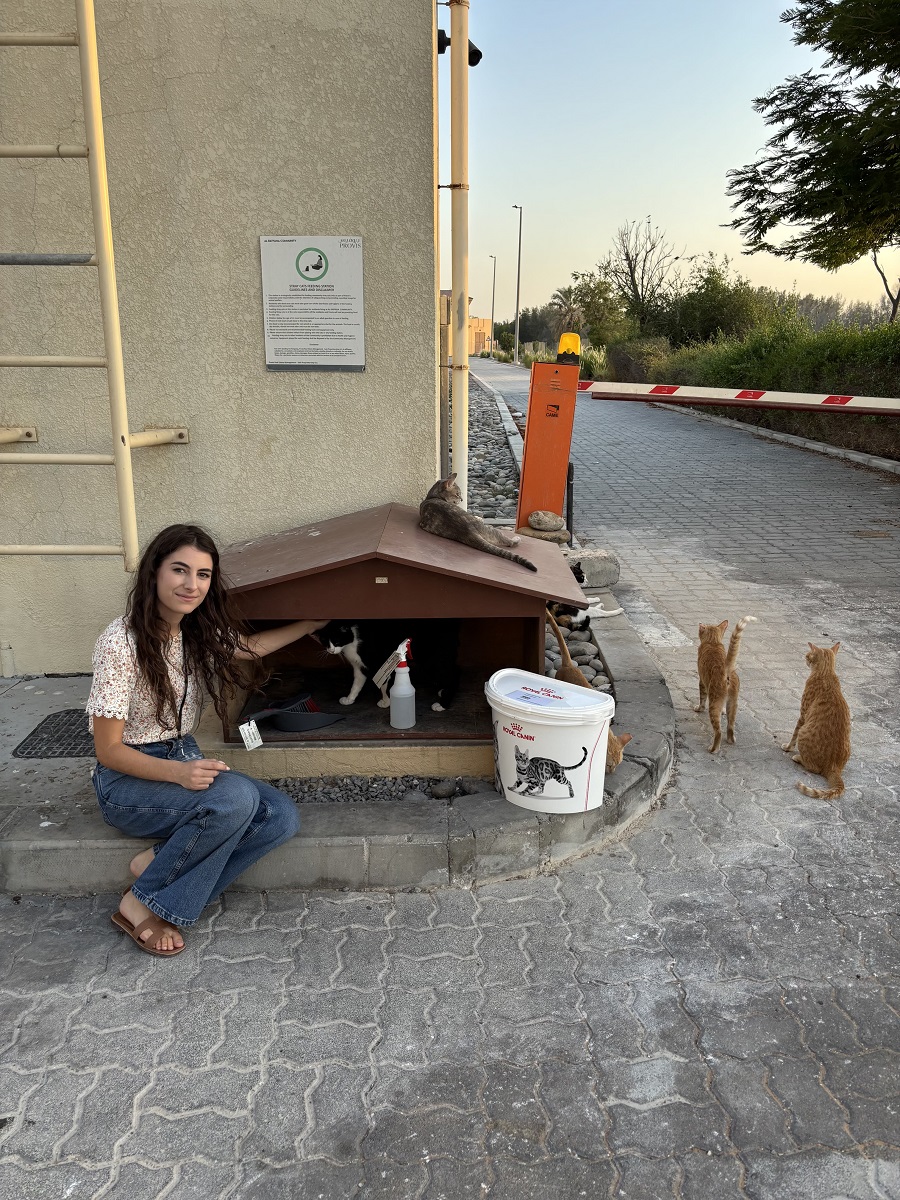 CAPTION: Volunteer at Al Rayyana feeding site IMAGE: Community Cat Program
Some diseases carried by felines can be transmitted to humans, like cat scratch fever and toxocariasis.
Toxoplasmosis is another disease felines can carry.
It is transmitted through feces and can harm pregnant women, potentially causing birth defects or miscarriage. Transmission of this, however is incredibly rare. The Abu Dhabi Animal Shelter says exposure is “unlikely” through petting an infected cat as the parasite is not carried on their fur and the same goes for being scratched or bitten by one. “In the past, immunodeficient people and pregnant women were advised to avoid cats. However, the Center for Disease Control (CDC) now advises that this is not necessary,” the website reads.
Aside from the minimal risk to humans, these cats suffer greatly.
Among infectious diseases and painful skin conditions, street cats in the region also struggle due to a lack of food, water and basic veterinary care for illnesses and injuries, and ensuring the animals are taken care of is the primary concern of Animal Welfare Abu Dhabi and the Community Cat Care Program.
While they can be resourceful, many stray cats have been dumped by previous owners and don’t know how to care for themselves. The heat in the region amplifies problems when summer temperatures can reach 50 degrees Celsius.
The the Community Cat Care Program aims to solve or at least reduce these issues and ensure our cat population is cared for properly.
The initiative, still in the pilot phase, has placed feeding stations equipped with fresh food and water around the perimeters of the chosen communities.
Along with this is a TNVMR (trap–neuter–vaccinate–microchip–return) program.
“This approach is carried out by registered, trained and fully supported volunteers who are also residents of the respective communities,” Shaw says.
“These volunteers are responsible for humanely trapping and transporting community cats to our approved veterinary clinics.”
Spaying and neutering the cats contributes to their overall health.
Without this, cats are at increased risk of such life-threatening health issues as uterine infections and breast tumors in female cats and testicular cancer in males.
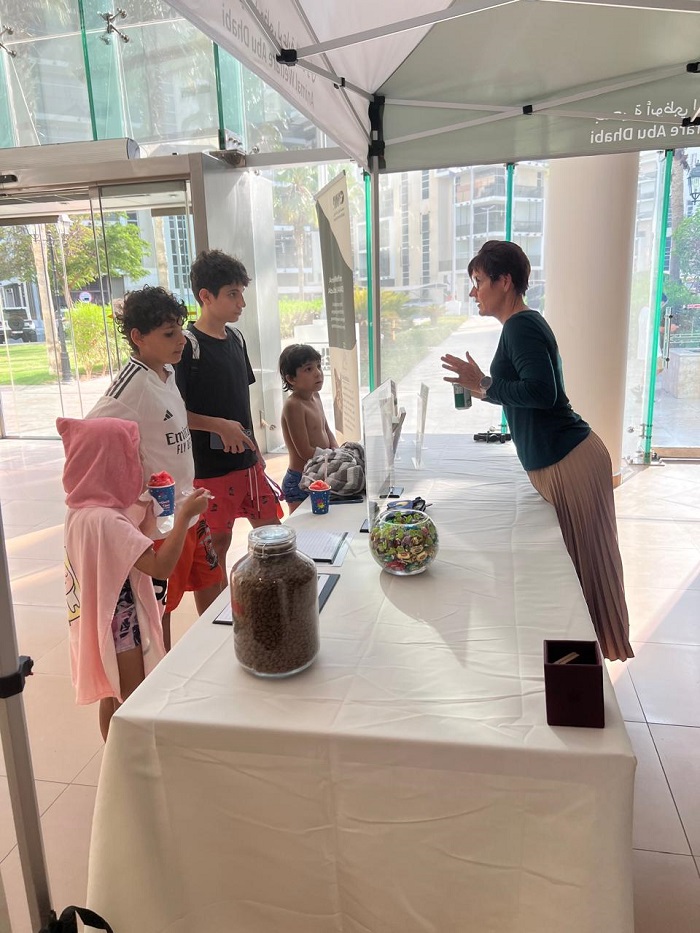 CAPTION: Awareness event at Al Rayyana Complex IMAGE: Abu Dhabi Animal Welfare Agency
Un-neutered male cats are also more likely to acquire and spread FIV and FeLV, but as Shaw mentions, “FeLV is more likely to be found in an indoor multi cat household (unlicensed shelter or hoarder situation) than a community cat population.”
The program’s procedures protect the cats from disease and contribute to a better quality of life.
The process goes something like this:
- Cats are humanely trapped and transported to approved veterinary clinics, where they are sterilized, vaccinated, microchipped and ear-tipped for identification before being returned to their original location.
- During intake, every cat is checked for an existing microchip and ear tip. Owned cats are identified through their microchips and/or collars and are excluded from the TNVMR program.
- To estimate the size of a community’s cat population, a ratio-based method considers human population density and the nature of the residential environment (such as apartment towers or villas). Scientific studies indicate that sterilizing at least 80 percent of the feline population achieves a meaningful reduction in breeding rates.
- The program keeps detailed records of all cats processed. These figures support data analysis and outcome tracking.
“A pre-program qualitative survey was conducted, and it will be relaunched once the 80 percent sterilization threshold is achieved. This will allow measurable, tangible impact, such as changes in cat visibility, nuisance complaints and resident attitudes,” Shaw adds.
Additional metrics to be measured include:
- Number of cats sterilized, with breakdown by gender.
- Number of cats assisted for illness or injuries and type of illness/injury.
- Number of cats assisted and removed from the community for adoption.
- GPS locations of cats at the point of trapping — allowing accurate mapping of hot spots and investigation of causes (such as unaccounted-for feeding stations or backyard breeding).
- Records of requests for community cat assistance, including type of support provided (from direct intervention to community-education efforts).
- Number of cats already sterilized that have been health-checked, vaccinated, microchipped and registered to the program.
- Number of cats euthanized on welfare grounds.
“We are using GPS data and mapping tools to visually track trapping locations and trends. As the program grows, we’re exploring further options for digital monitoring and data capture, but for now, our focus is on consolidating reliable baseline data from the pilot phase,” Shaw tells KUST Review.
The pilot will be re-evaluated when it reaches target thresholds, Shaw says.
If you would like to reach out to Animal Welfare Abu Dhabi for further information, email awad@oda.gov.ae or if you would like to volunteer to help our community kitties, scan the QR code in the image below.
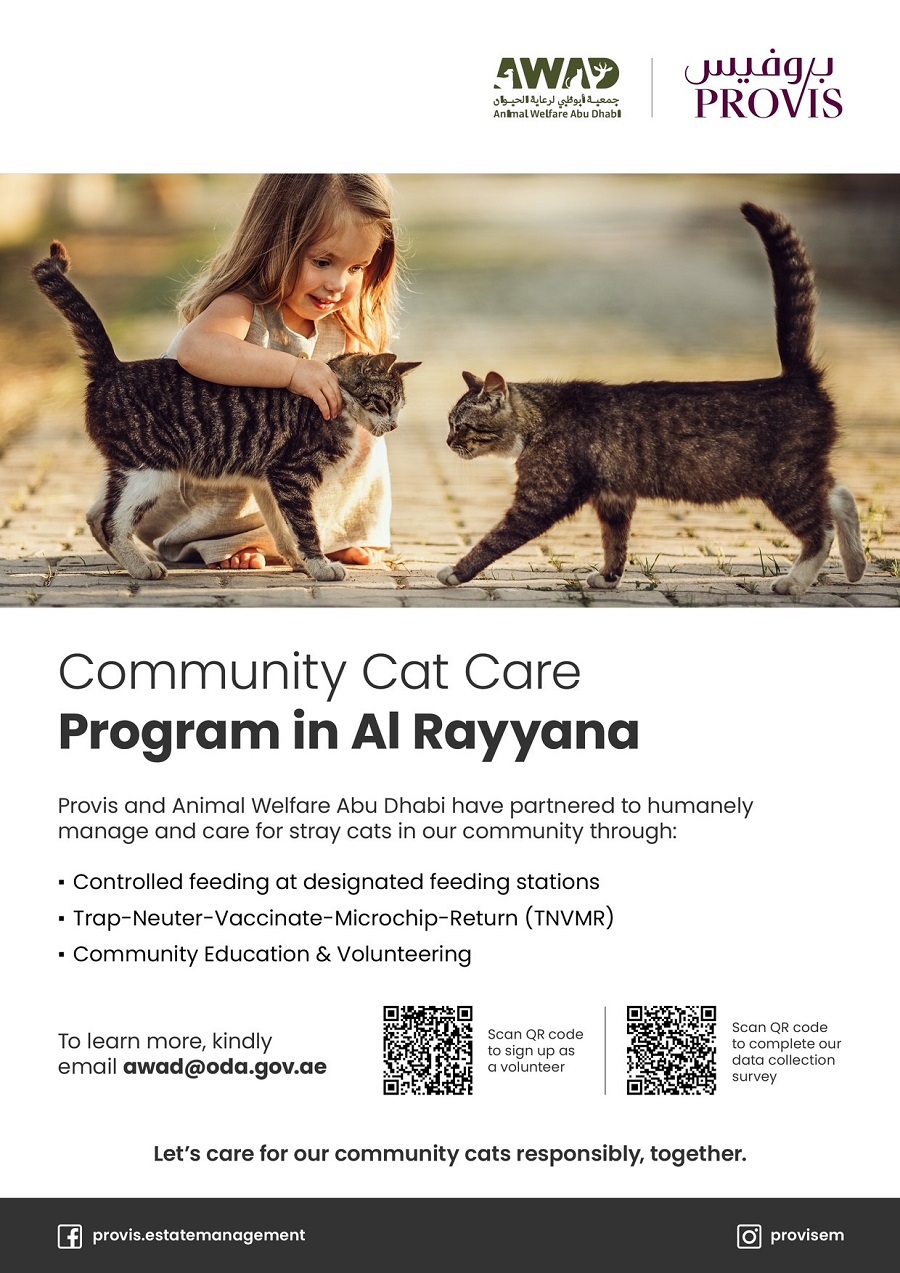 CAPTION: Community Cat Care Program IMAGE COURESY OF: Animal Welfare Abu Dhabi
More like this: Every splash counts