More midges, more chocolate

Cocoa production is not keeping up with demand, with a new study published in Communications Earth & Environment highlighting two critical threats to cocoa farming: low pollination rates and rising temperatures.

Researchers from Westlake University, China, conducted field studies in Brazil, Ghana and Indonesia, three of the world’s top cocoa-producing countries, and found pollination is a major bottleneck.

Natural pollination rates averaged just 16.7 percent, meaning most cocoa flowers do not turn into the fruit needed to make chocolate. When the researchers hand-pollinated, they increased yield by 20 percent, confirming that pollination, not soil nutrient levels as previously thought, is the key limiting factor for cocoa production.

Cocoa trees rely mainly on midges to transfer pollen from flower to flower. However, modern cocoa plantations often lack the leaf litter and organic material that these insects need to thrive. Heavy pesticide use and habitat destruction have also impacted pollinator populations.

Cooler temperatures also improved yield by 22 to 31 percent, indicating that climate change is already reducing cocoa production.

Related: The science behind global chocolate obsession

Brain pollution

Scientists have been warning the world about microplastics in our air, oceans and food for some time now, but these tiny invaders have found their way into a more troubling hiding place: the human body.

A recent study published in Nature Medicine discloses autopsy results that sound alarm bells on the potential impact of microplastics and nanoplastics (MNPs) on our health.

Researchers from the University of New Mexico Health Sciences in Albuquerque, examined postmortem samples from a variety of organs including kidneys, liver and the brain from 2016 to 2024.

The team discovered that the comparison of liver and brain samples throughout the time period showed significant increase in MNP concentration. And the proportion of polyethylene in the brain was 75 percent higher than that of the liver and kidneys.

The results suggest an increasing trend in plastic contamination over time. Further tests of dementia cases revealed even higher levels of MNP accumulation, in particular within immune cells and along blood vessels, underscores a need for continued research into the health implications of MNP accumulation.

RELATED: Microplastics: The invisible threat

Brewing strength by transforming
coffee-grounds waste

With 2.25 billion cups of coffee consumed daily around the globe, many companies, cafes and consumers have switched to recyclable or reusable cups and lids to reduce waste. But the grounds left over make their mark on the environment too, and researchers are getting creative with how to recycle them.

Coffee grounds are fully biodegradable, yet up to 75 percent find their way to landfills, where it takes up to three months for them to start breaking down. And even though coffee grounds are biodegradable, the breakdown process releases methane gas that has a greenhouse effect 28 times greater than carbon dioxide.

But what if the ground waste from your java helped secure the foundation of the building you’re sipping it in? This is a possibility thanks to a team of researchers at the Royal Melbourne Institute of Technology in Australia, which has found a way to use processed coffee grounds in concrete and boost its strength by up to 30 percent.

The key: converting it to biochar.


Biochar is a residue similar to charcoal originating from natural sources like plants and trees. It is created when biomass — any biological material — is burned in the absence of oxygen, typically at high temperatures ranging from 500 to 800 degrees Celsius — a process called pyrolysis.

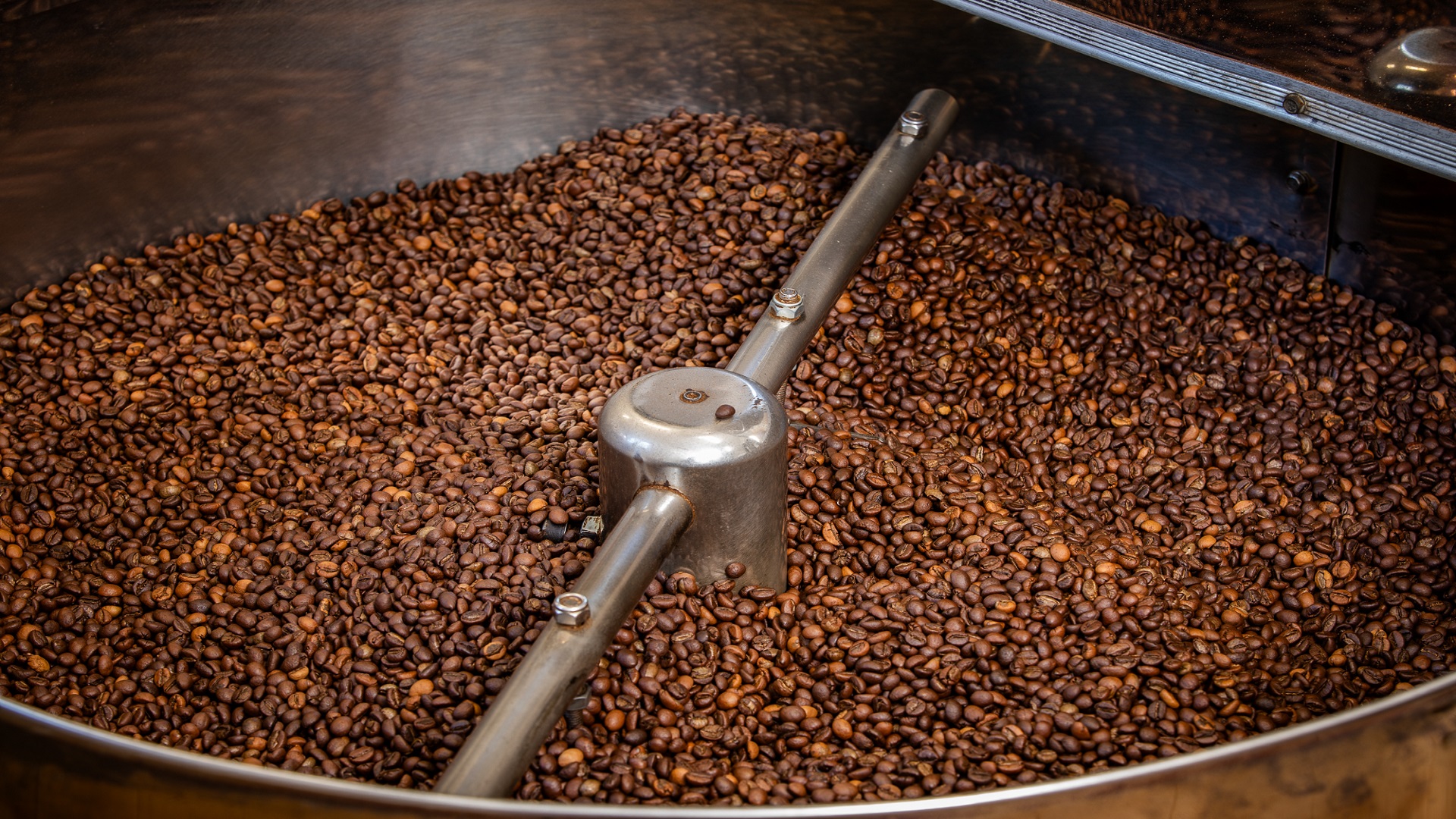
CAPTION: Samples of unroasted coffee beans, roasted coffee beans, spent ground coffee and the team’s coffee biochar. IMAGE: Carelle Mulawa-Richards, RMIT University

The process the team is using, however, requires lower temperatures than usual, burning at a more energy-conscious 350 degrees Celsius.

We use small-scale equipment and two hours of pyrolysis was sufficient, but the time can vary based on the size of the pyrolysis unit.

Dr. Shannon Kilmartin-Lynch, co-lead on the study.

The process from plant material to biochar prevents carbon dioxide from being released and transforms the makeup to one that is stable, permeable and rich in carbon. It is typically used in agriculture to increase crop growth.

Previous attempts to add biochar to strengthen concrete have been unsuccessful, able to add only 3 percent of the biochar and ultimately resulting in a weakened concrete. But the Melbourne team’s method with coffee waste proves to have substantial sustainability implications for the coffee and construction industries.


“There are multiple materials available in the market that can contribute to the improvement of concrete strength, but the key highlight of this research is that a waste material that was ending up in landfills and contributing to high greenhouse-gas emissions can be transformed into a high-value product for strengthening concrete,” Kilmartin-Lynch tells KUST Review.

So, they’ve reduced the waste and burning temperature, and it’s likely to be cheaper than using traditional concrete.

“We (the team) don’t see any implications that can hinder its field applications or commercial use. The (about) 30 percent increase in strength can be leveraged to cut down the required cement content, which is produced at approximately 1,450 degrees Celsius,” Kilmartin-Lynch says.

CAPTION: : RMIT researchers Professor Kevin Zhang, Professor Jie Li, Dr. Rajeev Roychand, Dr. Shannon Kilmartin-Lynch and Dr. Mohammad Saberian in the RMIT Microscopy and Microanalysis Facility, where they analyzed the structure of their coffee concrete (pictured left to right) IMAGE: Will Wright, RMIT University

He spends much of his time working toward waste solutions and seems to enjoy stuffing waste into concrete instead of the landfill. To date he has experimented with masks, medical gowns, gloves, tires and food waste. Success from these studies has powered the group to “look at further waste to add into concrete to achieve a circular economy within the concrete industry.”

The team sees the project’s success as two-fold: an absolute solution to the problem of coffee-ground waste — totally eliminating it from landfills — and a valuable resource for the construction industry.

Let’s discuss over a guilt-free coffee.

Totally tubular

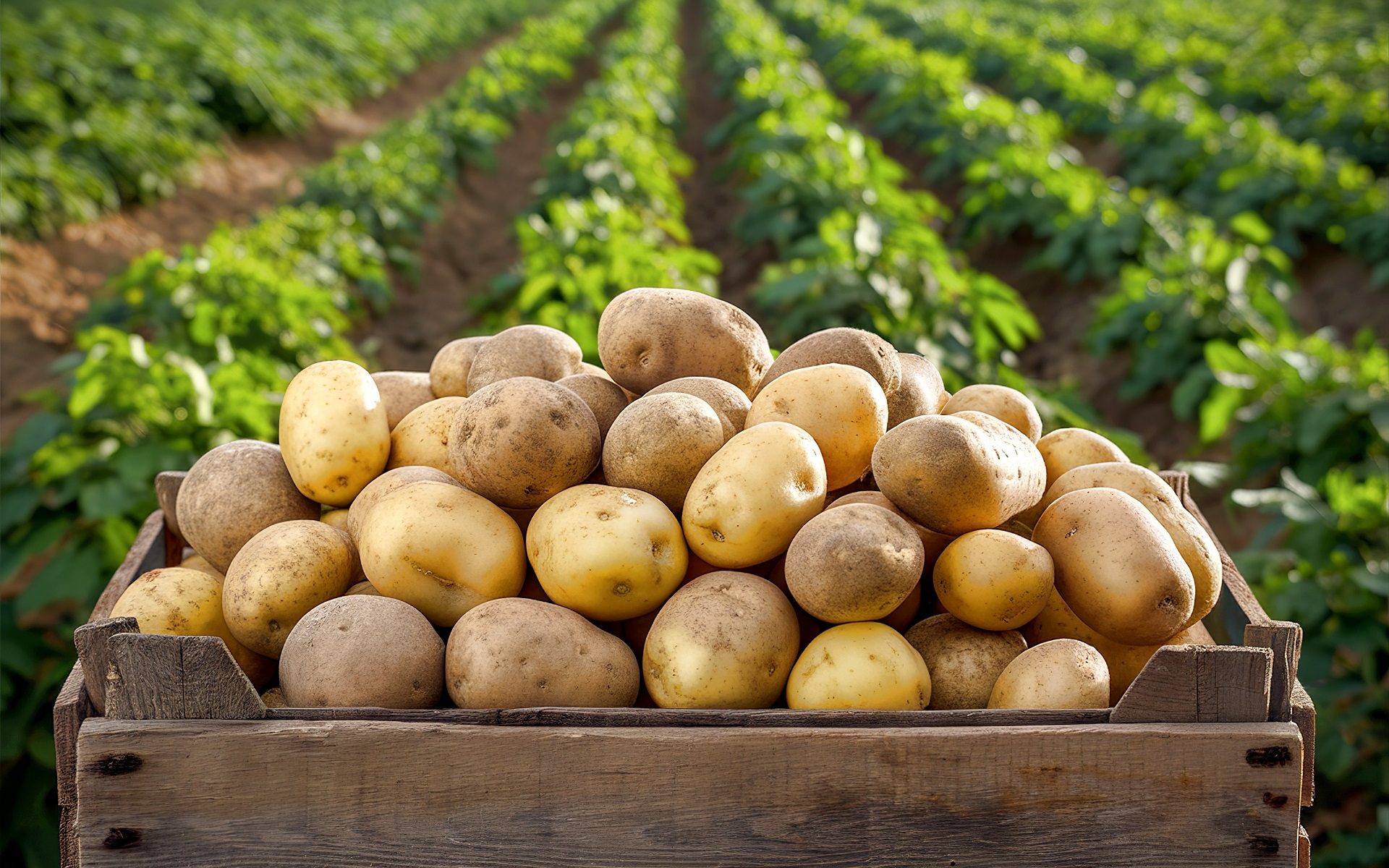
The humble potato may seem a simple vegetable, but its growth relies on an energy intensive respiration process that becomes increasingly complicated with rising global temperatures. That’s why researchers are working to modify its process and increase crop yield.

The enzyme, RuBisCO, needs to bind to carbon dioxide during photosynthesis but about 25 percent of the time, latches on to oxygen instead. This non-sensical sidetrack produces a toxic byproduct that is problematic for growth quality and quantity (it can decrease crop yields by up to 50 percent) and is typically instigated by heat stress.

The solution?

Researchers from the University of Illinois Urbana Champaign in the United States injected a gene into the nucleus of the plant cell. This produces a protein that makes its way to the chloroplast used in the photosynthesis where it breaks down the toxic derivative, eliminating the chloroplast’s need to send it out to the rest of the organelles. This effectively bypasses the energy-intensive photorespiration process and creates a new pathway, called AP3.

The genetically modified potato was tested over two growing seasons in Illinois and during an extreme heat wave in which temperatures exceeded 35 degrees Celsius and the results — that increased yield by almost a third and maintained nutrition value — suggests there is hope in assisting crops to navigate climate change. This modification can also be passed on to the next generation.

The study was published in Global Change Biology

RELATED: Protecting your produce

A new era in tracking space debris

As space debris becomes an increasing threat to operational in Earth’s orbit, researchers from Khalifa University have developed a new approach to tracking it using vision sensors aboard satellites and advanced data fusion techniques.

Traditionally, most space debris is tracked from the ground, using radar and telescopes. Ground-based tracking is limited by weather, atmospheric distortion and visibility constraints, but satellites equipped with the right sensors can continuously monitor debris from space, independent of weather and lighting conditions. The challenges lie in making these systems both accurate and efficient.

The research, published in Acta Astronautica, tackles this by developing a data fusion framework that processes and combines measurements from multiple satellites to improve tracking accuracy. Beyond tracking space debris, this framework could be used for future space operations, including interplanetary exploration, space tourism and satellite-based internet services.

More: Cleaning up our space