Of mummies, mice and medical students

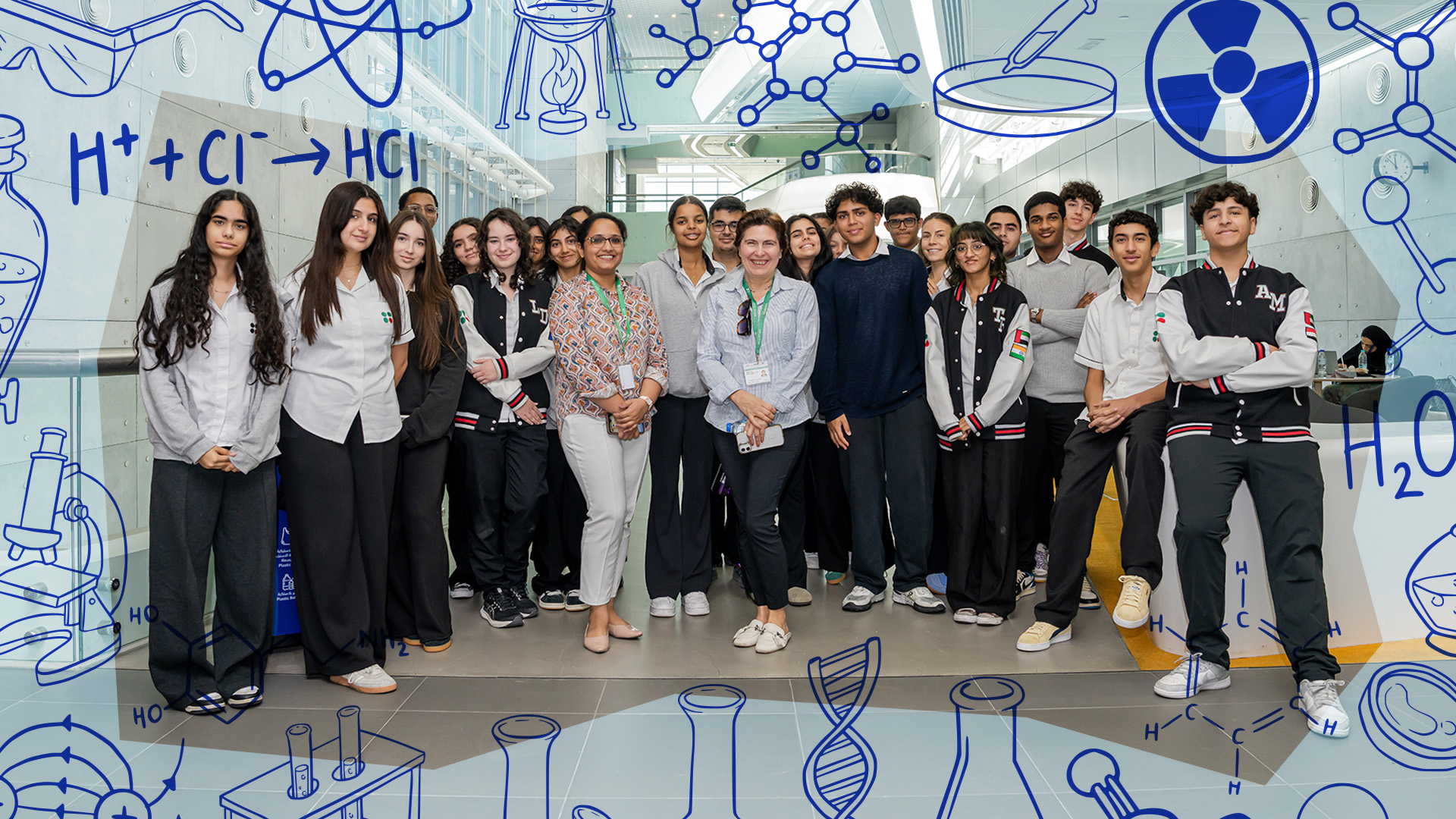
A crew of curious biology and chemistry students recently marched into Khalifa University’s main campus in Abu Dhabi for the science lesson of a lifetime.

IMAGE: Courtesy of UAE Year of Community website


With two packed days meeting med students, seeing how genome sequencing can help diagnose a centuries-old mummy and learning how to anesthetize a mouse, this was a field trip to remember.

The Raha International School, Khalifa City campus students’ bus was met by the academic coordinator of KU’s College of Medicine and Health Sciences, Hibba Samir El-Atar, and members of the KU public outreach team that had orchestrated experiences and welcome packs with their first (but hopefully not their last) lab coats.

“Our primary goal with these outreach programs is to make higher education in STEM fields tangible and accessible. We want to show students the ‘why’ behind the ‘what’ they learn in school. By bringing a piece of the KUST campus experience to them, we hope to plant a seed, showing them the incredible opportunities and dynamic environment that await them at a university like ours,” Khawla Alsaedi, specialist with the KU outreach team, tells KUST Review.


Next, the students visited the KU Experiential Learning and Clinical Simulation Center, where KU students are exposed to life-like situations and advanced imaging technology for an immersive learning experience.

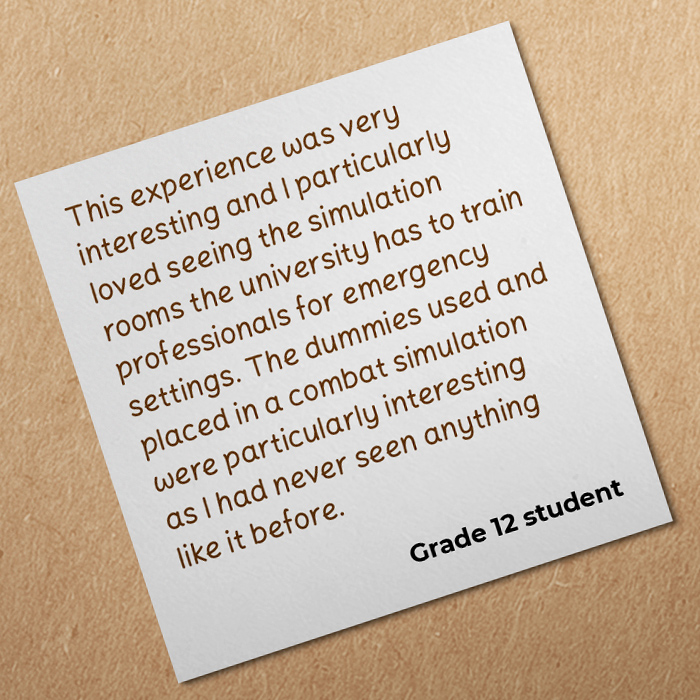
The students, led by Ahmed Khalam Mohamed and his team, observed CPR demos, tried out vital-signs equipment and participated in a clinical-skills workshop.

“I got to experience the facilities that I plan on studying in,” says Ali Zoheir, a Grade 12 student and self-proclaimed future plastic surgeon.

The remainder of the first day was a bit of a dream for potential future docs as they worked with the team from the medical sciences through a real-life case study and spent the final hour with a couple of KU med students, Layth Rafat and Carl Kassab, to find out what it’s really like to live in their lab coats.

The soon-to-be Raha graduates threw questions at the duo and received valuable advice: Take chances, manage your time well and get involved in research right out of the undergrad gate.

KU lab instructors Trust Nyirenda and Samson Chengetanai and KU faculty member Okobi Ekpo led the students on a guided tour of the anatomy and histology labs.

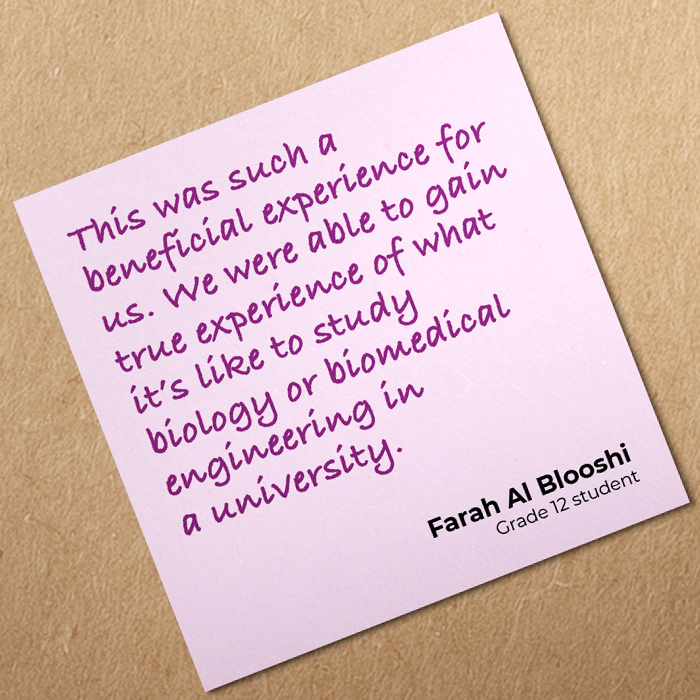
“It was very unconventional for us as (high school) students to be put in such a developed lab,” said Grade 12 student Farah Al Blooshi.

Next came the KU Body Museum tour. The museum opened in 2023 and is a permanent exhibition of dissected human bodies presenting both regional and systems-based anatomy in healthy and diseased adults. It is open to the public and often hosts school tours.

Within its walls the Raha students witnessed what a brain looks like after a stroke; what a person’s internal organs can tell us about their lifestyle and quality of life; the vastness of a fully extracted and intact human nervous system; and much more.

Siobhan O’Sullivan from the Department of Biological Sciences talked about her career path and an Egyptian mummy she studied as an undergraduate to determine the cause of death.

FYI, it was sickle cell anaemia.

O’Sullivan used the DNA extracted from the mummy’s toenails, which sat in a jar on her desk for a time. Gross or super cool? We’re going with cool.

There was more “cool” to come as the students moved on to a talk about what a biomedical engineer does with faculty member Anna-Maria Pappa and a demonstration of medical technology by Rateb Katmah.

They discussed wearable technologies like foot and heart sensors, sleep-pattern monitoring caps and stress-testing tech currently in use.

In the final part of the KU journey, students spent more lab time with Hamdan Hamdan for a talk about neurological conditions like ADHD, autism and Alzheimer’s.

They watched a video of a surgery on a mouse, learned how to anesthetize said mouse and why mice are used in the lab more than other animals (FYI, it’s cheaper and we can increase the testing size).
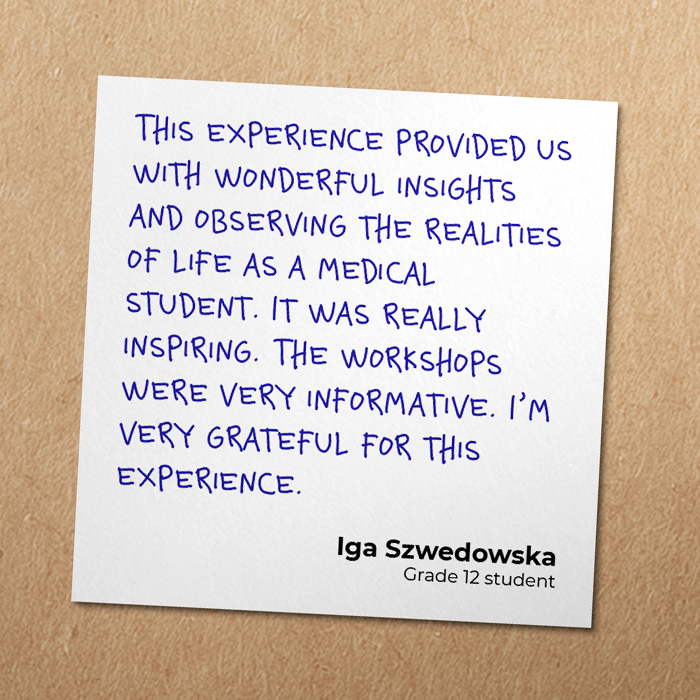

KU hopes to share these experiences with the Raha Grade 11 class soon and will continue to open its doors to other academic institutions.
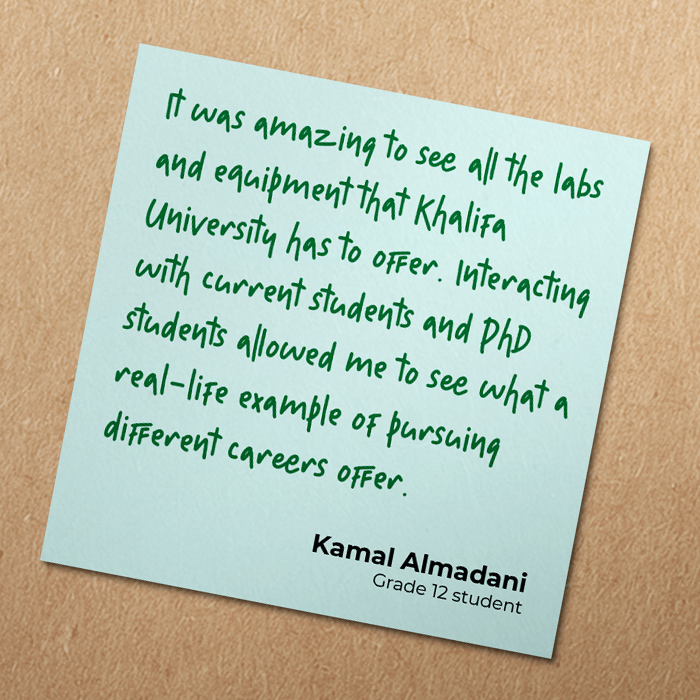

“Our DP2 Science students’ visit to Khalifa University was an inspiring and intellectually enriching experience.

The students learned a tremendous amount — from exploring the body museum and how different parts of the body function, how genetic testing is conducted on ancient Egyptian mummies, to understanding how artificial intelligence can be used to personalize medical treatment, to observing how multiple sclerosis is diagnosed and treated, among many other fascinating insights.

“We are deeply grateful for the warmth, guidance, and professionalism shown to us throughout the visit — particularly to Ms. Hibba (Samir El-Atar), who was present and continually sought ways to enrich the experience, and to Ms. Khawla, who accompanied and supported us throughout the two days.

This visit was truly memorable and profoundly educational for our students, and we extend our sincere thanks to everyone who made it possible,” said Margarita Lozinova, secondary chemistry teacher at the Raha, Khalifa City campus.


El-Atar says she very much enjoyed being part of organizing and hosting the visit is thrilled with the outcome and participation from the students and KU team alike, “Seeing everything come together and watching everyone engage so enthusiastically made it all worthwhile. I’m so grateful for the teamwork and support that made the day a success. I am looking forward to many more events like this in the future and welcoming students from schools all over Abu Dhabi.”

More like this: Every splash counts

GIFT FROM
THE SEA

Mangroves provide many benefits for the environment. They store carbon dioxide. They supply habitats for fish and other marine life. And they act as a natural windbreak, protecting the shore from tidal surges.

But what really excites Tiejun Zhang and his team at Khalifa University is the trees’ ability to purify seawater by extracting the salt that enters through their roots.

Purifying seawater is how the UAE gets most of its potable water. The traditional processes of desalination, however, are energy-intensive and create about 141.5 million cubic meters of brine a day around the world. This waste material can damage the environment if it’s pumped back into the sea or brought onshore.

Zhang’s bioinspired artificial mangrove, however, could be the inexpensive breakthrough a thirsty world needs.

The process is simple, Zhang says, and it’s powered entirely by the heat of the sun.

The sun’s heat draws liquid up through a nanostructured titanium mesh using passive capillary action. The salt separates from the water and precipitates on “leaves,” then at night falls onto the floating foam disc that keeps the device upright in water. The process collects about 2.2 liters/m2 of water a day.


The initial device is small, but we can make it much bigger depending on how much water you need.

Tiejun Zhang, department of engineering at Khalifa University


As a bonus, the researchers are investigating how the collected salt could be separated and used for other purposes.

“Sodium chloride is edible,” he says. “Calcium chloride, magnesium chloride, those are more for industrial processes. Our current technology proves that we can collect the salt. If we pull everything in a mixture, it’s not very valuable. If we can separate (the salts), refine them, and make them pure, then that would be very valuable.”

Zhang thinks the device might eventually be able to draw other valuable materials from seawater, even lithium.

But the applications aren’t just industrial, he says, pointing out that the device is small enough to carry in a backpack. Hikers and people who live off-grid might be able to use the artificial mangroves to purify water for personal use.

And the simple design, featuring titanium mesh and chemical etching to create a nano structure, makes it easily reproducible.

“A high school student could make it,” Zhang says. In the meantime, Zhang and his team are investigating start-up opportunities.

More like this: Vertical farms and 3D-printed reefs part of UAE’s plans for food security

Say ‘ahhh’

When the doctor tells you to stick out your tongue and say “ahhh,” he’s usually using a tongue depressor to move it out of the way to get a look at your throat. But the look of the tongue itself can tell a physician a lot about a person’s overall health, and now thermal imaging and AI are joining the tongue-diagnosis game that’s been around for centuries.

Traditional Chinese Medicine, or TCM, has been using the tongue as a diagnostic tool for at least 3,000 years.

It observes three tongue criteria to reveal our health: color, shape and type of coating covering the surface. For example, a healthy tongue would be some shade of pink but if it’s dark red, it might indicate sleep issues or anxiety, and a bluish tinge could indicate poor circulation.

While TCM uses the tongue as a main diagnostic tool, Western medicine might observe the tongue’s condition alongside many other indicators, like medical history and lab results.

This “gap” between the two, however, is nearing bridge status as technology develops — thermal imaging and AI-powered tools in particular.

A team of researchers recently introduced an AI health detector tool designed for TCM using thermal radiation image recognition and showcasing the seamless integration of human computer interaction (HCI) principles into health-care applications.


Infrared thermography captures detailed tongue images and records tongue-heat distribution to create thermal images that represent temperature variations.

The team says its portable, hand-held thermal radiation diagnostic tool, integrated with HCI, and created in collaboration with TCM practitioners, sets their research apart.

The dental mark tongue recognition model, using DenseNet T algorithm architecture, resulted in an average accuracy of 25 percent higher than other dentate tongue-recognition models that are designed to standardize and automate traditional Chinese medicine tongue diagnostics.

Another recent advance in tongue diagnosis leans on AI and machine learning for results.

A paper, published in Technologies, presents a new computer vision system that analyzes tongue color changes, offering potential for real-time diagnosis.

These analyses and machine learning predict health conditions with an accuracy exceeding 98 percent.

The researchers used a webcam to capture images in real time of both sick and healthy individuals and were able to differentiate between them simply by tongue color.

The system applies six machine learning algorithms to classify tongue images under a variety of lighting conditions.

“There have been studies where people tried to (diagnose via tongue color) without a controlled lighting environment, but the color is very subjective,” says co-author Javaan Chahl of the University of Australia.

The model was trained on more than 5,000 images across seven color classes. The results show that AI systems for tongue diagnosis are accurate, efficient, cost-effective and non-invasive. This is particularly important in areas with minimal access to health care, addressing the impact of lighting on the colors of the tongue, a key challenge for tongue diagnosis.

So, the next time you’re looking in the mirror, make sure to observe the conditions of your tongue and see what might be a little out of the ordinary. Sticking out your tongue at yourself might just be the key to preventing health issues.

More like this: How often you breathe could help detect Alzheimer’s

Making fuel from waste


Today more than half the world’s population lives in cities, and this is expected to rise to nearly 70 percent by 2050. Rapid growth in urbanization has also led to an increase in municipal solid waste — all the trash, garbage and rubbish thrown away every day. This typically includes common household waste, newspapers and plastic packaging, office and retail waste but also used tires and furniture.

The issue of municipal waste is exacerbated by the relentless rise in plastic waste. Estimates project a daunting 1.1 billion tons of plastic burden by 2050, meaning sustainable waste-management solutions are a priority for cities around the world.

Researchers are investigating ways to turn this plastic waste into hydrogen. Hydrogen is billed as the energy source of the future, but its production is hindered by scalability, environmental impact and economic viability. Despite hydrogen’s reputation as green fuel, current methods of producing it rely on fossil fuels and steam-methane reforming, which is energy-intensive and creates carbon dioxide as a byproduct.

Gasification, on the other hand, could be the hydrogen production technique we need to produce hydrogen at the scale we want it. Expose plastic waste to temperatures high enough and the hydrogen present in the plastic vaporizes, leaving behind an additional valuable byproduct: graphene.

Plastic is, after all, a hydrocarbon: polymers of hydrogen and carbon atoms. Heating the plastic quickly enough reorganizes the chemical bonds, with the carbon atoms combining to graphene and the hydrogen atoms becoming hydrogen gas. Flash joule heating is a technique for rapidly heating materials to extremely high temperatures with a jolt of electricity. Electricity converts into heat, achieving temperatures of thousands of Kelvin for a small energy cost and a large valuable product output.

Research led by Pau Loke Show, professor of biochemical engineering at Khalifa University, has applied machine learning techniques to the process to improve efficiency. He says integrating hydrogen production from unconventional feedstocks, bolstered by machine learning and advanced storage, can contribute to a sustainable and pollution-free future:

“Machine learning emerges as a critical enabler in optimizing gasification processes, enhancing efficiency and reducing emissions. Moving forward, these integrated approaches are key to advancing carbon-neutral energy solutions and fulfilling global environmental goals.”

More like this: The united colors of hydrogen

Obesity expert has the skinny
on semaglutide

Semaglutide and tirzepatide drugs like Ozempic and Mounjaro are making headlines around the world as users shed weight and researchers investigate possible new uses for the medications.

However one medical expert says these drugs are not only a solution to obesity but a gateway to understanding it as a disease rather than a result of weakness and lack of willpower.

CAPTION: Dr. Louis J. Aronne, Sanford I. Weill Professor of Metabolic Research and director of the Comprehensive Weight Control Center at Weill Cornell Medicine in New York 

Scientists cured obesity over 20 years ago, he says, “in animals and in humans by using a nerve growth factor. By giving the nerve growth factor, weight went down.

Unfortunately, it turned out these caused antibodies in some people, so the research was stopped. There are compounds being developed that were originally developed for Lou Gehrig’s disease, but people lost weight. Those who did didn’t regain weight over a prolonged period.”

Aronne says this is because it produced normal, healthy nerves in the part of the brain that regulated body weight — the hypothalamus.


Researchers believe the nerve growth factor stimulated stem cells for these nerves in the damaged part of the brain and connections were reestablished.

| Damage in the brain

The process of gaining weight and losing weight is really a reflection of damage in the weight-regulating pathways in the brain, he says. “What we know is that your brain becomes less sensitive to the hormones that control body weight.”

He spoke confidently back then that obesity was a physical problem and tried to persuade diabetes experts that focusing on weight loss would improve diabetic symptoms. However, they were rigid in their focus on blood-sugar control, Aronne says.

IMAGE: Unsplash
Inspired by a monster

More than 3 billion people (almost 40 percent of the global population) are classified as overweight or obese. By 2035, that number is expected to surpass 50 percent.

But those rates may be changing, and we have a lizard to thank.

Well, a monster to be precise. Read more›››

The Gila (HEE-lah) monster is a venomous lizard covered in beady scales native to the southwestern United States. While its bite is not usually fatal for humans, it can inflict burning sensations, severe pain and discomfort that can last for hours. It was this that led scientists to study its venom.

Ronald Jenner, a venom-evolution expert at the U.K.’s Natural History Museum, says using venom to create medicine is an ancient practice.

“People in ancient India, for example, were always exposed to snake venoms, and snake venoms do biological stuff. So, there has always been an interest to not just neutralize the effects of it but also use venom to cure other things.”

For example, the drug Prialt, which is procured from cone snail venom, is used to treat chronic, severe pain without the addictive properties found in other medications.

But the Gila monster is also able to go without food for long periods. Studying this led researchers to discover a hormone called exendin-4. Exendin-4 is similar to the GLP-1 glucagon-like peptide-1) found in humans. It regulates blood sugar and appetite by triggering insulin release and slowing food breakdown.

Because of the similarities between exendin-4 and GLP-1, scientists were able to develop medication to treat type 2 diabetes, which, according to the World Health Organization, affects 422 million people globally.

GLP-1 is effective for weight loss by making users feel fuller longer, reducing hunger and increasing satiety.

The original drug inspired by the Gila monster, which often goes for months without eating, isn’t new either. Exenatide, sold under the brand name Byetta, was approved by the U.S. Food and Drug Administration in 2005 to treat type 2 diabetes.‹‹‹ Read less

Aronne began his obesity clinic in 1987 after a study found patients with obesity were the most expensive to care for, with health-care costs double those of others’.

He also had a personal interest in getting to the bottom of why those who followed doctors’ orders were still struggling to lose weight as many of his family members had weight problems and other comorbidities.

About a year after he started his obesity program, a researcher from Rockefeller University Hospital invited Aronne to his lab to observe the results of an experiment in which blood was removed from a skinny mouse and given to an overweight mouse. Within three days, the overweight mouse’s weight went down to normal. It was this researcher’s work that led to the discovery of leptin, the first fat-cell hormone.

“It proved beyond the shadow of a doubt that there was a physical system trying to regulate body weight,” Aronne says. “Instead of it being calories in, calories out — instead of obesity being a lack of willpower — it was some type of hormonal problem.”

These medicines mimic hormones that are released when you eat.

“Food hits your intestines, cells in your intestines release hormones that get absorbed into the bloodstream, go to your brain and tell it how much you’ve eaten. And so, your body, in some cases, we think, is resistant. Maybe you don’t produce enough. So, they’re amplifying the GLP-1 signal so you feel like you’ve eaten before you eat.”

| Changing perceptions

Aronne compares society’s way of thinking about obesity to previous perceptions of severe mood disorders like anxiety, depression and psychosis when patients were told to just snap out of it or were advised to exercise and they’ll feel better. He believes these medications will eliminate the societal perspective that those who struggle with obesity have no willpower.

“It will definitely happen,” he says.

“Now we know that this is a physical problem that can be treated medically. People with severe mental illness used to be institutionalized, but now those institutions have closed because so many people are being treated medically. Like those with delusions, for example. You have to actually see someone who suffers from delusions to see what those medications have done. It’s really remarkable. And it’s the same now with obesity,” Aronne tells KUST Review.

The handful of weight-loss drugs currently on the market is only the beginning, he says.

Aronne and his team are working on other drugs that aim to allow patients to lose more weight by targeting more hormones.

Semaglutide (sold as Ozempic or Wegovy) is successful at mimicking one hormone and tirzepatide (Mounjaro), two hormones. This is why Mounjaro is widely considered more effective.

The trick is finding the right medication to suit the person. And that includes not only the weight-loss volume, but side effects the patient can manage.

Everyone responds differently. Some cannot tolerate it at all. Mounjaro has fewer effects than Ozempic or Wegovy, for example.

Cost is also a challenge. Many insurance companies don’t cover these drugs, which can run from U.S. $935 to U.S. $1,023 for a one-month supply of Ozempic.

A 2024 study by researchers at the Yale School of Public Health estimates that increased access to these meds could save over 42,000 lives a year in the United States alone. This includes those with type 2 diabetes and other health issues exacerbated by obesity.

“Expanding access to these medications is not just a matter of improving treatment options but also a crucial public health intervention,” says one of the authors on the study, Alison P. Galvani.

| Now what?

Concerns around the medications are not limited, however, to cost and the side effects, which include nausea, vomiting and gastrointestinal discomfort, but what happens after weight goals are achieved.

IMAGE: Freepik
A short history of ozempic

Ozempic was approved in 2017 for diabetes and quickly became known for its weight-loss effects. Ozempic works as a GLP-1 receptor agonist, triggering a response from the receptor and mimicking the action of the body’s natural GLP-1 hormone. Read more›››

Though Ozempic was developed to treat type 2 diabetes, it soon became a weight-loss tool.

Semaglutide, the main ingredient in Ozempic, impacts appetite, blood sugar and body composition. It increases insulin levels, which decreases blood sugar (glucose), reduces the amount of sugar released into the blood when food is broken down and slows digestion, making users feel fuller for longer.

Ozempic is one of several drugs on the market that average a weight loss of 15-20 percent, depending on dosage and patient response. More of these drugs are entering the market, targeted at weight loss rather than diabetes.‹‹‹ Read less

How do we keep the weight off?

Aronne says less frequent dosing could be an option, or lower doses. But if you come off it, it stops working. So rather than take it once a week, which is the typical dose, it could be taken every 10 days or on a semi-regular basis.

“As time goes on, we’re going to have better and better solutions,” Aronne says. “There are literally two dozen compounds that should be available in the next seven years.”

His team is working on a number of studies for weight-loss medications. One novel drug combines semaglutide with cagrilintide, an amylin (a hormone that comes from the pancreas) analog that is long-lasting. This would allow for lower dosages of semaglutide and weight loss results that may exceed 25 to 30 percent.

Pemvidutide, a GLP-1 and glucagon dual agonist, is also being explored. Aronne says glucagon increases metabolic rate, empties fat out of the liver and increases blood sugar. In combination with the GLP-1 that lowers blood sugar, it could result in even greater weight loss. And because it works on fat in the liver, it could have an added benefit for those with fatty liver disease.

These drugs have a way to go before they hit the market, but Aronne’s team estimates one of its new drugs, an oral GLP-1 simulator from Eli Lilly, along with a couple of others, could be available to the public by the end of 2026. Several more in clinical trials will follow in 2027.

“It’s going to be amazing,” Aronne tells KUST Review.

| Other applications

While Aronne focuses on his obesity patients, physicians are exploring other potential applications for these medications.

Some doctors prescribe them for ailments that have nothing to do with obesity or diabetes. The response has been positive.

A 2022 study by Chinese researchers suggests that GLP-1 medications are effective in treating inflammatory conditions like cardiovascular disease and psoriasis. The study was published on PubMed.

“There are GLP-1 receptors on white blood cells. That’s a direct mechanism by which it reduces inflammation, but then losing weight also reduces inflammation. These are unique anti-inflammatory compounds,” Aronne says.

These drugs have changed the lives of many patients, but further research is required.

In the meantime, to his patients and to those who struggle with obesity, Aronne has a message: “It’s not your fault.”