
Drones help farmers grow greener

Growing demand for food is putting increasing pressure on the environment. Excess fertilizers and chemical sprays pollute waterways: In 2020, 2.66 billion metric tons of pesticides were used around the world. But drones could be the answer to transforming the way we farm, improving crop yield and limiting environmental impact.


Soil health is another area closely monitored by farmers, now aided by drone sensory data. Information captured by drones can help farmers analyze soil composition and decide where supplements are required, increasing crop yields.

Drones are a new technology allowing farmers and consultants to obtain overhead images of farm fields and land areas at greatly reduced prices over satellite and other methods,” says Randy Price, precision farming specialist at Louisiana State University Agricultural Center.

Drones can be fitted with sensors and imaging technology, and this data plays an integral role in active farming. Among other uses, the data can help farmers identify health issues with the crop, such as fungal contaminations, pest infestations or areas of growth congestion. Identifying these issues early and targeting specific locations eliminates the need to spray entire crops with pesticides — which means less toxicants in the air, soil and food supply.

Randy Price – Louisiana State University Agricultural Center

But drones aren’t only used for capturing data, they’re also good workers. Beyond identifying the problem, they can also be the solution.

“Once images are obtained, spatial variability maps can be made and downloaded to sprayer drones, which will allow automatic spraying of selected areas with very little pilot attention needed — this technology is evolving rapidly and will eventually lead to effortless, precision spraying over larger areas of land in an entirely computer-controlled fashion,” Price tells KUST Review.


With any new technology, there are obstacles to overcome. The drones are equipped with 5G and send the data back to be analyzed, but connectivity issues could inhibit data collection and transmission; wind or rain can affect drone flights; governments may require clearance to use drones; and with added technology comes added costs.

Still, with the agricultural drone market expected to grow to $10.8 billion by 2028, up from $1.3 billion in 2020, these obstacles are expected to rapidly diminish.
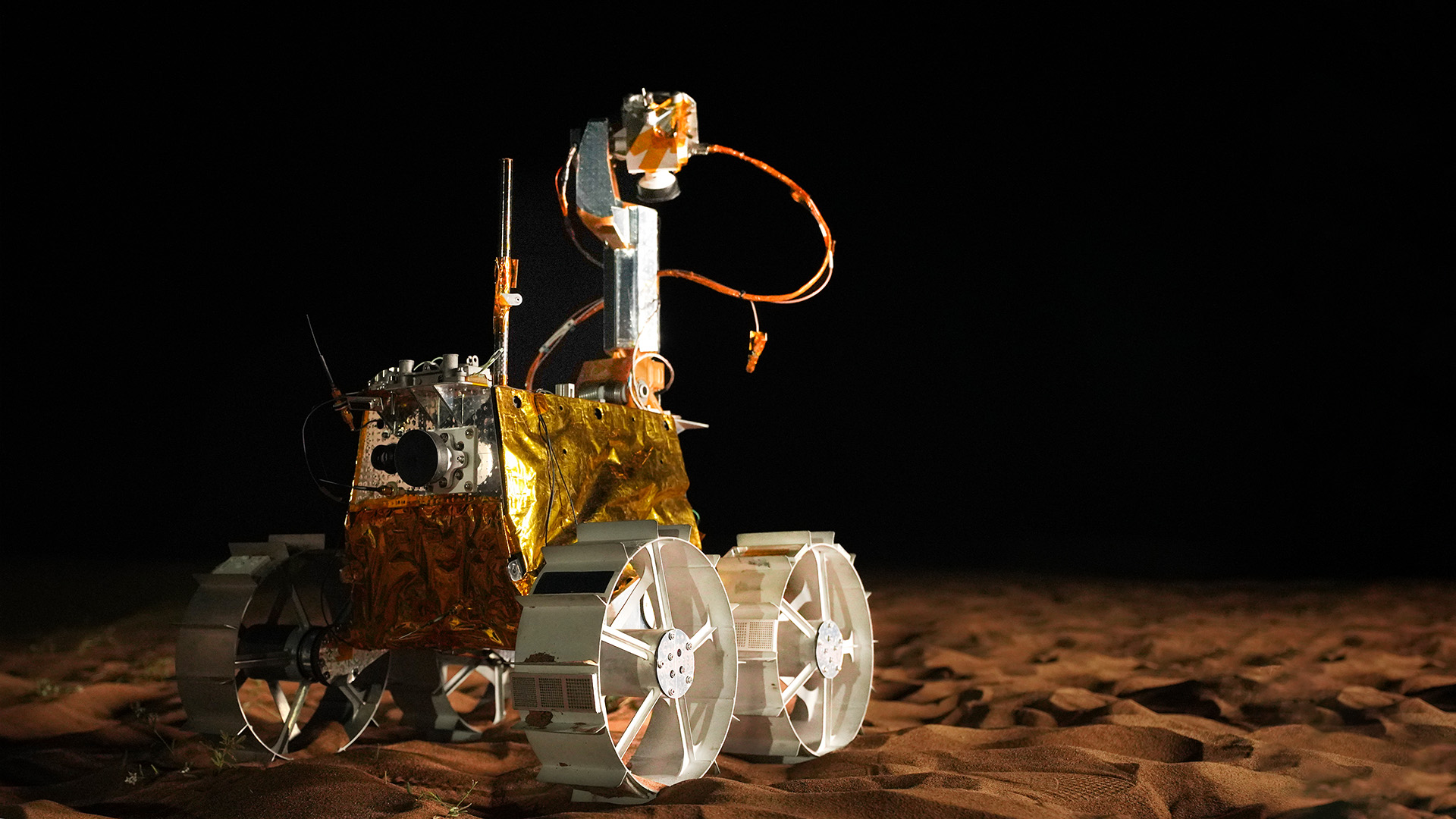
Rover chief: Risk proves UAE’s resolve

The UAE’s Rashid Rover was presumed destroyed after the Japanese company that operated the lander it was stowed on lost contact with the spacecraft at landing. But the project manager of the all-Emirati team that created the rover said getting the technology into space was an accomplishment all by itself.


Dr. Hamad Al Marzooqi, of the Mohammed Bin Rashid Space Center and a Khalifa University alum, said before the landing attempt that the UAE team behind the Rashid Rover knew the landing was dangerous, but believed it was worth the risk.

He said this mission reflects the adventurous spirit with which the UAE approaches everything. “This mission is proof that we don’t just make plans, we make things happen. This in itself is a success.

“All of these experiences and knowledge that we gained is a success by itself,” he said. “We gained confidence.”

The iSpace team said it would continue to investigate the loss of the HAKUTO-R’s telemetry.

The Arab world’s first lunar mission began three years ago. The UAE hoped to be the fourth country to safely land on the lunar surface.

Soft lunar landings are difficult because there is no atmosphere and parachutes can’t slow the spacecraft. Only the United States, China and the former Soviet Union have achieved them.

CAPTION: The team chose the landing site for ease of landing IMAGE: Anas Albounni

The project aimed to study lunar surface materials such as dust and soil, also called regolith, and monitor radioactivity and electrical signals that would offer important data for future missions. The rover was equipped with two high-resolution optical cameras to navigate the surface and allow geological study of the landing site.

Among challenges the rover team faced: its size.


“We have a small team working on the project, and the team did everything from scratch, from concept designs until now,” Marzooqi said. “(Usually) you have a team working on the custom design, then a team working on the engineering side, then another team working on the testing part and another team is working on the operations. But we went through the whole process from the beginning, from concept designs.”

“The knowledge gained through this mission is tremendous,” Marzooqi said.

“We have experts now doing communications with the systems from the moon. We have experts doing mobility systems,” and others in the Middle East are now interested in accessing that expertise, he said.

The knowledge gained through this mission is tremendous.

Dr. Hamad Al Marzooqi, mission project manager


CAPTION:Al Marzooqi with the Rashid Rover IMAGE: MBRSC

Mohamed Ramy El-Maarry, the director of the Space and Planetary Science Center at Khalifa University, contributed to the work on the rover.

“Having a member of KU, a national university, in the science team is a point of great pride for us,” El-Maarry told KUST Review.

The rover team put considerable work into the project, designing systems and instruments specifically for the task.

CAPTION: The Rashid Rover was built by an all Emirati team IMAGE: MBRSC

The Rashid Rover, named for the late Sheikh Rashid bin Saeed al Maktoum, former ruler of Dubai, was scheduled for a 14-day exploration.

Khalifa University planned to contribute to data analysis and collection and science operations.

The UAE is already working on a second rover. “We are not waiting for this one to succeed or to fail,” Marzooqi said before the landing attempt. The next rover will be more advanced, he promised.

The UAE space program has other projects coming up as well.

“We have a plan to launch a remote sensing satellite that will be the most advanced remote sensing satellite sent by MBRC. This will be our fourth thermal sensing satellite,” Marzooqi said.

“Also during this year we have a small program called the Payload Hosting Initiative. The idea is to have a … platform of small satellites to allow developing nations to (send payloads into space).”

On a personal note, prior to the rover landing, Al Marzooqi told KUST Review, “For me, the moon has always been special. Especially within our culture. As Muslims, we look to the moon to mark the start of and end of Ramadan and we follow the lunar calendar.

“But now, since we started working on the moon and we have our rover orbiting the moon, the moon is completely different for me. Every night I look up at the moon, though we cannot see the rover orbiting, knowing that there is something up there touched by our hand is an experience I cannot explain in words. This is something very personal for me and I was very fortunate to be a part of this team, working on this mission.”

It’s not alive!

Whether it’s adhesions that mimic gecko toes or robotic technology inspired by land animals like cheetahs, many developments in science are inspired by nature. A team of mechanical engineers at Rice University in the United States took inspiration one step further, creating a new field of study called necrobiotics turning a dead wolf spider into a robot.

Spiders use their legs to walk and jump, but unlike most animals, they do so with the force of pressure rather than muscle contraction and extension. Spiders don’t have the ability to extend muscles in their legs, so after flexing, they push blood into their legs like a hydraulic system, allowing for powerful movements like jumping. When the spider dies, the legs curl up because there is no pressure present.

The team reintroduced pressure into the spider’s legs via a needle in its back, adding pressure to extend the legs and removing pressure to flex them. This allowed the researchers to use the legs as an actuator gripper to pick up items. They demonstrated the spider’s ability to pick up oddly shaped and delicate items and lift objects up to 130 percent above its body mass.

Its ability to pick things up isn’t the only benefit of using bio material: Nature will take care of the waste.

The actuator can camouflage in natural surroundings and the material would eventually fully biodegrade — unlike bioinspired or biohybrid mechanisms that use synthetic materials. The actuators were used in 700 actuation cycles before decaying — only one of the limitations of working with dead organisms.

Seven hundred actuation cycles is a low number compared with non-bio actuator grippers. A synthetic gripper used in farming to pick up lightweight food like mushrooms or berries, for example, would complete between 263,000 and 700,000 cycles.

In addition to limited performance, there are variables to consider when working with bio material.
Not all wolf spiders are exactly the same size so will not have the same longevity. Additionally, variation in size could affect the strength of the gripper.

“The concept of necrobiotics could play a role in inspiring more sustainable fabrication of actuators to reduce the accumulation of technological waste,” the team says in Advanced Science. Though this is a new area of research, they will continue to explore other organisms with similar hydraulic- movement systems.

Educators grapple with how to use ChatGPT

ChatGPT, Open AI’s artificial-intelligence tool that can write poetry, news articles or essays, has been banned in many schools around the world, but others are embracing it in the classroom, saying it may revolutionize education.

Ahmad Samer Wazan, associate professor at Zayed University in Abu Dhabi, encourages the use of the chat bot in his classroom, but says it will never replace the human ability to think critically.

Wazan, who recently gave a presentation on the subject at Khalifa University, says ChatGPT can offer superficial results, but the real learning takes place in the process of probing the AI tool.

Students need to understand the subject enough to know that the answer is superficial. They also need to think critically to probe for a more in-depth and accurate result, he says.

If it is asked a question, it will answer in a broad fashion — without real detail. The user needs to ask more meaningful questions to get a meaningful result. This, he believes, is where the learning can take place.

“The tool is not thinking critically” he says, indicating educators should use this tool to help students improve the technical aspects of their writing, but not rely on it.

Ahmad Samer Wazan, associate professor at Zayed University

Wazan is not alone. Other teachers are using the bot in other creative ways: to write story prompts, provide sample-test questions to prepare for exams, or have students critique the information and writing it produces to strengthen their own skills. It’s not only students who can benefit, however.

Educators can use the platform to save them administrative work, which means more time to focus on teaching. For example, ChatGPT can write lesson plans, emails to parents and meeting agendas. It can produce professional-development content for administrators to share with their teams or create curriculum-specific content. Some educators believe even with the risks, AI will continue to evolve and students should learn to use it effectively and ethically.

While ChatGPT can be used productively in education, there are risks. Educators need to be aware of the bot’s abilities in order to determine whether students are learning. Some teachers are adding impromptu oral examinations to test students suspected of cheating.

Because ChatGPT will not offer the same essay twice, however, it can be difficult to spot plagiarism.

Though the structure, grammar and punctuation is well-executed, professors have noted facts that are wrong. As a result, they’ve caught students cheating with AI-generated work.

To combat this issue, educators are turning to content detectors that can analyze the text and determine the likelihood that it was produced by AI. These detectors, however, are not reliable.

As a result of inaccuracies and risks of plagiarism, schools around the world have banned or restricted the use of chat bots.

Sciences Po, one of the top universities in France, is one of them, promising serious consequences for students who flout the rules governing the technology. “The sanctions for use of the software may go as far as exclusion from the institution, or even from French higher education as a whole,” the university says in a press release.

Tips for using ChatGPT

ChatGPT is simply the latest technology they will need to adapt their practice for. Similar fears of plagiarism circulated with the launch of the internet, mobile phones and tablets — all of which are now integral classroom tools.

Global online learning platform Coursera offers tips to use ChatGPT responsibly: ensure accuracy by reviewing and editing; use the tool as a starting point — not for a polished result; use for work that doesn’t require creative input; and use in tandem with other platforms and tools including your own thoughts, emotions and strategies.

AI app can diagnose plant disease
and recommend treatment

The United Nations Food and Agriculture Organization estimates that almost U.S.$300 billion is lost globally to pests and disease every year, but the solution may lie in an artificial intelligence application you can download to your smartphone.

The International Center for Biosaline Agriculture in Dubai, in collaboration with the University of Barcelona, in 2022 launched an AI application that can help smallholder farmers detect crop disorders.

The application, called Dr. Nabat (the Arabic word for plant), aims to reduce crop loss in Tunisia, Egypt and the UAE. The app can diagnose 18 diseases commonly found in cucumbers, tomatoes and capsicum peppers. The developers plan to roll it out to other countries and eventually include other crops in the Middle East and North Africa such as quinoa.

While the app might solve complicated problems for smallholder farmers, it’s easy to use, the developers say. The farmer aims the Android phone camera at the crop, snaps a photo and instantly receives a diagnosis and recommendation for treatment.

The launch comes after a two-year beta trial in which 414 smallholder farmers and extension specialists fed data into the application.

Tarifa Alzaabi, director general of the International Center for Biosaline Agriculture, says providing this kind of information to smallholder farmers is important to the world’s food security.

“(The farmers) are the backbone of many agricultural economies, yet they often lack access to information about pests and diseases. We have developed this mobile application to help bridge this gap and put knowledge in their hands,” she says.

The World Economic Forum estimates smallholder farmers are responsible for one-third of global food supply.