Vertical farms and 3D-printed reefs
part of UAE’s plans for food security

There are many reasons countries struggle with food insecurity: poverty, high populations in developing countries, conflict affecting supply chains, climate change and more. But some simply don’t have the temperate climate required to grow food and depend on outside sources.

The UAE is one such country, importing 90 percent of its food supply. And it isn’t waiting for global warming to affect the imports it has always relied on.

This doesn’t mean the country will do it alone. Part of the UAE’s National Food Strategy 2051 is to diversify international food sources through collaboration and trade, but the aim is to ensure food security. And that means getting creative.


The National in 2020 reported that the UAE government invested U.S.$100 million to bring in four agritech companies to explore how countries with hot and dry climates can use their technologies.

One of the companies is U.S. based Aero Farms. The company’s founder and chief executive, David Rosenberg, told The National, “Most places in the world, they don’t even want to be second. They want to be fifth or sixth, get it tried and true then come here, they say. In the UAE, you have boldness of ‘let’s do it bigger, better,’ and that was very attractive to us.”

Aero Farms in 2023 opened the world’s largest vertical-farming research-and-development center. The Abu Dhabi facility’s goal: Forge ahead with inside vertical farming and sustainable agriculture in dry regions.

But the UAE is not just looking at agricultural development, it’s also focused on the sea — in particular coral reefs.

According to URB, the Dubai-based company known for building sustainable cities and tasked with the reef project, coral reefs are one of the world’s most varied ecosystems.

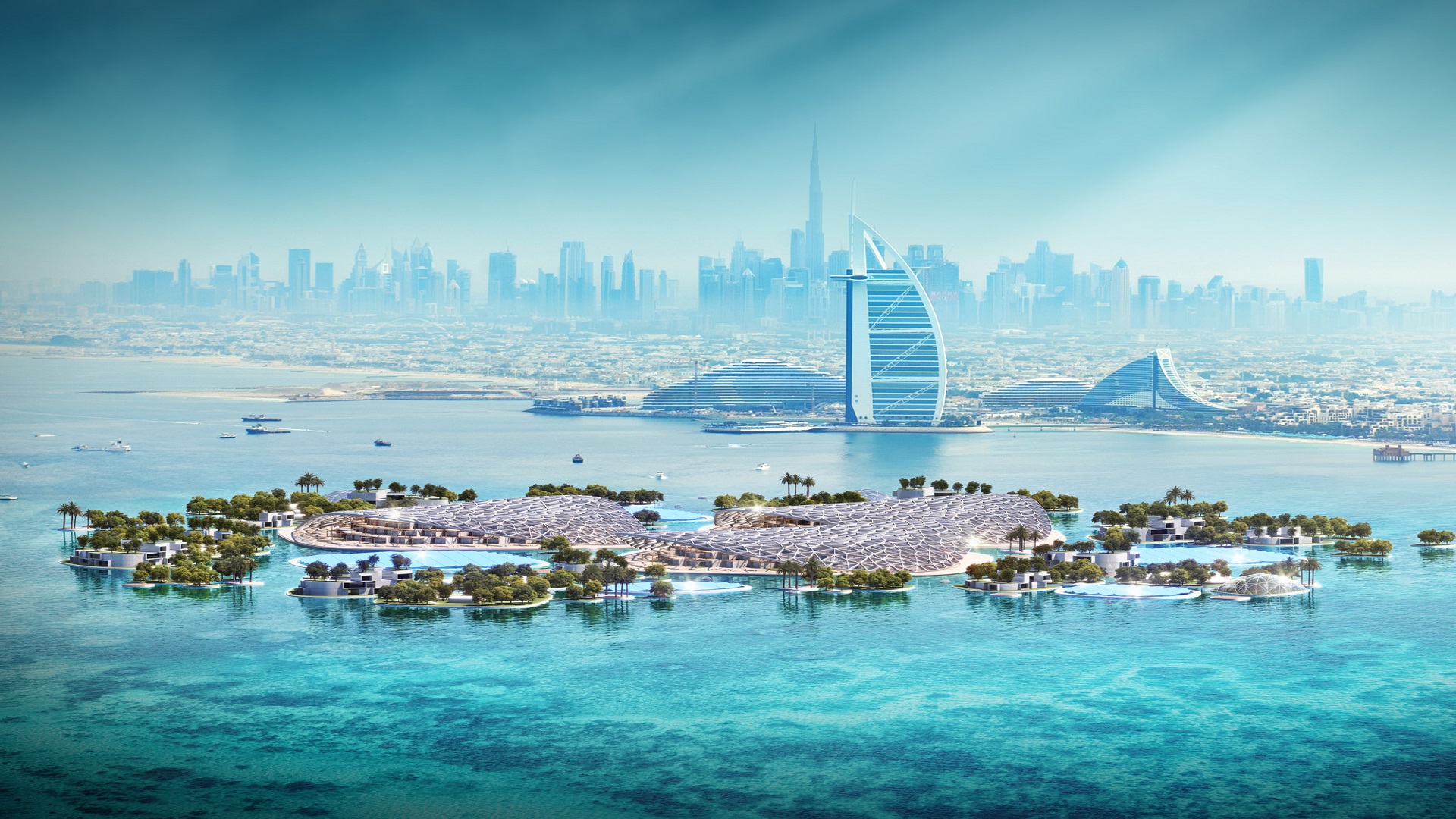
The recently announced Dubai Reefs project plans to create an artificial, 3D-printed coral reef spanning 200 square kilometers.

The ultimate goals: Repair the coastline from oil dredging and building; generate more fish; and boost eco-tourism and research.
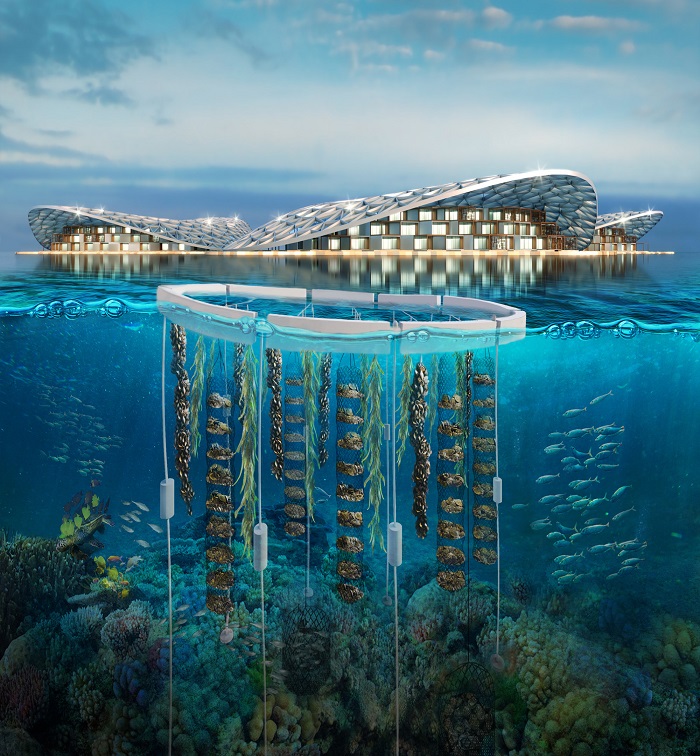
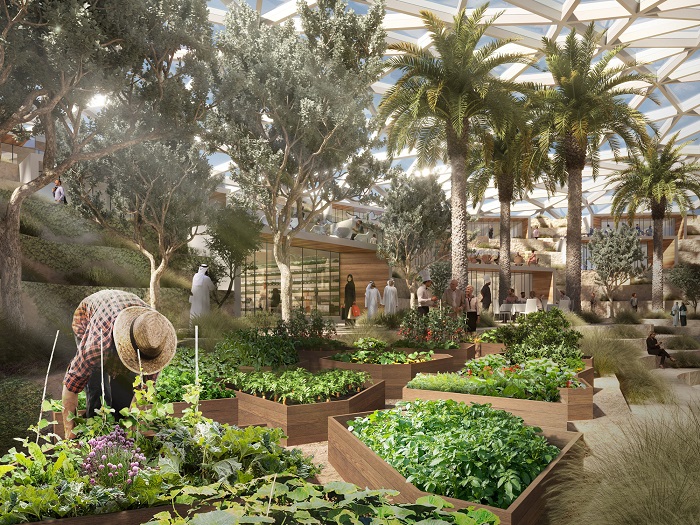
Caption: Underwater farming    Credit: URB

“Coral reefs provide an important ecosystem for life underwater whilst playing an important role in water filtration, fish reproduction, shoreline protection and erosion prevention,” the company says in promotional material for the project.

The bottom line when it comes to food security: More coral reefs equals more fish.

Coral reefs and their surrounding areas are home to 25 percent of all marine animals; 94 percent of the Earth’s wildlife live in the sea.

The project also aims to boost the tourism sector with eco lodges, eco resorts and a research center parked right in the middle of it all.

Google Earth shines light
on ancient Roman camps

Aerial photographs, images produced from cameras attached to planes, rockets or satellites, are used for photogrammetry and interpretation — measurements (for topographical mapping) and the identification and purpose of objects. But it was a team of archaeologists scouring Google Earth that uncovered historical camps in the Arabian desert dating back to 106AD.


The images, experts believe, are of Roman camps built to house soldiers as they prepared for a takeover of the Nabataean Kingdom. The Arab nomads settled in the area now known as Jordan and built a wealthy trade empire.

But after thousands of years, and buried by sand, how are the camps identified and what makes them Roman?

The three camps, shaped like playing cards, are characteristic of how the Romans built their temporary camps 2,000 years ago. They would also dig a moat surrounding the camp, which contributes to how they are found.

The aerial imaging picks up differences in the density in the sand, carving out the identifying rectangular shape. Conclusions were drawn based on the location and the historical Roman takeover of the Nabataean civilization, famed for building the carved cliffs of Petra in what is now Jordan.

IMAGE: APAAME

Dr. Michael Fradley, research associate at Oxford University and part of the discovery team, says they initially identified the camps by reviewing satellite images taken from Google Maps. 

“If we had just found one camp it would be interesting, but we would only be able to make a limited interpretation of the site,” Fradley tells KUST Review. “In this case, with three camps laid out in a row, we are able to infer a great deal more about the sites because we are able to confidently say the direction in which the Roman army were traveling and their likely target. 

We can then conjecture that they link to the annexation of the Nabataean kingdom by the Emperor Trajan after 106 CE.”

These conclusions may also have changed thoughts about the nature of the Romans’ battle with the Nabataeans.

“Roman forts and fortresses show how Rome held a province, but temporary camps reveal how they acquired it in the first place,” says Dr. Mike Bishop, one of the researchers and an expert in the Roman military, in a statement released by Oxford University.

And all this because of a camera.

Aerial photography has been used as a tool for archaeologists in finding ancient ruins for over a century — the first being Stonehenge in the United Kingdom. And the development of technology over time has made it possible to find sites that have long since been buried.

Athol Yates, a humanities and social sciences professor at Khalifa University, says often, the key is using light detecting and ranging (LiDAR) technology. This is a laser-based technology that detects and measures distances to objects on the Earth’s surface and ultimately creates a distance map of the object in the area.

­­­­­­­­­­­­­­“Because the settlements are often dug up, and the Romans did this all the time, they dug a moat and built a wall.

This (moat) eventually gets filled in over time but it’s less dense than the normal soil is, so when you’re using LiDAR, there will always be a depression, making it easy to spot,” Yates tells KUST Review.

Essentially, the laser fires toward the object, bouncing off its target and back to the emitting source. The time it takes to travel back allows for the measurement of distance.

“It reveals actual inundations. It’s not ground-penetrating radar, it’s just reflecting off solid things,” he says.


Khalifa University’s Athol Yates

The laser is able to bypass even the most overgrown landscapes as it can pass through leaves and the smallest spaces between tree branches, which contributes to its accuracy. As the cost reduces, LiDAR is being used across many industries.

The technology is also used in urban planning, geographical surveying, video games, movies and autonomous vehicles. It is also used by police to monitor cars zipping past on the highway — this means you can thank it for your speeding tickets.

Fradley, of the discovery team says they don’t use LiDAR in their work, “It was just through luck that our colleagues in Aerial Photographic Archive for Archaeology in the Middle East would be flying in Jordan not long after we identified the sites, and were able to take these more detailed aerial photographs of the western and central camps.”

The paper of the discovery of the Roman camps was published in Antiquity in 2023.

Robot fish has microplastics for lunch

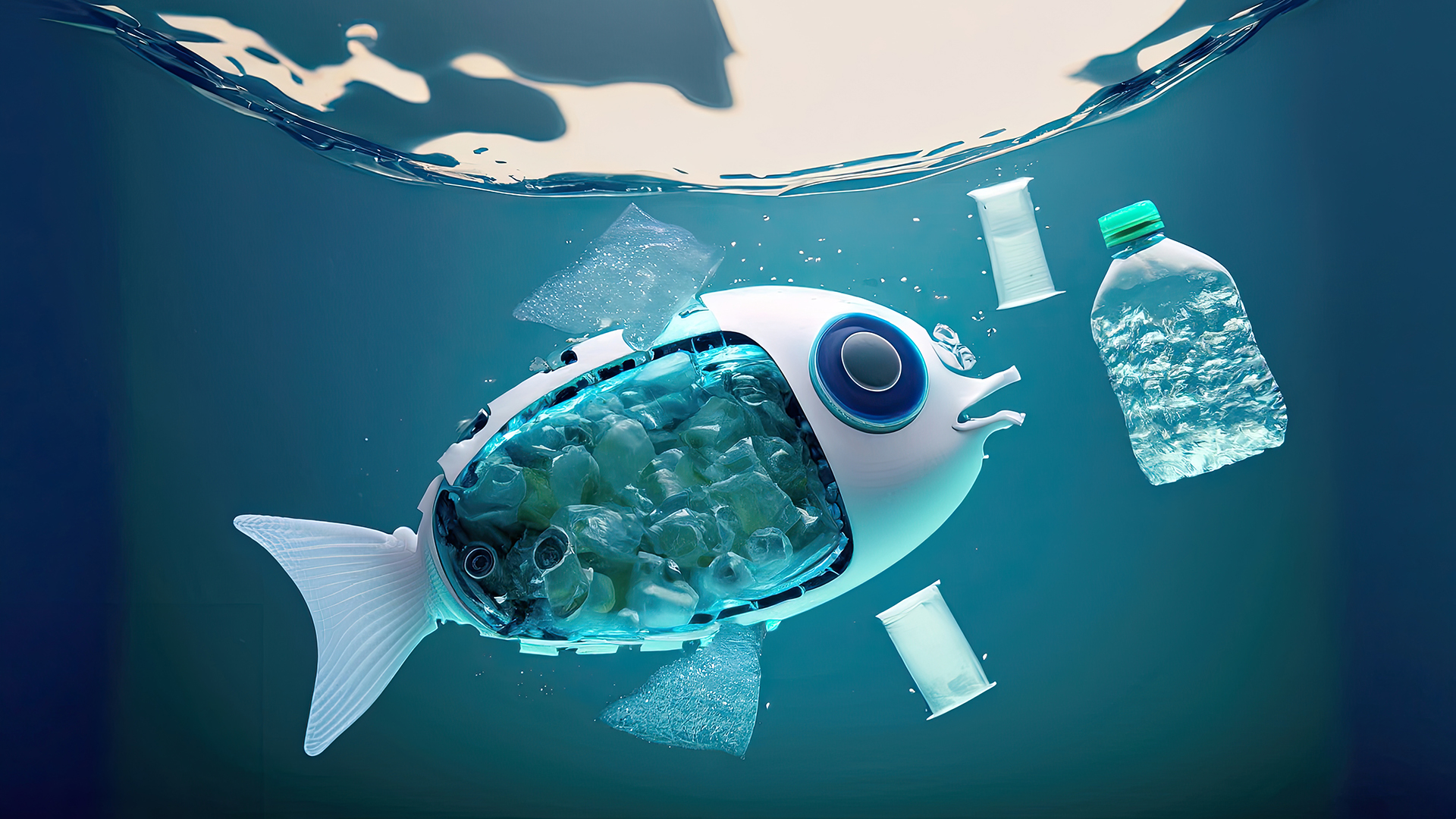
Scientists have developed a new generation of robot fish that can do more than just swim, it can also eat microplastics — providing a promising solution to the global problem of plastic ocean pollution.


The University of Surrey in the United Kingdom hosts a contest each year focused on developing robots that mimic things in nature. The 2022 winner, chemistry undergrad Eleanor Mackintosh, designed a robot that looks and acts like a fish and is skilled at filtering microplastics from water it sucks in through its gills. The robot is aptly named Gillbert.

Gillbert is 50 centimeters long and approximately the size of a full-grown pink salmon. It is shaped like a fish, and its movements mimic those of a fish. It moves through the water via remote control while its gills move in and out, drawing in water. Gillbert filters the microplastics — some as small as 2 millimeters — and stores them in an internal container.

Though Gillbert is operated by remote control, Robert Siddall, robotics lecturer at the University of Surrey and founder of the competition, hopes this robot fish inspires others to work toward gaining control of the plastic problem plaguing the world’s oceans.

But with an estimated 5.25 trillion pieces of plastic in the oceans, why focus on microplastics?

Ludovic Dumée, assistant professor of chemical engineering at Khalifa University, says although microplastics are small and difficult to see, they have an enormous impact.

“Microplastics, whose maximum dimension falls below 5 millimeters, are ultimately released into waterways and represent a major threat to global ecosystems, the entire food chain as well as many human industrial activities that rely on river or sea-water intake,” he says in a 2023 article in KUST Review.

Additionally, Dumée says human beings consume between 50,000 and 100,000 microplastics annually. This exposes humans to contaminants and increased cancer risks.

CAPTION: Plastic straws become microplastics IMAGE: Unsplash

Gillbert the fish is one possible solution to the microplastics problem, but more attention is required to solve this global issue.

The 2023 Natural Robotics Contest requires this year’s entries be inspired by the December 2022 UN Biodiversity Conference held in Montreal, Canada. The biodiversity conference addressed appropriation of a global biodiversity framework to deal with the main causes of nature loss. The 2023 contest is open for entries until July 1, and the winner is promised a working prototype based on their design.

A 3D print download of Gillbert is available for open access so others might improve upon the initial design.

It’s a robot invasion —
in the operating room

Telehealth evolved rapidly during the COVID-19 pandemic, with phrases like tele-triage and tele-consultants becoming household words as governments adapted policies and encouraged remote services to manage an unprecedented health emergency. At the same time, a halt in most elective surgeries worldwide highlighted a need for advancements in robotic surgeries.

Now with progress in machine learning, AI the 5G network and robotic surgery equipment, surgeons can operate on patients from across the room and across the world.


As with most technology developments, there are kinks to iron out. Since the first telesurgery in 2001, skepticism, network issues, legislative differences between countries and the high cost of robotic equipment hindered growth. After the development of 5G, however, a team in China in 2019 performed successful telerobotic spinal surgeries on 12 patients from six cities.

While both robotic surgery and telesurgery offer more precision, are less invasive and result in quicker recovery time, telesurgery also eliminates logistical issues like travel health risks and cost of travel. It also offers better access to much needed surgeries for underserved countries.

CAPTION: Neurosurgeon remotely operates on a patient IMAGE: Shutterstock

The Lancet in 2015 published a study in which researchers estimate 5 billion people lack access to necessary surgical care. The main problem with this is not only the expense of the robotic systems, but also access to high-speed internet.

Gary Guthart, CEO of Intuitive — the company that created the Da Vinci surgical robotic system, which was the first to be approved by the U.S. Food and Drug Administration — said the company is developing innovative strategies to increase the number of surgically trained clinicians in low-resource regions.

“This is an urgent problem,” he says, “because of the significant global shortage of surgeons, particularly in low-resource countries. Every year, an estimated 16.9 million people die who might otherwise be treated.”


With the need for telesurgery development at the forefront, advancements in machine learning, AI and the 5G network, the market is expected to surge to an estimated compound annual growth rate of 11.9 percent between 2022 and 2029. The growth can be attributed to things like a desire for less invasive surgeries, precision ability, a 3D surgical viewpoint and the increasing volume of surgeries worldwide. A paper published in 2020 in Elsevier estimates that there are 310 million major surgeries each year.

Further benefits include data sharing ability between institutions, remote consultations and training surgeons.

Anthony Fernando, president and CEO of Asensus Surgical, a medical devices company that focuses on digitizing the interface between surgeon and patient, believes that using AI, machine learning and adding deep-learning abilities to robotics will result in “the best possible patient outcomes independent of surgeon skill level, training, and experience. This transition of thinking and innovation is what will drive the larger digital transformation needed to enable the future of telesurgery and other future surgical improvements that we have not even imagined yet.”

Robotic-assisted surgeries have been around for nearly four decades. The first procedure was a brain biopsy in 1985, which led the way for a gallbladder removal in 1997. This robot did not have a camera, so a human assistant had to hold the endoscope. The first telesurgery – also a gallbladder removal – was four years later.

UAE growing food security
with new agritourism park

The UAE is known around the world for having the biggest and best of many things, from the world’s fastest roller coaster to the world’s tallest tower. Now the nation is making itself known for the biggest and best in agritourism.

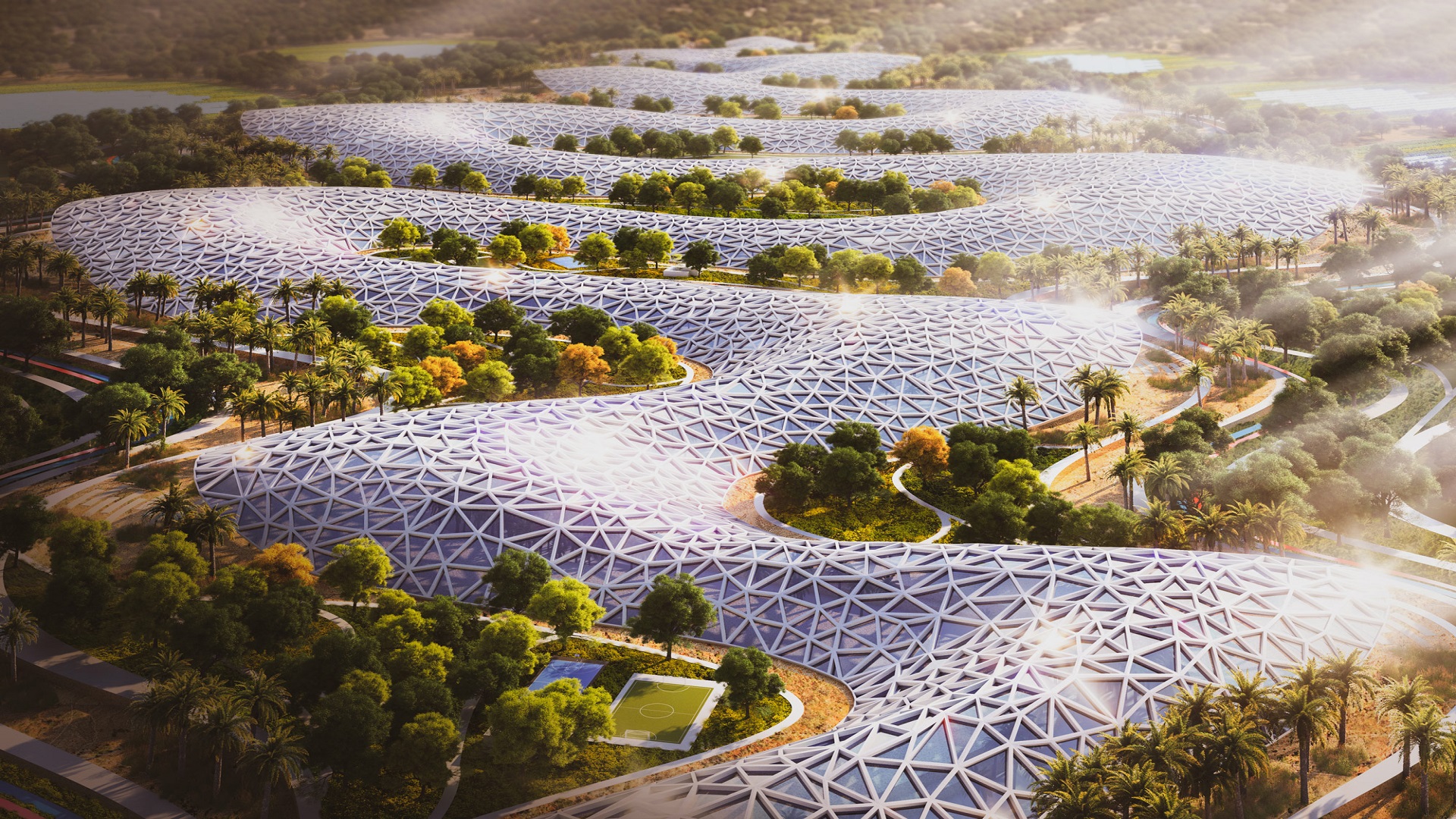
The UAE announced a plan in 2022 to build the largest agritourism park in the world. The park is set to begin construction in 2025 and open in 2030. The park will employ an estimated 10,000 people and host a fully green transit system and bio-saline agriculture.

While agritourism has been around since the end of the 19th century — in the form of city dwellers traveling in summer to visit family-owned farms — it is now a growing trend in sustainability and a popular choice for family vacations.

Activities in agritourism include anything from sampling food to an authentic farm-life experience in which a family might lodge on the farm and participate in daily operations. Many might have experienced agritourism and not even realized it when visiting a petting zoo, eating at a farm-to-table restaurant or picking berries.

Essentially, farmers or producers open their doors to the public for education, entertainment and an additional income stream. For some, however, it’s also about food security.

In a nation with a complicated climate and the pandemic highlighting difficulties with reliance on supply chains, food security is a major focus for the UAE. Approximately 90 percent of consumed food in the country is imported.

Credit: URB

In arid regions like the Middle East, developing technologies like vertical farms, a 400-hectare wheat farm fed by desalinated water in the desert and the world’s largest agritourism park are creating opportunities to become less reliant on imports.

The UAE’s leaders have expressed interest in becoming self-sufficient through driving local food production, incentivizing foreign investment and reducing red tape.

In a food and agriculture forum at EXPO 2021, Minister of Climate Change and Environment and Minister of State for Food Security Mariam Al Mheiri said, “We all share a vision for making our food system innovative, resilient and ultimately sustainable through increasing investment in agriculture research and development,” the National reported.

In 2021, the global agritourism market was appraised at $U.S.45,395 million and is estimated to reach $U.S.141 billion by 2030.