THE FAST & AUTONOMOUS

Peering through the gap in the catch fence, the members of the Fly Eagle team held their breath. A whine emerged from the distance, an engine noise that grew louder as anticipation built for the Dallara Super Formula car to round the corner and scream down the pit straight. In the blink of an eye, the car whipped past its spectators, crossed the timing beam and turned the corner at the end of the straight. The Fly Eagle team whooped; they’d set their best time yet.

Abu Dhabi’s Yas Marina Circuit is no stranger to racing cars. It hosts events throughout the year, including the season finale of the Formula One World Championship since 2009. But the track has never seen racing like this before. It’s not the speed or the car that makes it special: It’s the drivers.

The Fly Eagle car is driven entirely by artificial intelligence. There’s no driver in that car.

Yet, the drama, the speed, the precision, the passion — all remain.

The Abu Dhabi Autonomous Racing League (A2RL) is the first of its kind in the region, shaping the future of motorsport as we know it. Eight university teams were invited to take part in the “challenge,” going head-to-head for a prize fund of U.S.$2.25 million.
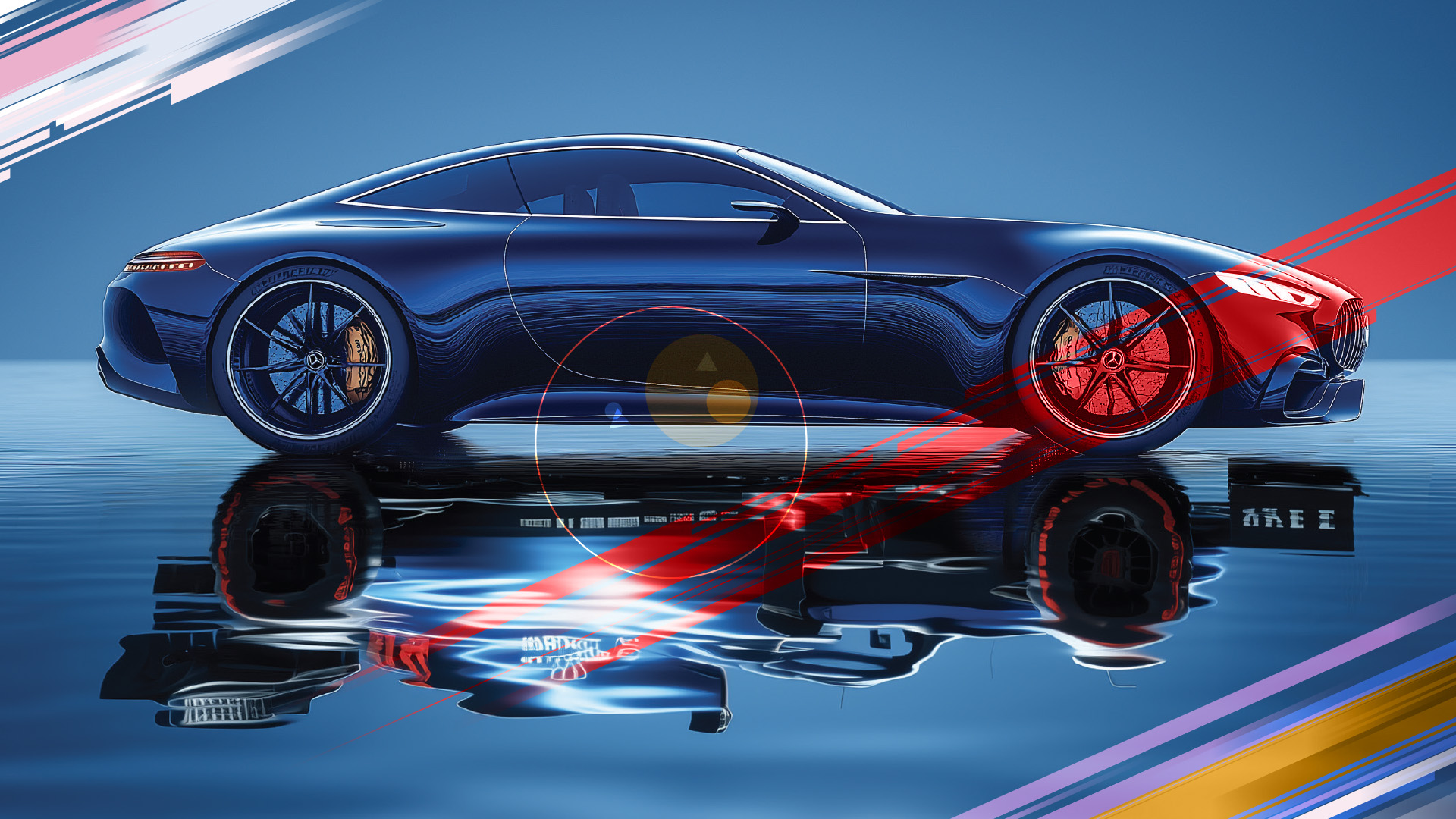
Image: Motorsport has long been a testing ground for innovations that later make their way into road cars.

Each team races using identical Super Formula SF23 cars, the fastest open-wheel race car after those used in Formula One, capable of reaching a maximum speed of 300 km/h. They’re also manufactured using sustainable bio-composite materials, an important factor we’ll get into later.

Each car is equipped with seven cameras, four radar sensors and three lidar units to navigate its way around the track, with the only difference between the teams lying in how they use their coding skills, algorithms and machine learning techniques to teach the cars to drive.

“Just because it’s a machine, doesn’t mean there aren’t human elements in it,” said Tom McCarthy. He’s executive director of ASPIRE, the “technology transition arm” of Abu Dhabi’s Technology Research Council. “Remember that it’s people doing the programming here.”

HOW DOES IT WORK?

The AI needs to be able to turn into corners at the right moment, know when to brake, accelerate, change gear and recognize its surroundings at all times. To get the most out of the car, it needs information on how hot the tires and the brakes are, what the wind is doing in each turn, how much grip the tires have left — all the information a human driver gets from sensors and intuits from experience.

You’d think that the fastest way around the track would be to train the AI on an “ideal lap” set by an actual racing driver, an expert, and then have the car follow that data to the letter. And indeed, there is training data for the algorithms, but every 50 milliseconds, the AI decides whether to listen to that training data or the live data it receives from its sensors. Sometimes, when it relies on its own inputs, the car shaves time off its previous best lap. Sometimes, it turns too soon and smacks into the wall.

Lakmal Seneviratne is director of the Khalifa University (KU) Center for Robotics and Autonomous Systems. With Majid Khonji, who leads the research activities in the KU Autonomous Vehicle Laboratory, the university entered the A2RL event with team Fly Eagle, a collaboration with Beijing Institute of Technology. They spoke to KUST Review in the team garage on qualifying day.

“The optimal trajectory is pre-computed,” Khonji explained. “The code is then based on the information you get about your location on the track, and you try to accurately follow that path.”

“In a simulator, your car would run perfectly using this method,” Seneviratne added. “And do 10,000km perfectly. But in real life, errors creep in. If not corrected, these errors build up and the car goes wrong.”
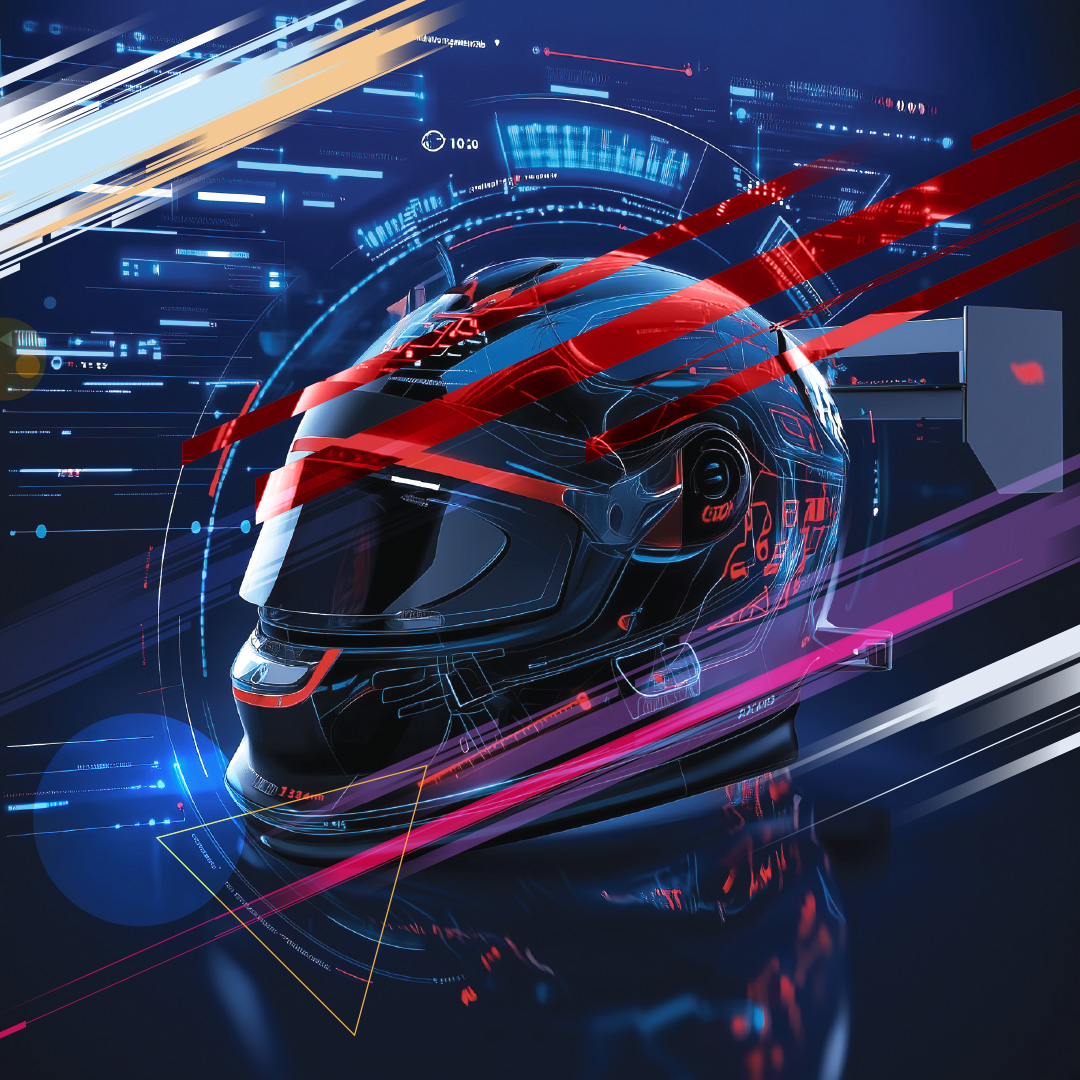
CAPTION: AI generated, KUST Review IMAGE: Anas Albounni, KUST Review

When asked if the team was correcting these errors or the AI was handling it, both Khonji and Seneviratne were quick to jump in: “The system is doing it. We set it up, but the system is doing all the learning, all the work.”

There’s plenty of run-off area at Yas Marina Circuit, but the barriers around the track are unforgiving, and there were many times during the practice runs that cars ran afoul of the track limits. Sustainable manufacturing came in handy as front wings were replaced regularly. And thankfully, the organizers had plenty of spare wings.

“We had some good runs but some technical hiccups, of course,” Seneviratne said on qualifying day. Race events are rarely without hiccups for any race team, no matter the category, but for Fly Eagle, the biggest issue was signal around the racetrack. Their car was finding it difficult to communicate with the GPS system localizing it around the circuit.

“We get a very high-quality 3D map of the track and then the car has lidar sensors which it uses to localize itself on this map,” Seneviratne explained. “The teams that are doing well here are using that technique successfully, and that’s what we’ll do next time too.”

“To give an analogy, imagine it’s a Formula One race and you’ve blindfolded the driver,” Khonji added. “That’s what our car is experiencing without the GPS.”

Elite racing drivers practice each track before they arrive by putting in lap after lap on a simulator. It’s common to hear them say they could drive a circuit with their eyes closed. Seneviratne laughed when KUST Review put this to him:

“In a straight line, sure, you could probably do it with your eyes closed, but corners, no way.”

This statement could not have been timed better: This is the point where attention was drawn from the garage back to the racetrack as the Kinetiz team car turned for Turn 12 too early and struck the barrier. Unfortunately for Kinetiz, Turn 12 is directly visible from the support pitlane where the teams were hosted for the event. The car was recovered, and a new front wing quickly supplied.

WHAT’S THE POINT?

Motorsport is often referred to as the “cradle of innovation”: Many innovations that found their way onto our roads originated in different motorsport categories. Disc brakes won the 1953 24 Hours of Le Mans Grand Prix for Team Jaguar and two years later debuted on Citroen road cars.

Carbon fiber was first used in Formula One in the 1980s to reduce weight and can now be found on high-performance road cars. Push-to-start reduced the start-up times for racing drivers in the pit lane — hardly a modern car lacks it now. Anti-locking brake systems originated on the Ferguson P99 racecar in 1961, the kinetic energy recovery system first tested in Formula One in 2008 led the way for hybrid vehicles and all suspension systems in cars today trace their roots to NASCAR or Formula One.
Even rear-view mirrors were first found in motorsport. At the first Indianapolis 500, driver Ray Harroun attached a mirror to his car so he could keep track of the cars behind him. By 1914, this was standard practice for all production cars.

ASPIRE says by stress-testing autonomous technology on the racetrack, it’s easier to identify key challenges and areas of improvement and rapidly address them:

“We believe there is potential in autonomous robotics and AI to combine these with the average driver to bring about greater safety on our roads,” said ASPIRE’s McCarthy. “We thought the best way to do it is to demonstrate its capability in the most extreme conditions you can, in the fastest, most well-designed race car in the world.”

Stress-test may be the operative word for the event. A race car lapping the circuit at speed with no driver but a computer was seriously impressive, but a full lap with no incidents was a rarity.

During qualifying runs, many of the teams struggled to set a lap. The cars seemed to randomly swerve, spin or turn into the barriers. Sometimes, they even pulled off to the run-off area and simply stopped.

Seneviratne explained the random stopping was the AI making a prudent safety choice: When it wasn’t sure what to do, rather than risk anything, it just came to a halt.

Fly Eagle, however, was not one of the teams that made it into the final.

“We’re on a learning curve but we’re really happy with what we’ve done,” Seneviratne told KUST Review. “For us, it was more about establishing a platform to go onto the next stage. This was the first time we’ve competed in any racing event. High speed is new for us.”

LIGHTS OUT

Four teams lined up for the final, hosted in front of a capacity crowd. Even this didn’t go to plan: The leading car spun, the second car passed by without incident, but then the race officials displayed a yellow flag to the competitors. Racing rules dictate no passing under a yellow flag, but this means no passing moving vehicles: i.e. no overtaking.

Humans get this. Computers did not. The algorithms knew they weren’t allowed to pass, so they didn’t. They stopped on track.

The safety feature is perfect for incidents on a real-life road, but it’s not so impressive for a racing event if all the cars grind to a halt.

After a restart, the eight-lap race was completed. For reference, Formula One drivers do a lap in about 90 seconds. They’d complete eight laps in 12 minutes or so. The A2RL cars took 16 minutes.

They weren’t far off once they got going but these lap times were slower than teams had achieved earlier in the week during their practice sessions. Once they’d reached the final, there may have been a subconscious unanimous decision to exercise a little more caution.

All race teams watch nervously as their cars compete – few must be as nervous as those watching a computer.


In the end, the inaugural event was won by the team from Technical University of Munich as its car correctly turned the hairpin on the last lap, while the lead car misjudged its entry. It was a clean move and was just as dramatic for a driverless car as it would have been for human drivers.

The gap between human and robot persists for now, but if these events keep happening, and teams keep pushing the boundaries of what AI can do, things may change very quickly.

A2RL plans to be back in 2025.

More like this: Aquabots
Stretch out that sodium niobate,
but not too much

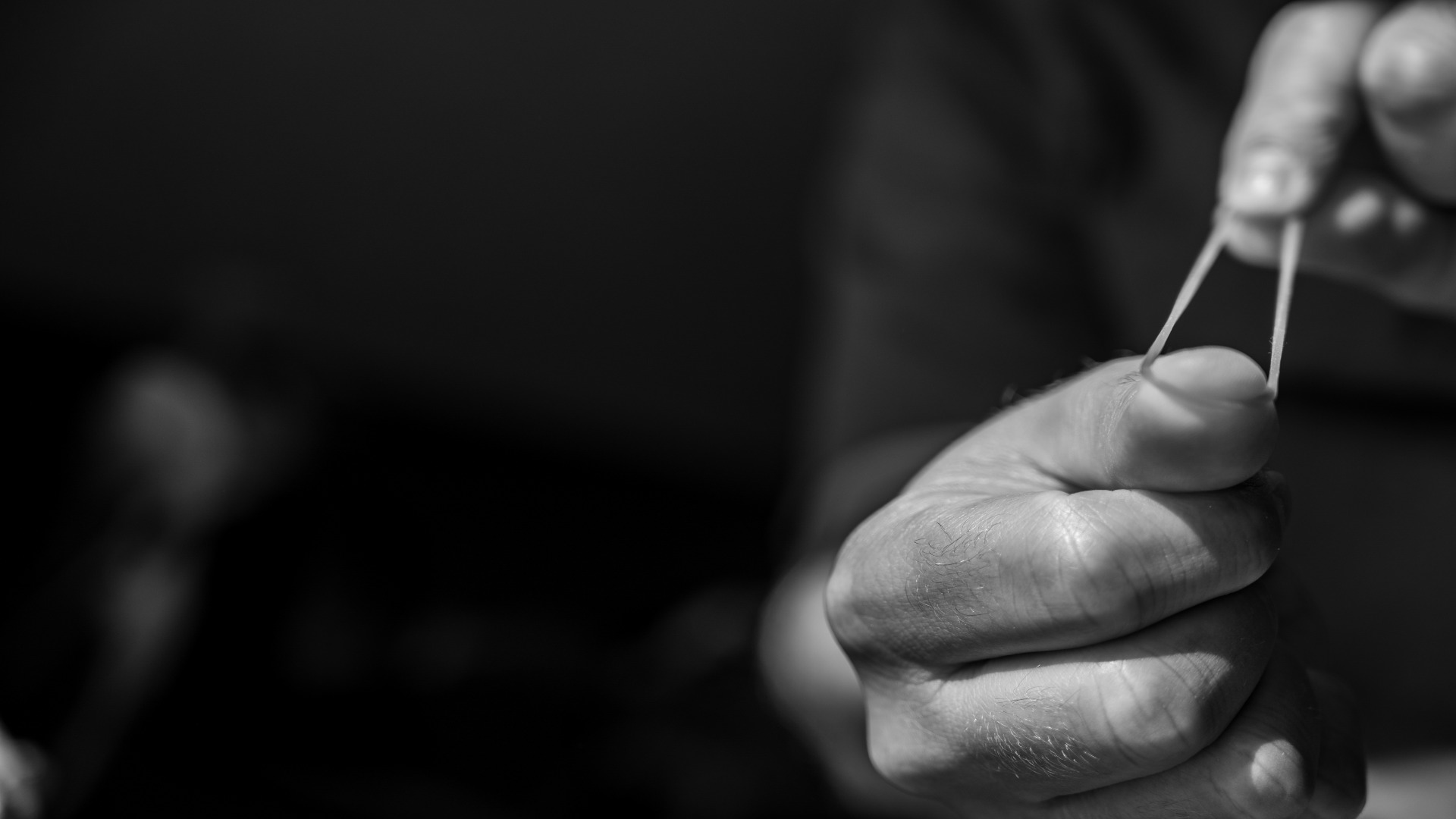
Grab a rubber band and stretch it just far enough to wrap it around a deck of cards — now you understand the trick behind the newest breakthrough in materials science: a simple concept with a serious impact on reduction in lead-based materials.

A group of U.S researchers recently published a study in Nature Communications showing that by putting the right amount of strain on an ultrathin film of sodium niobate (a harmless, lead-free material), they could cajole it into exhibiting some impressive electrical capabilities, the likes of which are usually only typical of high-performance, lead-based materials.

By controlling the stretch, they created small sections where two crystal structures can exist side-by-side.

The electric dispersion can easily twist, rotate and switch between multiple states, giving the material exceptional tunability and fast, reliable switching without adding complex chemical ingredients or harmful lead.

This makes it perfect for future memory chips, sensors and wireless tech.

Using powerful tools like synchrotron X-rays and advanced electron imaging, the researchers observed the crystal phases come to life and confirmed the unusual behavior.
The results indicate a promising path toward greener, safer high-performance electronics that don’t compromise on power.

More like this: Wear a coat

A plant’s secret weapon

The α-amylase inhibitor is a natural protein in plants that blocks an insect’s ability to digest starch — the yummy main source of energy many grain-eating bugs seek when devouring a mass-produced crop like corn.

When plants slip this inhibitor into the pest’s tissues, its digestive enzymes get jammed and the bug is left with a belly full of starch it can’t use.

A new review published in Biotechnology Journals explores how different plants create these inhibitors, the precision at which they can target insect enzymes and how scientists have attempted boosting them in crops.

Early trials showed promise, but there are public and regulatory obstacles to using the usual genetically modified organisms.

Now researchers are exploring how gene editing to refine a plant’s natural inhibitor genes might enhance its natural defense systems without foreign DNA additions.

If successful, it could result in less dependence on chemical insecticides, protect stored grains and contribute to more sustainable farming practices.

Before this gene editing happens, however, further research is required to ensure safety for humans, livestock and insects that provide positive impacts on crops. Researchers also need to make sure the pests they’re aimed at don’t evolve their way around the inhibitors.

More like this: AI builds super-charged proteins

The many faces of Botox

When we hear the term Botox or see it advertised, it’s usually tied to smoothing out facial wrinkles or keeping them at bay. But while beauty drives most of the market, that’s only part of the story. A range of important medical treatments also rely on Botox — and none of them has anything to do with chasing youth.

In 2024 alone, more than 9 million treatments were performed worldwide — up more than 26 percent since 2021. Close to 85 percent of users were women with an average age of 43. The number of men using Botox is also on the rise and is expected to reach 17 percent in 2025, up from 12.3 percent in 2018.

American ophthalmologist Alan Scott first used botulinum toxin A, a neurotoxin produced by a bacterium called Clostridium botulinum (brand name Botox) as an alternative to surgery, to weaken hyperactive eye muscles by paralyzing muscles and blocking specific nerves.

Scott had no idea how versatile the drug, then called Oculinum, would become in the field of medicine when he sold the rights to Allergan in 1991 for U.S.$4.5 million. At that time, it was used for uncontrollable blinking and misaligned eyes. Now worth billions, Botox is continually proving itself with a growing list of applications.

Like migraines that stop people in their tracks, preventing them from completing even the most basic daily tasks. These headaches impact more than a billion people worldwide every year.

Botox treatment was FDA approved for migraine treatment in 2010.

Injections are strategically placed around the head and neck areas to interrupt the pathway of pain connecting the central nervous system in the brain and spinal cord nerves. The neurotransmitters and molecules released during a migraine are interrupted by the botulinum toxin where the nerves and muscles connect.

This has been proven effective in those who suffer with chronic migraines, which means 15 plus headaches per month for a minimum of three months. It’s not for everyone, though. Users must be 18 years or older. It also doesn’t eliminate the headaches altogether but reduces the frequency by about 50 percent.

Botox is also used in patients with muscle spasticity, which can be the result of neurological disorders like stroke or cerebral palsy that cause damage to the brain, spinal cord or nerves that control muscle movement. Damage to the nervous system causes muscle stiffness or muscles to move involuntarily, because wrong orders are being delivered.


For those living with spasticity, relaxing the muscles means less stiffness in the muscles and improved range of motion.

Francois Bethoux, rehabilitation specialist-Cleveland Clinic


And if you’re a sweaty person, even when you shouldn’t be, Botox could be your new best friend.

Overactive sweat glands, a condition called hyperhidrosis, can cause profuse sweating, creating uncomfortable and often embarrassing scenarios.

Like many of the other conditions mentioned above, there is a surgical option — have those sweaty glands removed — but bodies need sweat to regulate body temperature, just not so much of it.

Botox injections to a localized site can block the signals that activate those overactive glands. This means your body’s sweat glands can continue to operate to cool you, without excess. The treatment takes about two weeks for maximum impact and can offer reduced underarm sweating by up to 90 percent.

This treatment can be applied to those with overactive bladders as well. This doesn’t mean that a little urine escapes when you sneeze — that would be considered stress incontinence. If your bladder is overactive, you might feel a sudden urge to urinate and struggle to control it or experience frequent urination day and night.

Good news: “A urologist can inject Botox into your bladder to treat urge incontinence or overactive bladder. This helps the muscles relax, which will give you more time to get to the bathroom when you feel the need to urinate,” according to the Mayo Clinic. Botox relaxes the bladder muscle to limit contraction.

This treatment can help the 17 percent of women and 3 to 11 percent of men who struggle with urge incontinence.

While these treatments are FDA approved, further uses in other off-label applications are sometimes approved on a case-by-case basis by the regulating body.

One of which is chronic pain.

It was once thought that these injections solely blocked the signals sent by nerves to the muscles, but new research tells us that’s not the only function — they also affect the electrical activity inside the nerves by calming overactive nerves.

Studies show that Botox reduces some nerve-related pain. In conditions like phantom limb pain, nerve damage pain and allodynia (when something that shouldn’t hurt hurts), tiny Botox injections result in the nerves becoming less sensitive.

So those things that shouldn’t hurt did so less, and it took more stimulus for those patients to feel pain.


A 2024 review published in Toxins discusses future potential applications, and it seems while Botox has come a long way, there’s still a ways to go.

The product is being redesigned by mixing and matching the modules and modifying its parts to create versions that work faster and last longer, don’t cause muscle paralysis and go only to the nerves that cause pain. Researchers are also studying new ways to administer the medication other than an injection.

Smart Botox is en route with products like microneedle patches, slow-release gels, light-activated nanoparticles that can be switched on only when required and gene-delivery approaches that make cells produce tiny amounts of the active Botox part over time.

These applications are only in their infancy and hopefully will be available before we get too wrinkly, but big picture, classic Botox (BoNT/A and BoNT/B) is in the process of becoming more precise, predictable, longer and faster acting, less paralytic and potentially needle-free.

More like this: Ozempic for sobriety?

Thirsty? Science hops to it

A changing climate is putting more pressure on the world’s supply of clean water. But an amphibian might have the answer.

A team of researchers at the University of Nevada, Las Vegas, has developed a material that harvests atmospheric water more efficiently than current technologies. And it’s all thanks to a frog.

Listen to the Deep Dive:

Frogs don’t consume food and water the way we do. Food is taken in orally, but the eyeballs fall inward to push it down the throat. Water, however, is absorbed through their skin.

It was this process that inspired a new ultra-absorbent material that came exclusively from studying hydrogels. The gels create a barrier that keeps out contaminants but allows water to pass through.

CAPTION: Jeremy Cho, assistant professor, Department of Mechanical Engineering
IMAGE: University of Nevada, Las Vegas

“A hydrogel is a soft polymeric material that can swell with water, meaning it is very permeable to water, just like skins in organisms,” says Jeremy Cho, one of the researchers on the team.

A hydrogen membrane and a liquid desiccant was the winning combination that permits rapid capture and large quantity storage for freshwater distillation.

“We observed that it could capture water at incredibly fast rates. We captured two to six liters per day per square meter of membrane area in Las Vegas air — the driest city in the United States,” Cho says.

The liquid desiccant attracts water and absorbs water vapor from the air, even when the relative humidity is as low as 10 percent.

The most challenging obstacle was to filter outside air particulates and contaminants. A hydrogel membrane was added between the desiccant and the air.

It sounds like an easy solution, but finding the just-right hydrogel took two years of experimentation resulting in two published papers. “It took a lot of careful hydrogel synthesis and experimentation to verify our theory,” he tells KUST Review.

| What’s new?

Though atmospheric water harvesting processes have been around for a long time, often repackaging old technologies, the team’s method is based on new tech.

“Our work is different in that we are not creating a new sorbent to be cycled, or relying on an old tech developed for a different application. We are presenting a new membrane-based method where water can be continuously captured into a liquid desiccant and released (distilled) in another location.

The segregation of processes is what’s key here as it allows you to separately optimize and control each process for better overall performance and efficiency. It gives us flexibility in how we can design a complete water-harvesting system. If we want to be solar or waste-heat or electrically powered, we can build different systems that still rely on the same membrane-based capture approach developed because of this flexibility,” Cho says.

| It’s not just for drinking

The majority of the market is focused on drinking water, which is only a fragment of overall water consumption, so the team initiated a start-up company with hopes its tech has a massive impact on sustainability and water sourcing.

Cho adds, “This approach was invented with water-stressed arid regions in mind, and sustainability has been part of the vision from the very beginning.”

This includes considering the current level of water stress and how their tech can impact water usage, conservation and regulation. Regulators are consistently looking toward lower consumption and water reclamation, and companies that look to environmental, social and governance factors when making investment calls are seeking to be water-neutral or water-positive.

Regulators in Nevada sometimes try to put off businesses from setting up there, based on their water-consumption forecasting. Cho and his team are hoping to eliminate this market barrier, enhancing the local economy.

| At what cost?

The problem is that these water solutions are more costly than tap water, but Cho says his team’s goal is to ensure their start-up company, WAVR Technologies, is focused on developing solutions to supply water to make up for these consumptive losses.

| Who is willing to pay the price?

Cho says there are many industries in Las Vegas looking for solutions, including real estate, hospitality, construction and high-tech manufacturing. “We’ve been talking to them, they’re all looking for a solution and are willing to pay for it. And from what we can tell right now, the amount they’re willing to pay seems to be achievable from a technoeconomic standpoint when we scale up our technology.”

“Climate change is real, and whether or not you accept the science that we are causing it, you are paying for it. In arid regions, it is extremely visible through our water resources, our utility bills, and our abilities to do business and live in our communities. We should be more responsible in how we use our water and do what we can to reclaim it. And whatever water we cannot reclaim, let’s consider sourcing that from the air—a hidden resource that surrounds us all,” Cho tells KUST Review.

The team at WAVR Technologies expects its first prototype to be ready by the end of 2025.