No bones about it

There are many physiological processes our bodies need calcium for, like building bones, contracting muscles (including the heart) and operating neurons. Calcium concentration in our bodies is typically regulated by the endocrine system using parathyroid hormones (PTH) and calcitonin.

PTH releases calcium from bones when blood calcium is low to maintain these functions. But what happens when you don’t have bones?

Well until now, it’s been a mystery.

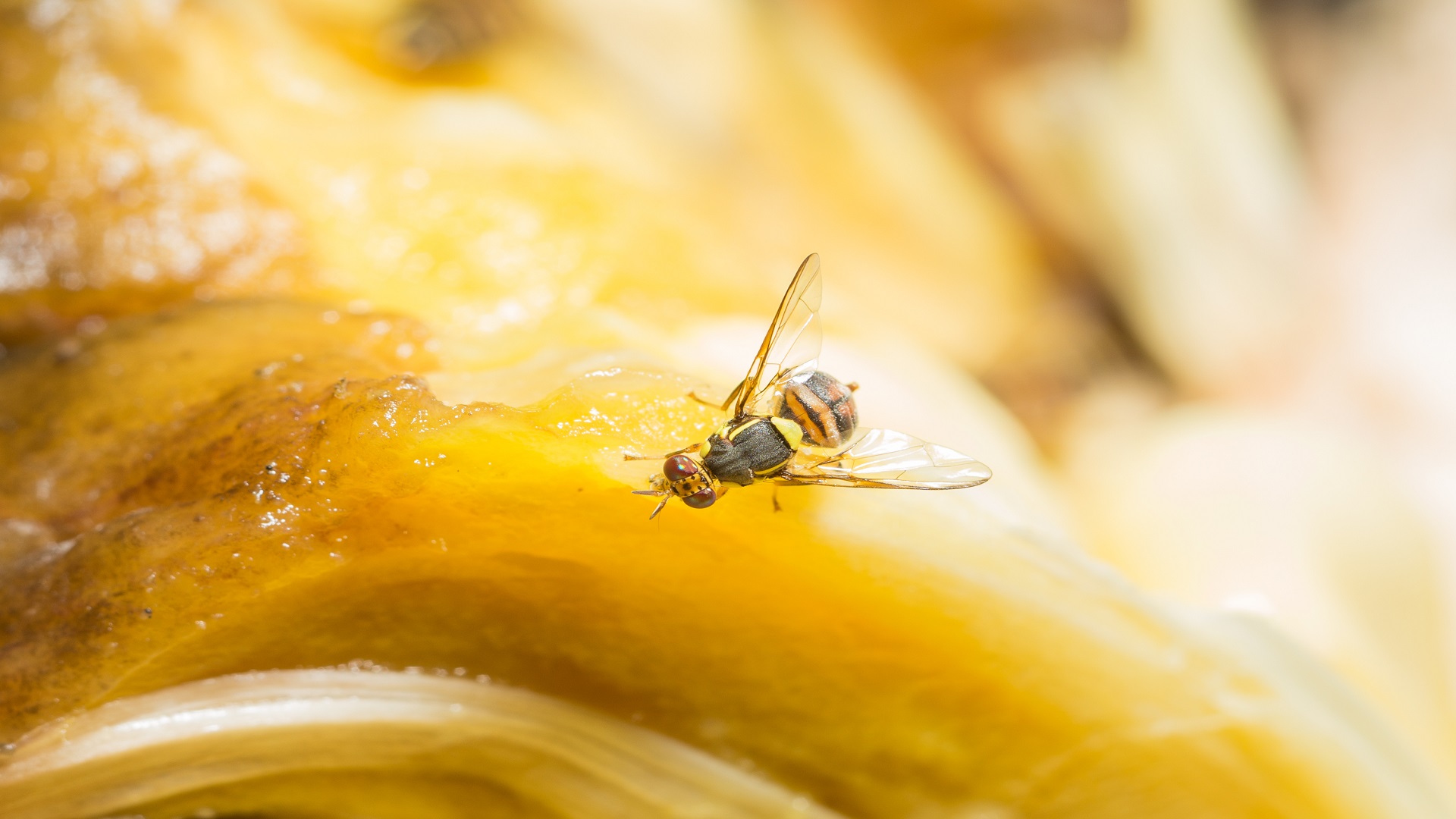
A new study from the University of Tsukuba, Japan, published in Nature, has discovered that peptide hormone Capa regulates calcium in the body fluid of the fruit fly Drosophila melanogaster.

“The team further discovered that Capa is secreted by specific neurons in the cranial nervous system and acts on the apical region of the Malpighian tubules — organs analogous to vertebrate kidneys — to mobilize calcium from “pearl-like calcium granules,” says the University of Tsukuba Research News.

This discovery offers the first evidence that animals without bones contain an endocrine system regulating calcium concentration.

More like this: Natural peptides might guard against COVID-19

Tiny miners clean up our soil

A Chinese research team recently proposed the novel idea that the ground beneath our feet could clean itself.

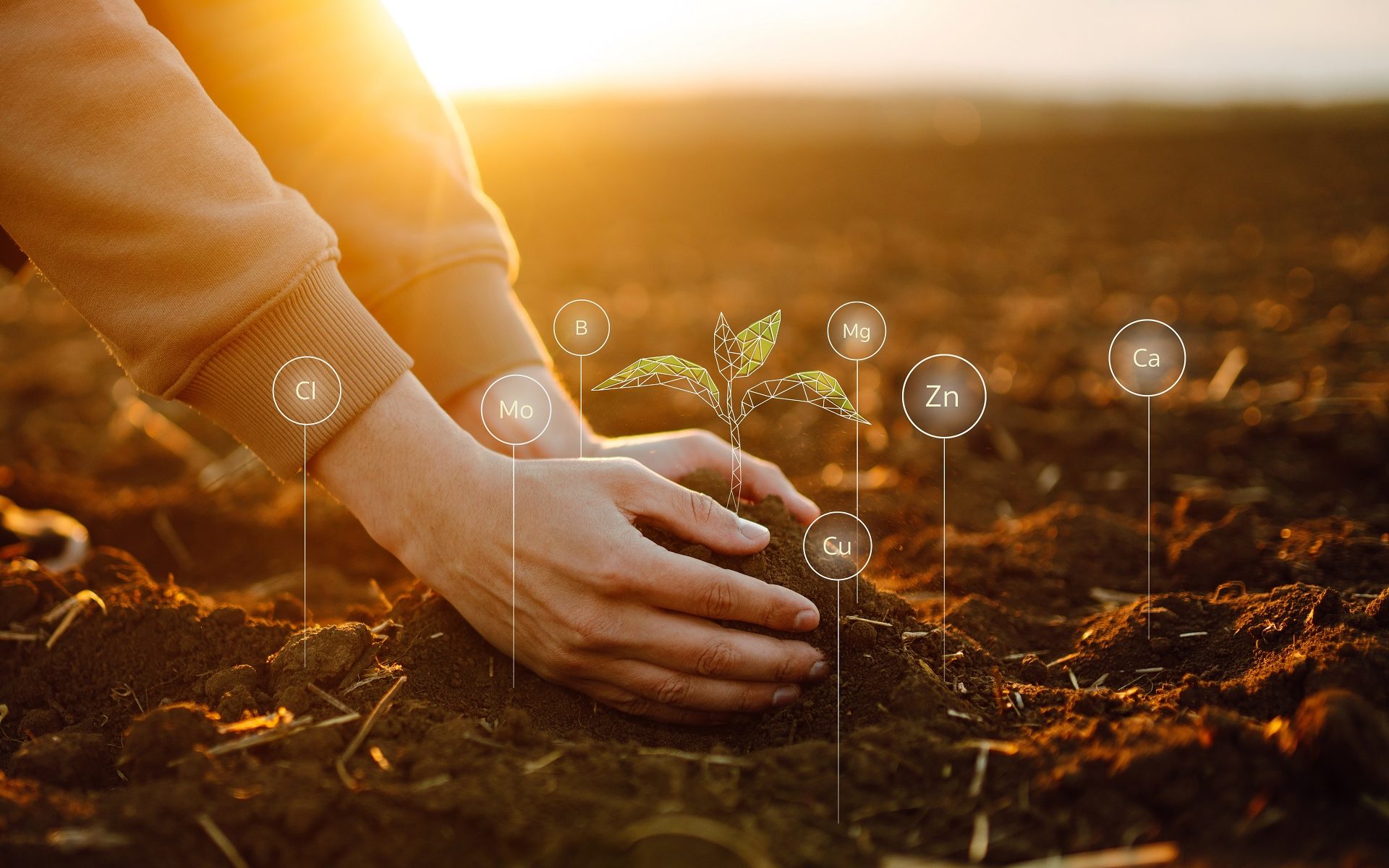
A process called microbial iron mining utilizes microbes that can “breathe” iron. As they do, they switch iron back and forth between its rusty and shiny forms — like a little chemical frolic that captures and modifies pollutants.

The tiny miners can tackle toxic metals like arsenic and lead, chemicals like pesticides and microplastics and excess antibiotics and nutrients that typically pollute waterways.

Most notable is that the soil cleaning is natural. Rather than having to dig up and haul away contaminated soil, scientists can provoke these microbes to do the work while saving energy, protecting ecosystems and recovering valuable resources like rare earth elements.

It’s still early days and the research is still lab based, but it shows promise. The next steps are deciphering how this will work in real-world soil while managing side effects like greenhouse-gas releases.

The research demonstrates how powerful nature can be under the right conditions and was published in Environmental and Biogeochemical Processes.

More like this: Drones help farmers go greener

Of mummies, mice and medical students

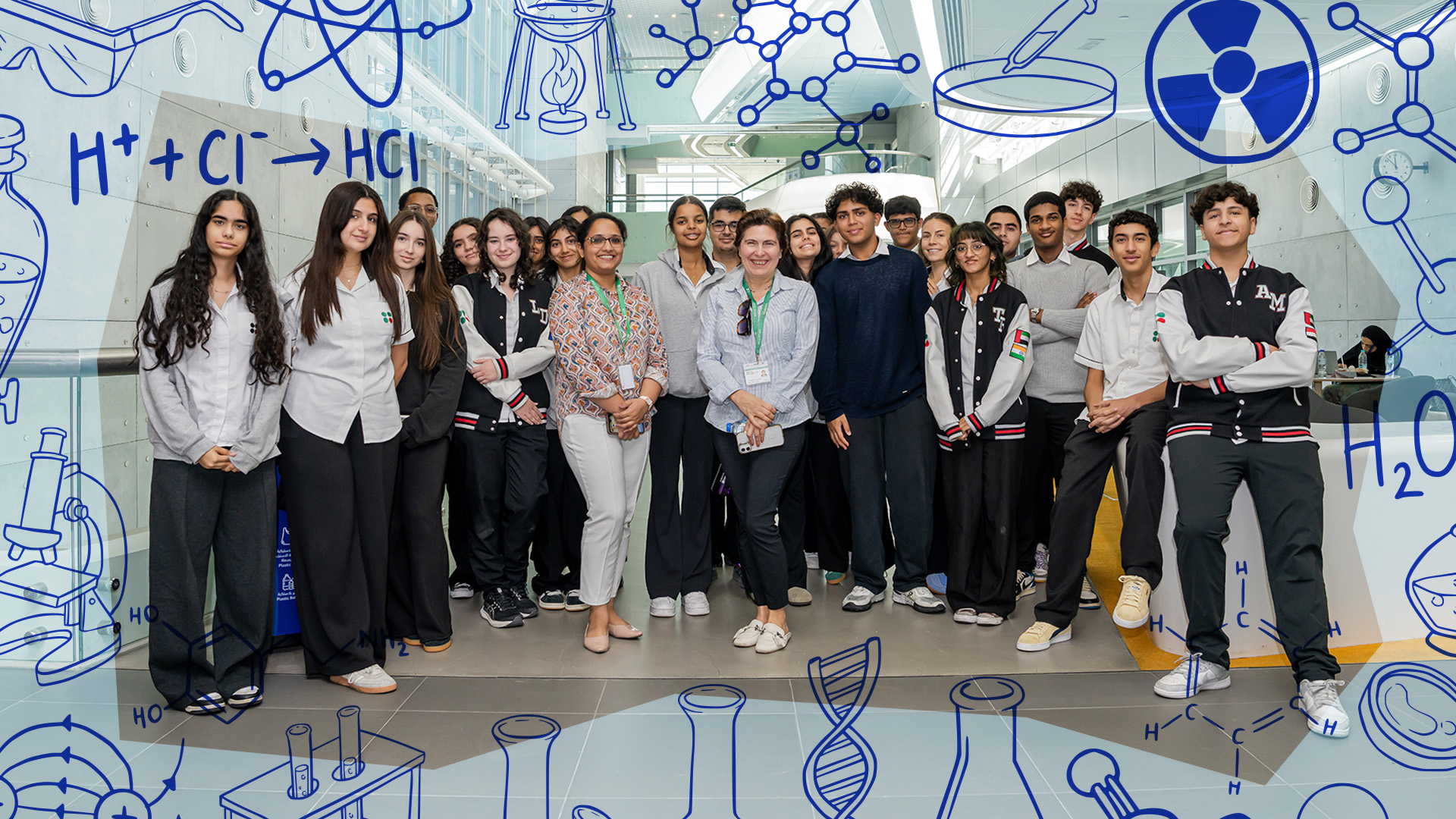
A crew of curious biology and chemistry students recently marched into Khalifa University’s main campus in Abu Dhabi for the science lesson of a lifetime.

IMAGE: Courtesy of UAE Year of Community website


With two packed days meeting med students, seeing how genome sequencing can help diagnose a centuries-old mummy and learning how to anesthetize a mouse, this was a field trip to remember.

The Raha International School, Khalifa City campus students’ bus was met by the academic coordinator of KU’s College of Medicine and Health Sciences, Hibba Samir El-Atar, and members of the KU public outreach team that had orchestrated experiences and welcome packs with their first (but hopefully not their last) lab coats.

“Our primary goal with these outreach programs is to make higher education in STEM fields tangible and accessible. We want to show students the ‘why’ behind the ‘what’ they learn in school. By bringing a piece of the KUST campus experience to them, we hope to plant a seed, showing them the incredible opportunities and dynamic environment that await them at a university like ours,” Khawla Alsaedi, specialist with the KU outreach team, tells KUST Review.


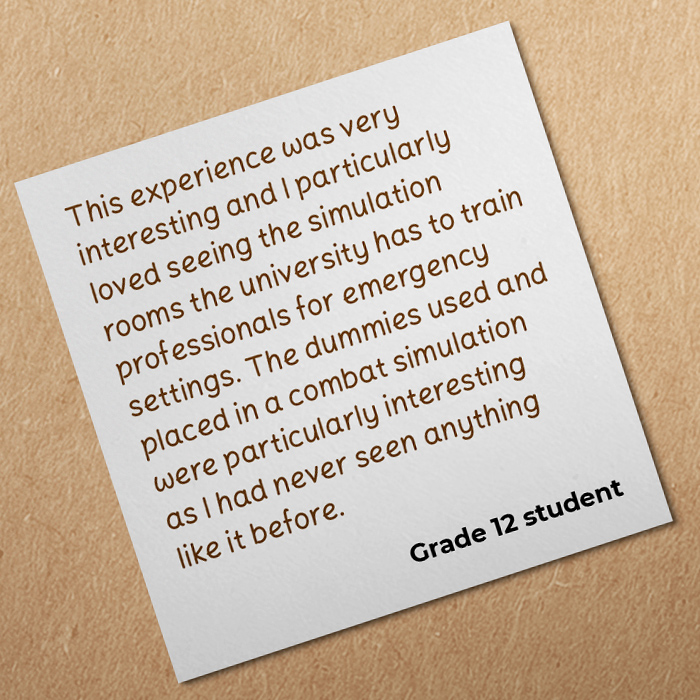
Next, the students visited the KU Experiential Learning and Clinical Simulation Center, where KU students are exposed to life-like situations and advanced imaging technology for an immersive learning experience.

The students, led by Ahmed Khalam Mohamed and his team, observed CPR demos, tried out vital-signs equipment and participated in a clinical-skills workshop.

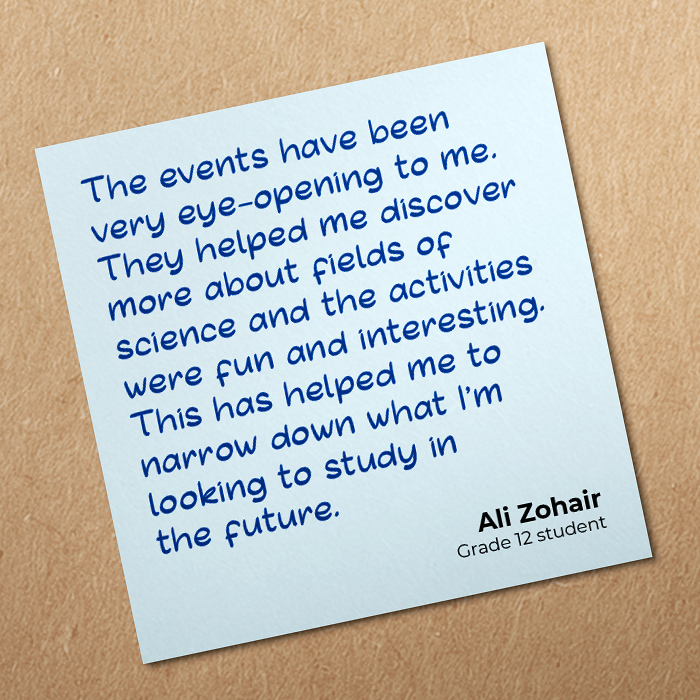
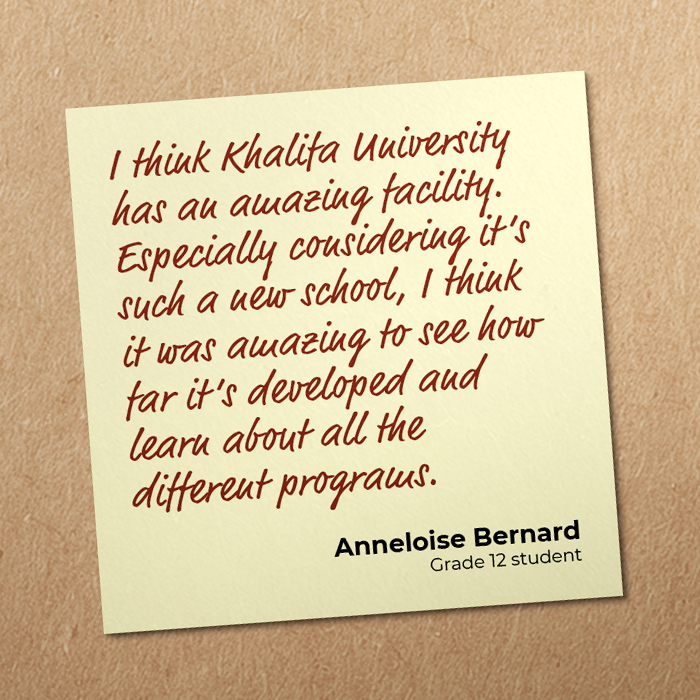
“I got to experience the facilities that I plan on studying in,” says Ali Zoheir, a Grade 12 student and self-proclaimed future plastic surgeon.

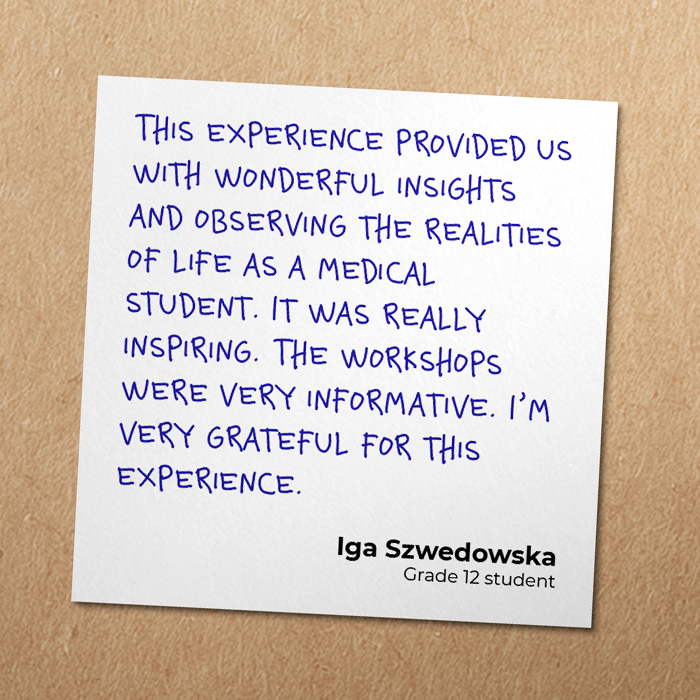
The remainder of the first day was a bit of a dream for potential future docs as they worked with the team from the medical sciences through a real-life case study and spent the final hour with a couple of KU med students, Layth Rafat and Carl Kassab, to find out what it’s really like to live in their lab coats.

The soon-to-be Raha graduates threw questions at the duo and received valuable advice: Take chances, manage your time well and get involved in research right out of the undergrad gate.

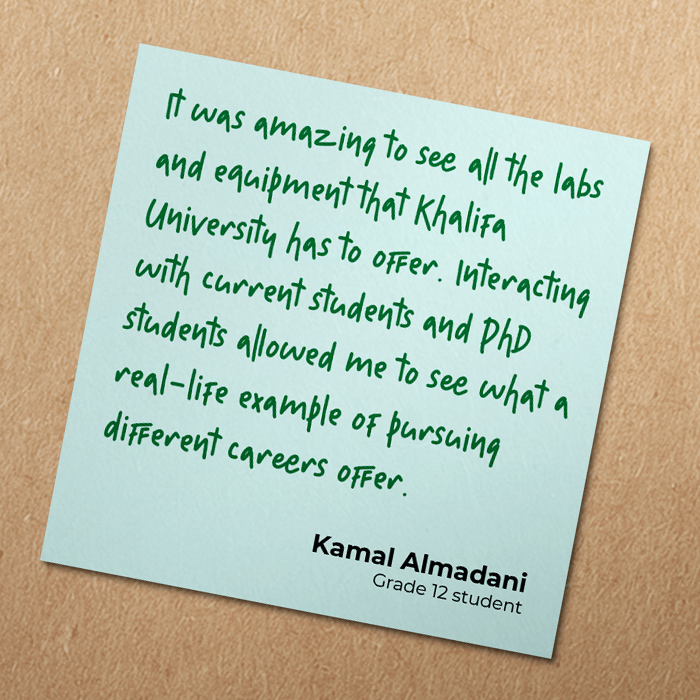
KU lab instructors Trust Nyirenda and Samson Chengetanai and KU faculty member Okobi Ekpo led the students on a guided tour of the anatomy and histology labs.

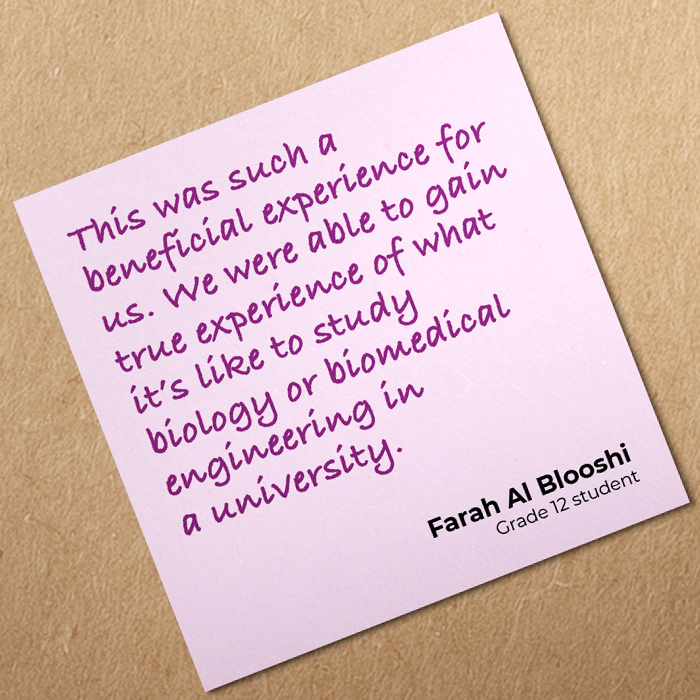
“It was very unconventional for us as (high school) students to be put in such a developed lab,” said Grade 12 student Farah Al Blooshi.


Next came the KU Body Museum tour. The museum opened in 2023 and is a permanent exhibition of dissected human bodies presenting both regional and systems-based anatomy in healthy and diseased adults. It is open to the public and often hosts school tours.


Within its walls the Raha students witnessed what a brain looks like after a stroke; what a person’s internal organs can tell us about their lifestyle and quality of life; the vastness of a fully extracted and intact human nervous system; and much more.

Siobhan O’Sullivan from the Department of Biological Sciences talked about her career path and an Egyptian mummy she studied as an undergraduate to determine the cause of death.

FYI, it was sickle cell anaemia.

O’Sullivan used the DNA extracted from the mummy’s toenails, which sat in a jar on her desk for a time. Gross or super cool? We’re going with cool.

There was more “cool” to come as the students moved on to a talk about what a biomedical engineer does with faculty member Anna-Maria Pappa and a demonstration of medical technology by Rateb Katmah.

They discussed wearable technologies like foot and heart sensors, sleep-pattern monitoring caps and stress-testing tech currently in use.

In the final part of the KU journey, students spent more lab time with Hamdan Hamdan for a talk about neurological conditions like ADHD, autism and Alzheimer’s.

They watched a video of a surgery on a mouse, learned how to anesthetize said mouse and why mice are used in the lab more than other animals (FYI, it’s cheaper and we can increase the testing size).


KU hopes to share these experiences with the Raha Grade 11 class soon and will continue to open its doors to other academic institutions.


“Our DP2 Science students’ visit to Khalifa University was an inspiring and intellectually enriching experience.

The students learned a tremendous amount — from exploring the body museum and how different parts of the body function, how genetic testing is conducted on ancient Egyptian mummies, to understanding how artificial intelligence can be used to personalize medical treatment, to observing how multiple sclerosis is diagnosed and treated, among many other fascinating insights.

“We are deeply grateful for the warmth, guidance, and professionalism shown to us throughout the visit — particularly to Ms. Hibba (Samir El-Atar), who was present and continually sought ways to enrich the experience, and to Ms. Khawla, who accompanied and supported us throughout the two days.

This visit was truly memorable and profoundly educational for our students, and we extend our sincere thanks to everyone who made it possible,” said Margarita Lozinova, secondary chemistry teacher at the Raha, Khalifa City campus.


El-Atar says she very much enjoyed being part of organizing and hosting the visit is thrilled with the outcome and participation from the students and KU team alike, “Seeing everything come together and watching everyone engage so enthusiastically made it all worthwhile. I’m so grateful for the teamwork and support that made the day a success. I am looking forward to many more events like this in the future and welcoming students from schools all over Abu Dhabi.”

More like this: Every splash counts

GIFT FROM
THE SEA

Mangroves provide many benefits for the environment. They store carbon dioxide. They supply habitats for fish and other marine life. And they act as a natural windbreak, protecting the shore from tidal surges.

But what really excites Tiejun Zhang and his team at Khalifa University is the trees’ ability to purify seawater by extracting the salt that enters through their roots.

Purifying seawater is how the UAE gets most of its potable water. The traditional processes of desalination, however, are energy-intensive and create about 141.5 million cubic meters of brine a day around the world. This waste material can damage the environment if it’s pumped back into the sea or brought onshore.

Zhang’s bioinspired artificial mangrove, however, could be the inexpensive breakthrough a thirsty world needs.

The process is simple, Zhang says, and it’s powered entirely by the heat of the sun.

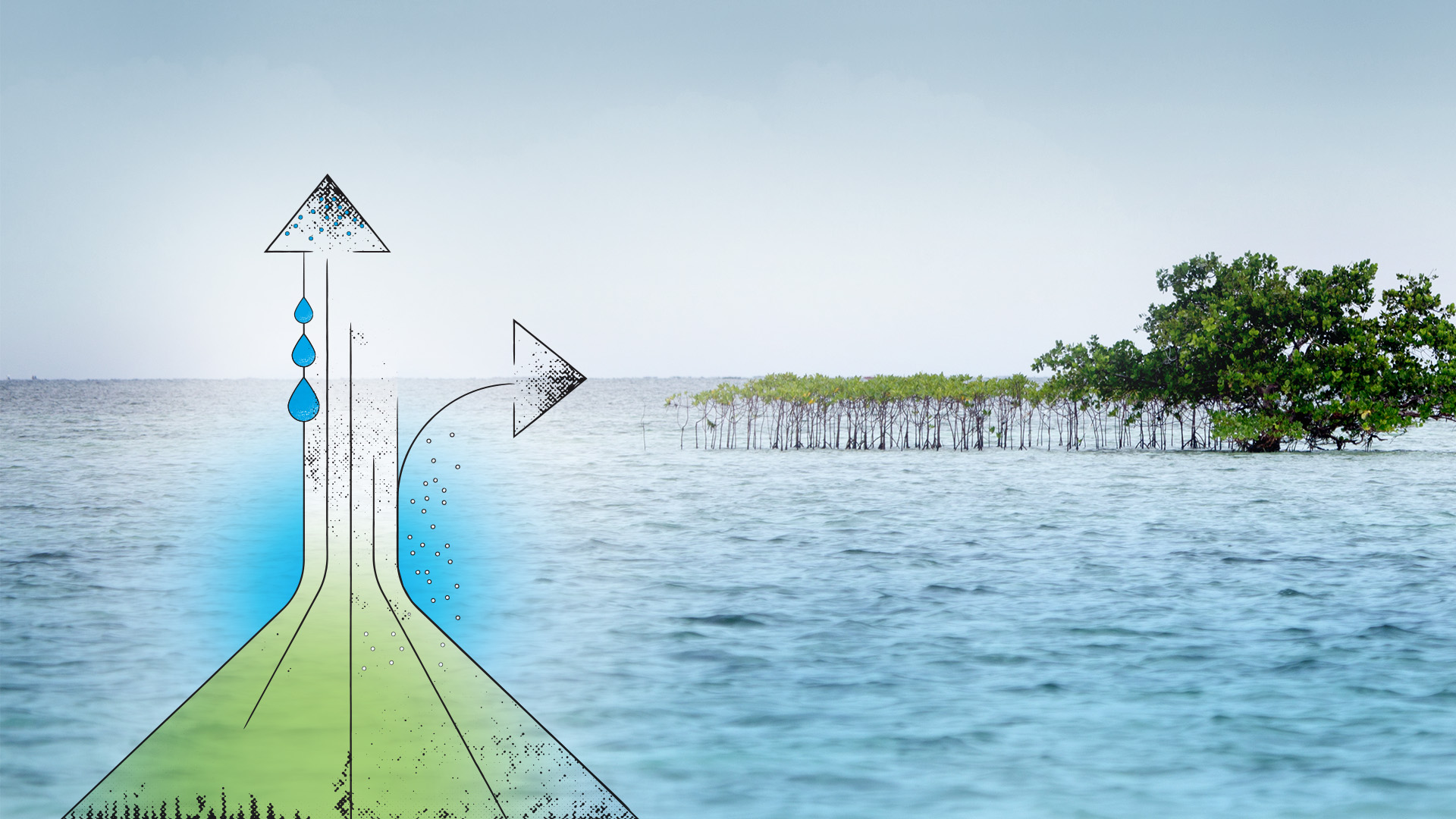
The sun’s heat draws liquid up through a nanostructured titanium mesh using passive capillary action. The salt separates from the water and precipitates on “leaves,” then at night falls onto the floating foam disc that keeps the device upright in water. The process collects about 2.2 liters/m2 of water a day.


The initial device is small, but we can make it much bigger depending on how much water you need.

Tiejun Zhang, department of engineering at Khalifa University


As a bonus, the researchers are investigating how the collected salt could be separated and used for other purposes.

“Sodium chloride is edible,” he says. “Calcium chloride, magnesium chloride, those are more for industrial processes. Our current technology proves that we can collect the salt. If we pull everything in a mixture, it’s not very valuable. If we can separate (the salts), refine them, and make them pure, then that would be very valuable.”

Zhang thinks the device might eventually be able to draw other valuable materials from seawater, even lithium.

But the applications aren’t just industrial, he says, pointing out that the device is small enough to carry in a backpack. Hikers and people who live off-grid might be able to use the artificial mangroves to purify water for personal use.

And the simple design, featuring titanium mesh and chemical etching to create a nano structure, makes it easily reproducible.

“A high school student could make it,” Zhang says. In the meantime, Zhang and his team are investigating start-up opportunities.

More like this: Vertical farms and 3D-printed reefs part of UAE’s plans for food security

Say ‘ahhh’

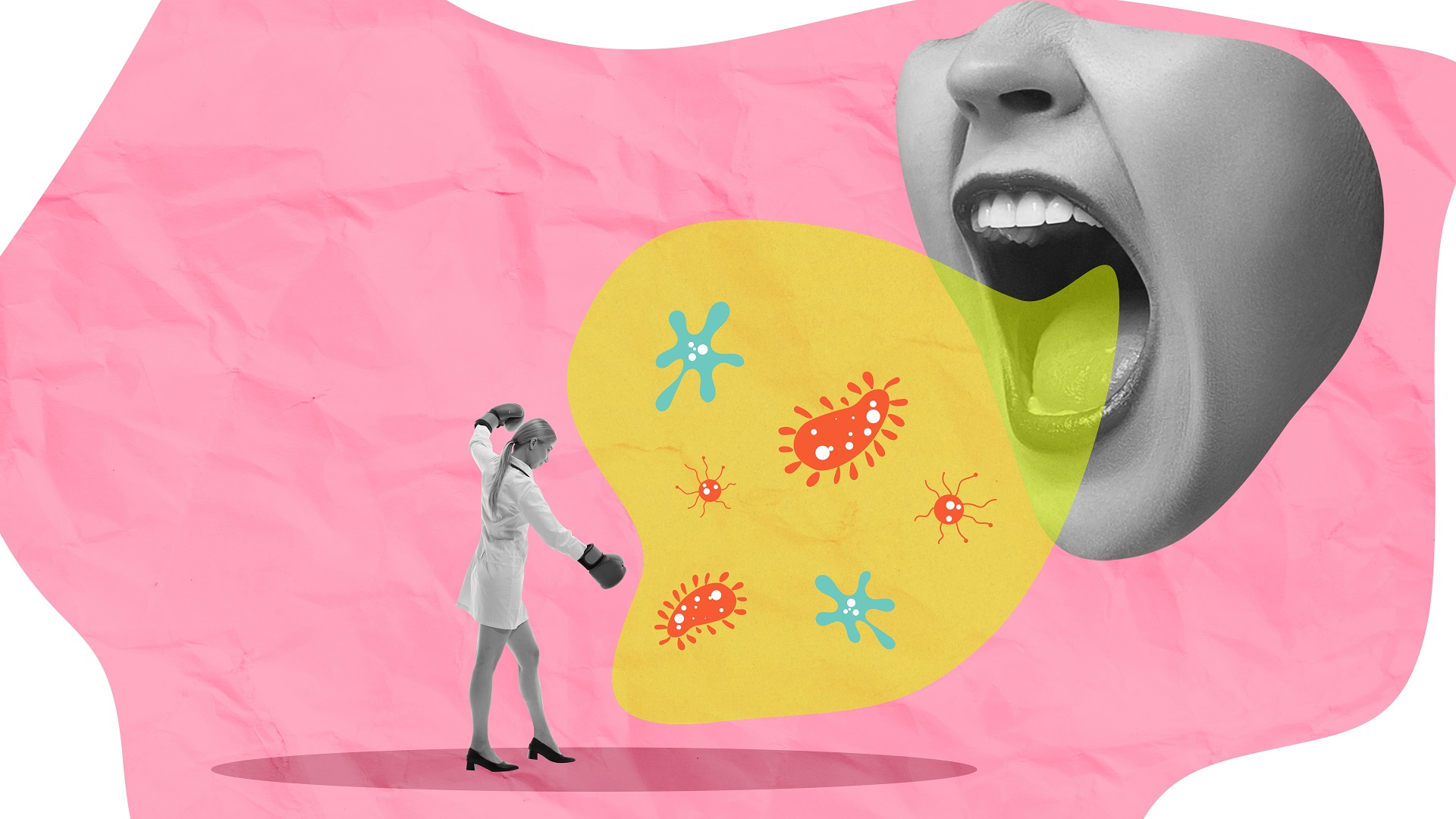
When the doctor tells you to stick out your tongue and say “ahhh,” he’s usually using a tongue depressor to move it out of the way to get a look at your throat. But the look of the tongue itself can tell a physician a lot about a person’s overall health, and now thermal imaging and AI are joining the tongue-diagnosis game that’s been around for centuries.

Traditional Chinese Medicine, or TCM, has been using the tongue as a diagnostic tool for at least 3,000 years.

It observes three tongue criteria to reveal our health: color, shape and type of coating covering the surface. For example, a healthy tongue would be some shade of pink but if it’s dark red, it might indicate sleep issues or anxiety, and a bluish tinge could indicate poor circulation.

While TCM uses the tongue as a main diagnostic tool, Western medicine might observe the tongue’s condition alongside many other indicators, like medical history and lab results.

This “gap” between the two, however, is nearing bridge status as technology develops — thermal imaging and AI-powered tools in particular.

A team of researchers recently introduced an AI health detector tool designed for TCM using thermal radiation image recognition and showcasing the seamless integration of human computer interaction (HCI) principles into health-care applications.


Infrared thermography captures detailed tongue images and records tongue-heat distribution to create thermal images that represent temperature variations.

The team says its portable, hand-held thermal radiation diagnostic tool, integrated with HCI, and created in collaboration with TCM practitioners, sets their research apart.

The dental mark tongue recognition model, using DenseNet T algorithm architecture, resulted in an average accuracy of 25 percent higher than other dentate tongue-recognition models that are designed to standardize and automate traditional Chinese medicine tongue diagnostics.

Another recent advance in tongue diagnosis leans on AI and machine learning for results.

A paper, published in Technologies, presents a new computer vision system that analyzes tongue color changes, offering potential for real-time diagnosis.

These analyses and machine learning predict health conditions with an accuracy exceeding 98 percent.

The researchers used a webcam to capture images in real time of both sick and healthy individuals and were able to differentiate between them simply by tongue color.

The system applies six machine learning algorithms to classify tongue images under a variety of lighting conditions.

“There have been studies where people tried to (diagnose via tongue color) without a controlled lighting environment, but the color is very subjective,” says co-author Javaan Chahl of the University of Australia.

The model was trained on more than 5,000 images across seven color classes. The results show that AI systems for tongue diagnosis are accurate, efficient, cost-effective and non-invasive. This is particularly important in areas with minimal access to health care, addressing the impact of lighting on the colors of the tongue, a key challenge for tongue diagnosis.

So, the next time you’re looking in the mirror, make sure to observe the conditions of your tongue and see what might be a little out of the ordinary. Sticking out your tongue at yourself might just be the key to preventing health issues.

More like this: How often you breathe could help detect Alzheimer’s