


Initiative safeguards health in the UAE while making the nation
a global leader in precision medicine ›››
Space News
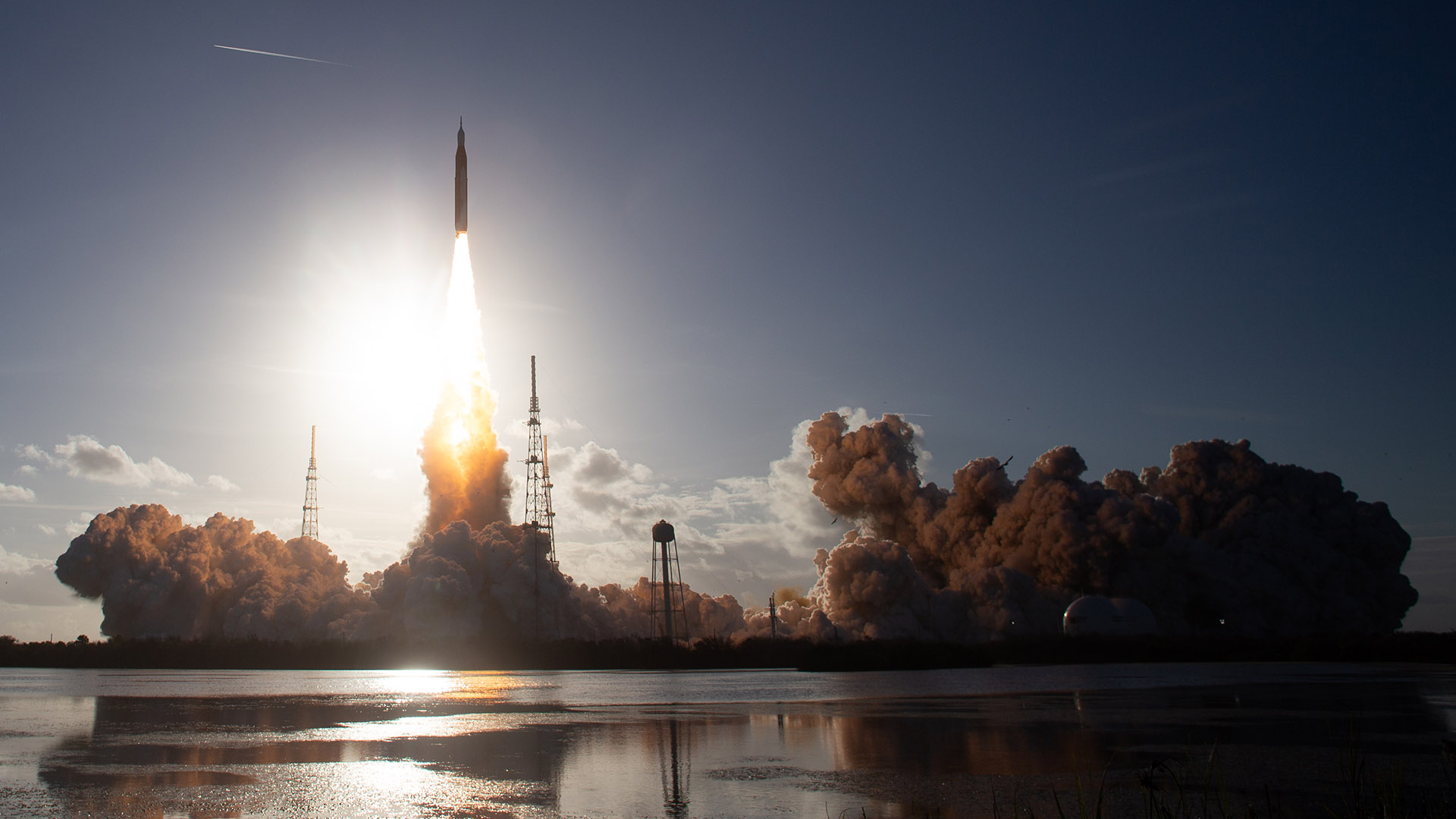
After more than 50 years, NASA aims to return humans to the moon with the April 1 launch of the Artemis II mission.
The last mission to land astronauts on the moon took place in December 1972 and was about planting a flag on the moon. So, what’s the difference this time?
NASA has bigger plans.
The Artemis program started with the 2022 launch of Artemis I, an unmanned flight test of NASA’s latest deep-space exploration systems. These include the Orion capsule — the vehicle that will launch from the Space Launch System (SLS) and sustain the mission crew. The mission lasted 25 days.
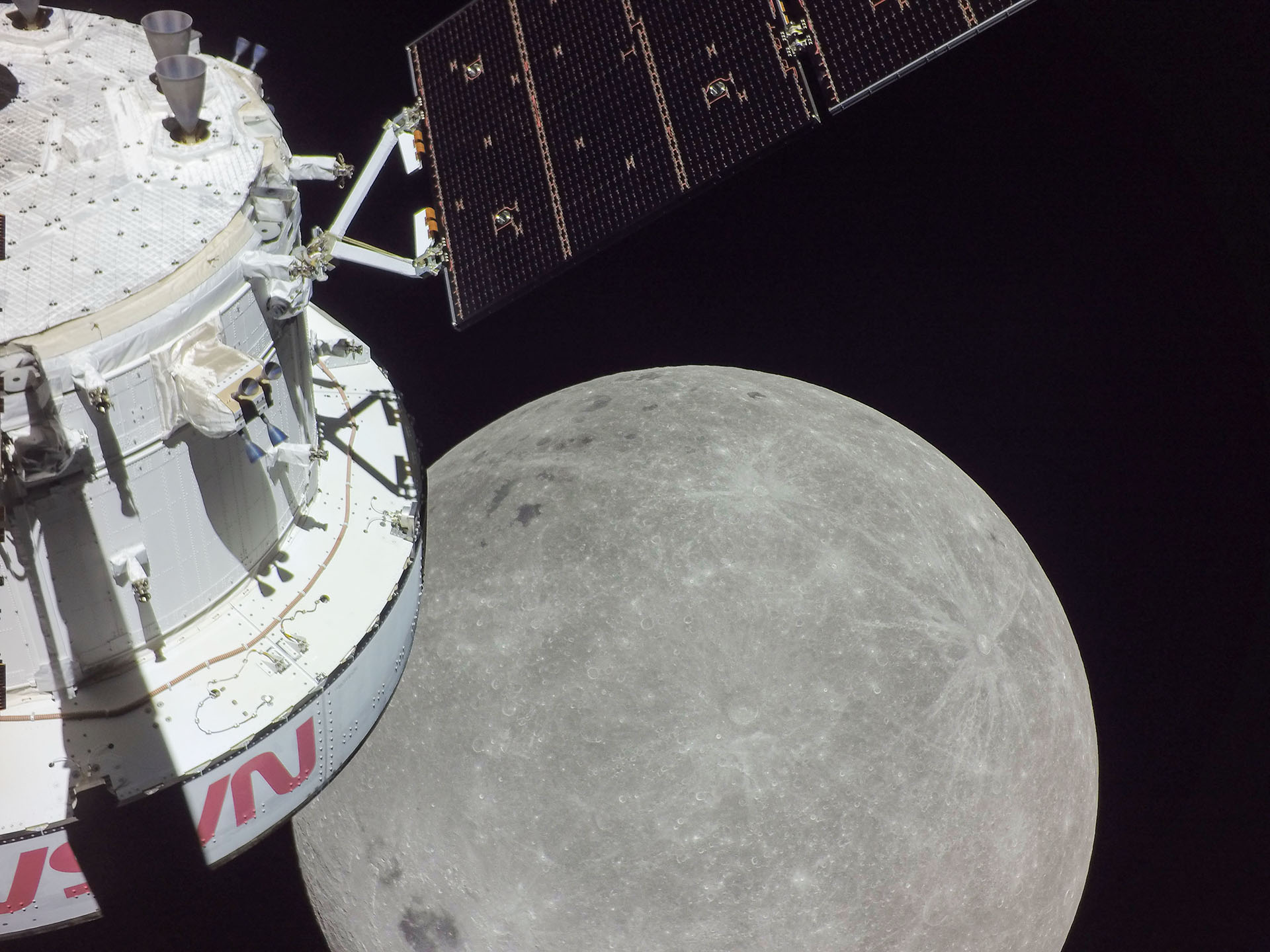 CAPTION: A portion of the far side of the moon looms large just beyond Orion in this image taken on the sixth day of the Artemis I mission by a camera on the tip of one of Orion’s solar array wings. IMAGE: NASA
Artemis II is the first manned part of the mission. A four-person crew – commander Reid Wiseman, pilot Victor Glover, mission specialist Christina Koch and mission specialist Jeremy Hansen – are on a 10-day trip that will circle the moon and return to Earth.
The Artemis II mission is critical because, according to NASA, it will “confirm the spacecraft’s systems operate as designed with crew aboard in the actual environment of deep space.”
 CAPTION: From right: NASA astronauts Reid Wiseman, commander; Christina Koch, mission specialist; Victor Glover, pilot; and Canadian Space Agency astronaut Jeremy Hansen, mission specialist, wave to family and friends. IMAGE: NASA
Tests for the Orion capsule team include: life-support environment; systems from ground to launch; flight and recovery; retrieval of flight hardware and data; emergency operations, including systems capabilities, abort operations and rescue processes; and finally verifying subsystems and validating data.
Artemis III is intended to test meeting and docking capabilities between the Orion capsule and commercial spacecraft from SpaceX, Blue Origin or both, required for landing boots on the moon. This mission will occur in low-Earth orbit.
The fourth Artemis mission is targeted for early 2028 and is expected to be the program’s first lunar landing. Once the craft is within lunar orbit, two astronauts will head down to the surface for a week of exploring close to the moon’s south pole.
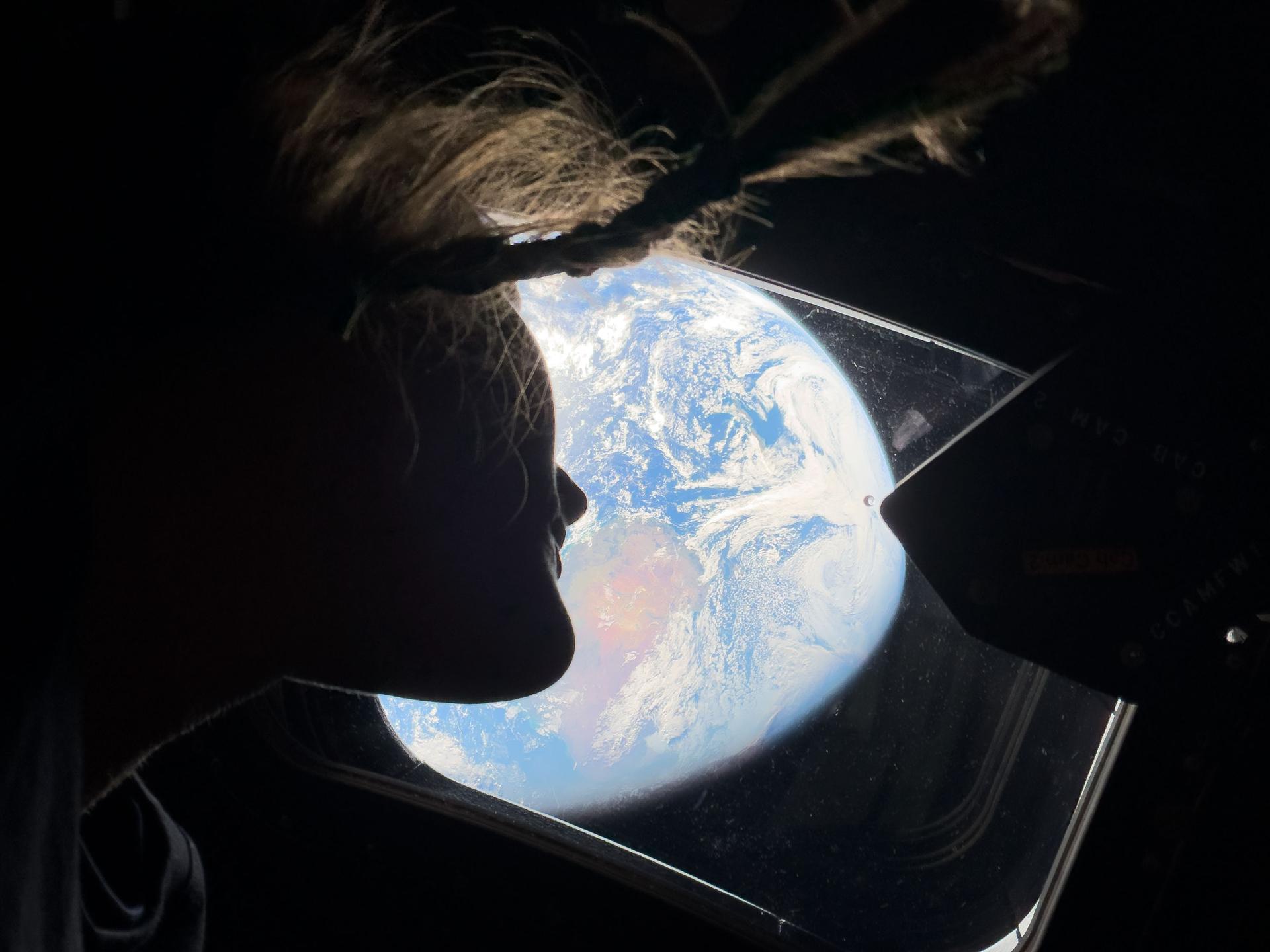 CAPTION: NASA IMAGE: Christina Koch peers out of one of the Orion spacecraft’s main cabin windows, looking back at Earth, as the crew travels toward the moon.
Artemis V is set for late 2028, landing another two crew members on the moon to begin constructing a lunar base for longer-term science missions.
After this final journey, missions are intended to occur approximately once a year.
The established lunar base will serve as a steppingstone for deeper space exploration, ultimately intent on sending crews to Mars.
Though this is an American mission, remember NASA’s motto: “For the benefit of all.” Space exploration has the unique ability to bring nations together, as countries collaborate in the shared pursuit of discovery, innovation and an enhanced comprehension of our place in the universe.
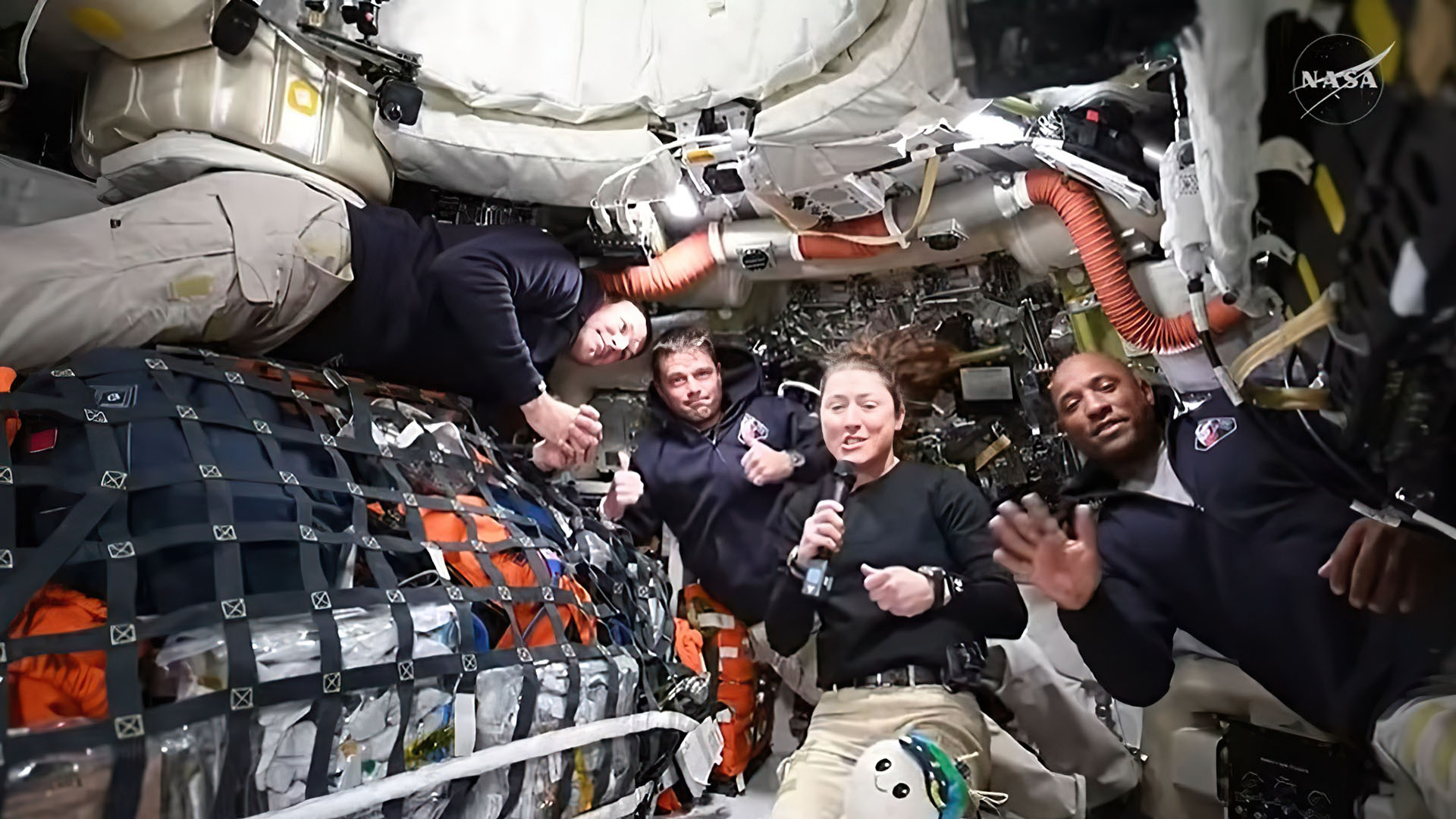 CAPTION: Artemis II crew members Jeremy Hansen, Reid Wiseman, Christina Koch and Victor Glover answer questions from reporters during the first downlink event of their mission. IMAGE: NASA
From onboard the Orion capsule, looking back at the Earth, mission pilot Glover says, “Trust us, you look amazing, you look beautiful, and from up here you look like one thing. Homo sapiens are all of us; no matter where you’re from or what you look like, we’re all one people.”
After traveling a record-breaking 252,760 miles from Earth (within 4,006 miles from the moon’s surface), the Artemis II crew is expected to splash down April 10 in the Pacific Ocean, likely off the California coast near San Diego.
More like this: Mining the moon
Get the latest articles, news and other updates from Khalifa University Science and Tech Review magazine