



Workers in the 1970s fields paved the way for sustainability›››
General Science
F
ill a room with hundreds of pinned butterflies, and most people can admire the colors and patterns and leave having had their fill of beauty. But explaining how these patterns emerge, why butterfly wings have such luster and variability and how a species has evolved requires more thought.
Museums and science centers need to carefully consider how to get this information across to people from all backgrounds. That’s where things can get tricky.
“What are museums for?” Asks the UNESCO International Council of Museums’ Running a Museum: A Practical Handbook. “What is the purpose of all the efforts in collecting, restoring and displaying objects? It is certainly not merely an occupational therapy for curators or those who do research in the field. It is also not only about the pride in representing the culture of a nation or of the world’s common heritage.
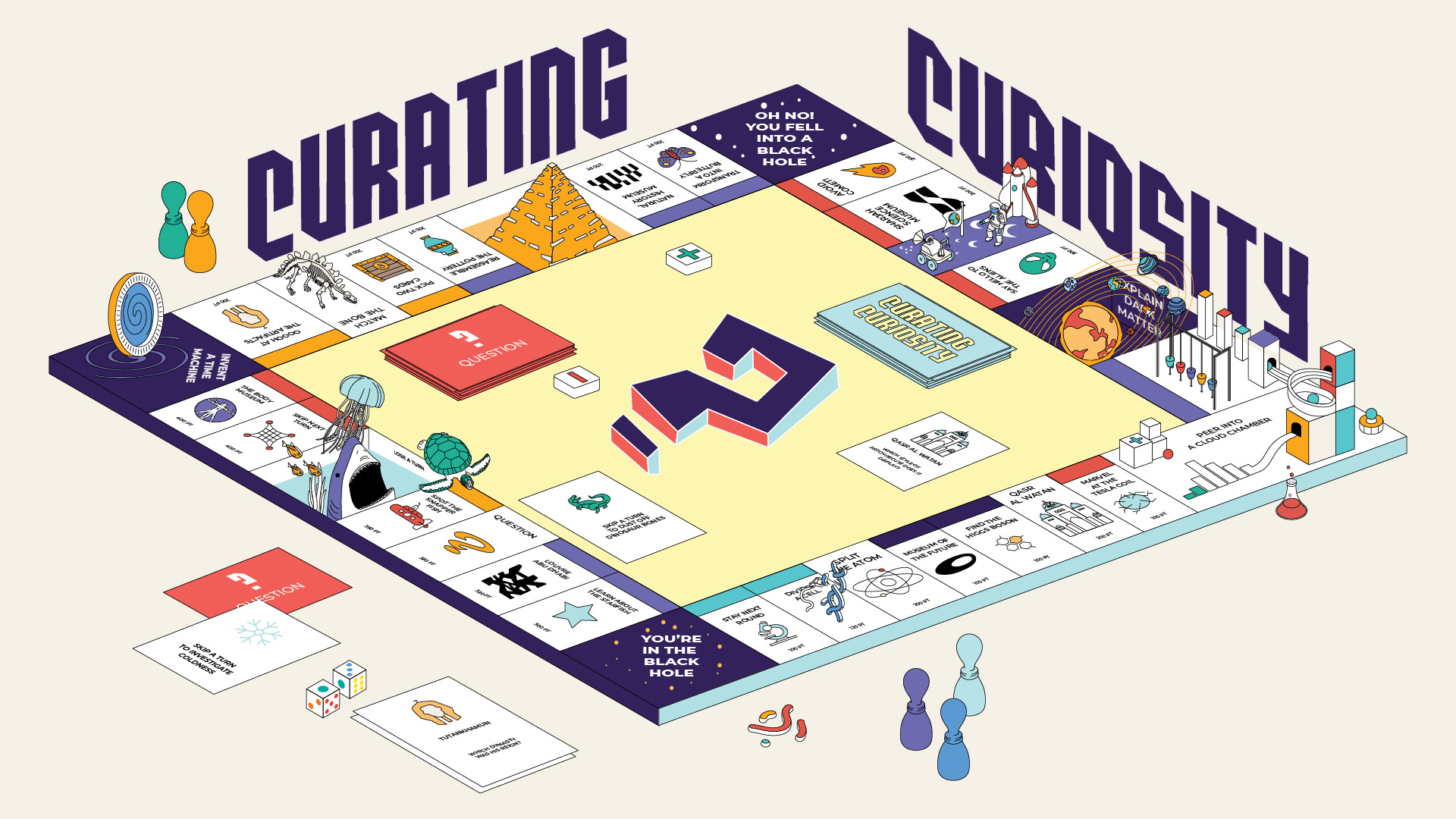
 Illustration: Adjad Design
In fact, this is undertaken in order to make the museum’s knowledge and collections known to the public, to people of all ages and backgrounds, and to let them participate in knowledge and culture.”
In 2012, an extensive study completed by The Museum Group noted that, “Museums, with their real artifacts, dioramas and immersive exhibitions provide a uniquely positive environment to foster learning by young children.” While the study cites children as an example, visiting an environment with a vast collection of stories and artifacts from many cultures can enrich the minds of any age.
“Learning suffuses almost every moment of our daily lives,” writes David Anderson in a 2021 report to the U.K. Department for Culture, Media and Sport.
In A Common Wealth: Museums in the Learning Age, he calls museums “universal educational institutions of immense expressive power and authority” and says they play a crucial role as public learning centers in fostering the skills of children and adults. The writers of the UNESCO International Council of Museums’ handbook agree: “Continuing education for people of all ages … can take place in museums. Education should be regarded as one of the main goals in the museum’s policy.”
Paige Brown Jarreau, a Ph.D. in biomedical engineering, realized she loved communicating about her research just as much as (or more than) working at the lab bench. Since 2011, she’s maintained the blog From the Lab Bench and advocates for science communication.
Brown Jarreau says science museums are an “incredibly valuable” resource for public education and engagement: “Let’s face it,” she says, “there aren’t many instances of high school students and members of the general public walking into science labs on university campuses to experience science in action. But in the museum environment, museumgoers can interact with live exhibits and gaze into glass laboratories where scientists are dusting off dinosaur bones, extracting DNA from leafhopper insects, and remotely tracking bird migration across the continent.”
Museums are education institutions in their own right, offering engagement through experience, and, crucially, open to all.
John Falk, professor of science education at Oregon State University, explains the role of the science museum in providing educational opportunities in the United States in particular: “There is a growing appreciation that Americans learn most of what they know about science outside of school. Institutions like science museums can play an important part in that.”
Jasper Green is the author of Powerful Ideas of Science and How to Teach Them. He’s a former British school teacher and while his techniques are mainly developed for children, they are relevant to anyone entering a museum environment: “Scientific ideas are powerful ideas because they give people powerful ways of seeing the world that are dramatically different from their everyday experiences.
But this scientific perspective involves more than just a knowledge of the facts of science. It also requires people to understand how these scientific ideas became established in the first place. It is through understanding the relationship between the scientific ideas and the nature of science that students come to appreciate science as a discipline of inquiry, which enables them to ask and answer questions of the world such as where humans come from, why there isn’t yet a cure for cancer and why coldness doesn’t exist.”
Most adults know where humans come from, but it’s hardly unusual to wonder why we still don’t have a cure for cancer despite all the research and knowledge. The fact that there’s no such thing as coldness would also appear counterintuitive to even the most rational adult: We feel cold, how can it not exist?
 IMAGE: Anas Albounni
Daniël van Tonder and the team that designed the Body Museum at Khalifa University had an unusual challenge: Make the plastinated displays of real human bodies and body parts accessible while honoring the donors’ dignity. Read more›››
Depending on the viewer, it could be “walking either into a horror house or into a fantastic body exploration,” van Tonder says.
In the end, the team chose to use simple language suitable for school groups, curious community members or visiting medical students explaining the systems that work together to support human life and let the bodies speak for themselves.
“I think the main message is just to know what’s going on and how to care for (the body) and make you more aware that you need to pay attention to these individual structures,” van Tonder says.
Details: bodymuseum.ku.ac.ae/
By: Suzanne Condie Lambert‹‹‹ Read less
“Scientific ideas and practices are radically different from intuitive, everyday thinking,” Green says. “And that means they can be hard to learn and tricky to teach.”
Margherita Sani, a project coordinator at the Network of European Museum Organisations, says accessibility is a multifaceted concept with many dimensions: “In all cases, museums should be aware of the circumstances that impede people’s participation and the full enjoyment of their collections and should make an effort to remove them, in order to promote equal access to all.”
By considering the general public a key audience, researchers can generate more enthusiasm, trust and even funding for science. Science Museum Group U.K. encompasses six of the largest museums in the United Kingdom. Central to all of them, says Beth Hawkins from Science Museum Group U.K., is helping people see that science is not just for scientists.
“We show how science is relevant and valuable for everyday life and make links between people and science. Our museums reveal stories of passion, imagination and creativity of the people who have shaped the world we live in. Visitors can explore the social impact of science and technology through the experiences and emotions of the innovators and the users and see the breadth and diversity of the people who use science in their work and everyday lives.”
Blogger Brown Jarreau also thinks this is an opportunity for science museums to aim beyond just education to citizen-science programs:
“While it’s great for scientists to be able to leave jargon behind and talk to the public, I think this should be only the beginning of museum efforts to engage the public in science. Interactive museum exhibits and citizen-science projects, where community members are encouraged, for example, to bring in samples from their backgrounds for museum scientists to analyze, get a bit closer to the goals I think science centers should have in mind.”
“There are many different reasons why museums and science centers are such great places for engaging people with science,” Hawkins says. Beth Hawkins from Science Museum Group U.K. “With awe-inspiring authentic objects, cutting-edge science stories, and hands-on experiences, our museums celebrate and connect the past, present and future of science and technology. By presenting science content in surprising and imaginative ways, our experiences expose new perspectives of science and technology to inspire all our audiences.”
Everyone has the right freely to participate in the cultural life of the community, to enjoy the arts and to share in scientific advancement and its benefits.
– Article 27, Declaration of Human Rights
The surprising and the imaginative are tools of the trade for Geoff Thatcher, who designs and develops experiences for museums and attractions around the world. In the UAE he and his team have developed concepts for Qasr al Watan, a palace turned museum, and the Warner Bros. World theme park.
For Thatcher, it’s all about transforming science into an experience.
“The best science experiences are all based on simple ideas and simple stories that help you connect with science in a fun way,” he tells KUST Review. “There’s no place for a traditional, dry approach to education these days. In fact, there’s never been a place for it! Think of the best teacher you ever had: They make learning more interesting and that hasn’t changed. Is there a place for artifacts? Sure — they’re wonderful! I want to see artifacts! But we have to figure out ways to make it more interesting. The content may be very dry and academic but it’s all in the way you present it. One of the most powerful things you can do is surprise people.”
“Too often, text for panels, labels and captions are written by specialists for specialists, overestimating the basic knowledge of the general public,” says the European museums group’s Sani. “Interpretation doesn’t only mean writing in clear, simple language, using an appropriate font and easy-to-read colors. It also means developing a narrative which tells about the culture that produced the objects, the contexts from which they originate, and their meaning in contemporary societies.”
This is Thatcher’s main point too: “In designing any exhibit, we have to figure out the story,” he says. “We have to simplify science into a story and then turn that into a physical attraction. He offers the example of the Al Ain Zoo in Abu Dhabi, saying the most important thing to consider is “the enduring idea that the zoo is based upon.” For the people working at Al Ain Zoo, that enduring idea was conservation. “We simplified the story of the Al Ain Zoo down to one word: family,” Thatcher says. “That doesn’t sound very science-y, but conservation is part of the family heritage in the UAE.
Conservation is part of the legacy and families in harmony thrive just as nature in harmony thrives. From there, we just started brainstorming. You want to find a story, an emotional takeaway, and then transform it into an experience and understanding.”
We simplified the story of the Al Ain Zoo down to one word: family. Conservation is part of the family heritage in the UAE. Conservation is part of the legacy and families in harmony thrive just as nature in harmony thrives.
– Geoff Thatcher, founder of Creative Principals
Thatcher talks about an exhibit he put together to teach energy-conservation principles. To make sure people — especially children — were able to engage with the concepts, he installed a mini golf course where each hole taught a different principle:
“Yes, you could play a round of mini golf and not learn anything, but the goal was that a child would be playing with somebody, and as they’re playing, we’re fostering conversation around science. When designing an experience, I do it with the mindset that I am providing an educator — a teacher, curator, volunteer, parent figure, big sister — with a tool that can help them teach. The best education happens face-to-face, and the very best education happens when a parent talks to their child in a museum exhibit about what they’ve just experienced.”
Thatcher wants to provide tools to teach in all his displays and exhibits, not just lessons.
“Think of the Tesla coil installed in many a science museum around the world,” he says. “A Tesla coil is just a light show, it’s just special effects, and you could put that to music and it would be no different to going to a rock concert: You’d learn nothing. But we provide these tools for educators to use that experience to teach.”
Monica Metzler, executive director of the Illinois Science Council, says when communicating science, few researchers speak about their actual research — this level of detail is too much for most audiences:
 IMAGE: Abjad Design
Here she’s recalling a time when a researcher who studies depression gave a public talk about happiness, in part because people are more likely to come to an uplifting talk.
Thatcher laughs at the idea of dumbing it down: “Why is that a bad thing? We all have a different level of education — it’s not a bad thing to dumb down science so I can understand it, so a child can understand it.”
“Sometimes, communicating science means zooming out to get to the right level, and sometimes it means talking about a different subject entirely.”
Metzler also recommends not worrying about “dumbing science down”: “All people — from mechanics to hairdressers — simplify their messages to get points across. It does not degrade science to do this,” she says.
And as Thatcher points out, “dumbing down science works if it sparks curiosity.”
“The holy grail of science museums is not to provide someone all the knowledge they need, but to inspire them, to become a launching point,” says Oregon State’s Falk.
Thatcher wants the experience of his exhibits to persist long after you’ve left the museum: “My goal is at dinner, or in the car on the way home, you’re still talking about what you’ve experienced. We want people to be curious, we want them to explore, we want them to be surprised.”
For Hawkins, from Science Museum Group U.K., museums are great places for science engagement because the best exhibits encourage people to talk science:
“We design our experiences to get visitors talking, to share their ideas and opinions about science with us and each other, in and beyond our museums.
We invite our visitors to tell us their own ‘science stories’ from their lives and local communities. By helping more people to see that museums are places where they feel welcome and can enjoy themselves, we hope will promote a lifelong connection with science and culture.”
Tilly Blythe, head of collections and principal curator at the Science Museum U.K., gets the last word:
“Science is embedded in the world around us, and only by seeing science as part of our broader culture can we begin to understand and interpret it in the rich and multifaceted way it deserves.”
More like this: Keep calm and camel on
Get the latest articles, news and other updates from Khalifa University Science and Tech Review magazine