


Workers in the 1970s fields paved the way for sustainability›››
Natural Science
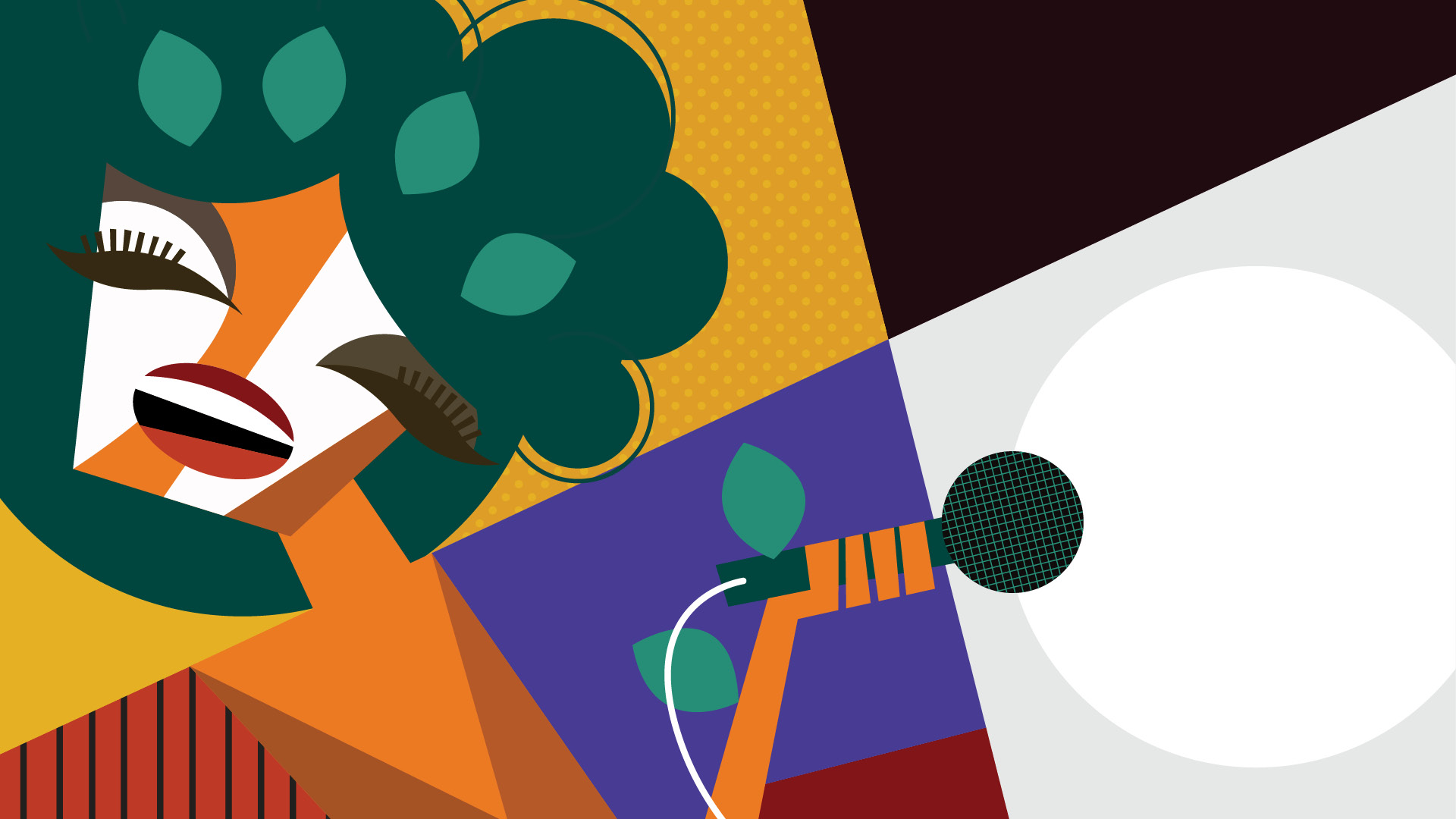
Australian-born musician, composer and Fulbright Scholar Sam Nester has made a career for himself collaborating with scientists to turn natural patterns into sound.
He spoke with us about that work, which includes a residency with a U.S. National Park in Hawaii making music from earthquakes; using lie-detector-style technology to “listen” to plants; and, more recently, two projects as an artist-in-residence with New York University Abu Dhabi creating sound art from DNA and the Arabian Gulf’s coral reefs.
Nester and KUST Review started out talking about a project with a big purse and creative freedom. “That’s the dream of every artist,” Nester says.
Sometimes. I get that more and more now. Sometimes it’s, “Here’s some money, we want you to do something.”
And there’s other times where it’s like, “We want this thing and let’s work on it together,” so there’s already a basis for something.
And sometimes, like in Abu Dhabi, they say, “Here is what we do, what we research, what we study, the things that interest us, and you come in and do whatever it is you want to do. Hopefully some of that will be together.”
The genome thing (“Transposon”) is one of two big projects that we worked on. The other is to do with coral reefs in the Arabian Gulf. Right now I have a hydrophone – an underwater device with microphones – in the Arabian Gulf recording the soundscapes of the coral reefs. John Burt, a very well-known marine biologist, and I have started what is essentially the first soundscape study in the region.
 IMAGE: Abjad Design
We record the sound of those coral reefs and how the acoustics of them change depending on the time of the year and the heat stress. Burt can also add that as a data point in research and look at the study of how the sound of those reefs determine health for the reef itself and everything that lives on or around the reef.
The genome thing (“Transposon”) is one of two big projects that we worked on. The other is to do with coral reefs in the Arabian Gulf. Right now I have a hydrophone – an underwater device with microphones – in the Arabian Gulf recording the soundscapes of the coral reefs. John Burt, a very well-known marine biologist, and I have started what is essentially the first soundscape study in the region.
We record the sound of those coral reefs and how the acoustics of them change depending on the time of the year and the heat stress.
In addition to that, as a sound artist and a musician, I’m listening to those things. And we’re collecting plastic from the Gulf and working with engineers at NYU to reconstitute it into discs. We’re basically making the equivalent of vinyl discs out of ocean plastic and I’m cutting into them the sounds of these dying coral reefs, essentially the last sounds of these coral reefs encoded into the material that’s choking them.
There will be publications and hopefully these records will have an installation coming out.
But for both of these projects, the genome one and the coral reefs project, NYU hosted their first artist-in-residence. That happened to be me. It was new for them to have an artist in residence in the sciences. I presented my work and basically went around to all the labs meeting scientists. The general project is with Stéphane Boissinot, the director of the Center of Genomics. His interest is in transposable elements.
What I wanted to do is find a way of turning the genome into sound. Boissinot’s focus is on the elements in genomics, repetitive things that also change. We started looking at that and playing around with the ideas of converting genomic information into musical parameters and then building with biomathematicians a code that would allow us to feed in any genetic information. It will churn out a MIDI file. That could be a piece of music and also a light installation.
Yeah! Yeah. We can turn it into sheet music right now and I can go perform it. But I was also looking at turning it into sound and doing it in really scientific ways. I’m using digital software because we can have things that are played exactly for the length as they exist in the genome.
It’s also a way of saving data in sound, which we can then turn back into data. And it’s also a way for scientists to be able to look at their own work in different ways. We can start to hear patterns in things and of course there’s this idea of the art-science collaboration – looking at things that are being researched and ways artists think about things. Hopefully we come up with something that’s interesting for both disciplines.
 IMAGE: Abjad Designs
It is but maybe not the way we think about it. With “Arcadia” what it’s doing is registering changes in conductivity between two points in a plant. Essentially it’s a lie detector. Those changes from one plant to another plant or ecosystem plant to ecosystem plant are different because of the frequency at which those conductivity changes occur, how strong they are and how conductive on the scale it is. That’s to do with a whole bunch of things. One of them is the change of water in an individual system. It changes with patterns of day, night, time of the year or whether it’s going through photosynthesis. Those have a lot to do with health.
I was just in a desert in China in Inner Mongolia doing something with “Arcadia.” If the plant is healthy, the technology works relatively consistently. It does change from place to place but it’s not like one plant sounds like a chainsaw and another sounds like a piano.
That’s more my decision. I get to invent an instrument that the plant will “play,” but I don’t invent sheet music for it.
That was one of the big ways in which I can connect to scientists. One of the things I’ve done in the last eight years or so is collaborate with research scientists.
“Arcadia” was in no way a science project. I just wanted to make something that would make us think a little bit more about the rate at which things happen in plants. There are a whole bunch of biological processes in plants. How can I convert that into something that will give wonder or awe? There’s such an active part (of plant life) that we don’t see.
Years ago I had an installation at George Mason University of Virginia It was designed for a year in a greenhouse where scientists were researching medicinal and native plants. The scientists asked me if we can save the data. So I showed them how the information came out as data, how it came out as Musical Instrument Digital Interface (MIDI). It’s basically what John Burt is looking at with coral reefs, even though that’s acoustic recordings, the actual sounds of fish, shrimp, crabs and whatever lives on the reefs.
We’re looking at how those acoustic patterns change depending on time of day, night or season. The scientists at George Mason asked to see, to observe how that conductivity changes with other parameters they were looking at.
In the end they accepted it and decided maybe they could learn something from art. Which never happens. From there more and more things have happened like working with the U.S. National Parks and scientists with the U.S. Geological Survey to turn earthquake data into sound.
It’s really beautiful and interesting.
I was the artist-in-residence for Volcanoes National Park on the Big Island in Hawaii. I was collecting earthquake data, the same thing we’re doing with the genome project.
I say it’s the same thing, but the projects are obviously very different. The idea is the same – taking the data itself and converting three-and-a-half weeks of earthquakes into sound, into a playable score.
Earthquakes are happening all the time, not just the ones you feel. It was an idea that came from being there. I felt an earthquake, looked it up and realized there were tens of them before and hundreds happening after in the same place.
Of course, we don’t feel them day to day, but it’s fascinating because all of them are contributing to the shape and size of Hawaii and also the placement of our continents.
The project “Rifts” was amplifying something we didn’t hear into a way that you could maybe understand that there is so much hidden natural rhythm.
That’s a lot of what I look at. I amplify the hidden rhythms in nature.
 IMAGE: Abjad Design
So I created this piece and when you hear the instruments that are playing and how loud they’re playing and how long they’re playing, each relating specifically to an earthquake and to the positioning we have in the data.
Yeah, there are a couple of things I’m interested in. I have a commission for a new piece for live performance in Houston, Texas, at a cistern. There’s a 15-million-gallon cistern (underground water storage tank). Other than the live performance, I’m looking at creating a light installation controlled by parameters of water data. Most of it is what I’m looking at with Antarctic ice melts.
Other natural rhythms I’m interested in are moonquakes, which I only learned about about a year ago.
I want to see if I can convert the quaking of the moon into a piece of music.
The feedback I like is not necessarily “I like it” or “I dislike it,” but does it make people ask more questions.
“Arcadia” is the same thing: “What is happening?” or “I wonder what my houseplant sounds like?” That’s the thing that’s amazing.
And now with the genome project it’s “What does my genetic code sound like?”
The best feedback is the audience thinking about their fears or excitement for the future. But also the way they connect those questions and thoughts that are already bouncing around. They’re all connected, of course, but there’s no narrative.
The best part is when they ask questions that are not necessarily about the art anymore.
The best feedback is when they start to take that and ask questions about other parts of life or existence. It tells me I’m on the right path.
More like this: Making science feel like stories
Get the latest articles, news and other updates from Khalifa University Science and Tech Review magazine