
Climate change promises uncharted waters
for scientists studying vast bands of vapor in the sky›››
Climate Change


The UAE’s arid landscape is being reshaped by increased weather events like extreme rain and obstinate fog, but Diana Francis and her team at Khalifa University are on the case to ensure readiness for whatever comes.
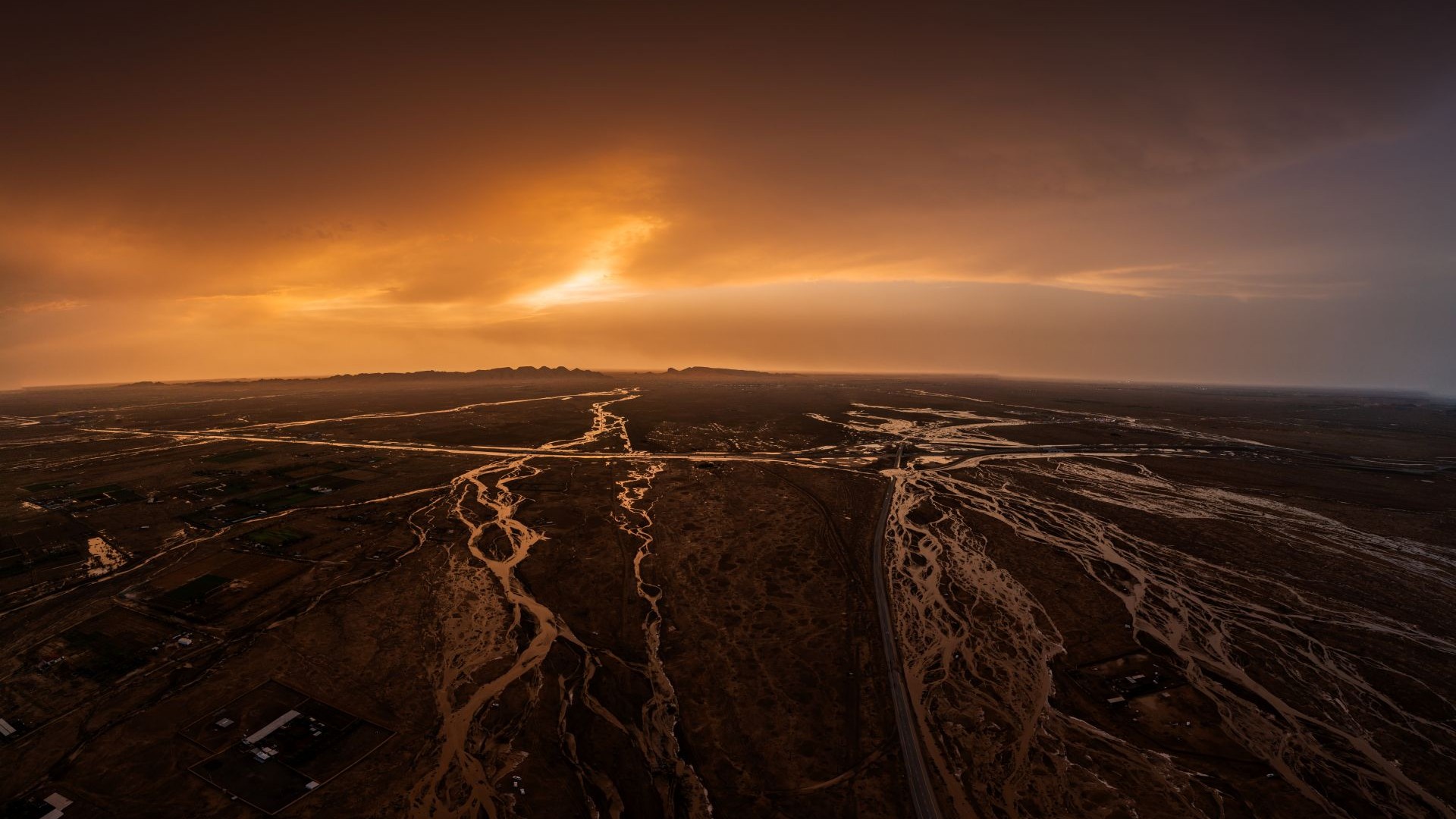
In spring 2024, more rain fell on the UAE landscape than it could drain or absorb, totaling about 250 millimeters in 24 hours. Heavy rain and flooding caused major infrastructure damage and brought desert cities to a standstill.

associate professor in Khalifa University’s department of Earth Sciences
It was a shock to desert residents and authorities, but it was a golden opportunity for Francis, whose lab studies regional weather.
It confirmed what data over two decades has been winking and nudging at: Expect bigger, longer-lasting spring rainfall systems in the Arabian Peninsula.
Francis’ study concludes that 10 to 40 percent of the storm’s intensity was the result of global warming and that events of this magnitude were made 30 times more likely with climate change.
Temperature increase in oceans causes more evaporation, and temperature increase in the atmosphere allows it to hold 7 percent more vapor for every degree Celsius. This is “food for storms,” Francis tells KUST Review. She estimates a regional rainfall increase by up to 30 percent or more by the end of the century.
But when that much rainfall comes in such a short time, it gathers and stays for a while.
The dampness’ lengthy stay in the desert soil, even throughout the hot summer months, brought the spread of natural vegetation, offering hints at what these intermittent downpours might mean for soil health and adaptability. In an arid, water-scarce environment, extra water could be beneficial
But is it worth it?
When storms are unpredictable and short-lived, the usual rainwater-collection methods won’t cut it. It means reservoirs would need to be ready year-round to take in huge volumes very quickly.
“There are opportunities from these changing patterns in rainfall.”
– Dr. Diana Francis, department of Earth Sciences at Khalifa University
It sounds great. Desert dwellers need more water. But this could be more expensive than helpful. Cost-comparison analysis between this and desalination is needed to determine which is the better option.
Another water-source opportunity in the UAE desert is fog. Normally, about 50 foggy nights occur each winter, but only in the absence of wind. The conundrum is that the horizontal fog layers just sit there, having a chill out. Unless those layers are moving, they can’t be caught by harvesting nets. Fog without wind can’t be harvested.
It’s another unknown to hammer out.
What we do know is that the water droplets in UAE fog come in two sizes that merge as a fog episode ends, with the majority of fog droplets falling in the coarse bin, likely due to the quai-permanent presence of dust in the air. A new machine learning tool Francis’ team trained improves satellite fog detection by 30 percent.
So, we know UAE fog has all the right stuff. We also have a good idea of when it will happen. We just need to figure out how to capture it. Francis provides the info, but it’s up to engineers to take the next step.
If we are going to capitalize on increasing storms and better manage urgent situations as they are happening, we need a system.
 CAPTION: 2024 storms brought a year’s worth of rain to parts of the UAE in just 24 hours. IMAGE: Shutterstock
In late 2025 a project was in place to forecast flood depths at any point on the map 10 days in advance. This includes 1-kilometer rainfall forecasts and up-to-date satellite reports every 6 minutes during a major weather event.
This offers authorities the opportunity to prepare by placing pumps and tankers early and to plan for drainage years in advance.
As Abu Dhabi prepares to host the 2026 UN Water Conference, Francis’ work tells us that in arid climates, water is not only a concern with regards to supply — it’s also an ecological one. Now we can know how much will arrive, where it will go and how ready the land is for the storm.
More like this: A river runs over it
Get the latest articles, news and other updates from Khalifa University Science and Tech Review magazine