


Initiative safeguards health in the UAE while making the nation
a global leader in precision medicine ›››
Natural Science News
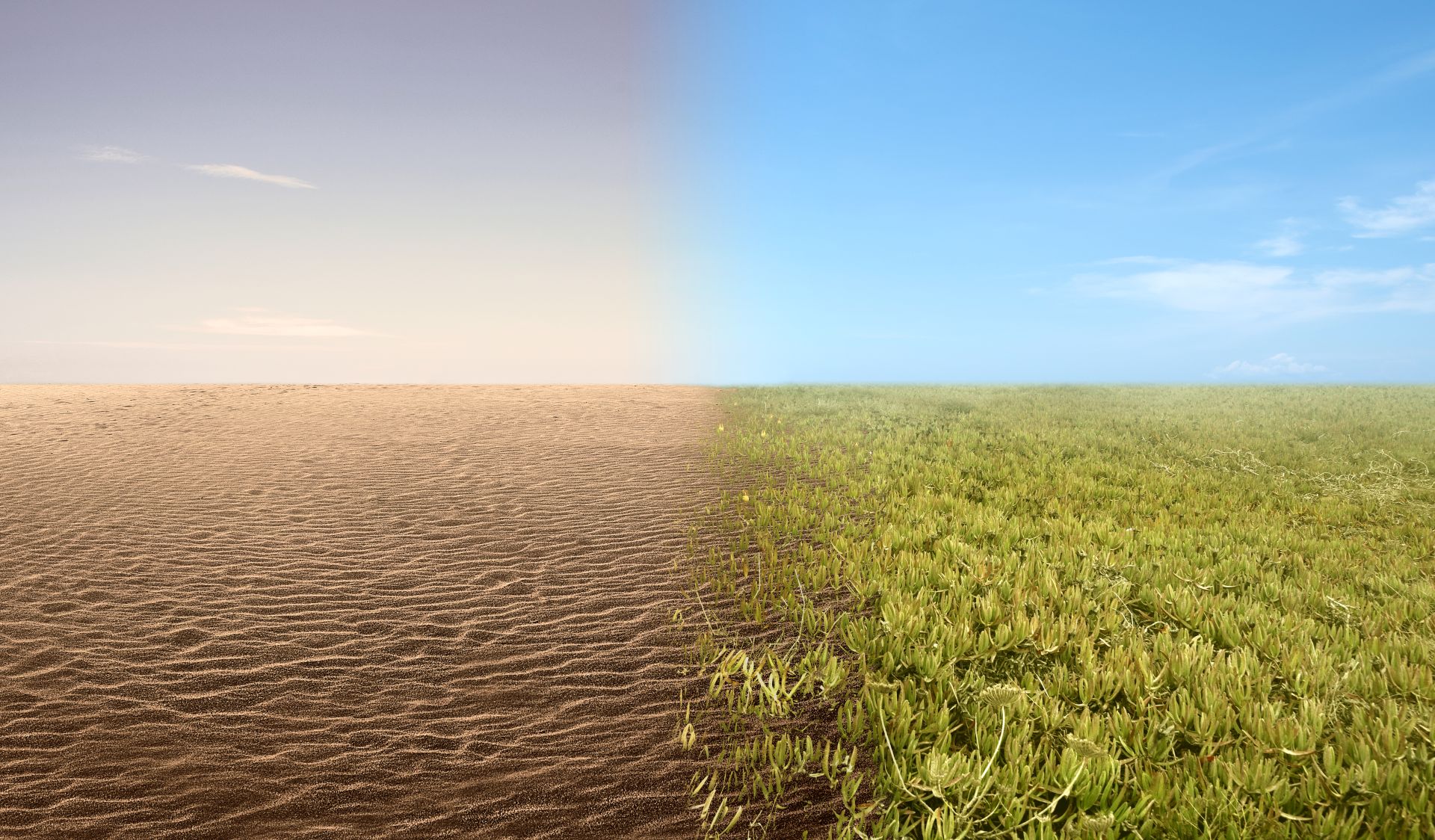
Yesterday’s pineapple peels could become tomorrow’s arid-region food security.
Researchers at Khalifa University recently discovered that turning discarded pineapple peels into nano-scale cellulose and injecting it into sand can supercharge the soil’s capabilities.
The team conducted tests on three types of sand and found that the nanocellulose fibers — tiny, thread-like fibers made from plants — resulted in 58 percent reduction in water permeability, a water-holding capacity increase of 32.7 percent and the ability to withstand pressure force of 0.5 megapascals.
The pressure force doesn’t sound like much but the difference between sand and living soil isn’t water, it’s how the pressure moves. This pressure is the point at which sand is no longer passive and begins to push back, making it harder for roots to grow. So remaining under .5 megapascals is key to growth.
This paper, published in the Journal of Bioresources and Bioproducts, proves that food waste can be repurposed to make desert soils more productive, contributing to food security and a circular economy.
And bonus — we get to eat more delicious pineapples.
More like this: Gift from the sea
Get the latest articles, news and other updates from Khalifa University Science and Tech Review magazine