
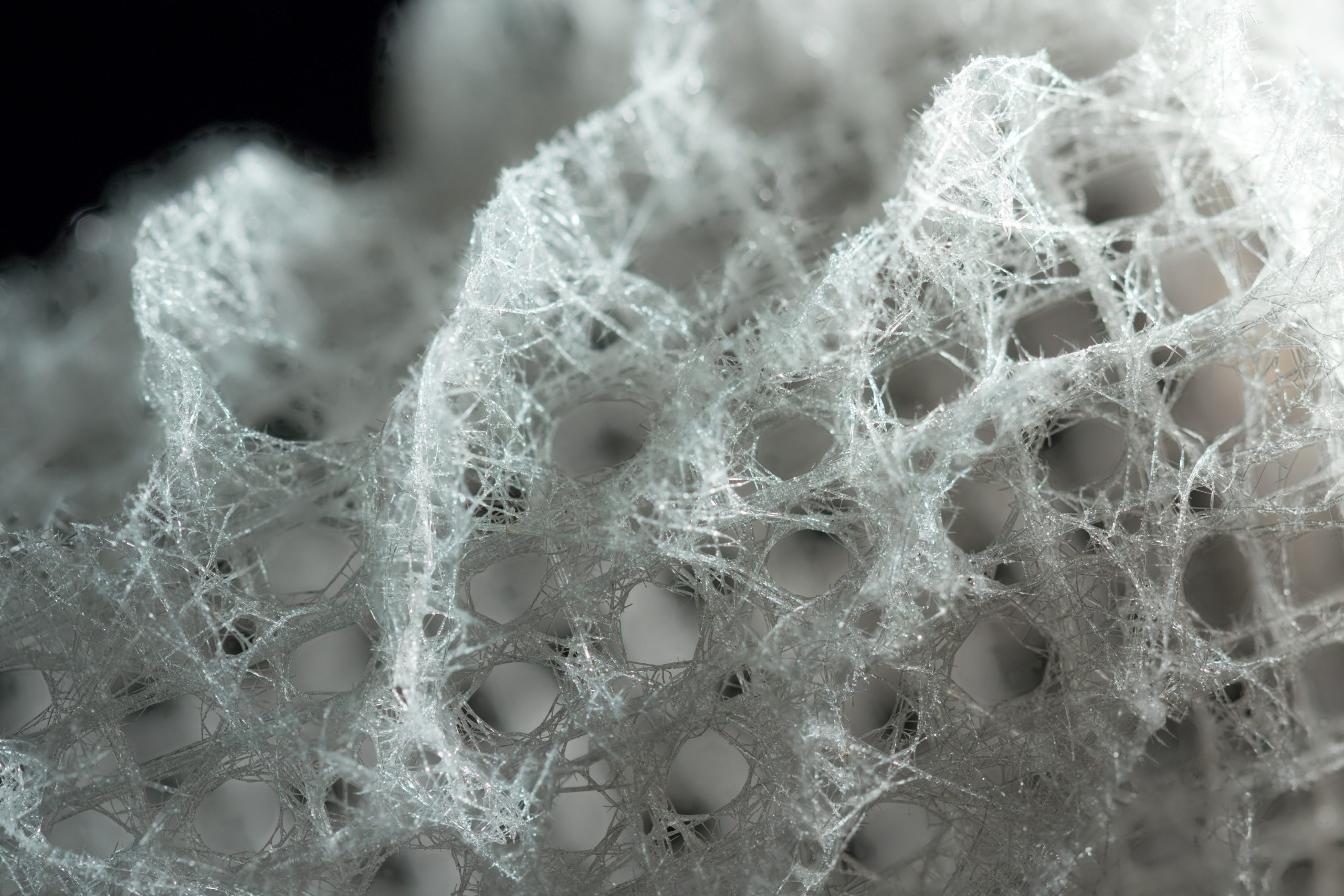

IMAGE: Shutterstock CAPTION: The Venus flower basket sponge

A deep-sea sponge may hold the blueprint for the next generation of crash-resistant materials.

Researchers at Khalifa University have created a lightweight, 3D-printed structure inspired by the skeleton of the Euplectella aspergillum, commonly known as the Venus flower basket sponge, which can absorb dramatically more impact energy than traditional designs.

The bio-inspired findings, reported in Defence Technology, could help engineers develop stronger and lighter components for vehicles, aircraft, spacecraft, protective equipment and packaging materials.

Unlike many soft-bodied sea creatures, the Venus flower basket sponge has a remarkably strong glass-like skeleton. Its intricate framework combines a square-grid pattern with diagonal supports, creating a structure that is both lightweight and resistant to crushing.

KU researchers re-created this architecture using advanced 3D-printing technology to test whether nature’s design could improve modern engineering materials.

The team manufactured the sponge-inspired lattices using a technique called digital light processing, which builds complex structures layer by layer from a light-sensitive polymer resin.

IMAGE: Shutterstock

They then subjected the samples to controlled impact tests, measuring how much energy the structures could absorb before collapsing.

The sponge-inspired lattice absorbed about 11 times more energy than a simple square-grid lattice of the same material. The improvement comes from the combination of two design features: A square framework provides stiffness, while diagonal supports prevent sudden failure by allowing the structure to collapse gradually, layer by layer.

“This controlled collapse acts like a built-in shock absorber,” the researchers find. Instead of breaking suddenly under force, the structure spreads the impact across multiple layers, dissipating energy more efficiently.

More like this: Stretch out that sodium niobate, but not too much

Join our mailing list

Get the latest articles, news and other updates from Khalifa University Science and Tech Review magazine