

Researchers look to nature to pull water from the air›››
Mapping the Emirati genome
Initiative safeguards health in the UAE while making the nationa global leader in precision medicine 28 Jan 2026
Before scientists discovered the millions of hidden gems of the Emirati genome and before personalized medicine became the forefront of healthcare, there was a vision: the Emirati Genome Project.
For decades the Arab genome had been invisible to international databases, and this left researchers lacking insight on regional diseases.
IMAGE: UAE Year of FamilyThis gap was the main target for the Department of Health – Abu Dhabi, which established the Emirates Genome Council in June 2021 chaired by His Highness Sheikh Khaled bin Mohamed bin Zayed Al Nahyan, Crown Prince of Abu Dhabi.
The Genome Project aimed to build a complete and comprehensive genetic map of the Emirati population and advance the UAE in the field of precision medicine.
The project took its first step into light worldwide when researchers identified more than 1 billion genetic variants through analyzing almost 40,000 Emirati genomes; 38 percent of the identified variations were specific to the Emirati population.
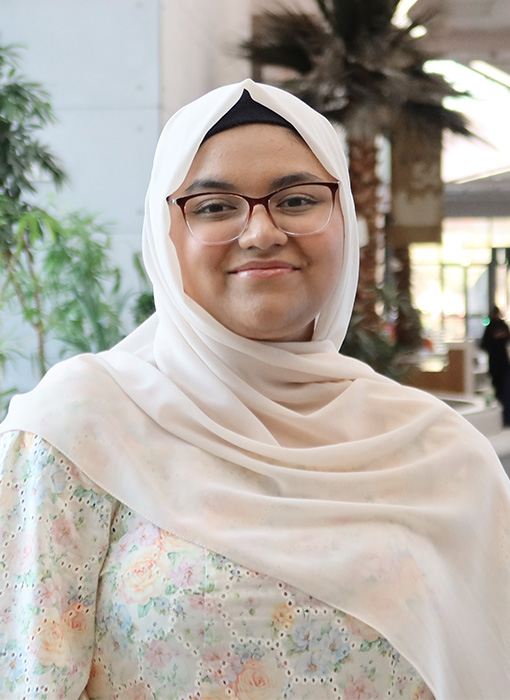
CAPTION: Haleema RaufNow with over 800,000 samples collected nationwide and several global collaborations, including with Harvard Medical School to train 500 Emirati physicians in genomic medicine, it is recognized worldwide.
“This initiative is not only enhancing local capacity in Abu Dhabi but also setting a benchmark for global healthcare standards,” said Alireza Haghighi, founding director of the Harvard International Center for Genetic Disease.
Suddenly there was a new road being paved for the future of medicine, and it was all happening on home soil.
BEFORE THE BREAKTHROUGH, PREDECESSORS
AND INSPIRATION
To fully understand this milestone, we need to take a step back and recognise the roots of this effort, beyond the laboratories.
Let’s rewind to the 1990s when the idea of DNA mapping ignited the creation of the Human Genome Project, a global milestone. Later, the Human Pangenome Reference Consortium showed how powerful and important genome mapping was. It also highlighted the under-representation of non-European populations in global genomic databases.
Moving forward to the 2010s, researchers in the Middle East had come face-to-face with the absence of the Arab genomic data. This left them blind to the disease patterns and risk factors required to treat the regional population.
In 2015 there was a sudden shift when the Qatar Genome Project was launched. Alongside this initiative, the region started premarital and newborn-screening programs. These combined efforts highlighted the importance of early genetic detection and the gaps in clinical genomics that could not be ignored any longer.
This initiative is not only enhancing local capacity in Abu Dhabi but also setting a benchmark for global healthcare standards.
– Alireza Haghighi, Harvard International Center for Genetic Disease
For the UAE, healthcare leaders seemed to realize the same need, with high rates of recessive genetic conditions due to consanguinity. Keeping in mind UAE’s position as a global innovation hub, the launch of the Emirati Genome Project was not just a step forward in science, but it also established itself as one of the largest population genome projects. It aimed to sequence 1 million Emirati genomes. This initiative marks a landmark in UAE’s journey into precision healthcare.
THE NEW ERA: EMIRATI DNA AT THE
FOREFRONT OF DEVELOPMENT
The Emirati Genome Project is currently one of the world’s most active population-genomics initiatives.
The UAE now has its first full telomere-to-telomere reference genome (a complete version of the Emirati genetic map). The risk of hereditary cancer can now be detected earlier than ever before through precision oncology programs. Moreover, newborn screening now identifies more than 815 treatable genetic conditions.
In this era, doctors can decide on the safest and most effective medications for their patients. This has revolutionized scientific research.
CHALLENGES FACED
AND OVERCOME
Success did not come without struggle. This may seem like a seamless operation, but it was built through years of problem-solving and careful policy development.
The biggest obstacle faced was ensuring the public’s trust and the safety of their data. A survey in 2022 showed that 73% of the population supported the program; the rest were willing to participate but hesitated due to privacy concerns. This meant a legal and technological framework was needed to safeguard the highly sensitive information. The UAE established one of the strongest genomic data-protection laws in the world. This made sure that all genetic data would be stored within national infrastructure and protected heavily.

This leads us to the next hurdle: Where would the infrastructure for processing the massive amount of genetic data come from?
This is how the M42 Centre of Excellence was established.
Today, it is the largest sequencing facility outside of the United States, and it enables industrial-scale processing that is supported by robotics.
Further partnerships with institutes like Khalifa University, Harvard Medical School International Center for Genetic Disease, SEHA and Cleveland Clinic Abu Dhabi have made possible the training and education of professionals and developing large laboratories to accomplish the groundbreaking research.
This has positioned the UAE as a global leader in precision medicine and research. The Emirati Genome Project stands as a testament to the possibilities of scientific ambition, and the discoveries are already reshaping the future of healthcare globally.
Haleema Rauf is a cell & molecular biology junior at Khalifa University.
More like this: Of mummies, mice and medical students
Get the latest articles, news and other updates from Khalifa University Science and Tech Review magazine